Imagine being wide awake and carrying on a conversation with your surgeon while he operates on your wrist. If that sounds more like the plot of a horror movie than a surgical procedure, think again.
A relatively new, minimally invasive technique for treating carpal tunnel syndrome allows surgeons to release the compressed nerve while patients are fully awake, using only local anesthesia. There is no general anesthesia, no tourniquet and, in many cases, no need to leave the comfort of the surgeon’s office.
The technique, called ultrasound-guided carpal tunnel release, uses real-time ultrasound imaging and a specialized device called UltraGuideCTR from Sonex Health to allow surgeons to see the structures inside the wrist as they work.
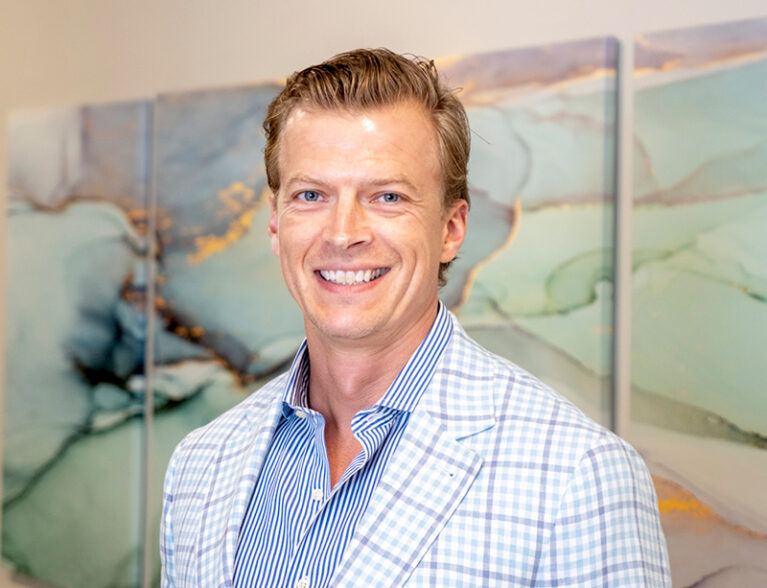
Dr. Victor Marwin, the newest orthopedic surgeon at Vero Orthopaedics, helped develop the current generation of the device and serves as principal investigator for MISSION, a large U.S. registry studying real-world outcomes of ultrasound-guided carpal tunnel release.
“Dr. Paul Paterson, who was with Vero Orthopaedics until his passing earlier this year, and I actually designed the new generation of the knife that is currently on the market,” Dr. Marwin said. “He was the first surgeon to adopt this procedure in America, and it is my absolute honor and privilege to be able to carry on Dr. Paterson’s legacy and to take over the role of my mentor and dear friend.”
Carpal tunnel syndrome, or CTS, is one of the most common conditions affecting the hand and wrist. It occurs when pressure builds on the median nerve as it passes through the narrow carpal tunnel in the wrist, causing numbness, tingling, pain and weakness in the hand. Symptoms are often felt in the thumb, index and middle fingers, although they can sometimes extend into the ring and pinky fingers.
For people with moderate to severe symptoms who have not responded to nonsurgical treatments, surgery may be a good option to release the ligament pressing on the nerve.
Minimally invasive carpal tunnel release has been around since the 1990s, when endoscopic techniques using a small camera were introduced. While effective, endoscopy has limitations because the surgeon is viewing the anatomy from the surface through a small portal.
Ultrasound changes that perspective.
“The UltraGuide technique is even more minimally invasive and tissue sparing, and patients get back to their daily activities very quickly,” Dr. Marwin explained. “It’s also very precise because the ultrasound allows you to see things the camera doesn’t.”
A camera essentially provides a view of the surface. Ultrasound, on the other hand, sends sound waves through the tissue and creates a real-time image of the structures beneath it.
The technique provides what Dr. Marwin calls “minimally invasive surgery with maximum visualization.”
Many surgeons still perform a mini-open release through a small incision. While the incision is considerably smaller than that used in traditional open surgery, the surgeon’s field of view remains limited.
“It’s like looking at a room through a keyhole,” Marwin said. “With ultrasound, I can see the entire inside of the room.”
Traditional open carpal tunnel release remains an effective procedure and is considered the benchmark for direct visualization because the surgeon can see the anatomy directly. But the tradeoff is a larger incision and longer recovery.
With ultrasound guidance, the entire procedure can be performed while the patient is wide awake.
“I can do the surgery with the patient in the office utilizing only local anesthesia,” Marwin said.
“You don’t have to go to a hospital or surgery center. It’s really no more invasive than going to the dentist to have a filling.”
The patient spends less than an hour and a half in the office, with the actual procedure taking roughly 10 to 15 minutes. After the wrist is numbed with local anesthetic, the patient may feel a brief needle prick. Once the area is numb, most patients feel little more than movement or pressure.
“Patients are typically listening to music or talking to me during the procedure,” Dr. Marwin said. “It’s actually a unique opportunity to have uninterrupted face time with your surgeon to talk about whatever you want.”
The incision is only about 5 millimeters, roughly the width of a pencil eraser, and generally does not require stitches. A small amount of skin adhesive and tape is used to close the opening, and the patient can go home shortly after the procedure.
The dressing typically remains in place for about 24 to 48 hours. After that, patients can wash the area with soap and water and cover it with a small bandage while the incision heals.
“There are no restrictions afterward, no need for physical therapy, and patients can go back to activities as tolerated,” Dr. Marwin said. “There might be a bit of soreness in the hand for a few days, but most patients are back to playing golf or tennis within about five days.”
Rapid recovery is one of the procedure’s biggest attractions.
In a 2026 report from the MISSION registry, the largest U.S. study of ultrasound-guided carpal tunnel release to date, 887 patients underwent the procedure on 1,082 hands at 22 sites. The median time to resume normal activities was three days, while the median return to work was four days. Nearly 90 percent of patients reported being satisfied with the results six months after surgery, and the reoperation rate was just 0.1 percent.
“For me, the greatest reward is seeing my patients pain-free, rested after sleeping through the night without their nerves waking them up every hour and disrupting their sleep cycle, and regaining their quality of life after a very simple surgery,” Dr. Marwin said.
Dr. Marwin will be conducting a seminar on UltraGuideCTR on Aug. 20. Call 772-569-2330 to reserve a seat.
Dr. Victor Marwin earned his medical degree from Albany Medical College and completed his Orthopedic Surgery residency and a hand and upper extremity surgery fellowship at the Jacobs School of Medicine at the State University of New York at Buffalo. Before entering private practice Dr. Marwin served as a Lieutenant Commander in the U.S. Navy. His military career included roles as an Attending Orthopedic Surgeon at Naval Medical Center Camp Lejeune and Assistant Professor of Surgery at the Uniformed Services University of the Health Sciences. He also deployed to Helmand Province, Afghanistan, with a Shock Trauma Platoon and Forward Resuscitative Surgical System, treating complex trauma and teaching local medical staff. Call Vero Orthopeadics at 772-569-2330 for an appointment.