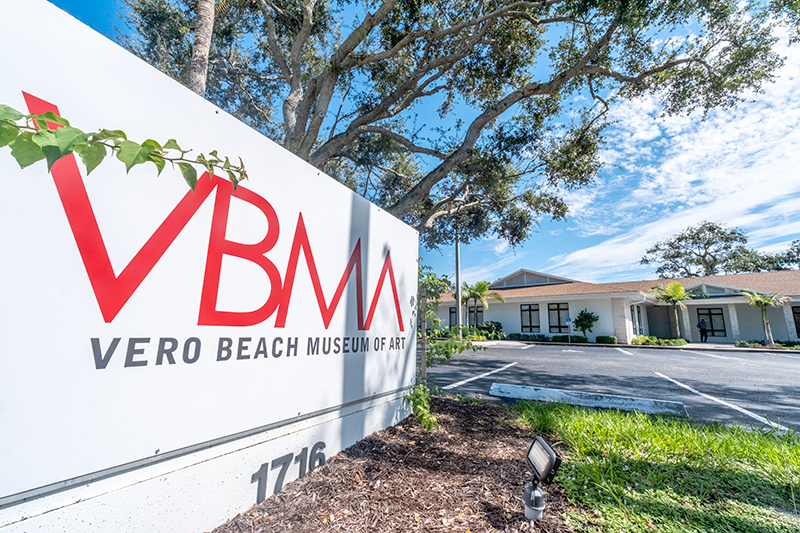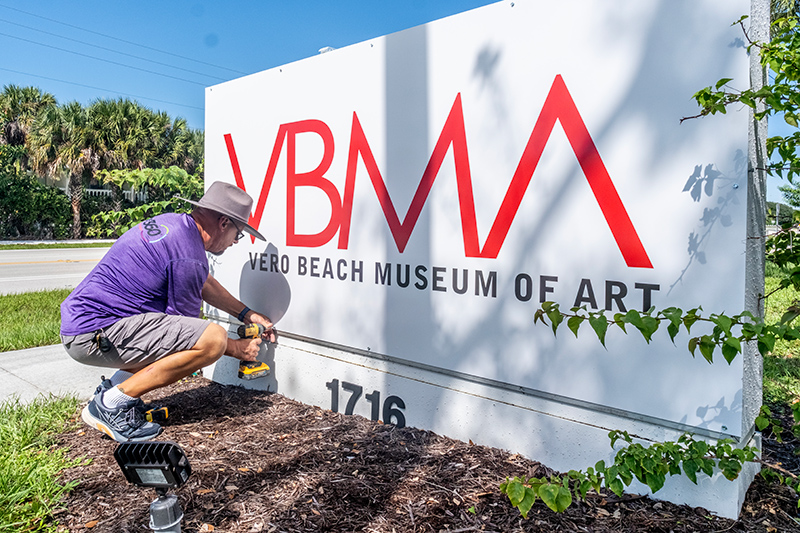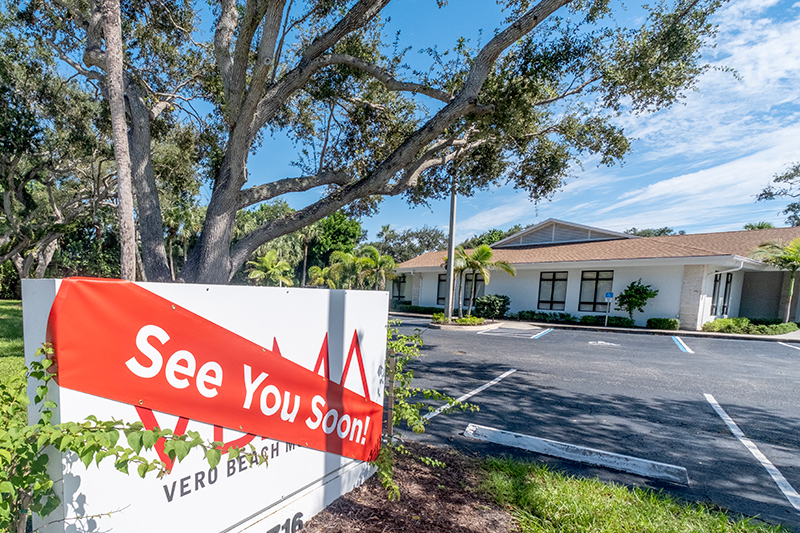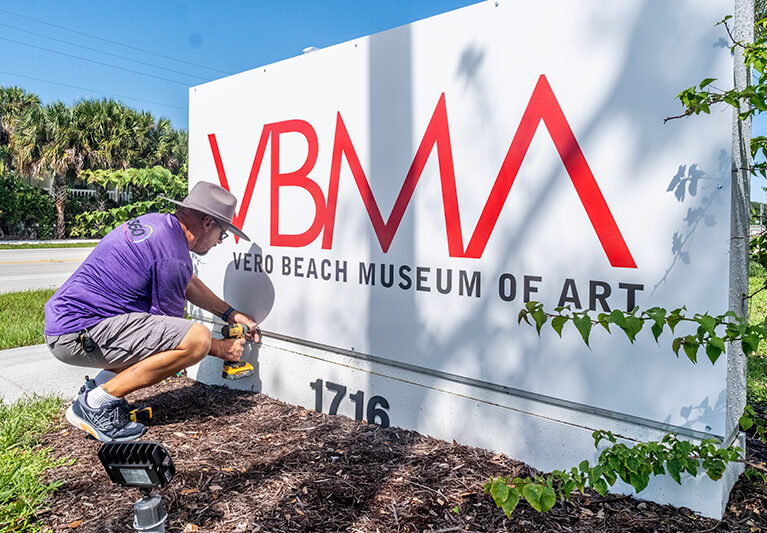
The Vero Beach Museum of Art has leased a large building on A1A in Riomar and in February will relocate its core staff – as well as its spring art classes, and later its summer art camp for kids – to this satellite location until its $126 million expansion is completed in the fall of 2028.
The museum took possession of the 6,000-square-foot building at 1716 A1A, former site of the Bungalow Home Outdoor Living store, on Oct. 1.
About 25 administrative employees, plus security staff, will move to the satellite location. A dozen employees in the collections and facilities departments and half the marketing and communications department staff will remain in the Museum’s Collections Building while the Education Wing, Administration Wing, Holmes Great Hall, the Leonhardt Auditorium and all exhibition galleries are torn down.
Approximately 17 employees will not be kept on staff during construction. They have all been notified that their employment ends in February, said Suzanne Seldes, the museum’s deputy director. They will be welcome to reapply for positions when the museum reopens in 2028, she added.
The spring 2027 term of art classes will begin in the new satellite location on March 1, but class sizes will be smaller due to space limitations. The eight-week summer art camp for kids ages 5-16 will also have a reduced capacity.
The film studies program will remain on hiatus until after the project is finished. The foundry and two western art studios were demolished earlier this year and the ceramics kilns were put into storage, Seldes said. Instruction in ceramics will continue using air-dried clay that can be decorated with paints and other finishes, she said.
However, after the expansion, the museum will feature a spacious 1,000-square-foot ceramics center – the museum’s largest studio – with a new kiln room and glazing room, Seldes said. Indian River Community Foundation is sponsoring the ceramics center.
Cinephiles will study film in the museum’s new 300-seat auditorium, about 25 percent larger than the Leonhardt Auditorium.
The museum’s offsite community access programs – which are presented in partnership with Senior Resource Association and the Center for Memory and Movement – will continue as usual, Seldes said, along with the Museum Explorations on the Go program, which places art teachers in classrooms at around 20 public schools and kids’ clubs.
Explorations on the Go reached nearly 2,500 students this year, up from around 1,900 the year before, she said.
This January’s 2027 fundraising gala will be the last in the current facility. The 2028 gala will take place off-site at an as-yet undisclosed location. Art in Bloom, on March 4, 2027, has been moved to an afternoon “high tea” at Celebration Grove, an event venue on 66th Avenue west of the city. Next year’s Art in Bloom will be held off-site, as well, Seldes said.
Painting and light construction to get the new offices and classroom spaces ready for the spring is expected to cost around $30,000, Seldes said. Two anonymous donors agreed to cover that cost, and an anonymous member of the museum’s board of trustees has agreed to pay 50 percent of the $200,000 annual cost for the two-year lease, she said.
Meanwhile, $119 million has been raised toward the museum fundraising campaign goal of $126 million and preliminary construction is “going gangbusters,” said museum president Brady Roberts. The elevated pad that will serve as the new extension’s foundation is completed and contractors have started pouring the first cast-in-place wall, he said.
“It’s one thing to look at renderings, which are beautiful, but when you’re standing in the space and see that first 30-foot wall going up, you see the vertical expanse and the scale of the building. It’s really impressive,” Brady said.
It will take builders around seven months to finish the cast-in-place walls, made with a specially designed formula that is a blend of concrete, Florida beach shells and locally mined sand. After casting, the walls will be sandblasted to expose more of the shells and give the final finish a warm, refined surface. Then the walls are sealed to protect them from the elements.
Although they encountered a short delay during foundation work when they uncovered some older mechanical, electrical and plumbing structures that were not on any plans, all of that has been sorted out and the project is back on schedule, Brady said.
With new people retiring to the area all the time, Brady said he is not concerned about raising the funding necessary to keep the museum’s doors open and programs operating well into the future.
“We’re meeting people who have served in leadership roles on other major museum boards and who are interested in serving on our board,” he said. “We’re experiencing a growth boom in the state of Florida overall since Covid. We don’t grow the same way Tampa and Miami and Palm Beach do, thank goodness, but we have had some wonderful people come into our sphere.”
Photos by Joshua Kodis