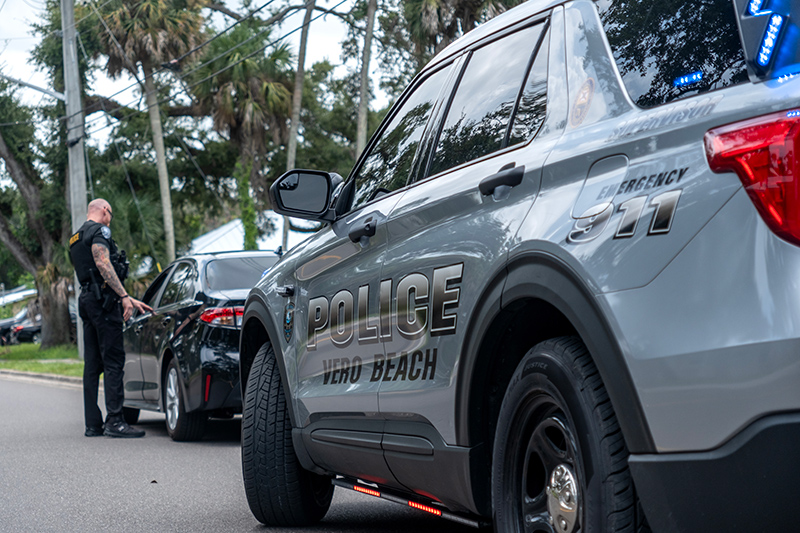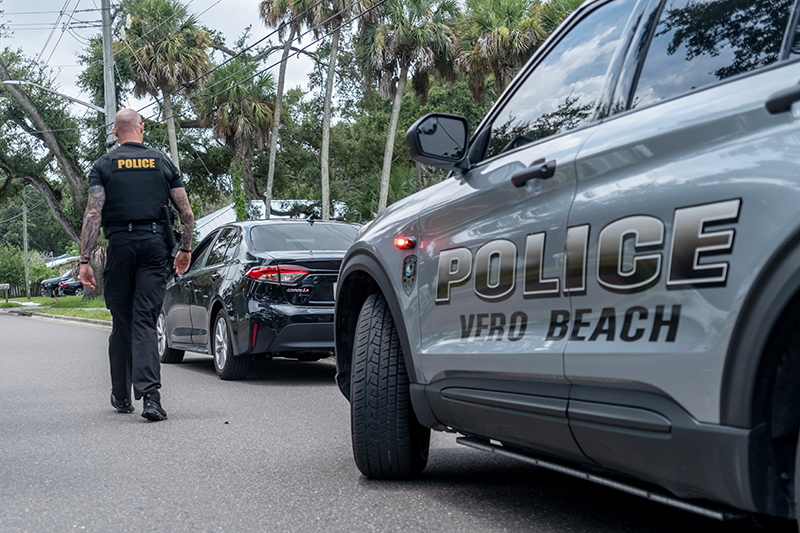
Thanks to a new state law, police in Indian River Shores and Vero Beach will be trained to better handle encounters with autistic people and others who have mental, emotional or neurological issues that make communicating a challenge, especially in stressful situations.
The development is important because, according to autism organizations, more than 2 percent of Americans are on the autism spectrum, with 25 percent of that number profoundly autistic.
That means there are several thousand autistic children and adults in Indian River County, along with thousands more with other “neurodivergent” conditions.
Because those people may act in odd ways and have difficulty understanding and complying with instructions, interactions with police can go wrong very quickly.
“Trouble can arise when an officer misinterprets certain behaviors as indicators of criminality, deception or a threat. Such mistakes can lead to harm to those with mental illnesses or disabilities or those diagnosed with a sensory processing disorder, including autism spectrum disorder,” according to the National Conference of State Legislatures.
A state law that took effect on July 1 requires all first responders in Florida to undergo training intended to improve interactions with such people.
Vero Beach Police Lieutenant Matt Harrelson said Florida’s Criminal Justice Standards and Training Commission will be adding Blue Envelope and Blue Card training to the curriculum for all new recruits in 2028. Among other things, recruits will learn techniques for interviewing neurodivergent citizens, de-escalation strategies and how to differentiate neurodivergent behaviors from belligerence.
All current law enforcement officers are required to complete the training by 2030, Harrelson said.
The Blue Envelope and Blue Card Program, originally created in 2020 by the Connecticut Police Chiefs Association, has been adopted by dozens of other states, now including Florida. The programs are intended to alert police and other first responders to a person’s condition, facilitate communication and reduce conflict.
Starting Jan. 1, 2027, people may request the envelopes and wallet cards from any Florida Department of Motor Vehicles location. Drivers are asked to keep important documents, such as a driver’s license, vehicle registration and proof of insurance, in the envelope and keep it in their glove compartment or sun visor. That simplifies what needs to be done by the driver during a traffic stop or other interaction.
The outside of the envelope indicates that the driver has a neurodivergent condition and includes instructions both for the driver and for the law enforcement officer or emergency responder about how to interact during an emergency call. The kit also includes a bumper sticker and a wallet card for the person to carry when not in their vehicle.
“For many people who struggle with autism there are challenges with sensory processing,” said Vero Beach neuropsychologist Whitney Guidebeck Legler. “Lights, sirens, loud voices, multiple conversations, even physical proximity can be experienced as intense or intensely overwhelming.
Stress typically will magnify sensory processing weaknesses and there is a good chance that could overload this person’s nervous system.”
What may look like non-compliance to the officer might actually just be the person’s lack of ability to cope with that immediate situation, Guidebeck Legler said.
People who are neurodivergent, which includes a broad range of conditions including autism, dyslexia, Attention Deficit/Hyperactivity Disorder (ADHD) and other mental health conditions, often look at the world differently and interact with others differently than neurotypical people, said Heather Dales, CEO of The Arc of Indian River County.
A traffic stop is already a challenge no matter who you are, Dales said. “People on the autism spectrum may have a different response.” They may fail to make eye contact, be slow to respond, or maybe not even respond at all.
“Just being aware of that is a big part of it, being mindful that it’s about perspectives and how people look at things differently,” Dales added. “How to handle a traffic stop is not something they teach you about in school.”
People with psychological diagnoses are four to five times more likely to have contact with law enforcement than the average person, said Harrelson.
“They are the ones who may be having an episode in public, or appear to be acting strangely, and we get called,” he added. “For us, it’s all about de-escalation. The more we know about this person, the more likely it will be to have a safe and equitable outcome for all parties involved.”
Rolling up with lights flashing and the siren blaring may be the exact wrong thing to do when an officer gets called to investigate a situation involving a neurodivergent person, said Harrelson. He is providing information about the program to the department’s training division, and personnel there will push it out to all the current officers.
Most Vero Beach officers are already familiar with many of the techniques taught in the program because Harrelson created Combined Indian River County Law Enforcement, a similar program, in 2019. Adapted from a program in Jupiter, FL, C.I.R.C.L.E. is a volunteer registry of residents who have mental, neurological or physical disabilities.
Participants agree to provide a photo of themselves, details about their condition, and contact information for relatives or others who officers may call for help. Participants are given a wrist band with a number on it. First responders across the Treasure Coast can use the number to access the person’s profile on the mobile data terminals in their emergency vehicles or they can call a dispatcher to look up the information.
“So, the Blue Envelope program will basically piggyback off their C.I.R.C.L.E. training,” Harrelson said. “It will help officers have the necessary information on the front end, which may eliminate the use of force, or God forbid, a taser. We’ll have their name and information about their condition. And we can pass that along to Emergency Medical Services or others who respond.”
Marie Fishman, who lived in Vero Beach for 10 years before moving to the Gainesville area, says the C.I.R.C.L.E. program probably saved her life. In fact, Fishman, who has been diagnosed with bipolar personality disorder, was the second person to sign up for the program.
“I had a long history of serious problems with law enforcement,” Fishman said. “I have been pulled from cars and had guns drawn on me. I was worried I was going to get killed one day.”
Harrelson convinced Fishman to register with C.I.R.C.L.E. in 2019, shortly after he launched the program and things began to change, Fishman said. “Once they saw the wrist band, they knew not to shine a flashlight in my face or treat me aggressively. They just detained me until they could look up my information about the things that can trigger me and the best way to approach me. I was less anxious and able to make better decisions to keep everyone safe.”
Fishman writes about her C.I.R.C.L.E. program experiences in a just-published book called “Emotional Weather: Surviving, Rebuilding, and Becoming With Borderline Personality Disorder.” It is available on Amazon.
“He didn’t treat me like a problem. He treated me like a person,” she writes about Harrelson in the book. “He listened. He learned. He cared. For the first time in my life, my therapist and the police were working together to keep me safe. My relationship with law enforcement began to change. Slowly at first. Then profoundly.”
Fishman also has spoken about her experiences during officers’ Crisis Intervention Training in Alachua County, where she now lives.
Participation in the C.I.R.C.L.E. program is free. To register, people or caregivers can contact the Vero Beach Police Department at 1550 20th St. in downtown Vero Beach.
Photos by Joshua Kodis