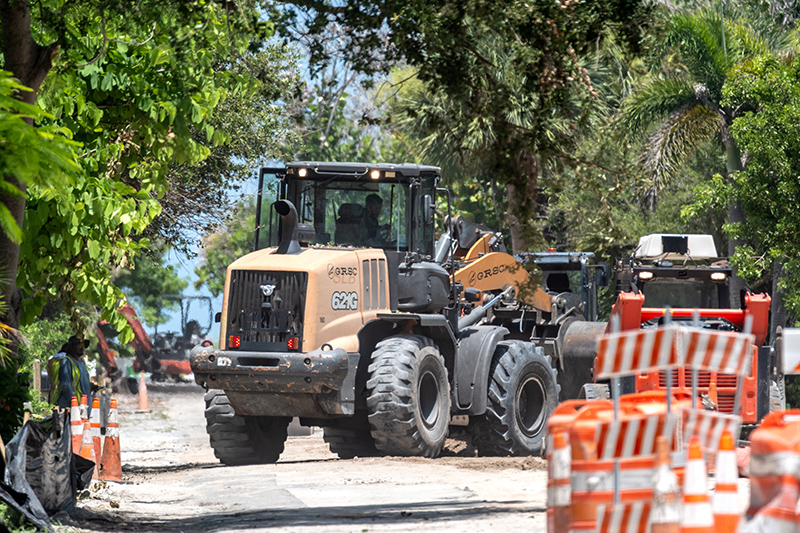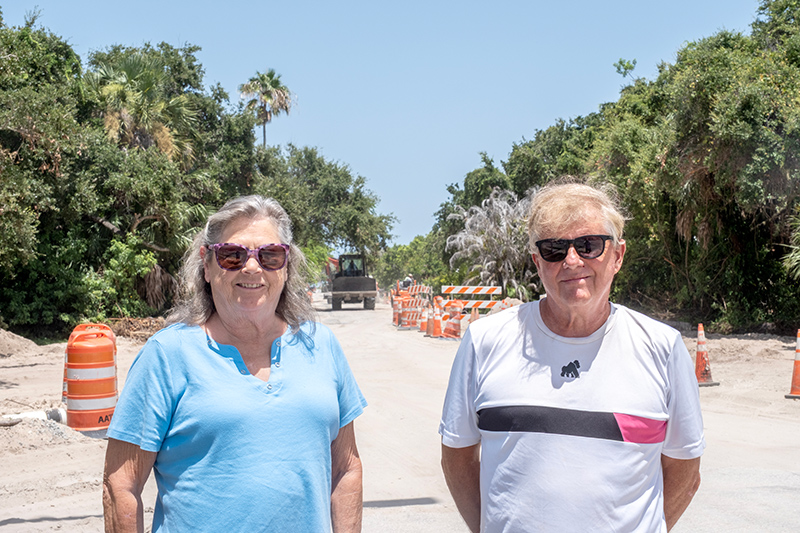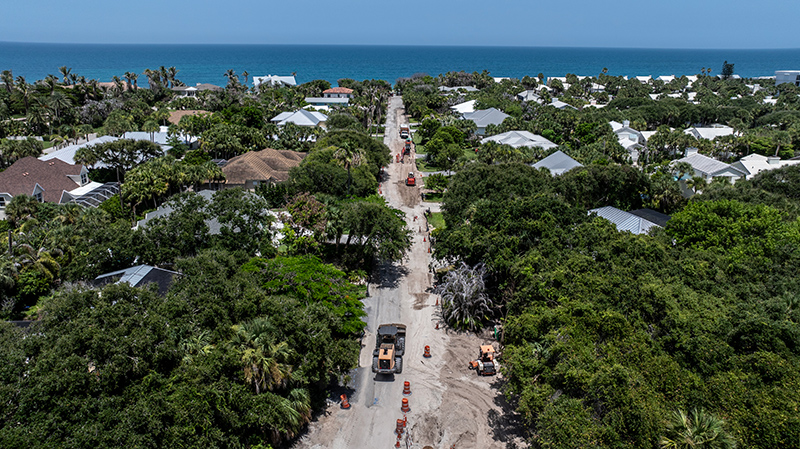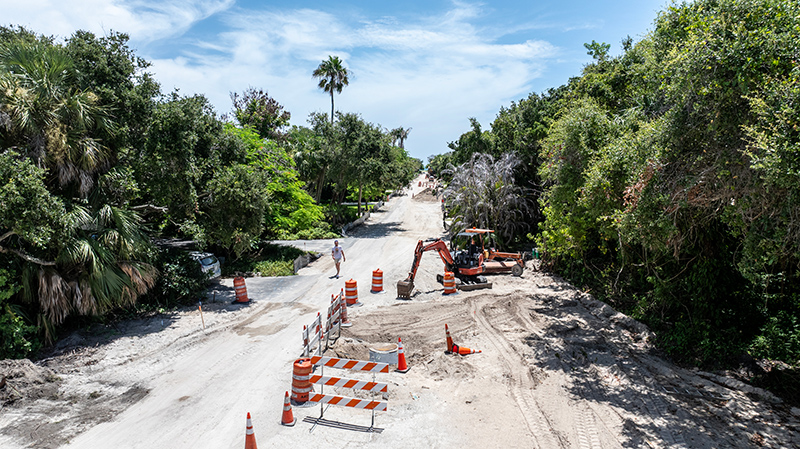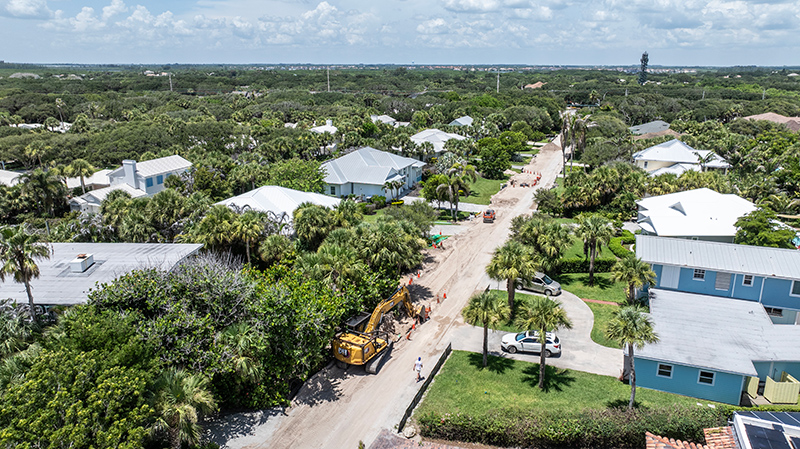
A group of more than 70 Indian River Shores homeowners has presented a petition to the Shores town council and Vero Beach city council, asking for help with the costs of connecting their homes to the Vero Beach municipal sewer system.
The Florida Legislature passed House Bill 1379 in 2023, which requires owners of homes using standard septic systems to upgrade to an advanced nitrogen-reducing septic system or connect to a central sewer system by 2030.
But the Shores residents who signed the petition have been told the only option for their neighborhoods is to connect to Vero’s sewer system, which services the neighboring town. They have been told the cost to convert may run as high as $40,000 – or even higher – according to Stephen Shorrock, who started the petition drive.
The affected area includes homes on Surf Lane, Pebble Lane and Reef Lane, east of Highway A1A, and Seminole Lane and Indian Lane, west of A1A, near the town’s southern boundary. Houses on Beachcomber Lane and Sunrise Terrace about a mile north on the east side of A1A are also included in the mandated conversion.
Shorrock lives on Pebble Lane. He purchased his home shortly after he retired in 2019.
Most of the homes in the affected areas were built in the 1960s and 1970s before central sewer service was available in Indian River Shores. Although the houses have increased in value, especially since 2020, many of the owners are retired or have inherited the houses and don’t have the income or savings to pay the costs of connecting to the sewer system, said Sheila Saville, who helped Shorrock with research related to the petition.
Saville, a retired software development manager, lives on Surf Lane with her husband, who worked for the U.S. Senate Sergeant at Arms. They bought their home in 2017.
“The Florida government decided that this was the right thing to do, which is fine with us. We support connecting to the sewer,” Shorrock said. “What it really comes down to is how do we fund this? Why wasn’t there more thought given to the proper way to fund this? Why aren’t they going after some state and federal grants? The only reason they are finally paying attention to this … [funding problem] is because of what we brought to the table.”
The one-page petition asks the town and the city to pursue grant funding and to postpone any assessments charged to homeowners until after all other avenues of funding have been exhausted. After that, the petition asks the municipalities to provide a payment plan so residents can pay the connection costs over 10 years without interest.
It’s possible that decision-makers simply believe that Shores residents are all wealthy and can afford the connection costs easily, but that’s not true, Shorrock and Saville said. One town official said exactly that, according to Shorrock, who declined to name the official.
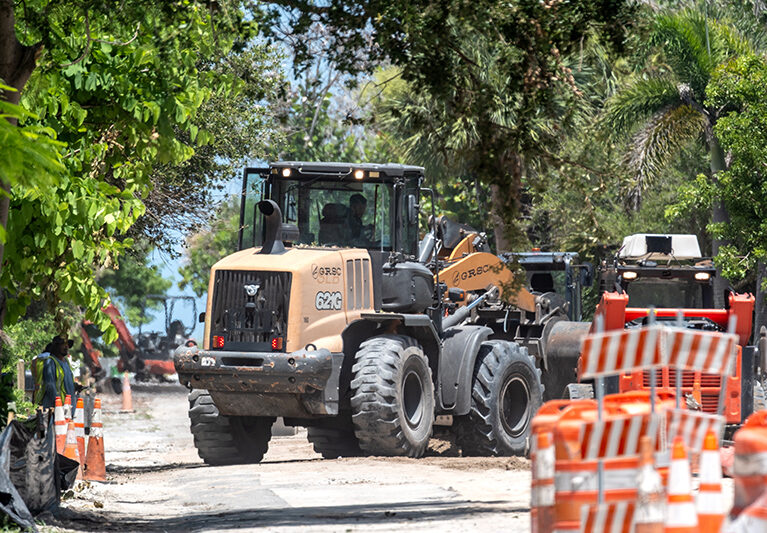
Shorrock said he also believes they are being asked to connect to a gravity-fed system rather than converting to the less-expensive Septic Tank Effluent Pump (STEP) system used elsewhere on the island because the town is already tearing up and repaving Pebble Lane and Beachcomber Lane.
By contrast, a STEP system conversion would cost around $17,000 per household, because the connecting line is smaller and closer to the surface than gravity sewer pipes. STEP system pipes can be installed without tearing up adjacent streets.
Because the repaving and sewer connection projects are being combined, residents will share in some of the street construction costs, Sherrock said, which is why the quoted costs are so high.
After receiving the petition, town council members James Altieri and Bob Auwaerter called a meeting with Vero Beach Water and Sewer Director Rob Bolton, Town Manager Jim Harpring and affected residents.
“We asked how they came up with those shared-cost numbers and they said they just met around a table and came up with what they thought was fair,” Shorrock said. “Well, no, it’s not fair.”
The petition asks both municipalities to take a closer look at shared costs and come up with figures that are fairer to the homeowners. It also asks them to consider offering credits like the City of Vero Beach offers homeowners when they complete STEP system septic to sewer conversions. Those credits add up to $3,390 per property.
So far, both municipalities have been receptive to their ideas, Shorrock said.
When he went door-to-door collecting signatures, he was surprised by how many people were not aware of the costs they were facing, he said.
“We want to keep the pressure on,” he said. “We want to raise awareness that this is not the way it should be done. There really should have been harder work done on trying to find a way to solve the funding issue up front.”
Other communities in Florida have received or created sewer connection grants, Saville said.
Brevard County voters approved a 1/2-cent sales tax to fund its Save Our Indian River Lagoon Project Plan. Under the plan, residents can qualify for grants of up to $24,000 per property to pay for septic-to-sewer conversions.
“So, people are finding different ways to do this, but it does take a lot of effort,” Saville said. “The state mandated this but basically turned it over to the municipalities to figure out a way to pay for it.”
For now, the affected homeowners are waiting to see what compromises city and town officials come up with, Shorrock said. Both municipalities are busy working on their budgets for next year, so it will be August, at the earliest, before they can address it publicly, Shorrock said.
Photos by Joshua Kodis