If you’ve ever had a stubborn knot in your shoulder that refused to loosen no matter how much you stretched, massaged or rested it, a treatment called dry needling may offer relief.
The increasingly popular technique is being used by trained healthcare professionals to treat musculoskeletal pain and movement problems. Often incorporated into a broader treatment plan that includes exercise, stretching, and manual therapy, dry needling targets painful trigger points within muscles to help reduce discomfort and restore function.
During the treatment, thin, sterile needles are inserted through the skin into specific areas of muscle tissue known as myofascial trigger points.
Though it seems similar to acupuncture, the treatment is based on a different understanding of disease and healing.
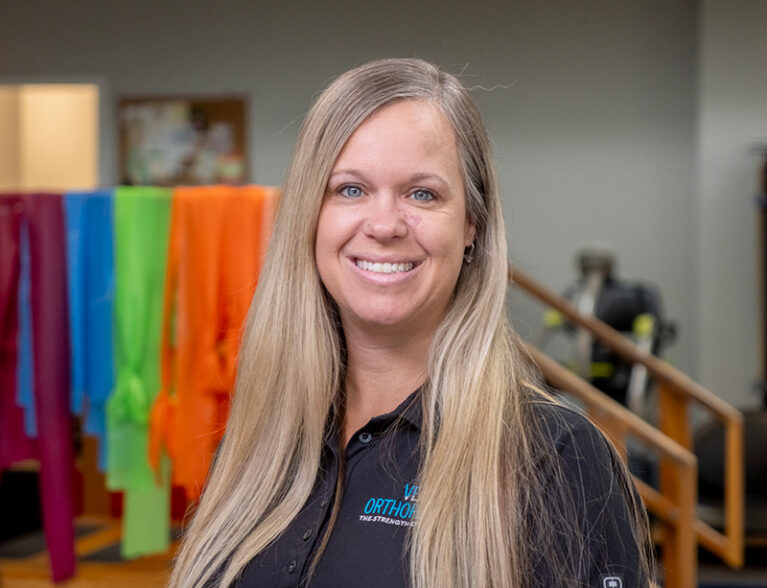
“When we insert the needle into a trigger point, which is like a tight knot in the muscle, the muscle usually twitches, causing it to relax,” explained Michelle Turner, executive director of therapy services with Vero Orthopaedics.
“It also stimulates the body’s healing response. By creating a tiny puncture in the tissue, the body recognizes that something needs attention and sends blood flow, oxygen and nutrients to help repair the area.”
Trigger points are tender, knotted areas that develop within muscles. While they can be painful when touched, they are also capable of causing referred pain, meaning discomfort may be felt in a completely different part of the body.
“Typically, there’s some underlying weakness or tightness that creates dysfunction in the way a patient moves,” Turner said. “That dysfunction causes certain muscles to overwork in ways they shouldn’t.”
When muscles are overused, they may not receive adequate blood flow, oxygen or nutrients to return to a normal resting state. As a result, the tissue around a trigger point becomes more acidic, nerves become sensitized, and pain develops.
When a patient presents with pain, Turner begins with a thorough evaluation to determine whether dry needling is an appropriate treatment option.
“We assess what’s tight, what’s weak and what’s painful,” she said. “If we feel dry needling will help, we insert the needle into the affected muscle. In some cases, we may also treat tendons or ligaments. Sometimes we perform what’s called ‘bone pecking,’ where the needle is brought down to the bone to stimulate healing in the surrounding tissues.”
A typical treatment lasts about 20 minutes. If necessary, the needles can be connected to electrical stimulation to create an even greater response in the muscle.
Some patients notice improvements in pain and mobility almost immediately, while others require several sessions before experiencing meaningful results.
“I generally advise patients to try at least three sessions,” Turner said. “If they’re not noticing any improvement after that, I usually don’t recommend continuing.”
Dry needling is commonly used to treat back pain, neck pain, joint pain, tendonitis, migraine headaches, and repetitive-motion injuries such as tennis elbow and carpal tunnel syndrome.
The treatment involves no medication. The needles are considered “dry” because nothing is injected into the body. The sterile, disposable needles are used only once and then discarded.
During treatment, the provider gently inserts the needle through the skin and into the targeted tissue. Depending on the condition being treated, the needle may be placed just beneath the skin or deeper into the muscle to reach the trigger point. The needles may remain in place for a few seconds or up to 20 minutes.
Patients may feel a brief muscle twitch during treatment, which therapists consider a positive sign that the muscle is responding.
“It really doesn’t hurt because the needles are so thin that many patients barely feel them,” Turner said. “When the needle reaches the muscle, they may feel a quick twitch or cramp-like sensation that lasts only a second. There’s virtually no downtime. Patients can return to their normal activities immediately afterward.”
Because both treatments use thin filament needles, dry needling is often confused with acupuncture. However, the two approaches are based on very different philosophies.
“Acupuncture is rooted in traditional Chinese medicine and focuses on energy flow, or chi, throughout the body,” Turner explained. “An acupuncturist may place a needle in one part of the body to help symptoms somewhere else. Dry needling is based on Western medicine and focuses on the musculoskeletal system. We’re treating a specific muscle, tendon or joint that’s contributing to the patient’s pain.”
While acupuncture can be used to address a wide variety of physical and systemic conditions, dry needling is designed specifically to reduce muscle pain, deactivate trigger points, and improve movement.
In Florida, dry needling may legally be performed by licensed physical therapists, chiropractic physicians, acupuncturists and medical doctors who have completed approved education and certification requirements.
Experts recommend that patients ask potential providers about their dry needling training and credentials before beginning treatment and ensure the therapy is part of a comprehensive plan of care.
For many people struggling with chronic muscle tightness or lingering pain, dry needling is proving to be a valuable tool in the rehabilitation toolbox. While it isn’t the right solution for every condition, when combined with proper exercise, stretching and therapeutic care, it can help patients move more comfortably, recover more quickly, and get back to the activities they enjoy.
Michelle Turner, PT, DPT, OCS, DN, is executive director of therapy services at Vero Orthopaedics and is certified in dry needling. She attended the University of Florida for her bachelor’s degree in health science, the University of Central Florida for her master’s in physical therapy, and the University of St. Augustine for her physical therapy doctorate. She practices at Vero Orthopaedics at 3955 Indian River Blvd., Vero Beach. You can call 772-257-3621 to schedule an appointment.