What’s got hunched-over shoulders, downcast eyes, and little or no awareness of what’s going on around it?
If you said one of the countless people walking down the street or through the mall or airport with eyes glued to a cellphone, you’re right.
Wayne Giang, an assistant professor of engineering at the University of Florida who has examined the link between phone use and walking injuries, says, “I don’t think people are aware of how much they’re distracted and how much their situational awareness changes when they’re walking and using a phone.”
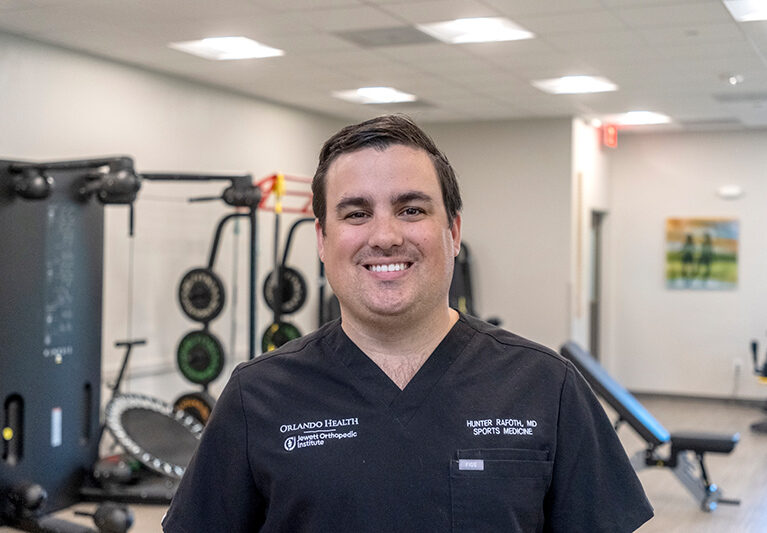
“Don’t underestimate the physical effects of walking while you’re on your cell phone,” adds Hunter Rafoth, M.D., an orthopedist at Orlando Health specializing in primary care sports medicine. “The list of reasons why it’s not a good idea is a long one.
“Because your posture is hunched over, your gait gets thrown off when you walk.
“One of the things that keeps us from falling is our vision and the ability to see obstacles.
Obviously, that’s compromised when you’re not looking around you.
“It’s not biomechanically efficient for our bodies to operate in this position. People take shorter steps and spend longer time with both feet on the ground.”
Science Direct, which publishes scientific, health and technology information, states that falls and severe head injuries have been increasing in association with the use of smartphones while walking.
A growing body of academic research identifies cognitive, perceptual, and motor deficits caused by this practice.
Researchers estimate that the distraction of our cell phones has caused 76,043 emergency room visits in the United States over the last 20 years.
The study found that when phones became smart, Internet-connected devices in the mid-2000s, injuries like tripping, falling and walking into things increased because phone use.
Although half of the injuries were minor cuts, scrapes and bruises, 18 percent were classified as injury to an internal organ – mostly concussions and mild traumatic brain injuries.
The study was based on data from 100 hospitals throughout the U.S. and extrapolated to provide the national estimate of 76,043 emergency room visits.
Dr. Rafoth adds, “Although many injuries aren’t life-threatening, they can be life changing. And in extreme cases, they can be catastrophic, like getting hit by a car.
“Although the effects people most often discuss are physical, how your mood and stress levels respond shouldn’t be underrated,” says Dr. Rafoth. “A walk is supposed to be relaxing.
“It’s a break from your daily routine – perhaps working on the computer. You should be getting away from technology, stretching your neck, and clearing your mind.
“When you’re reading messages on your phone, you’re still in work mode.
“And because your gait slows down, the cardiovascular benefits of walking will be reduced because your heart rate will have less of an increase.”
Dr. Giang agrees, saying that we reflexively adjust how we move. Video footage of pedestrians has shown that people on phones walk about 10 percent slower than their undistracted counterparts.
Seniors Today, a provider of health information, discusses a study done in 2023 that examined psychological effects of walking in a park or along a street while looking at a phone – or not.
Generally, when people go for a walk, they feel better afterwards, which was evident in the phone-free walking group. The group that engaged on phones while walking reported feeling less relaxed, less positive, less excited and less happy after walking while engaging with their smart phones.
These negative effects were attributed to a diminished connection with nature and the surrounding environment.
An observation often made about what happens when your eyes are glued to your cellphone while walking is how it affects your situational awareness. Exactly what is that?
Dr. Rafoth explains, “Situational awareness is the ability to perceive what’s happening around you, understand what it means, and anticipate what’s likely to happen next.
“It’s like when you’re walking through an airport, eyes down and oblivious to what’s going on around you, slowing your gait and interfering with the scores of people who are racing to catch a flight.”
In a world in which we’re already plagued by “tech neck,” you’re just adding to exposure time by hunching over your phone while walking.
Cleveland Clinic says that the physical stress caused by tilting your head forward to gaze at a handheld smartphone or tablet is harmful.
Given the weight of your head, this positioning can stress and damage your neck, shoulders and back, causing injuries to start happening in your neck and all the muscles around there. Cervical disks in your spine degenerate because of that forward head posture.
Alternately, taking a walk – especially in a peaceful natural setting – without looking at your phone has a wide and potent array of mental, emotional and physical benefits, making it one of the bet “medicines” in the world.
Dr. Rafoth adds, “A benefit of taking a walk strictly for relaxation or exercise is having the ability to disconnect and clear your mind. Take an opportunity to get away from a screen.”
Hunter Rafoth, M.D., is an orthopedist at Orlando Health specializing in primary care sports medicine. He received a bachelor’s degree in biomedical engineering and a medical degree from University of South Carolina, completed a family medicine residency at Orlando Health Bayfront Health Family Medicine and a sports medicine fellowship at Cone Health Primary Care Sports Medicine in Greensboro, N.C. He is board certified in family medicine, specializing in sports medicine. He practices at Orlando Health Jewett Orthopedic Institute-Melbourne, 5565 N. Wickham Rd. You can call 407-643-1234 for an appointment.