Long before memory falters or names begin to slip away, microscopic changes are already unfolding deep within the brain, invisible and undetectable without sophisticated imaging.
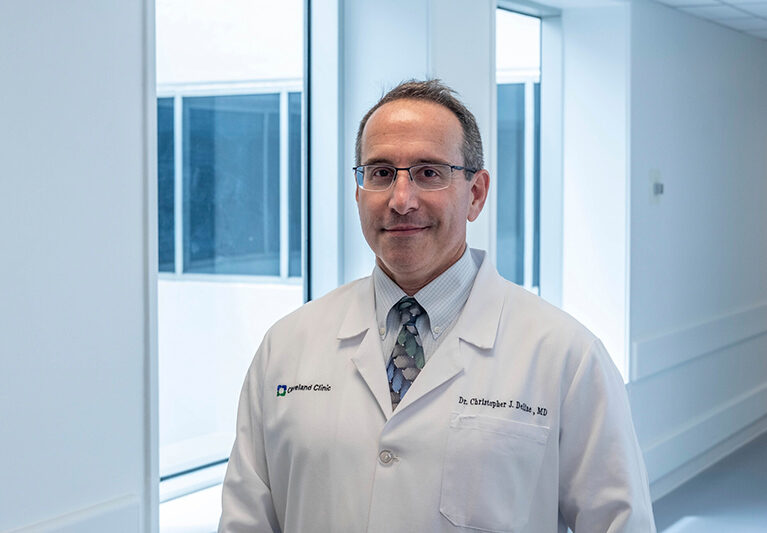
“Alzheimer’s disease involves a cognitive decline that can affect people’s lives in many ways, from being forgetful to not recognizing family members or becoming disoriented,” said Christopher Deline, MD, a neurologist with Cleveland Clinic Indian River Hospital.
“A lot of focus has been on two proteins; one called amyloid and one called tau. These are normal proteins, not foreign bodies. Tau is used in brain cells to form a stabilizing architecture that helps transport chemicals within the cells. Amyloid helps with hormone production, acts as a communicating molecule, and helps regulate the immune system. Patients with cognitive disorders show elevated levels of these proteins. But these elevated levels can also show up in a patient who has had a stroke, a traumatic brain injury, or even lack of sleep, so they are really markers of injury.”
For decades, scientists have focused on amyloid, a sticky protein that accumulates into plaques and is widely considered one of the hallmarks of Alzheimer’s disease. These plaques are believed to disrupt communication between neurons and trigger a cascade of damage that eventually leads to cell death.
Advances in medical technology have made it possible to detect amyloid in living patients, a breakthrough that was unimaginable just a generation ago. PET scans can now visualize plaques in the brain, while spinal fluid tests measure amyloid levels with remarkable precision. Even more recently, blood tests are emerging as a less invasive and potentially more accessible way to identify early changes in the brain.
The growing ability to detect amyloid has coincided with the development of drugs designed to remove it. These anti-amyloid therapies, often delivered through intravenous infusion, work by helping the immune system clear plaques from the brain.
On brain scans, the results can be striking – amyloid levels are clearly reduced. But the impact on patients is more nuanced. Some studies suggest these drugs can modestly slow cognitive decline, particularly when given in the earliest stages of the disease.
“The mainstay treatment right now is with these new anti-amyloid targeted drugs, which basically clean out excess amyloid protein in the body,” Dr. Deline explained. “Clinically, these antibodies do not cure Alzheimer’s. They simply slow the cognitive decline in people with cognitive impairment or mild Alzheimer’s disease. They do not work in advanced stages of the disease.
They can slow decline by four to six months, but they have not been shown to alter the ultimate outcome.”
There are also risks associated with anti-amyloid infusions.
“Infusions can cause imaging abnormalities, swelling of the brain, further confusion, headaches, and even micro hemorrhages in the brain,” Dr. Deline warned. “If you happen to have a stroke, you may not be able to take certain medications to help you survive. It’s important to weigh the risks against the potential benefits prior to any treatment.”
Another protein, tau, forms tangles inside brain cells and is closely linked to the severity of symptoms. Inflammation, vascular changes and lifestyle factors also appear to play important roles in the etiology of the disease. Some researchers now believe that targeting amyloid alone may not be enough.
“It’s best to treat cognitive decline in a multidisciplinary way and focus on lifestyle choices first and medication second,” Dr. Deline said. “At Cleveland Clinic, we approach it through nutrition, hydration, blood pressure screenings, and healthy habits. Lifestyle choices may, in fact, be the best hope for prevention.”
The U.S. POINTER study, a two-year clinical trial, found that lifestyle interventions, specifically increased physical activity, improved nutrition, and cognitive and social stimulation, significantly improved or protected cognitive function in older adults at high risk for decline.
According to Dr. Deline, alcohol is a major contributor to cognitive decline. Limiting alcohol intake and avoiding smoking may help reduce the risk of mental deterioration.
Sleep is another critical factor. People who do not get enough sleep can develop brain changes similar to those seen in Alzheimer’s disease. Getting eight to nine hours of sleep is a general guideline, but quality matters just as much as quantity. If you snore or wake repeatedly during the night, testing for sleep apnea may be worthwhile.
Staying hydrated is another simple but important preventive step. Drinking adequate fluids, eating balanced meals, and exercising regularly all support both brain and overall health.
“Adhering to these lifestyle choices will not only help prevent Alzheimer’s, but it can also help prevent heart disease, stroke, and a multitude of other medical ailments,” Dr. Deline said. “It really comes down to choosing a healthy lifestyle, the earlier the better – but it’s never too late.”
For patients and families, the emergence of amyloid-targeting treatments brings both hope and uncertainty. The ability to directly target one of the disease’s defining features represents meaningful progress, even if it is not yet a cure.
“These new amyloid infusions are promising, and hopefully we’ll start seeing better clinical results and not just better imaging,” Dr. Deline concluded. “I think the most promising breakthrough in understanding Alzheimer’s is predictability. We can start estimating, based on lab levels, how quickly someone could potentially develop symptoms.”
Scientists are now working to refine these treatments, identify who will benefit most, and intervene earlier; perhaps before symptoms begin. Blood-based biomarkers, improved imaging, and personalized medicine are all part of this rapidly changing landscape. Each discovery brings us closer to changing the story of Alzheimer’s from one of inevitable loss to one of possibility, progress and hope.
Christopher Deline, MD, site director of the Neurological Institute at Cleveland Clinic Indian River Hospital, is double board-certified by the American Board of Psychiatry and Neurology in both vascular neurology and neurology. He completed his residency and fellowship in neurology and vascular neurology at Washington University School of Medicine in St. Louis, where he worked with and was mentored by prominent cognitive disorder specialists whose research moved the paradigms on brain health. He sees hospitalized patients at Cleveland Clinic Indian River Hospital and outpatients at 1155 35th Lane, Vero Beach, a medical building on the campus of Cleveland Clinic Indian River Hospital where he works with a multidisciplinary team of neurologists, neurosurgeons, neurointerventional surgeons and interventional pain specialists. The Neurological Institute phone number is 772-563-4741.