Not many phrases are more unwelcome than, “It looks like it’s time for you to have a colonoscopy.”
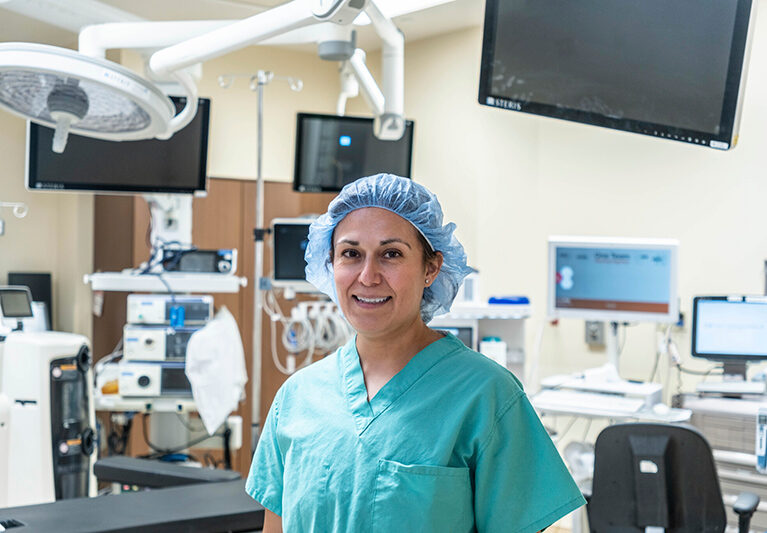
Tania Lopez, DO, a gastroenterologist with Orlando Health Medical Group, says that while it’s true that most people still dread having a colonoscopy, there have been improvements over the past few years that make it the procedure less obnoxious.
“Not only are there choices in types of tests available but the parameters for the liquid test are more user-friendly than they used to be. The dose of liquid required was 4 liters but now it’s 2. Plus, the flavor has been greatly enhanced.”
Plus, the FDA approved a pill option in 2020 that bypasses the liquid cleanse entirely.
Verywell Health, an online source of reliable and up-to-date medical information, notes two additional patient-friendly changes:
- Dosing regimen: For morning colonoscopies, patients can split prep liquid into two doses: one liter the night before and one liter four-six hours before the procedure. For afternoon colonoscopies, it is acceptable to take the entire dose on the day of the procedure.
- Shorter diet restrictions: Restrictive diets now begin just the day before the procedure for low-risk patients, with a doctor’s approval, instead of several days in advance. In addition to clear liquids, patients can eat low-fiber foods – such as white bread, pasta, and ripe bananas—for breakfast and lunch the day before a colonoscopy.
Dr. Lopez is a fan of splitting the dosage. “Patients actually clean out better when they do it this way. It’s easier to detect polyps. I’d say we are now using this method just about 100 percent of the time.”
The FDA-approved oral tablet is a formulation of sodium sulfate, magnesium sulfate and potassium chloride called Subtab, which is now widely used as a colonoscopy prep method.
“Subtab pills are an option for most patients,” says Dr. Lopez. “However, if you have a kidney problem or have been on dialysis, they’re not for you.
“Although they’re just as effective in cleaning out the colon, many people don’t like the fact that they need to drink a lot of water. There is widespread reporting of feeling nauseous.”
Cleveland Clinic explains how to prep for a Subtab colonoscopy.
You will receive a kit that contains two medication bottles and a 16-ounce cup for water. Each bottle contains 12 pills. Take all 12 pills with a cup the night before your exam. Later that evening, drink two more cups of water, filling the cup to the line each time. Six hours before your exam, repeat all three steps.
TV commercials for home-based colon cancer tests like Cologuard air regularly, but Dr. Lopez is not a fan. “They’re not nearly as effective as the other two procedures.
“The data not only gives false positives and false negatives, but up to 50 percent of advanced polyps cases can be missed.”
Johns Hopkins University (JHU) states the benefit of these stool sample tests is that they can be performed in the comfort of your home and mailed to a laboratory for analysis. However, the information that these tests provide is limited.
JHU says that negative DNA tests don’t always prove absence of colorectal cancer and they can miss 8 percent of colorectal cancers, 30 percent of polyps that will soon be cancer, and 57 percent of polyps that may become cancer.
Dr. Lopez says one of the most important pieces of information the public should be aware of is that the recommended age to have a colonoscopy is now 45, younger than before. “Yes, 45 is the new 50,” she says. “One in five new cases is in someone under age 55.”
“Some of the recognized risk factors [for colon cancer] bear repeating, too,” she says. “Poor diet, lack of exercise, low fiber, and being sedentary, which contributes to obesity, are big risk factors.
“Although we can’t change our genetic makeup – which can play a role – we can avoid processed meats and limit alcohol and smoking.”
Tania D. Lopez, DO in gastroenterology, earned a bachelor’s degree in biology and received her osteopathic medicine degree with highest honors from Nova Southeastern University in Fort Lauderdale. She completed her internal medicine residency and gastroenterology fellowship at the University of South Florida/Largo Medical Center, where she served as chief fellow. She has certifications from American Osteopathic Board of Gastroenterology and American Osteopathic Board of Internal Medicine. Her office is located in Sebastian at Orlando Health Medical Group Gastroenterology-Sebastian, 12920 U.S. 1, Suite B. Call 772-589-0580 for an appointment.