Experts estimate that more than one-third of Americans have some degree of arthritis in their joints. For many of those people some of the most challenging times come when they’re behind the wheel of a car.
Getting in and out of the car, using hand, wrist and shoulder joints while driving, stress on ankles and knees, all can cause pain and take away the pleasure of an excursion.
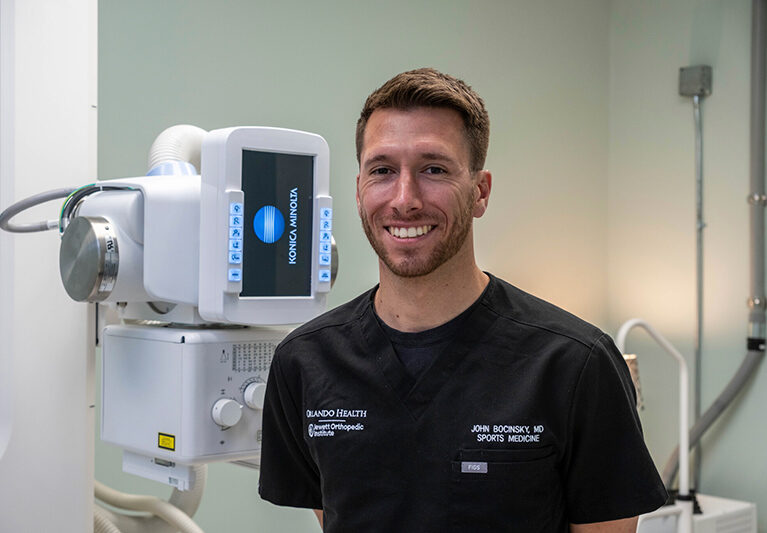
John Bocinsky, MD, a non-surgical sports medicine physician with Orlando Health Jewett Orthopedic Institute, says “driving is a big deal in Florida.
“With our lack of public transportation, there aren’t many other options and being in pain while you’re driving can be challenging,” he says.
“Luckily, there are lifestyle changes you can make and gadgets you can buy that help make you more comfortable.”
Exercising so that you can be the fittest version of yourself is important, according to Harvard Health. Occupational therapists there say a consistent exercise routine that strengthens muscles in the abdomen and those surrounding the joints can help ease osteoarthritis symptoms.
Dr. Bocinsky agrees. “Strengthening your core to reduce the force and demand that go through your joints when you’re driving will also help with injury prevention,” he says.
Cleveland Clinic says that a physical therapist can work with you on exercises for stretching and strengthening. With good muscle tone, joints can better do what they’re supposed to do.
Adaptive devices are gamechangers, says Dr. Bocinsky. “The arthritis in different parts of your body is affected by the various motions that driving entails.
“Hip arthritis is impacted by getting in and out of the car. Wrist arthritis is affected by steering. Turning your head aggravates neck arthritis.
The good news is that there are devices readily available to help.
“Car handle assists which are shaped like the grip of a cane and hook onto the door latch while the car door is open give you something to lean on for support if you have trouble stepping in and out of the car,” says Dr. Bocinsky.
“Steering wheel covers help with gripping, providing relief if you suffer from wrist or thumb arthritis.
“If your car doesn’t have a keyless ignition system, use a large-handled key turner to make it easier to start the engine.
“Seat belt extenders ensure less rotation of the torso, which helps with shoulder arthritis. They’re excellent if you have trouble reaching to pull out the belt.
“A seat cushion will help you sit in the correct position, easing hip arthritis. It can also help keep your arms in a neutral position while you drive, helping your shoulders.”
Medical News Today, a health information site, adds the following tips:
- Adjust the mirrors as necessary prior to driving.
- Avoid manual transmission vehicles.
- Make adjustments to armrests.
- Consider using a donut cushion, lumbar spine support, or heated seat cover for added comfort and control.
Knowing your body and physical limitations can be gamechangers. Dr. Bocinsky. “Breaks are so important when you’re sitting for any length of time, and that includes driving.
“If you’re on a long drive, get up every 30 to 60 minutes and walk around.
“Try to lump your driving activities together. Do errands in the same neighborhood on the same day.
“Since acute inflammation causes most arthritis pain, if you know you’re going to be having an extremely active day, try not to plan to do a lot of driving the following day.
Lastly, Dr. Bocinsky says, make sure you get the most appropriate car for your condition. “Do you physically fit in it properly? Does it have hands free options?”
Rheumatoidarthritis.net adds:
- Make sure the armrests are in a comfortable position and place.
- Find a car with a headrest that works for you.
- The height of a vehicle makes a difference – select one that’s easy to get in and out of.
Most people who have arthritis don’t consider a certified driver rehabilitation specialist. Certified driver rehabilitation specialists work with individuals with disabilities who may need adaptations to drive. This includes people with arthritis.
A certified driver rehabilitation specialist will first complete a comprehensive driver evaluation. This driver evaluation will assess any visual, cognitive, or functional limitations that may impact a driver’s ability to safely operate a vehicle. The evaluation will also determine individual needs for driver training or adaptive driving devices.
John Bocinsky, MD, is a non-surgical sports medicine physician with the Orlando Health Jewett Orthopedic Institute. He has a BS in biomedical engineering from Florida Institute of Technology and MD degree from the University of Florida. He completed his residency in family medicine at the University of Missouri, where he was chief resident in his final year. He has board certification in family medicine and primary care sports medicine. His office is located at 13000 U.S. 1, Sebastian. Call 407-643-1234 for an appointment.