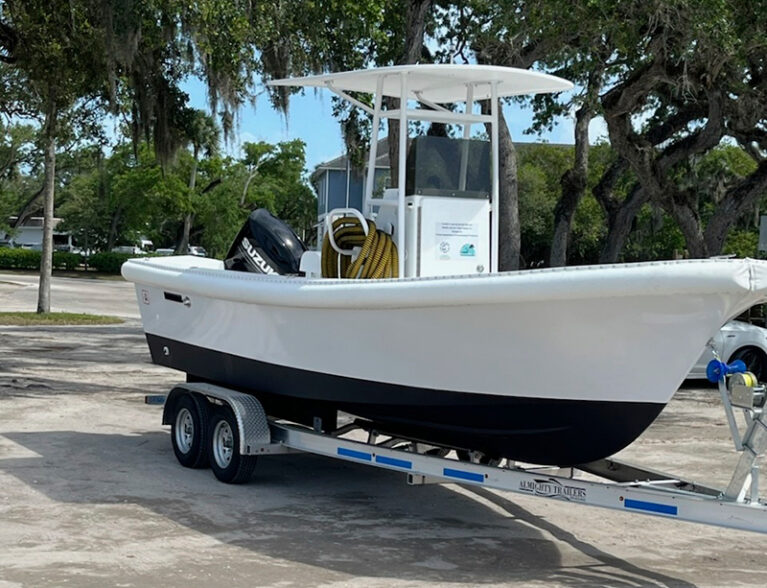
Indian River County has purchased a custom 23-foot pump-out boat to take sewage out of vessels anchored in county waters to reduce pollution in the Indian River Lagoon.
Life on the water in Vero Beach has its advantages, such as waking up to the sound of bottlenose dolphins chuffing or pelicans crashing into the water to catch breakfast, and a growing number of people who visit by boat end up staying, sometimes permanently.
The boats look picturesque out on the water, but the maritime congestion comes with a price.
More live-aboard boats mean more marine lavatory waste making its way into the lagoon.
Up until June 2025, boaters were permitted to dump their lavatory waste directly into the lagoon, provided the effluent was properly treated with chlorine or other chemicals to remove bacteria, such as E. coli, Salmonella, Shigella and other harmful organisms.
But this treatment does not remove nitrogen and other nutrients that are harmful to the lagoon ecosystem, especially 11,000 acres of estuary between Vero Beach and Fort Pierce that was designated an Aquatic Preserve by the state in 1970 and was further protected by the 1975 Florida Aquatic Preserves Act.
Because marine toilets use very little water, the effluent contains up to 40 times as many nutrients as household sewage. These nutrients, if allowed to enter the lagoon, can feed algal blooms that smother seagrass beds, which are a staple food for manatees, sea turtles, baitfish, tunicates and other marine animals.
With that in mind, the Environmental Protection Agency last June designated the entire preserve a “No-Discharge Zone,” making it illegal to dump even treated marine waste into this area of the lagoon. Violating the regulation will earn boaters a fine of $250 for each dumping incident.
The new regulation has led to long lines and bottlenecks at the two local pump-out sites available to the public. One is located at the city marina’s fuel dock, where boaters can motor up and offload waste seven days a week between 8 a.m. and 5 p.m., paying $5.35 per pump-out.
The second public pump-out station is located at Loggerhead Marina in Grand Harbor and is available from 8 a.m. to 4:30 p.m. Thursday through Monday. There is no charge for pump-outs, but the dockmaster welcomes gratuities.
Pump-out stations at Capt Hirams Resort and the Quail Valley River Club Marina are for guests only. Also, some vessels are too large to access any of these marinas.
The City of Vero Beach is expanding its marina to deal with the additional live-aboard boaters in the area, adding slips and mooring spots, but in the meantime, vessels anchor in the lagoon near the marina or in other sheltered spots where there are no facilities to empty their wastewater.
Trying to help out, Indian River County’s Natural Resources Department purchased “a hand-crafted custom vessel” from PumpOut USA in DeFuniak Springs, Florida.
The boat is 23 feet long, with a 14-inch draft and 8-foot beam, weighing in at 3,250 pounds. It is outfitted with a reinforced 350-gallon tank to hold waste, a 150 horsepower Suzuki outboard engine, and comes with pumping equipment and 50 feet of suction hose.
The cost of the boat and a trailer to haul it was $116,250, but grants and donations covered most of the price tag.
A Clean Vessel Act grant from the U.S. Fish and Wildlife Service, administered through the Florida Department of Environmental Protection, provided $87,187.50, which covers 75 percent of the purchase price, and Indian River Land Trust donated $29,062.50 – enough to cover the remaining 25 percent of the cost.
“Our board was very excited to join with the county in this cost-sharing partnership to make all of this happen,” Ken Grudens, Land Trust executive director, told commissioners at their April 21 meeting, where the vessel was discussed. “This is huge for our county. It is important to prevent raw sewage from entering the river.”
The Clean Water Coalition of Indian River County donated $10,000 toward the first year’s cost to operate and maintain the pump-out vessel, which is estimated to be around $40,000 per year, not including the part-time operator’s salary, which is expected to be $25,716 per year. “We’re so thrilled that the Natural Resources Department has come up with this solution, and we’re thrilled to be a part of that solution,” said Judy Orcutt, president of the Clean Water Coalition.
The two nonprofit organizations will have their logos emblazed on the boat’s hull, along with logos for the FDEP and U.S. Fish and Wildlife Service, said Melissa Meisenberg, a senior environmental specialist with the county’s Natural Resources Department.
“This is big,” said Indian River County Commissioner Joe Earman at the April board meeting. “People don’t understand how much of a problem this is. The City of Vero Beach has been battling it for years. This will make a really big difference.”
Once the new boat hits the water, the operator will meet boaters at their vessels, pump out their marine waste tanks for free, and transport the waste to receiving site connected to the county’s sanitary sewer system.
The service will be available on Mondays, Wednesdays and Fridays. Boaters can call or text the operator to arrange for service. The exact daily schedule and phone number have not been released but will be announced when the county launches the service, Meisenberg said.
To begin with, the county will lease dock space for the pump-out boat at the city marina and offload collected waste into the marina’s septage receiving line. Later, the county will create a permanent home dock for the vessel and build a receiving station on county-owned property, Meisenberg said.