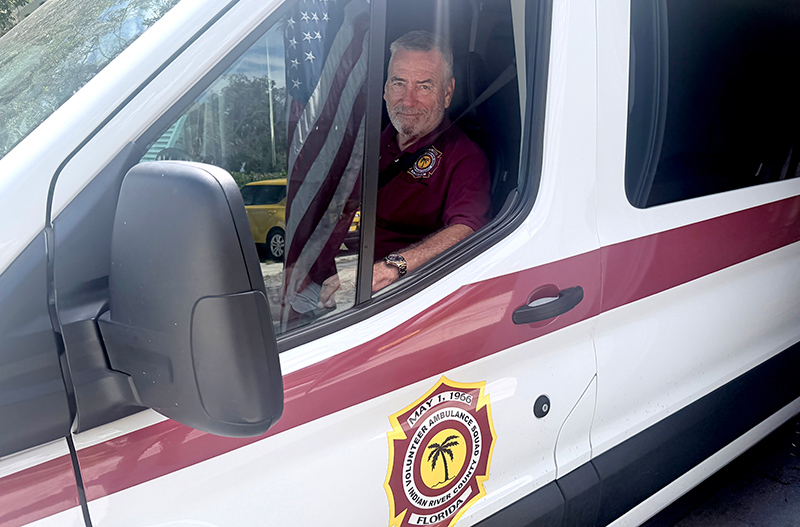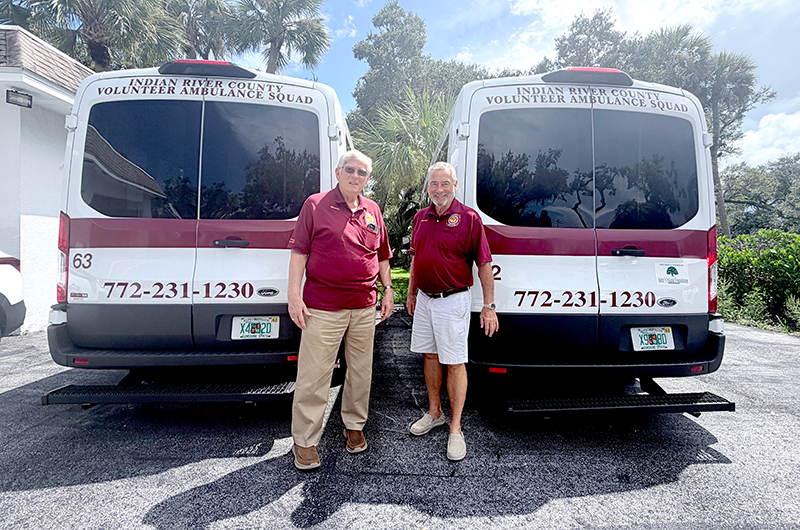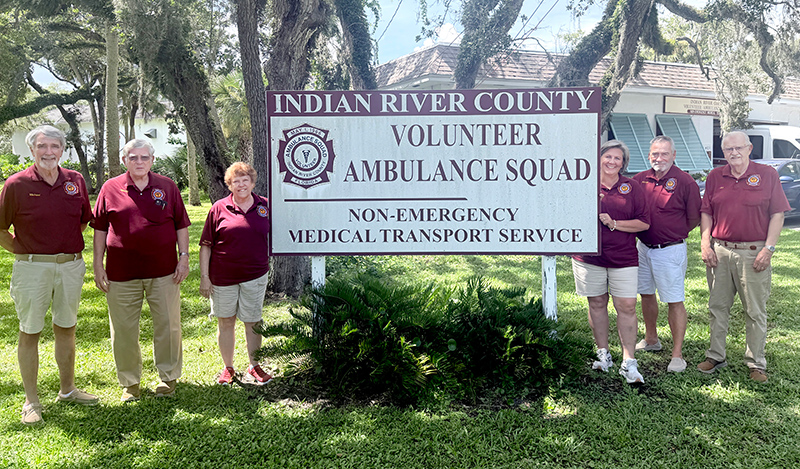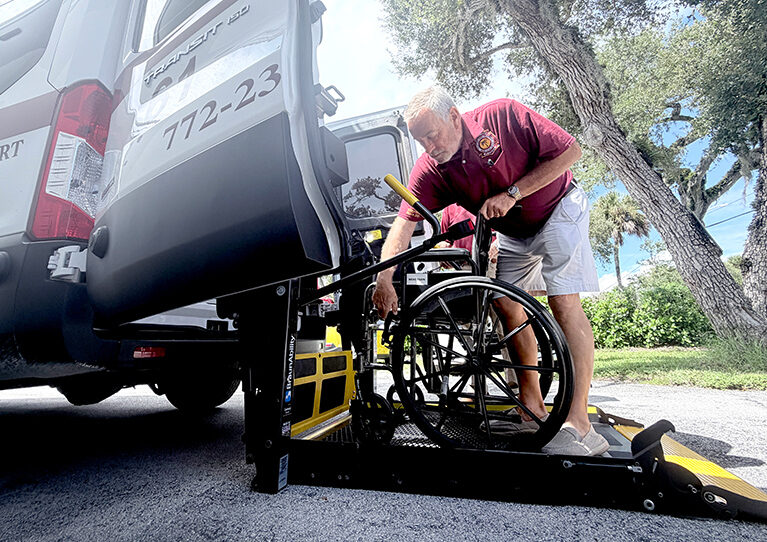
The Indian River County Volunteer Ambulance Squad, which this year marks its 60th anniversary, continues to provide an invaluable service of free, non-emergency medical transportation to area residents. Today, the highly venerated Ambulance Squad is among the oldest nonprofits in the county.
Supported by dedicated volunteers and a generous citizenry, the squad has created a rich history of service while adapting to changing, often challenging, times and today remains stronger than ever.
In the early days of the county, emergency medical transportation was provided by local funeral homes, using their hearses. Then in 1966, when funeral homes discontinued the service, local volunteers stepped up to fill the need, and the Volunteer Ambulance Squad was born.
Initially armed with a single vehicle, the Ambulance Squad provided first responder emergency service, equipment and volunteer drivers, including EMTs.
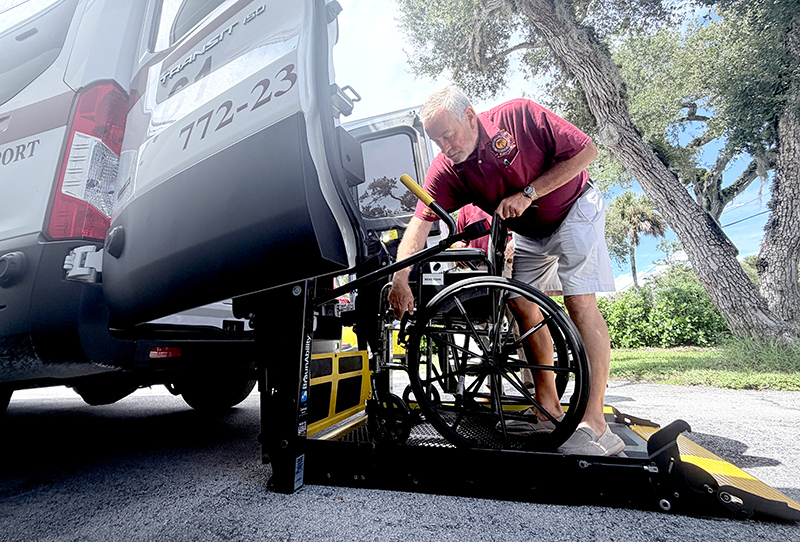
By 1989, the Indian River County Fire Rescue Division opted to train and deploy its own professional paramedics for emergency medical transport, and the squad shifted to non-emergency transportation for ambulatory and wheelchair-bound patients, all at no cost.
“Back then we had only five vehicles, all wheelchair vans,” recalls Ambulance Squad administrator April Hargett, who joined as a driver in 1993.
“A good part of our work was taking people from nursing homes to doctors. Now, many of the nursing homes have their own transportation, so almost all the passengers are either in their own homes or in assisted living.”
Last year, according to Hargett, the squad made 8,691 runs, averaging 35 a day. (A run transports one person to and from a medical appointment.)
“In 2025 we did 100,133 miles with 10 vehicles. That’s a lot of fuel,” says Hargett.
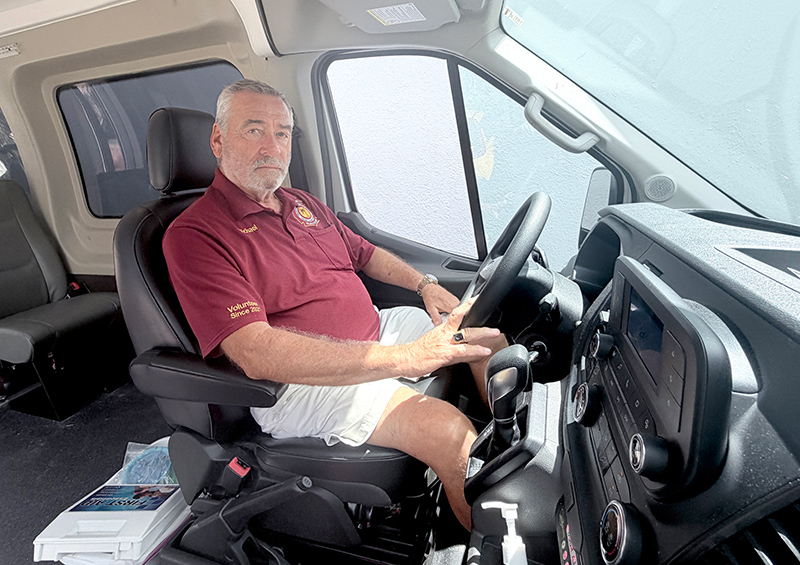
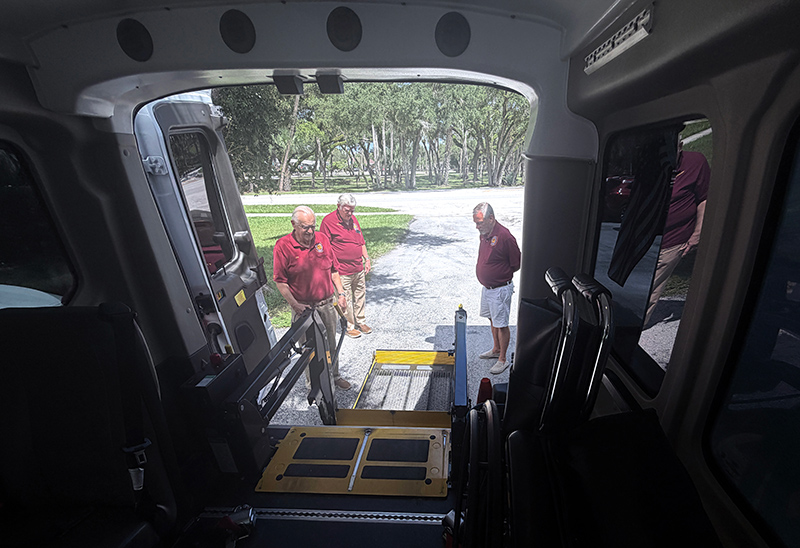
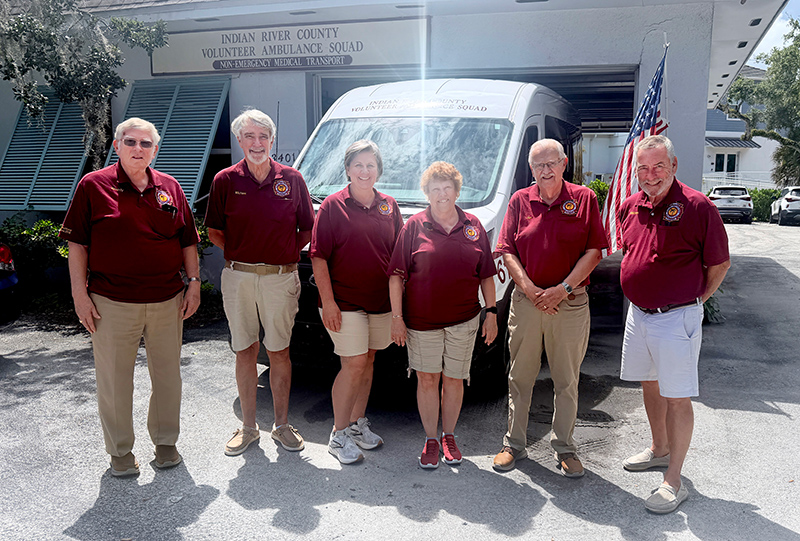
Working in teams, approximately 50 volunteers run in four-hour shifts, typically two or three times a week, from squad headquarters at the Eastern end of the Barber Bridge. Seven sedans transport ambulatory patients and four vehicles accommodate wheelchair patients.
Like longtime driver Woody Sutton, who retired after a 37-year career with the railroad, the drivers are predominantly retirees whose careers span a wide range of fields.
“Nothing gives me greater satisfaction than being a part of a group of individuals dedicated to helping those who need a way to stay healthy, by giving them rides to their doctor appointments,” says Paula Taylor, an 11-year driver.
“We serve people of all ages, those who no longer drive, those who are unable to drive, and those who cannot afford to drive. We bring a bit of sunshine to those in need of a friendly smile and a sympathetic ear,” she adds.
Although most drivers are men, the number of women, currently three, is growing. Taylor says she finds that low number interesting, as it’s generally women who take family members to doctors’ appointments. She encourages more women, and men for that matter, to consider volunteering.
“I wish everyone could hear the life stories we hear, from remarkable to humorous to tragic. Our riders are all wonderful and we appreciate them as much as they appreciate us,” says Taylor.
They view the squad as a well-run, door-to-door concierge service, and take pride in their spotless vehicles, uniform shirts, and treating clients with the utmost warmth, kindness and respect.
Their clients respond with heartfelt appreciation, often considering the drivers to be real friends.
Drivers Sutton, Jim Manor, Michael Cremen and Michael Blanck shared just some of the reasons they remain dedicated to the squad.
Among them, clients have said they couldn’t remain in their homes or live independently without the service, and that they appreciate not having to stand and wait at a bus stop. Clients and drivers alike value the social interaction it provides.
Barbara Peck relies on the service for her thrice weekly dialysis.
“The drivers are kind, efficient, on time. They pick me up and bring me back. We’re so lucky to have them. After a while you get to know the drivers like friends,” says Peck.
Phyllis Van Stedum, who is legally blind, calls the service a tremendous blessing.
“We have no car. My husband has dementia. We are dependent on them, and April always finds a slot for me. She knows the county like the back of her hand.”
Van Stedum also has high praise for the “stupendous” drivers, noting that as unpaid volunteers, they just want to help serve the community.
George Auflick enjoyed a multi-faceted career that took him into precarious places and situations across the globe. But about 2021, when work demands began to take a toll on his physical capabilities and he needed help, he called the squad.
“April was the first person I spoke with. I was welcomed with open arms. They were all so immediately receptive,” says Auflick.
He utilizes the services twice a week and says he doesn’t know what he would do without them.
“I would do anything for them. They are well-trained, well-educated, good people. They care about the community.”
Susan Senko, the squad’s new assistant administrator, already feels the strong spirit of teamwork and the sincere, selfless care and concern drivers show for those who rely on them.
“It felt like home right away. We’re here because we want to be,” says Senko.
Drivers and clients all agree that Hargett is the lynchpin of the organization, keeping the wheels rolling efficiently. Sutton stresses that Hargett does not like to keep people waiting. She instead strives to meet a wait time goal of less than 10 minutes, working in continuous communication with the teams as requests come in.
Financing includes grants from such funders as the John’s Island Foundation, trusts and individual donations. Transportation hours are 8:30 a.m. to 2 p.m. Monday to Friday.
For more information, please visit VolunteerAmbulanceSquad.org or phone 772-231-1230.
Photos by Joshua Kodis