Cancer changes lives in an instant. One phone call. One biopsy result. One conversation that begins with the words, “I’m sorry.”
In the moments that follow, patients are expected to absorb an avalanche of information about chemotherapy, radiation, surgery and medications while wrestling with fear, uncertainty and questions about their future. But treating cancer involves far more than fighting a disease. It means caring for the whole person.
That is where oncology social workers step in.
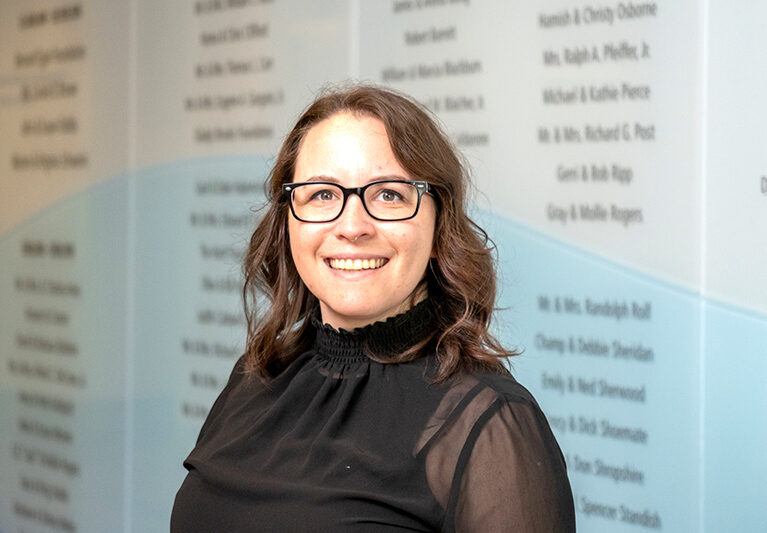
“Some people assume cancer care is all about radiation, chemotherapy and surgery, but cancer doesn’t just affect a person physically,” said Dr. Samantha Robinson, an oncology social worker at Scully-Welsh Cancer Center at Cleveland Clinic Indian River Hospital. “It affects their emotional health, psychological health, cognitive health, social health, financial health and all of the practical parts of everyday life.”
For many newly diagnosed patients, Dr. Robinson is one of the first people they meet after learning they have cancer. During their initial treatment visit, she performs a comprehensive psychosocial assessment designed to uncover anything that could become a barrier to successful care.
Those barriers may include financial hardship, transportation problems, food insecurity, unstable housing, anxiety, depression, lack of family support or simply the overwhelming emotional weight of the frightening, life-changing diagnosis.
“We want to identify those issues before they become a crisis,” Dr. Robinson said.
One of the tools she uses is the Distress Thermometer and Problem List, developed by the National Comprehensive Cancer Network and affectionately called the “sixth vital sign” in cancer care because unmanaged distress can affect treatment adherence and quality of life. Patients rate their level of distress on a scale from zero to 10 while identifying concerns in practical, emotional, family, spiritual and physical areas of their lives. A score of four or higher signals significant distress, prompting Robinson to respond within 24 hours.
Distress doesn’t always look the same.
Some patients break down in tears. Others become anxious, withdrawn or depressed. Some simply need someone to listen.
“In some cases, we have to provide crisis intervention if someone is expressing suicidal thoughts or has lost their sense of purpose or identity,” Dr. Robinson said. “I also support family members and caregivers because cancer affects their lives, too.”
Her role extends well beyond counseling sessions.
Dr. Robinson helps patients apply for disability benefits, locate transportation to treatments, connect with food and housing resources, arrange home health services and find financial assistance to help cover bills that continue to accumulate while patients are unable to work.
She also guides patients through difficult conversations about advance care planning, palliative care and hospice, ensuring they understand their options and maintain control over decisions about their care.
“A diagnosis is incredibly overwhelming, and it can be hard for someone to make decisions,” she said. “I educate them about the services available, help them build the right care team and work closely with physicians and nurses to make sure they’re getting everything they need.”
The approach is known as whole-person, patient-centered care.
At Cleveland Clinic Indian River Hospital, oncology social work is part of the palliative care and integrative medicine program and is available to patients at no additional cost, regardless of how many visits they require.
“My role is unique because I can see someone from the day they’re diagnosed through every stage of treatment and even at the end of life,” Dr. Robinson said. “I can intervene at any point, although it’s always better to identify distress early before it becomes a crisis.”
Much of Robinson’s work involves helping patients change the way they think about themselves after a diagnosis.
Using cognitive behavioral therapy, she teaches patients to recognize and challenge negative thoughts that often accompany serious illness.
“Many patients believe they’re becoming a burden to their family, and that simply isn’t true,” she said. “I’ll ask them to ask their caregiver if that’s how they feel. Almost always, the answer is no. Then we work together to redirect those negative thoughts.”
She also incorporates dialectical behavior therapy techniques, mindfulness exercises and grounding strategies to help patients regain a sense of calm during periods of intense anxiety.
One simple but powerful exercise is known as the 5-4-3-2-1 technique. Patients identify five things they can see, four they can hear, three they can feel, two they can smell and one they can taste. The exercise redirects attention away from fear and back to the present moment.
“When people become overwhelmed by emotion, they move out of their logical brain and into their emotional brain,” Dr. Robinson explained. “Grounding techniques help them slow down so they can think more clearly.”
For some patients, counseling alone isn’t enough. When depression or anxiety becomes debilitating, Dr. Robinson works with the medical team to refer patients for more intensive psychotherapy or psychiatric care, where medication combined with therapy may offer the greatest benefit.
Throughout every stage of the cancer journey, Dr. Robinson believes her most important job is helping patients hold on to hope, even if that hope changes over time.
“Hope evolves throughout the cancer journey, and I help people redefine what it looks like depending on where they are,” she said. “For someone receiving treatment, hope may mean fewer side effects or seeing the cancer shrink. For someone with advanced disease, hope may mean spending meaningful time with loved ones. Hope exists in every stage, but sometimes people lose sight of it because no one has helped them recognize what it has become.”
In the end, an oncology social worker doesn’t treat cancer itself. Instead, they help patients navigate everything cancer tries to take away – their confidence, independence, security and peace of mind – while reminding them that no matter where the journey leads, they never have to face it alone.
Dr. Samantha Robinson, Ph.D., LCSW, graduated from Florida Atlantic University in 2016 with a master’s in social work. Soon after graduation, she began a doctoral program and earned her Ph.D. in 2021. Throughout her career, she has provided psychotherapy and psychosocial support to individuals, families, and groups in diverse clinical settings. She currently serves as an oncology social worker at the Scully-Welsh Cancer Center at Cleveland Clinic Indian River Hospital, where she provides counseling and emotional support to patients and their families through their cancer journey.