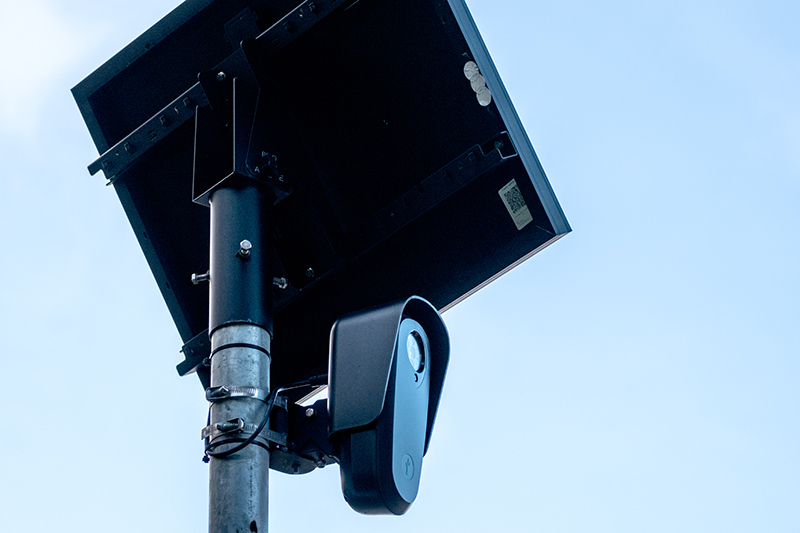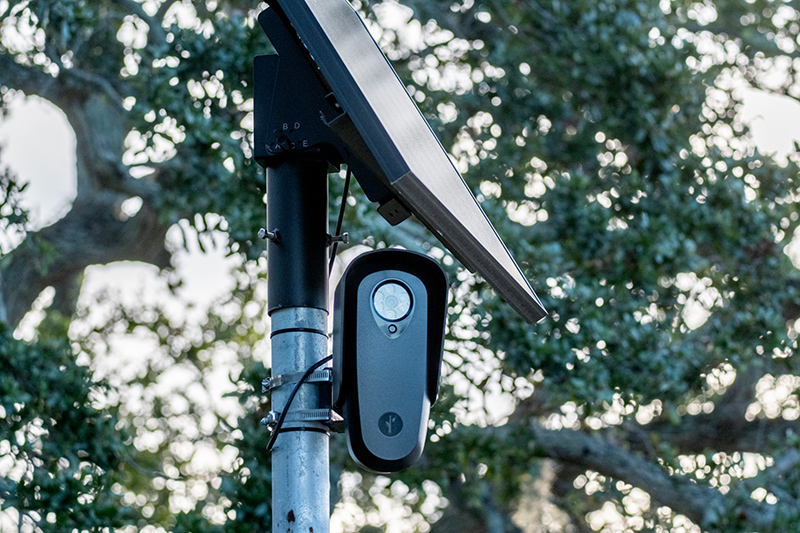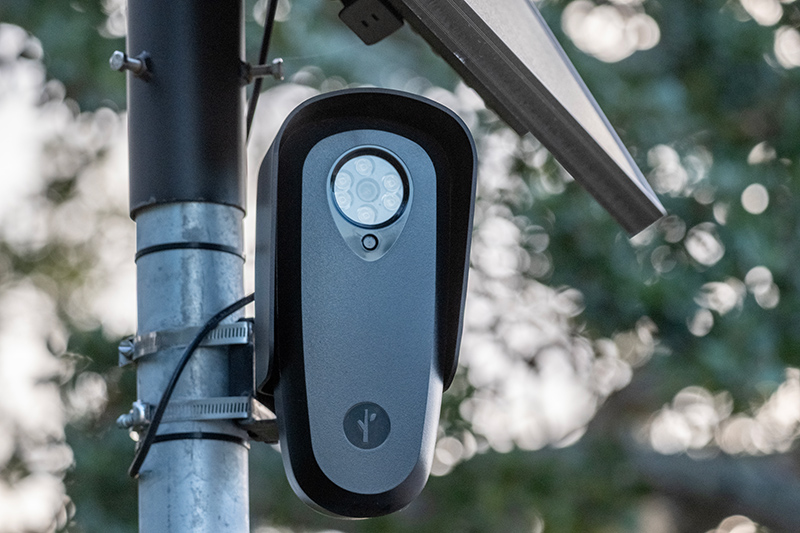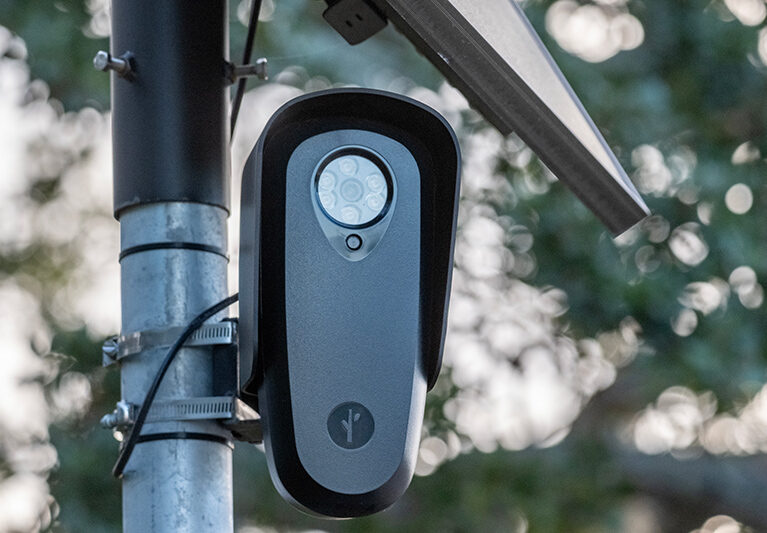
Indian River County law enforcement agencies may be pulling some license plate readers from its state highways following an order from transportation officials, but police still want residents to know that the devices play a key role in solving some criminal investigations.
“These cameras help us have a better probability of solving cases. They are helpful in so many different ways,” said Police Chief David Currey, Vero Beach Police Department. “(The cameras) help us establish a timeline and help with follow up investigations. It’s an essential tool to keep the community safe.”
The Florida Department of Transportation memorandum issued Monday, Aug. 31 revoked permits for automated license plate reader devices on state highways after nationwide reports of misuse, data privacy concerns and surveillance schemes.
“I think these cameras…these license plate readers are out of control,” Gov. Ron DeSantis said in an Aug. 27 news conference, days before the transportation department issued its memo.
Law enforcement agencies have 30 days to remove the devices. Transportation officials will remove any remaining cameras after the 30-day period, according to the memo.
“The removal of cameras will take away an investigative tool used by law enforcement,” said Jim Harpring, town manager for Indian River Shores.
Flock tracks murder suspect
The license plate readers have been essential in helping law enforcement agencies track homicide suspects, officials say.
Indian River County Sheriff Eric Flowers previously praised the Flock Safety system for helping deputies track 33-year-old Matthew Allen Waggle. Deputies determined that Waggle traveled on a bus from Arizona to Orlando, then rode in an Uber to the Vero Beach area to fatally shoot his ex-girlfriend on Aug. 16.
Flock cameras – which are also used by private residences and businesses across the county – then located the Ubers Waggle took to travel to Vero Beach and back to Orlando. Waggle then got on a Greyhound bus headed for North Carolina.
U.S. Marshals later found Waggle at the Super 8 by Wyndham Motel Dunbar/Charleston Area in West Virginia following a four-day nationwide manhunt.
“We got a murderer off the streets because of the Flock system,” Flowers previously said.
Flock helps solve fatal crash investigations
Police also used the license plate readers to investigate a July 17 deadly motorcycle crash in Vero Beach. Currey said the cameras captured the motorcyclist traveling at 113 mph as he passed through the intersection of 15th Place and U.S. 1.
“We were able to put (the motorcyclist) in different locations throughout the city because of Flock,” Currey said.
The motorcyclist crashed into a concrete utility pole at the intersection of Eighth Avenue and 21st Street, just north of U.S. 1. Police identified the motorcyclist as 25-year-old Mario Raya, of Sebastian.
“Speed was the sole contributing factor as to the cause of this crash,” Vero Beach police officials previously said.
Flock cameras also helped Florida Highway Patrol identify a Ford F-150 involved in an Aug. 9 fatal hit-and-run crash in Indian River County, leading to the arrest of Michael Steigerwald. Troopers said Steigerwald was traveling westbound on Eighth Avenue when he swerved to avoid a bicyclist, but was unsuccessful.
The truck hit Steven Edward Poteat, who was also riding westbound on an e-bike just ahead of the pickup. Poteat was taken to HCA Florida Lawnwood Hospital in Fort Pierce, where doctors pronounced him dead, troopers said.
Using Flock to locate missing people
The license plate readers have also helped law enforcement officials in cases involving missing people, suicidal individuals and traveling criminals. Harping said officers with the Indian River Shores Public Safety Department used the Flock cameras for a number of cases involving missing people with Alzheimer’s disease.
Nationwide, Flock helped law enforcement officials locate more than 10,000 missing people and reunite them with their families last year, according to its website. The tag reader system also helped nearly half its customer base find and recover more than 50 percent of stolen vehicles in their jurisdictions.
License plate readers in Indian River County
Several law enforcement agencies across Florida, including the Brevard County Sheriff’s Office, suspended the use of the Flock system or similar tag reading programs pending guidance from the state.
While no suspensions were announced in Indian River County, local law enforcement officials plan to remove the stationary cameras from state rights-of-way. The cameras were installed beginning Sept. 2021 throughout the county, sheriff’s officials said.
“We will comply with the order and continue (using) the ones that are not affected,” said Lt. Kevin Jaworski, a spokesperson for the Indian River County Sheriff’s Office.
The Cameras
Indian River Shores has two license plate readers along State Road A1A – one on the north end of the town and the other on the south end. Harpring said the town will remove the devices within the 30-day period.
“The memo is pretty clear and straightforward,” Harpring said.
A third camera, located on the historic Jungle Trail in the Shores, is not on the state highway, Harpring said.
The City of Sebastian has one license plate reader on a state right-of-way near U.S. 1 and Jackson Street on the north side of town, and eight others that are not on state highways. Sebastian police officials will have the camera on the state highway taken down but not the others, said deputy chief Tim Wood.
Indian River County sheriff’s officials will also have license plate readers removed, Jaworski said. The county has 122 license plate cameras, 52 of which are on state highways and will be taken down, Jaworski said.
Vero Beach has 10 license plate readers. None are located on state highways, Officer Kelsea Marty said.
Fellsmere Police Department does not have any license plate readers, said Scott Newsom, police chief. But, the sheriff’s office has at least one camera at Interstate 95 in Fellsmere, Jaworski said.
The sheriff’s office also has two additional cameras in Vero Beach, with one on 17th Street and the other on Beachland Boulevard.
Sebastian, Indian River County and Indian River Shores all have stationary Flock cameras, while Vero Beach has both Flock and Motorola Solutions.
Privacy concerns
The controversial tag-reading system – which includes more than 120,000 cameras across 49 states – had been raising concerns about privacy for years. There have also been growing reports of misuse of the system nationwide.
On Aug. 13, Flock officials announced operational changes, including reducing the time frame that data is retained in the system from 30 days down to 10. Flock also introduced “Evidence Mode.”
“Our analysis shows that over 90% of searches without a full plate are done within a week,” Flock officials said in the Aug. 13 update.
“Evidence Mode, which will roll out in the coming weeks, addresses the exceptional cases that take longer: detectives can preserve specific (license tag) data as evidence for an active investigation in cold storage, consistent with existing laws and policies.”
The American Civil Liberties Union, the nation’s largest public interest law firm, contends that Flock violates privacy across the country by taking unsolicited photos of vehicles belonging to citizens, logging detailed information about them into a massive database, tracking the vehicles and using artificial intelligence to discover private matters of the occupants’ lives.
In Brevard County, Deputy Michael Fultz resigned May 27 after an audit showed he used Flock to track his ex-girlfriend’s license plate while he was off duty, reports show. There have been no reports of Indian River County deputies misusing the Flock system as of Sept. 8, according to sheriff’s officials.
‘Misunderstanding’ of how Flock works
All law enforcement officers are required to login and put a reason for searching a tag – including theft, shooting, or a missing person – when using the Flock system, Jaworski said. Officers do not need a warrant to search license plates while using Flock.
Currey said he believes there should be policies in place to prevent abuse of the tag-reading system. The police chief said people have a misunderstanding of how the license plate readers operate.
Currey said the myth about the license plate readers being part of “statewide government surveillance” is not correct.
“It is a (stationary) camera system that’s pointed at a fixed spot on the roadway. It reads the plate. It does not use facial recognition. It does not scan phones or Bluetooth. It does not issue citations,” Currey said.
“It provides a photograph that could (produce) an investigative lead,” Currey said. “It’s important people understand what (the cameras) do and what they do not do.”
Photos by Joshua Kodis