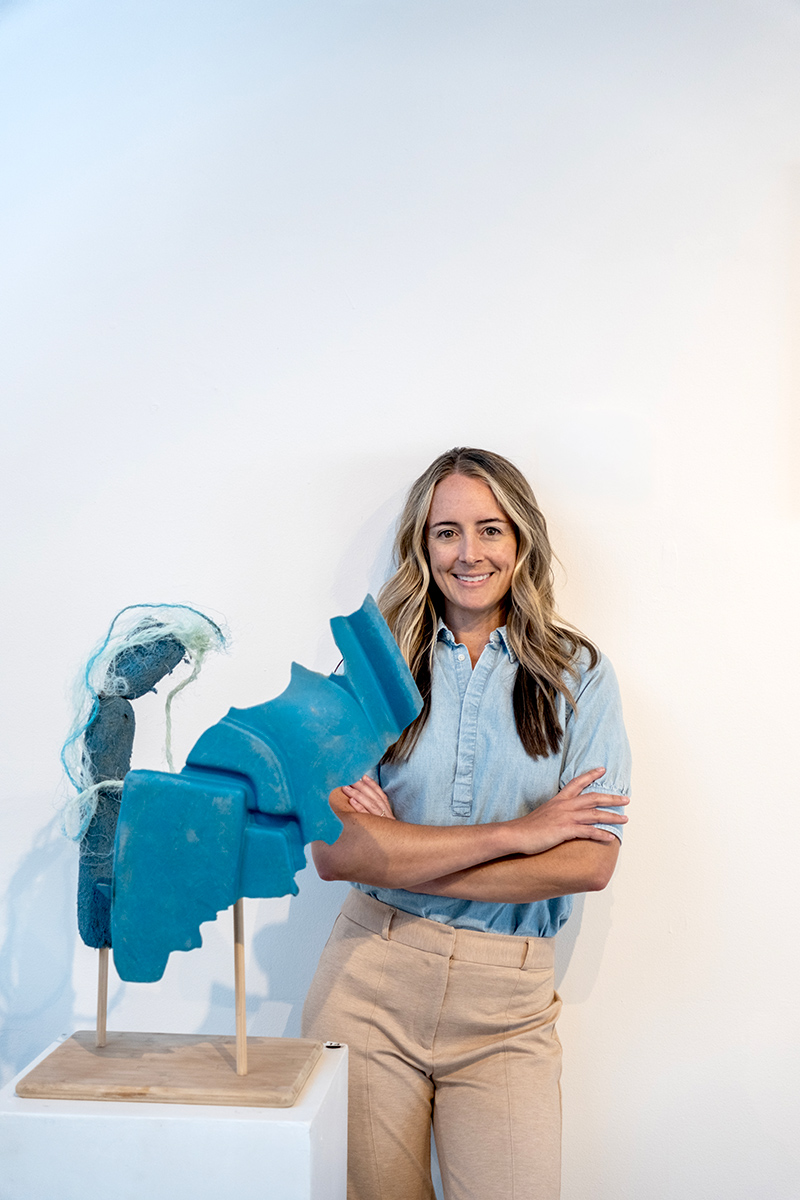
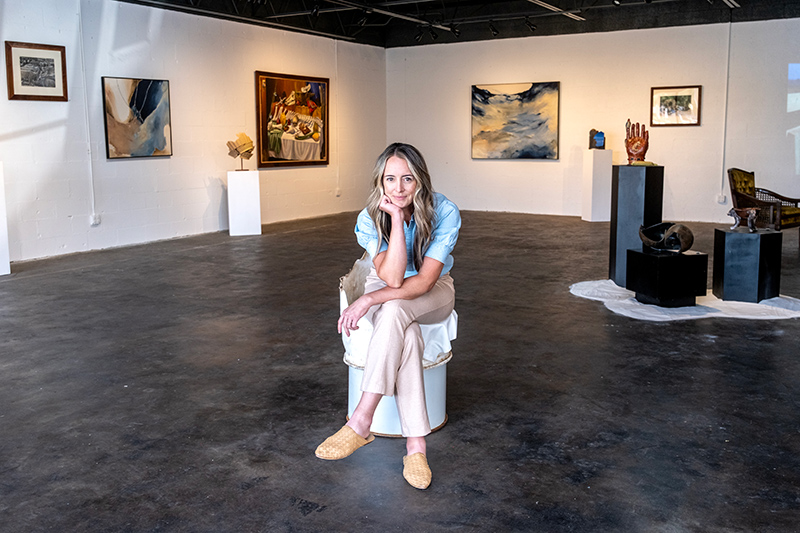
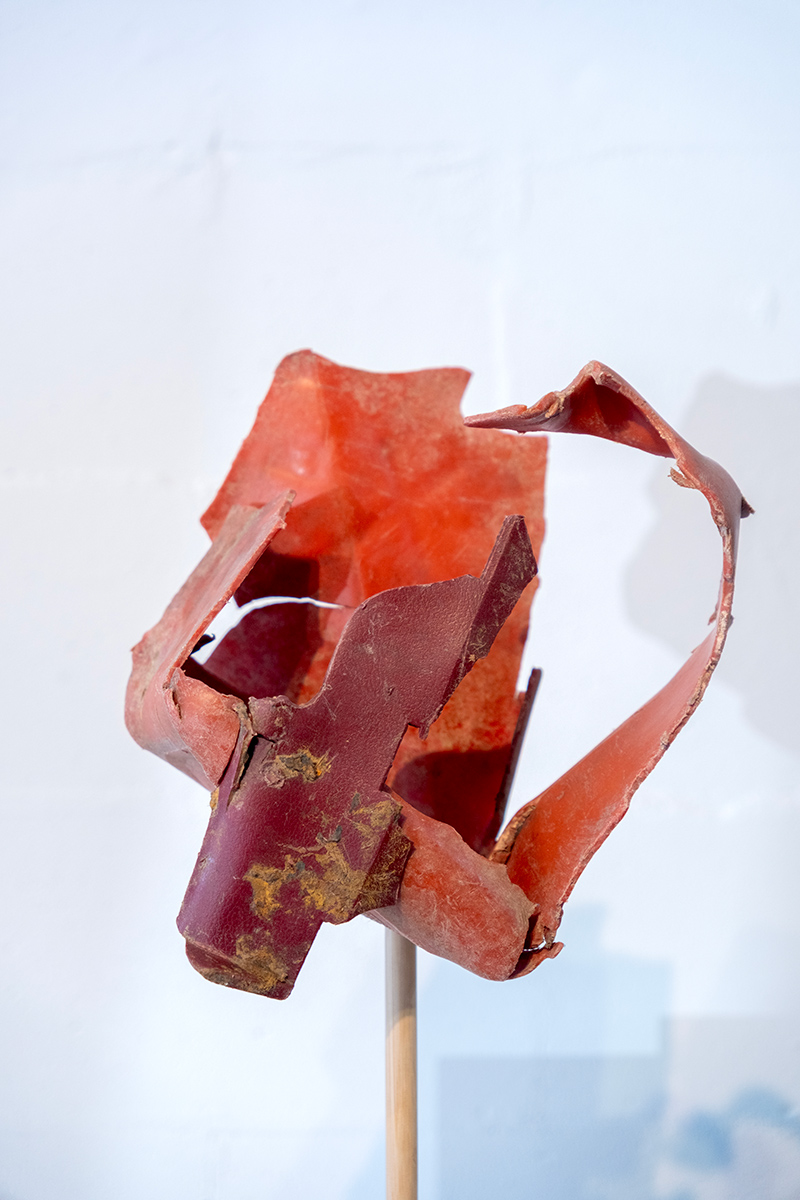
Sculptor and filmmaker Madeleine Eberhard is one of four artists featured in Stewards, a multimedia installation at Raw Space focused on environmental stewardship. Through her work, she hopes to highlight the urgent need to protect natural habitats and reduce the human-made debris harming our waterways.
Others in the show, on display through Oct. 3, are rancher, artist and poet Sean Sexton; painter and ceramicist Christina Bates; and painter and show curator Gabriela Hernandez.
“I’m passionate about conservation and stewardship. I’m not from here, but I do love Vero Beach and I don’t want it to get overdeveloped,” says Eberhard.
She began visiting her grandmother here at age 10. Her mother later also purchased a home here and when COVID hit, Eberhard came down from New Orleans and in 2021 decided to stay.
“And now here I am in a job 10 minutes from home, quality of life, going to the beach.”
Although Eberhard’s sculptures are primarily constructed from discarded plastics, their origins are not immediately apparent. Rather than paint the pieces she finds, she allows their colors, textures and weathered surfaces to speak for themselves.
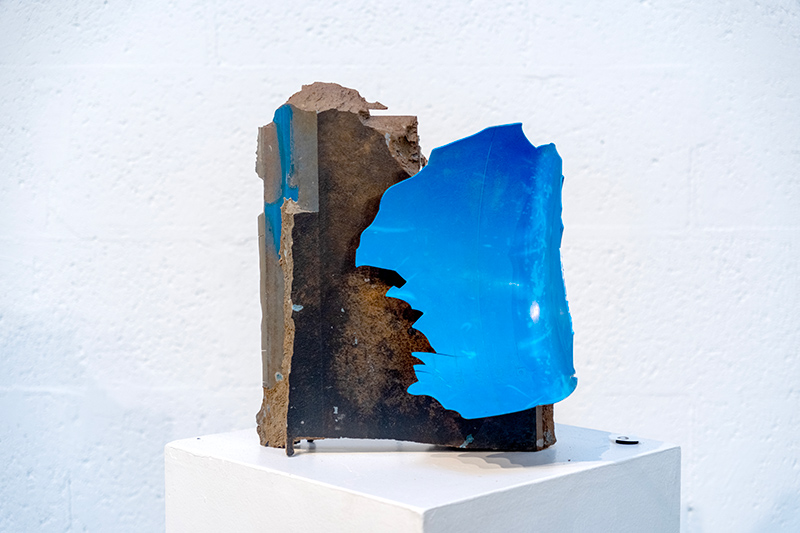
“I just clean the pieces. This one didn’t need anything, so it’s sitting just the way that it was,” says Eberhard, referencing “Broken Pottery,” which isn’t pottery at all.
“It was from the banks of the Mississippi River. It was half-submerged in mud and covered with dirt and stuff. After cleaning it off I found that it had this lovely patina on it and some cracking of the plastic,” she explains, guessing that it might have once been part of a barge buoy.
“The cracking and the patina tell a story of either that moment of impact or maybe just how long it’s been in the water. You know, the Mississippi travels from the top of our country all the way to the bottom. Forty-four million pounds of silt travel down it a day, and there’s a story in every piece that you find there.”
The tangle of “Mississippi Mud” brings together pieces of what was likely an oil can crushed in the water.
“It’s that relationship to water that’s so important with my pieces because they’ve shaped it. And I also feel like I’m freezing that decomposition in time. So by pulling it out of the water at that moment, you can see the story that’s maybe told,” says Eberhard.
“It’s our artifacts that we’re leaving behind. We now dig up what the Romans and ancient Egyptians left behind, but for us, this is what we’re leaving behind,” adding that our casual discards, particularly plastics, will remain on the planet for a very long time.
She cut in half and rearranged what was likely a plastic flower pot made to look like clay, for “Terra Cotta.” What now somewhat resembles a warrior’s helmet was discovered in the sand at the Fort Pierce Inlet. And the combined pieces of “Blue in Brown,” found on a Fort Pierce beach, consist of a rubbery substance that resembles wood and a jagged section of a bright blue plastic bucket.
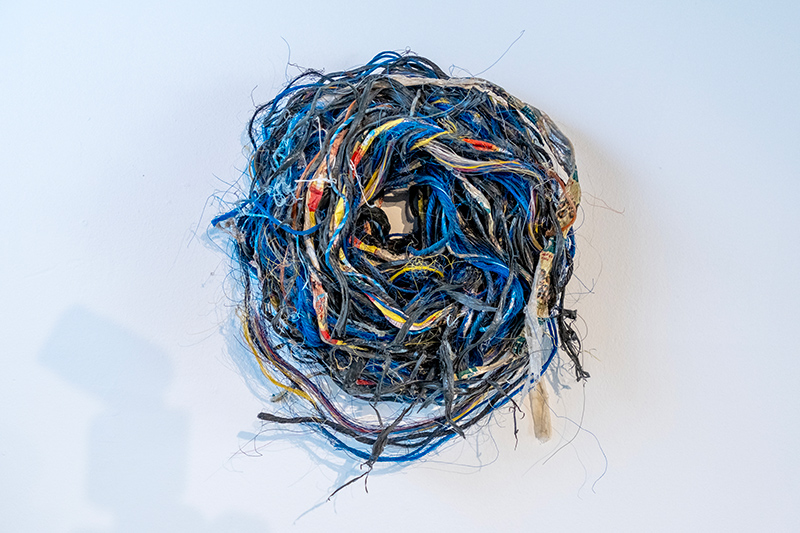
“Nesting Trio,” three woven wall sculptures, look for all the world like birds’ nests.
“This one was kind of fun. It’s from one of those huge barge ropes. They’re thick and they’re braided really tight. It was super heavy and really long. I found it and dragged it all the way home and cleaned it probably 15 times. It was so coated in mud. And then I started to pull it apart,” she explains.
“When I took the braids apart, I found that the rope itself was made from recycled material, like baby formula packaging, coffee wrappers and fishing line,” she says, noting that some companies use recycled materials to construct ropes for commercial boats.
“Over 70 of the plastic marine waste in our oceans is actually commercial fishing line. So, although this wasn’t commercial fishing line, it is made of that. But again, this one I sort of froze in time into beautiful little nests.”
A newer work, “Green Wave,” is an intriguing abstraction made from pieces she found in Florida and in New Orleans on the Mississippi River.
“This one really does a good job of showing that sort of dual composition between the plastics themselves and the shadows. And I think the shadows sort of speaks to that larger thing that I’m trying to do with my artwork, which is to say, there’s a shadow aspect to this waste.”
Originally from Michigan, Eberhard graduated in 2000 from Florida State Film School and worked in film production in Los Angeles, New York, Philadelphia, Denver and Montana.
She has worked at Ironside since 2020, initially helping to develop its video program, and for the past two years as director of brand.
For Stewards, she produced a film, also called “Stewards,” that she describes as “a little bit documentary and a little bit abstract.” It is shown on the wall at the gallery and on the homepage of the show’s website, which she also created.
“I try to find this sort of poetic middle ground where I’m shaping what a person says and using footage to find a liminal space. I feel like it’s going to be a lifelong passion of mine.”
The stunningly beautiful film focuses on various aspects of stewardship within our community that tie together its distinctive ecosystems.
The film begins and ends with Sexton on the pastoral ranch where he was born, and includes insights from county conservationists, Ocean Research & Conservation Association citizen scientists and Blue Cypress Lake residents.
“The film is all about people’s personal passions; not necessarily their projects. As a viewer, I wanted people to get inspired by these stewards and connect with them,” says Eberhard.
For more information, visit Stewards-IRC.org.
Photos by Joshua Kodis