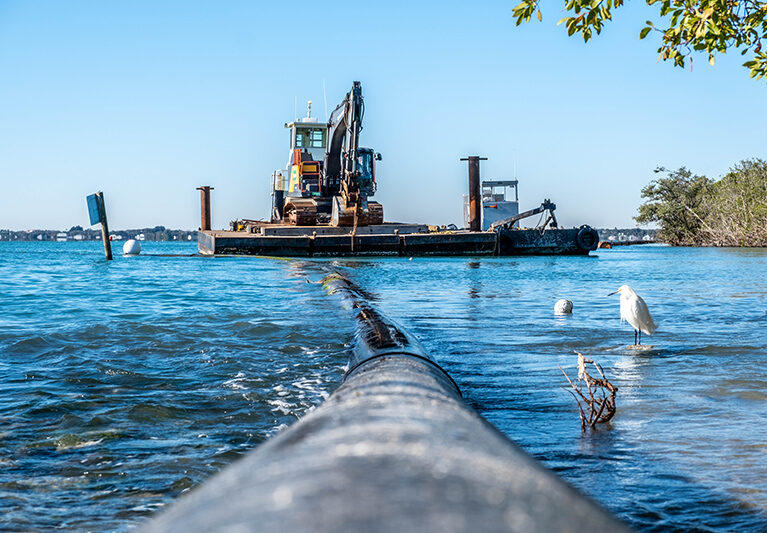
Despite months of delays, cost overruns and multiple mishaps, including a nasty nor’easter that washed away a chunk of beachfront in February, the Sebastian Inlet dredging project is finally finished.
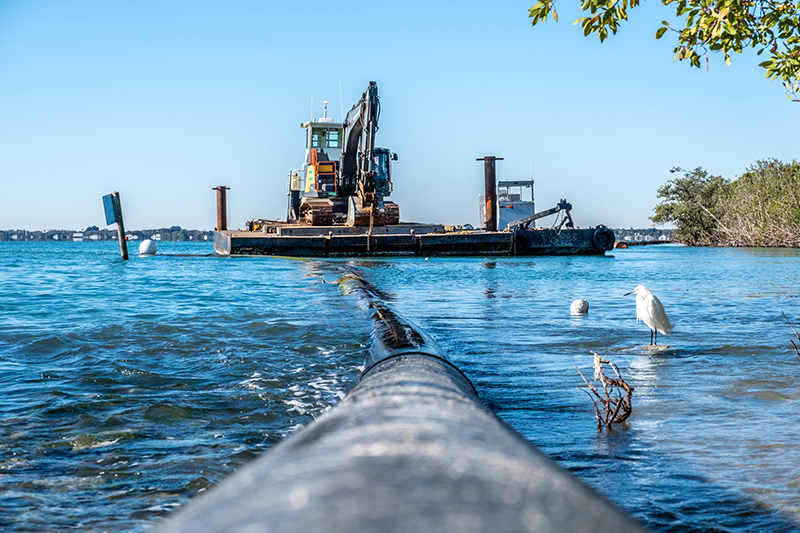
Workers with contractor ATL Diversified Industries completed dredging the channel and 42-acre sand trap on the southwest side of the inlet on April 26, just four days before the latest project completion deadline, according to Ed Garland, public information officer for the Sebastian Inlet District, the independent special taxing district that maintains the inlet.
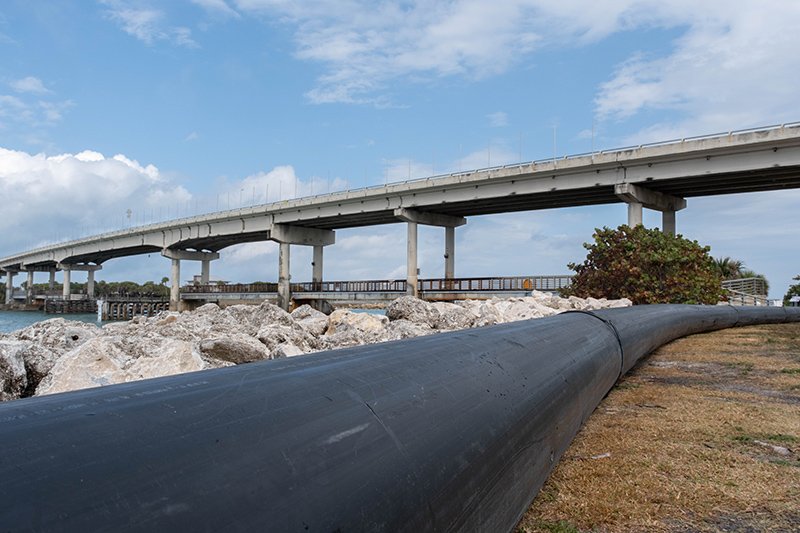
ATL’s contract ended on May 30, Garland said, just hours before contractors with the Florida Department of Transportation began work on the six-year, $101 million A1A bridge replacement project that would have halted dredging work, whether it was complete or not.
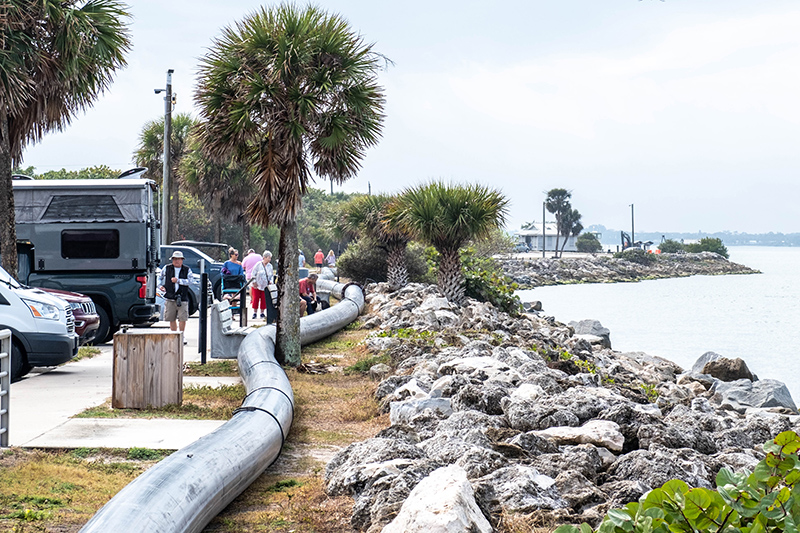
Because of the two stone jetties that frame the mouth of the inlet, sand that would normally be carried south by ocean currents gets blocked or swept into the inlet by the tide. Every five years or so, the District has to vacuum up the sand to maintain a depth of around 10.5 feet in the 150-foot-wide channel so that boats can enter and exit the inlet safely.
Sand and debris also settle in the sand trap, a large pit dynamited in the marl years ago, which needs to be dredged to a depth of between 12 feet and 17 feet. Most of the dredged material is then deposited on the beach south of the inlet to counteract erosion.
In all, more than 271,000 cubic yards of sand were placed on the beach during the project, including about 90,000 cubic yards of mined sand that was trucked in last year, Garland said.
This volume satisfies the Memorandum of Understanding the district has with Indian River County, which requires the District to bypass an average of at least 75,000 cubic yards of beach compatible sand per year, he said.
The hope is that the inlet won’t need to be dredged again until bridge construction is completed in the spring of 2032.
The final cost of dredging was $8,529,239, which is about $1.28 million more than the original contracted cost.
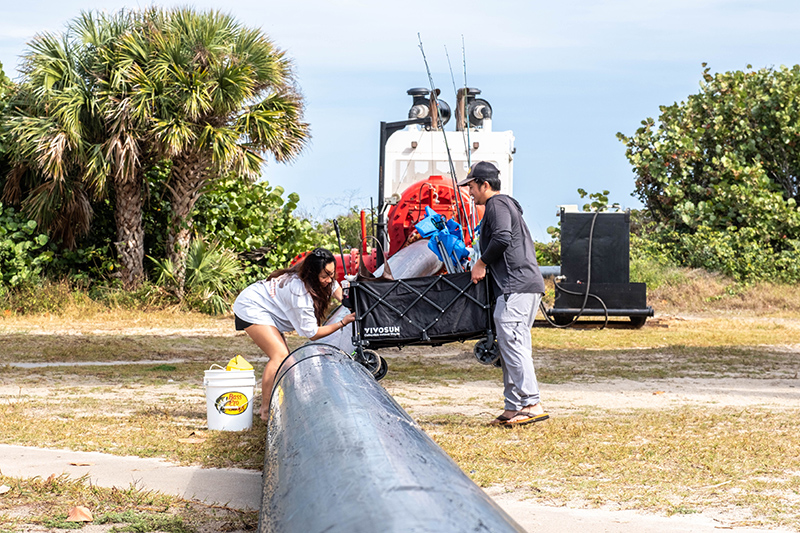
Problems plagued the project from the start, beginning in January 2025. The first delay came when ATL discovered that the wrong dredging pipe had been delivered and would have to be reordered. Shortly after the right-size pipe arrived, a fire broke out on a dredge platform, prompting another delay while crews waited for a mechanic to be flown in from California to repair damaged equipment.
Then, late last March, at least three boats banged into dredging pipe floating in the channel near the surface, leading to another delay while ATL anchored the pipe to the bottom of the channel and added caution signs and markers.
Last April, concerned that ATL would not be able to finish dredging by the time sea turtle nesting season was in full swing in the summer of 2025, District commissioners extended ATL’s contract to give the company time to come up with a plan to finish the project.
Over the next several months, lawyers for ATL and the district hammered out an agreement by which ATL would continue the dredging project in the 2025-2026 season for an additional fee of $650,000. The district also had to cover extra funding for legal fees, consulting fees and other expenses related to the extended contract.
ATL restarted dredging last November, but the string of bad luck was not over. An early February nor-easter plunged temperatures below freezing for several days and churned up the surf at beaches near the inlet. The strong surf eroded about five feet of an already narrow beachfront south of the inlet and dislodged a long section of pipe that carried sand to the beach.
The district agreed to a two-month extension and $48,313 in additional payments so ATL could rebuild the beach and anchor the pipe with 20-foot pilings sunk into the sand. The new extension also meant additional fees paid to engineers overseeing the project.
The contractor was able to complete beach repairs and finally finish dredging within the extension period.
One piece of good news for district taxpayers: Despite all the delays, half of the final cost of the star-crossed project, including the cost overruns, will be reimbursed by the Florida Department of Environmental Protection’s Beach Management Funding Assistance Program, Garland said, noting that the District has already received about $2,834,800 in reimbursements from the fund.
Because dredging and sand placement continued both years into turtle nesting season, which officially begins on March 1, five nests had to be relocated away from the project area last year, and two had to be relocated this year, Garland said.
Photos by Joshua Kodis