You probably expected that you wouldn’t be able to run as fast or jump as high as you aged, but did you expect that your ability to learn, remember and solve problems would slow down too?
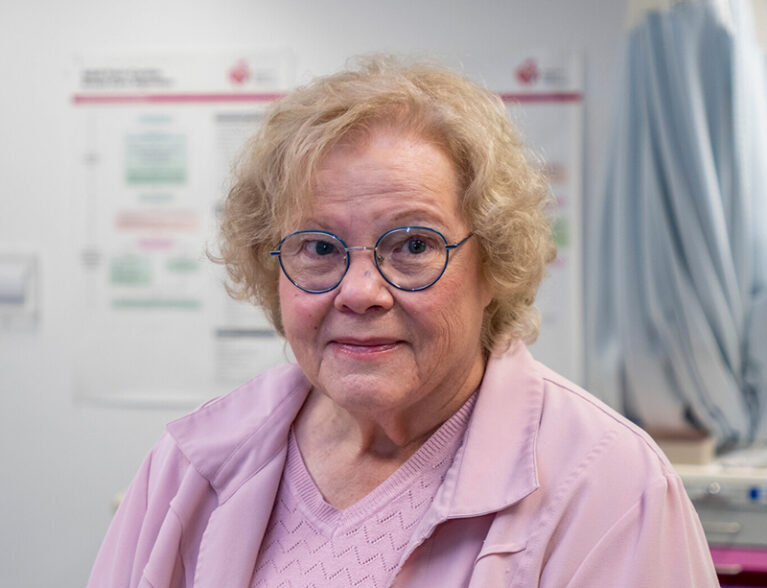
Susan Rivers, MSN, RN, says most people don’t notice changes in their 40s, but by their 50s many begin to feel like they’re not quite as sharp as they were. In one’s 60s and 70s, multitasking often gets noticeably more difficult.
“Things like driving while carrying on a conversation may not feel as comfortable for you,” she says.
“The culprit is loss of brain volume,” Rivers explains. “As you age, your brain changes in understated but measurable ways. The brain’s overall size begins to shrink when you’re in your 30s or 40s, and the rate of shrinkage increases once you reach age 60.
“The prefrontal cortex (PFC) is where most of the shrinkage starts.”
Cleveland Clinic states that the PFC guides many everyday functions, including
- Attention: Helps you stay focused and ignore distractions.
- Decision-making: Helps you think through choices and direct your behavior.
- Emotions: Allows you to understand feelings, show empathy and respond to rewards or punishments.
- Goal setting: Learns from past experiences to manage your actions instead of acting on impulse.
- Self-control: Stops you from reacting automatically and lets you choose better options.
- Working memory: Holds information for a short time so you can use it right away.
“It’s pretty much inevitable,” explains Rivers. “It’s part of our DNA.”
But she says there’s good news, too, about effects that result from changes in your brain. “We’ve found that things like increased ability to control emotions and a tendency to not get thrown off course occur in the majority of people.”
The National Institutes of Health added some additional areas of improvement:
- Cognitive skills that require constant practice, such as understanding and using language, are usually well preserved. Researchers have wondered whether some cognitive skills may actually improve with age.
- Older people tend to be better at ignoring distractions than younger participants.
Stanford Medicine’s Memory Disorders Division says that when someone comes into its clinic and says they’re having memory problems, doctors ask about medications, psychiatric problems like anxiety and depression, and sleep. There are a lot of factors that can affect memory and that are not necessarily related to aging.
Rivers explains that the majority of people continue to make some new brain cells as they age, though the number and type differ from one person to another.
“Our lifestyles have a definite effect on this process,” she says.
“What’s good for your heart is good for your brain. Don’t smoke. Eat the rainbow and sleep 7-to-8 hours a night. The later hours of sleep are when the hormones that help keep our brains healthy are secreted.
“Physical activity increases blood flow to the brain, which helps in the development of new cells.
The American Brain Foundation says that while brains can age faster than one’s chronological age, they can also age slower. It’s possible to be of advanced physical age and have a brain that’s healthier than average.
In fact, most of us know older people in their 70s, 80s or even 90s whose minds are clear and sharp, so loss of concentration and memory power is not universal.
There are many reasons why some people’s brains age faster than others, including disease, genetic history, environmental factors and lifestyle, some of which are out of one’s control.
Here are some things the American Brain Foundation recommends for everyone:
- Try to manage stress. Chronic stress has negative effects on many aspects of mental and physical health, including the immune and cardiovascular systems. It robs us of restorative rest, and it reduces our ability to focus and make decisions.
- Prioritize physical health.
- Practice cognitive activities and spend time with others. Engaging in activities like solving puzzles, learning new skills, and reading help to keep your brain’s cognitive abilities in good shape. It’s important to maintain friendships and other social connections.
- Get regular check-ups. Make sure to see a doctor for preventative check-ups. Be open about how your body and mind are adjusting to life as you get older. Provide thorough information and complete the recommended health screenings.
Susan Rivers, MSN, RN, has taught nursing at Keiser University for more than 20 years. She has a BS in nursing from the Medical College of Georgia, and an MS in nursing from the University of Birmingham. She has certifications as a Critical Care Registered Nurse and as a Neuroscience Registered Nurse. Keiser University has locations in Melbourne and St. Lucie West.