Although the first sight of wrinkles is the biggest fear most people have about aging skin, healthy skin is more than just surface deep. It reflects your overall health.
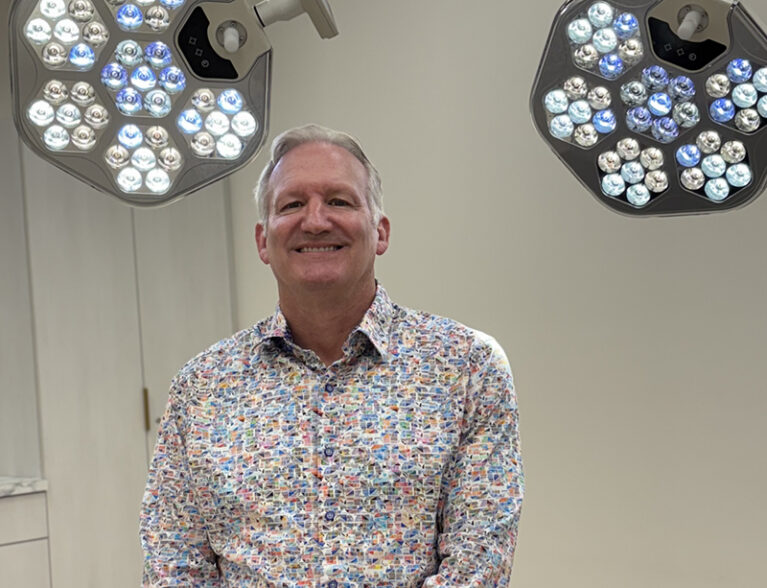
Dr. S. Darrell Lee, a Mayo Clinic-educated plastic surgeon who owns Lee Plastic Surgery & Medical Spa, says, “Biologically, skin is an organ that simply wears down over time. By the time you’re 65, the skin has lost about 20 percent of its thickness, making it more fragile and less effective as a barrier.
“While issues can range from a minor annoyance like dry skin to more serious concerns like skin cancer, the vast majority of seniors deal with significant changes to their skin’s health and appearance.”
Harvard Health Publishing states that as we grow older, our skin also becomes thinner and more delicate, making it more vulnerable to damage.
“Several biological shifts are happening simultaneously as we age,” explains Dr. Lee, “making skin issues ‘the norm’ for seniors.”
He says they include:
- Reduced oil production: Sebaceous glands produce less oil, leading to chronic dryness.
- Loss of elasticity: Collagen and elastin production drop, causing the skin to sag and tear more easily.
- Thinning of the “fat pad”: The subcutaneous fat layer thins out, bringing less cushioning and less insulation (which is why many seniors feel cold easily).
- Slower cell turnover: It takes longer for the skin to heal from even a tiny scratch.
Older people tend to take more medications. Because the skin is your body’s largest organ and is highly vascular (full of blood vessels), it’s often the first place to “leak” the news that your internal chemistry has changed.
“Medication-induced skin changes can range from a slight glow to significant irritation.”
Dr. Lee offers a breakdown of the most common ways medications mess with your “wrapper.”
- Photosensitivity (the “sun magnet” effect). Some medications react to UV light, causing severe sunburn in minutes, not hours. Common culprits include antibiotics (like Doxycycline), certain blood pressure meds (Hydrochlorothiazide), and retinoids. Results include rashes, “hot” skin, or blistering even on a cloudy day.
- Thinning and easy bruising. Particularly common in those on long-term medical treatments. Common culprits include corticosteroids (like Prednisone) and blood thinners (like Warfarin or aspirin). Skin becomes “paper-like.” Even a minor bump can cause a large purple bruise.
- Chronic dryness and itching (pruritus). Some drugs strip the skin of its natural lipid barrier or interfere with oil production. Common culprits include statins (cholesterol meds), diuretics (water pills), and Isotretinoin (Accutane). Results include flaky, tight or “crepey” skin that itches constantly, especially at night.
- Pigmentation changes. Some medications change the color of your skin or cause “stains” from inside out. Common culprits include certain antimalarials, chemotherapy drugs, and even some heart medications (like Amiodarone). The result is blue-gray tinting, dark patches (melasma), or darkening of existing scars.
Mayo Clinic says that by age 70, nearly everyone experiences dry, itchy skin – the most frequent skin complaint in older adults.
Dr. Lee says these are among the most common causes of itching:
1. Environmental and external triggers like low humidity. Cold winter air or dry desert climates suck moisture right out of your skin. Artificial heat like central heating, space heaters, and wood-burning stoves significantly drop indoor humidity levels. Long hot showers feel great, but they act like a solvent, melting away natural oils your skin needs to stay hydrated. Frequent swimming in chlorinated pools can chemically strip the skin’s surface.
2. Lifestyle habits and irritants. Harsh deodorant or antibacterial soaps are often too alkaline for your skin’s natural pH, “over-cleaning” it into a state of dryness. Synthetic scents in lotions or laundry detergents are common “contact allergens” that cause itching. If your job requires frequent hand-washing (like healthcare or food service), your skin never has a chance to rebuild its barrier. Deficiencies in Vitamin D, Vitamin A, Iron or Zinc can manifest as chronic dry, flaky skin.
3. Biological and medical factors. As we age, oil (sebum) production drops significantly. By age 65, most people have naturally drier skin. Eczema (atopic dermatitis) and psoriasis are frequent conditions, but even a mild case of contact dermatitis from a new watch or ring can cause localized itching.
4. Systemic Issues: Chronic itching can be a “smoke signal” for internal issues like thyroid disease (both overactive and underactive). Diabetes or high blood sugar can cause dehydration and poor circulation, leading to itchy legs and feet. If your kidneys and liver aren’t filtering waste properly, toxins can build up in the bloodstream and cause intense, “unscratchable” itching.
Dr. Lee explains that dermatitis, keratoses, cherry angiomas, and skin tags are very common as we age. “Dermatitis is a general term for skin inflammation. Essentially, it’s your immune system overreacting to a trigger.
“There are three types of dermatitis: atopic dermatitis (or eczema), contact dermatitis and seborrheic dermatitis.
“Keratoses refers to an overgrowth of keratin (the protein in your skin). There are two main types: seborrheic keratoses (which are benign), and actinic keratoses, which are pre-cancerous.
“Keratosis Pilaris are the small, harmless bumps resembling chicken skin that are caused by a buildup of keratin that plugs the hair follicle.
“Cherry angiomas are bright red, circular spots made up of clusters of tiny blood vessels (capillaries) near the surface of the skin.”
The basics of skin cancer remain the same, but it actually behaves differently as we age. Dr. Lee says, “For seniors, the disease is often more aggressive and harder to spot due to ‘background’ skin aging. Treatment requires a much more tailored approach.
“In young people, a new spot is easy to see because their skin is usually clear. In seniors, symptoms are often masked by existing ‘wisdom spots,’ hiding among seborrheic keratoses, age spots or cherry angiomas.
“For older adults, a symptom is often a texture change – a spot that feels like sandpaper or that won’t heal, rather than just a dark mole. Seniors are statistically more likely to have tumors that ‘ulcerate’ (break open or bleed), often a sign of a more aggressive growth.”
He adds, “For older adults, the cause is usually decades of daily sun exposure, leading to basal cell and squamous cell carcinomas, which pop up on ‘weathered’ areas like scalp, ears, and tops of hands.
“In younger adults, skin cancer (especially melanoma) is often linked to intense, blistering sunburns or tanning bed use.
“Skin cancer isn’t just more common in seniors; it’s often more dangerous due to biological changes, like thinning skin, stiffening skin tissue, and declining immunity.”
Regardless of your age, the A-B-C-D-E Rule still applies when you’re checking for skin cancer:
- Asymmetry (lopsided shapes)
- Border (ragged edges)
- Color (multiple shades)
- Diameter (larger than a pencil eraser)
- Evolving (Most Important for Seniors: Any spot that is changing, itching or bleeding).
Like many other areas of medicine, new tools have evolved to aid in treatment. Dr. Lee says newer IPL (Intense Pulsed Light) systems are used specifically to target red hemoglobin in cherry angiomas.
“CO2 shines in 2026 when used to treat pre-cancerous actinic keratoses. It uses two wavelengths at once, one to clear the visible rough patch and the second to stimulate deep collagen to help the body ‘push out’ damaged, pre-cancerous cells that haven’t surfaced yet.”
Dr. S. Darrell Lee graduated from New York Medical College, where he also completed his internship and general surgery residency and earned his board certification in general surgery. He completed a fellowship in plastic surgery at Mayo Clinic and obtained board certification in plastic surgery from the American Board of Plastic Surgery. Lee Plastic Surgery & Medical Spa is located at 220 NW Peacock Blvd., Port St. Lucie. For more information, call 772-291-5572.