High cholesterol is one of the biggest health concerns for both men and women, especially as people age. Because this condition affects millions of people, there are many questions – and misconceptions – about its causes and management.
Although there’s no shortage of reading material about high cholesterol, there is, unfortunately, lots of misinformation about causes, effects and treatments.
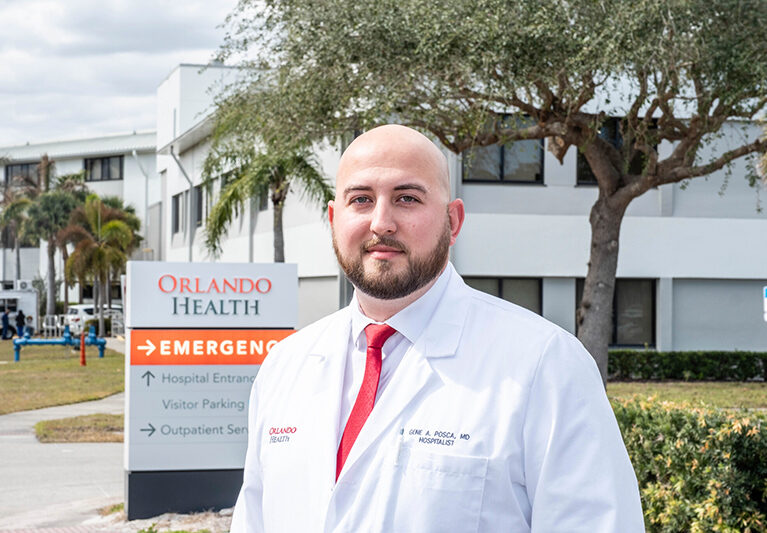
Gene Posca, MD, a hospitalist at Orlando Health Melbourne Hospital, sorts fact from fiction in regard to blood cholesterol.
“Cholesterol is one piece of the puzzle of what constitutes risk factors in heart health,” he says.
“Age, gender, family history and blood pressure also play a part.
“However, having said that, managing cholesterol levels plays a very important part in maximizing your health.”
Coconut oil, which raises HDL (good) cholesterol, is touted by many as a healthy choice compared to other cooking oils, but Dr. Posca says. “There are health risks you should know about if you consume or cook with coconut oil. It is full of saturated fat, which can raise your LDL (bad) cholesterol and your chances of cardiovascular disease.
“It also tends to raise inflammatory markers, which detect and monitor generalized inflammation, infections, or autoimmune conditions in the body.”
Mayo Clinic concurs, stating that butter, lard and coconut oil all contain saturated fat. Dozens of reputable studies link saturated fats with increased bad cholesterol levels and higher risk of heart disease.
It’s a common misconception that only vigorous exercise has a positive effect on cholesterol and heart health, but Dr. Posca disputes that.
“There are many forms of exercise that benefit not just your cholesterol level, but also your general health. While vigorous exercise like long-distance running is very beneficial, so is yoga – interestingly, especially for men,” he says.
“The relaxation qualities of yoga are not only good for heart health, but it’s one of the most effective ways of lowering depression for men. Women will have the best overall results from weightlifting.”
BMJ Group, a global healthcare knowledge provider, states that although walking and jogging were effective for lowering cholesterol for both men and women, strength training was more effective for women, and yoga or qigong more effective for men.
Another cholesterol myth is that the condition only affects older people, but Dr. Posca says that if you don’t get your cholesterol levels checked until you’re middle-aged, you may be in for a big surprise. “By middle age, a lot of damage may be done.
“Atherosclerosis, a hardening of your arteries from plaque building up gradually inside them, can actually begin as early as your teens,” he says.
“The sooner you have a problem diagnosed – I recommend starting to get checked when you’re in your 20s – the easier it will be to control it. And while it’s true that there is a strong genetic connection, the eating habits and sedentary lifestyle we practice today can definitely increase your cholesterol numbers, too.”
Cleveland Clinic explains that plaque consists of fat, cholesterol and other substances. This plaque buildup limits blood flow. You may not have symptoms of atherosclerosis until you have complications like a heart attack or stroke.
Are you under the misconception that only those who are overweight or obese have high cholesterol? Not true, says Dr. Posca. “Anyone can have high LDL. The genetic predilection is present even if you’re slender.”
The American Heart Association (AHA) says it’s common to think that thin people don’t have high cholesterol. While overweight people are more likely to have it, those who are slender can be affected as well. AHA’s advice is to have your cholesterol checked regularly regardless of your weight, physical activity and diet.
Once upon a time, high cholesterol was considered a “man’s” disease. Medical research has shown that not to be the case, but misconceptions persist.
“The risks associated with high cholesterol are somewhat delayed in women,” says Dr. Posca. A 40-year-old man might have similar risk factors as a 50-year-old woman.
“This can lead women to having missed diagnoses. But as we’ve learned, by the time a woman goes through menopause, her risk factors will have caught up with a man of the same age.”
Mayo Clinic says that after menopause, women face an increased risk of cardiovascular disease.
The hormonal shifts associated with menopause, particularly the decline in estrogen, contribute to this risk. Estrogen has a protective effect against heart disease, which diminishes after menopause, leading to heightened cardiovascular risk.
Dr. Posca cautions that if you’re making healthy changes to your diet, there’s one thing that’s often overlooked. “Most people think that fatty foods in the diet contribute to raising your cholesterol.
“That’s true, but a carbohydrate-heavy diet can cause high LDL, too. Excess sugar and carbohydrate consumption can cause blood sugar levels to rise. The body will turn blood sugar into glycogen and if the amount is too high, the residual blood sugar will be stored as triglycerides. Increased triglycerides lead to an increase in LDL cholesterol.”
Gene A. Posca, MD, is a hospitalist at Orlando Health Melbourne Hospital. He received B.S. degrees in molecular biology and biochemistry from SUNY Albany, New York, an MD degree from American University in St. Martin, and participated in the internal medicine residency and chief residency curricula at Florida Atlantic University. Orlando Health Melbourne Hospital is located at 250 N. Wickham Road, Melbourne.