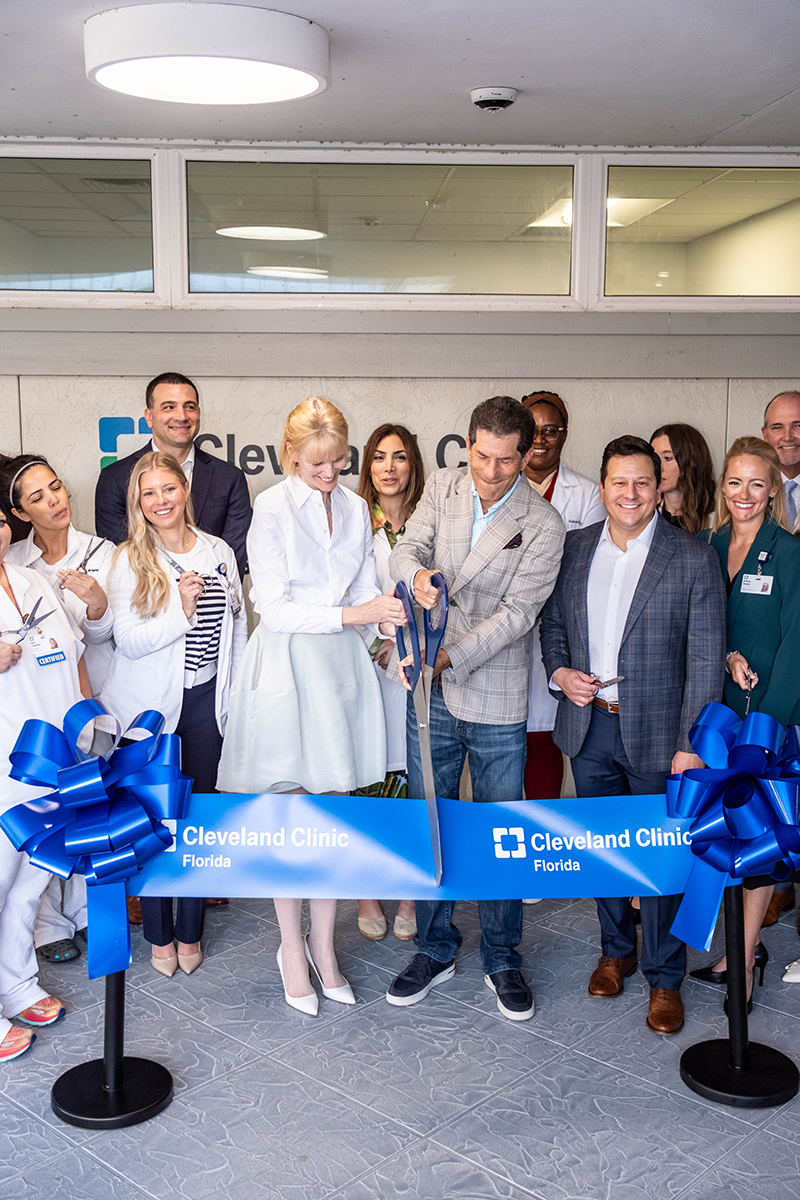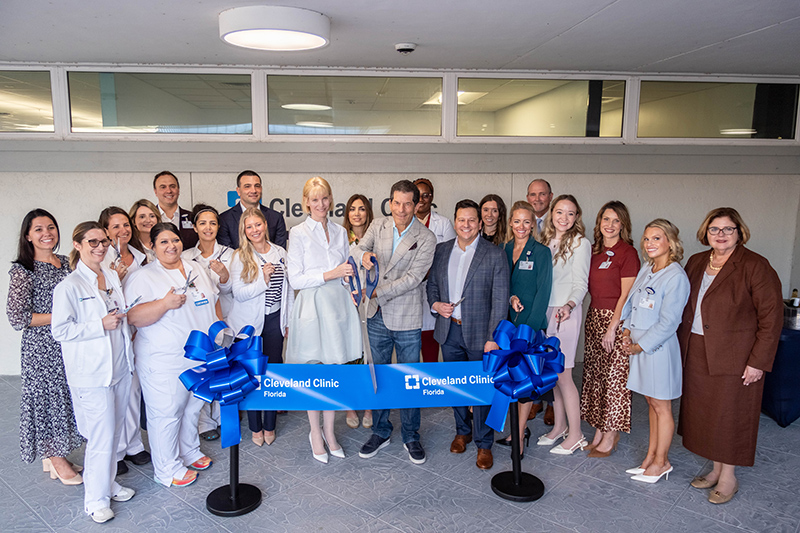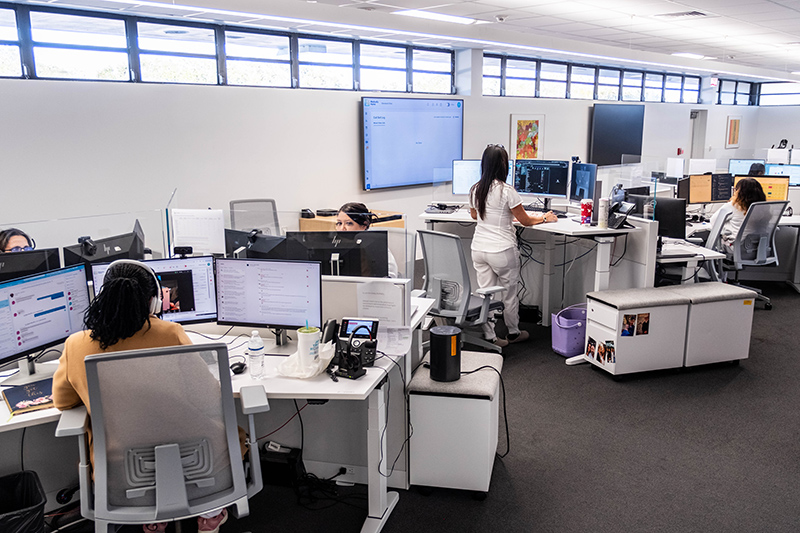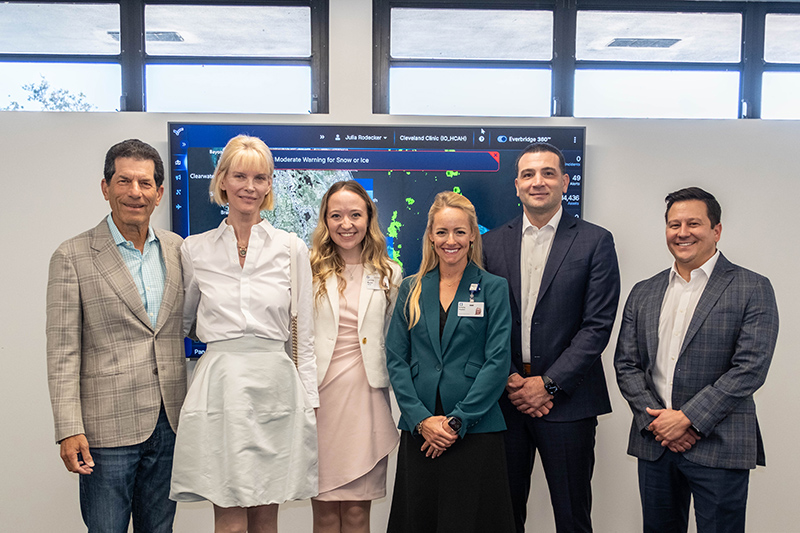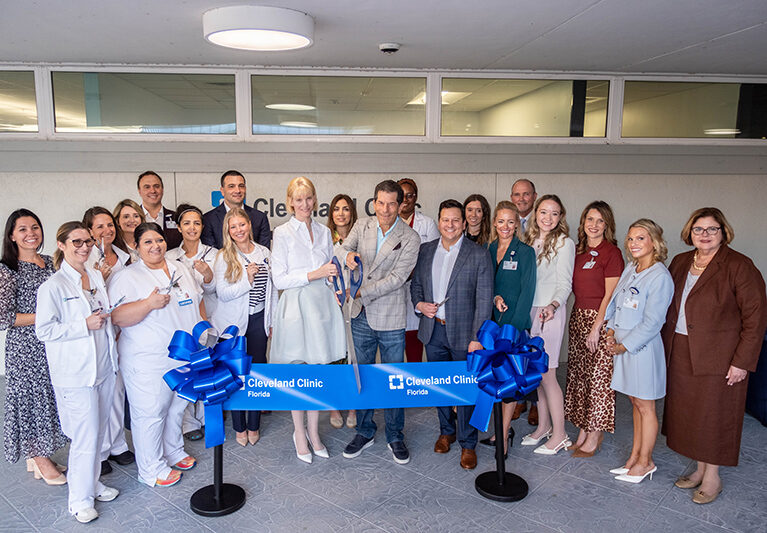
Cleveland Clinic marked an exciting milestone last week with the opening of the Rubinstein Family Hospital Care at Home Suite, a high-tech command center located in Vero Beach.
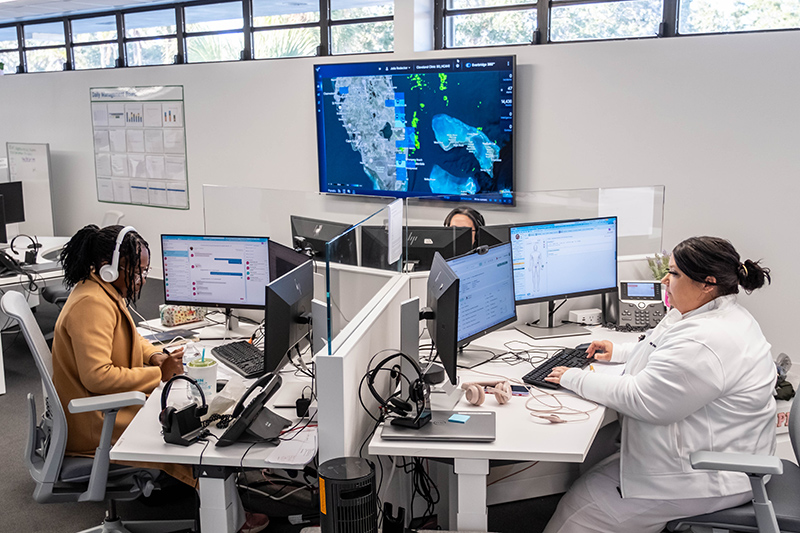
The suite serves as the hub for all Cleveland Clinic Hospital Care at Home programs. The futuristic service is available in Vero Beach, all other Cleveland Clinic locations in Florida, and at two hospitals in Ohio just added to the network. From this centralized location, patients in both states are monitored 24 hours a day by specially trained doctors and nurses.
To most people, the idea sounds almost too good to be true – hospital-level care without the hospital. No beeping monitors down the hall, no roommate behind a curtain, no waiting for a nurse juggling a dozen call lights. Just your own bed, your own kitchen, and a medical team watching over you (virtually and in person) around the clock.
It was a little more than four years ago that Cleveland Clinic began reimagining what hospital care could look like in the future. Instead of asking how to build bigger buildings, hospital leaders asked a more radical question: What if the hospital came to the patient?
The result was a sustainable healthcare delivery model that allows patients to receive acute hospital care in the comfort of their own homes. In April 2023, Cleveland Clinic launched its first Hospital Care at Home program at Indian River Hospital here in Vero Beach. The results have exceeded expectations.
More than 5,000 acute care patients have been admitted into the program through Florida’s Cleveland Clinic hospitals, with more than 100,000 home visits completed.
“While you are at home, you are actually under a hospital admission, and we are caring for you the same way we would care for you in our brick-and-mortar hospital,” said Dr. Richard Rothman, vice president and chief medical officer at Cleveland Clinic Indian River Hospital.
Delivering hospital-level care beyond hospital walls requires a carefully orchestrated system.
According to Dr. Rothman, the program rests on three essential pillars.
The first is the new command center, which houses physicians, pharmacists, nurses and care coordinators.
The second pillar is the latest technology, including the electronic medical record and specialized software that connects patients in their homes to the command center through a tablet. This digital tether allows clinicians to monitor patients continuously, respond to concerns in real time, and coordinate care as seamlessly as possible.
The third pillar is the clinical service network – local healthcare professionals who physically go into patients’ homes to deliver care. When an order is placed for medication, physical therapy, lab work or another service, the software routes it to the clinical service provider closest to the patient.
In many cases, services traditionally confined to the hospital, such as chest X-rays, echocardiograms and ultrasounds, can also be performed right at home. Patients are additionally “rounded on” virtually by nurses and Cleveland Clinic physicians throughout the day.
The new command center “was made possible by a $2 million gift from Vero Beach residents John Rubinstein and Karen Richardson,” Dr. Rothman said. “John is an electrical engineer best known for his instrumental role in the development of both the iMac and the iPod.”
Their generosity is rooted in a deep appreciation for the power of technology to change lives for the better.
“Not unlike how the iPod enabled you to listen to music wherever you were, this latest set of technologies enables hospital-level care in your home environment, which Karen and I think is really cool,” Rubinstein said.
“Delivering better care, enabled by technology, at a better price point is something that makes sense to both of us,” Richardson added. “As technology people, we’re always looking for disruptive change – either in capabilities, economics or both.”
After more than 5,000 admissions, Dr. Rothman and his team have identified clear patterns in the types of patients who benefit most from hospital care at home. These include individuals with common acute and chronic conditions such as heart failure, pulmonary disease, pneumonia, influenza, diverticulitis and cellulitis. Even some patients with advanced cancer – many of whom have already spent significant time in hospitals for chemotherapy and other treatments – can safely receive acute care at home.
One of the most compelling findings has been a lower risk of hospital readmission among patients treated at home compared to those admitted for the same conditions in traditional hospital settings.
“Our 30-day readmission rate is 8.1 percent, which is significantly lower than in our brick-and-mortar hospitals,” Dr. Rothman said. “We’ve also avoided 12,754 traditional hospital stays.”
He believes the home environment itself plays a major role in these outcomes. “Patients are under less pressure at home. They can physically move around more, and we’re able to individualize care plans in ways that are harder to do in a hospital setting.”
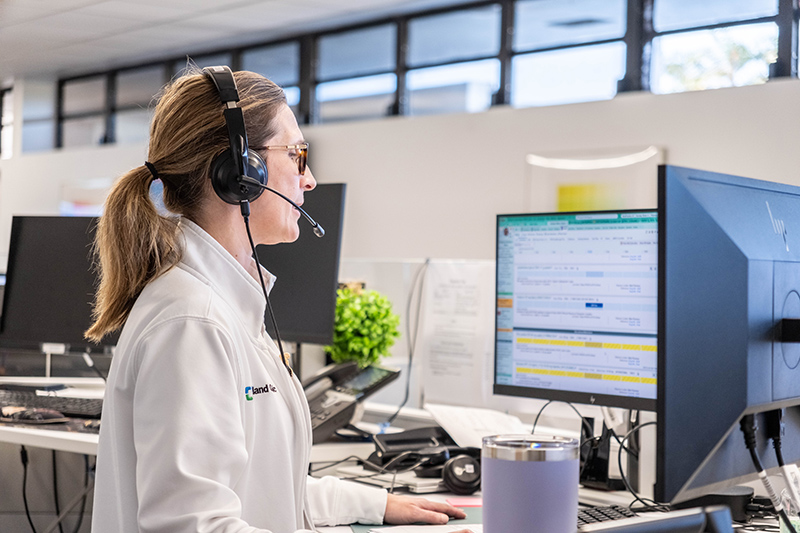
The model also transforms the nursing experience. Rather than running from room to room on a busy hospital ward, nurses in the command center focus entirely on patient interaction and response. Seated at their stations, they monitor patients continuously, communicate with family members assisting in care, and respond to calls in real time. Calls to the command center are answered in under a minute, according to Rothman, with virtual care beginning immediately.
Beyond improving patient care, the program has delivered a significant economic benefit to the Vero Beach community. The command center operates 24 hours a day, seven days a week, staffed by local nurses, physicians, pharmacists, advanced practice providers and care coordinators.
More than 100 professional jobs have already been created locally, with more expected as the program continues to expand.
Cleveland Clinic is also studying the model through a research consortium to better understand outcomes and identify opportunities for improvement.
“Only about 25 percent of our patients qualify for hospital care at home,” Dr. Rothman said. “The rest require ICU-level care or hospital admission for procedures such as cardiac catheterization, heart attack treatment, or surgery. But what we’re learning here helps us optimize care for all hospitalized patients.”
Patient eligibility is determined by a thorough evaluation in either the emergency department or a hospital medical-surgical inpatient unit. An attending physician must determine that the patient does not require an acute procedure or ICU-level care. The home itself must also be deemed suitable.
Once approved, a nurse escorts the patient home and provides instruction on using the tablet that connects directly to the command center. From there, patients have immediate access to nurses and clinicians, along with virtual visits from cardiologists, pulmonologists and other specialists as needed, as well as home visits.
In an era when healthcare often feels rushed, impersonal and confined by walls, Cleveland Clinic’s Hospital Care at Home program is quietly redefining what it means to be hospitalized. For thousands of patients, recovery no longer begins with a discharge, it begins at home, where healing may be most natural of all.
Visit Cleveland Clinic’s Hospital Care at Home page for more information: https://my.clevelandclinic.org/florida/departments/medicine/depts/hospital-care-at-home
Photos by Joshua Kodis