The number of wound care centers worldwide is booming.
Amerex Clinical Research, a full-service, global contract research organization, explains that the trends driving growth include the rising prevalence of diabetes and obesity, an aging global population, technological innovation in healthcare, and a shift to outpatient and home-based care.
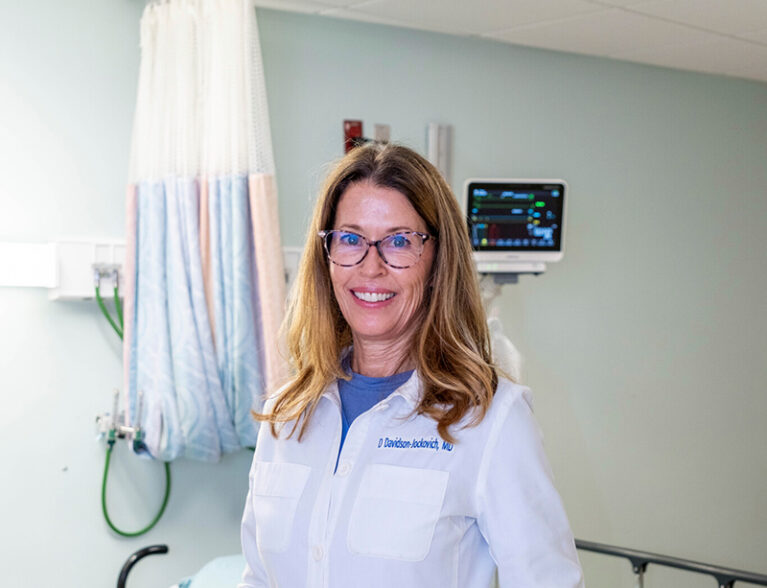
Dr. Dawn Davidson-Jockovich, medical director, Orlando Health Sebastian River Hospital Wound Care Center, says the most common thing bringing people to a center are chronic ulcers.
“They are usually diabetes-related and most often on the legs. They probably have already been seen by a medical professional but need more work.
“Wound care centers are staffed with specialized providers who help patients with chronic wounds heal as quickly as possible,” Dr. Davidson-Jockovich adds.
The National Library of Medicine lists the following common types of non-healing wounds:
- Pressure sores
- Surgical wounds
- Radiation sores
- Foot ulcers due to diabetes, poor blood flow, chronic bone infection (osteomyelitis), or swollen legs
NLM adds that certain wounds may not heal well due to: - Diabetes
- Poor circulation due to damage to arteries or veins
- Nerve damage
- Bone infection
- Being inactive or immobile
- Weak immune system
- Poor nutrition
- Excess alcohol use
- Smoking
- Having a foreign body (such as a piece of wood or broken glass) in the wound
Dr. Davidson-Jockovich explains that most of the wounds they treat are stuck in what she calls the second stage of healing.
“Some healing has taken place, but the wound is not progressing to the next stage.”
She says that the staff at a wound care center doesn’t just take care of wounds. “They’re addressing the patient’s overall health needs. Are they smoking, exercising, keeping the leg elevated, if necessary?”
“They also help patients understand not only why the wound has occurred, but why it has gotten worse.”
Of special concern are lacerations or other wounds that occur in the water. “If a person is immuno-compromised, they must be very careful to treat it promptly,” says Dr. Davidson-Jockovich. “A wet wound that stays wet is very likely to get infected.”
Many harmful organisms can at times be found in lakes, rivers, inlets, estuaries and the coastal ocean. Some bacteria may cause destructive soft-tissue infections and other illnesses.
Most soft tissue wound infections occur with conditions such as poorly controlled diabetes or low immunity. However, sometimes otherwise healthy people can develop a skin infection after skin injury and exposure to natural bodies of water.
“Time is of the essence for a person who is a diabetic and has a wound on his or her leg. If it hasn’t healed in one to two weeks, you need to seek treatment at a wound care center,” advises Dr. Davidson-Jockovich.
“The team that will treat you may include an infectious disease doctor, a vascular surgeon, a dermatologist and an emergency room doctor.
“Other reasons you should visit a wound care center within that two-week window are if you have poor circulation or have trouble managing your care on your own.
“If the patient develops pressure ulcers – also called bedsores – they need to be treated quickly because it doesn’t take them long to get out of hand. The earlier a wound is seen, the better the chance that the treatment will work,” adds Dr. Davidson-Jockovich.
Several new treatments and tools are available to help wound care centers more effectively treat wounds. “Vacuum-assisted closure is a method of decreasing air pressure around a wound to assist the healing,” says Dr. Davidson-Jockovich. “We also use bio-engineered skin substitutes, particularly for vascular and diabetic wounds.”
Multilayer compression wraps, total contact casts, and negative pressure wound therapy are other common therapies, according to University of Rochester Medical Center.
Hyperbaric Oxygen Therapy, during which you breathe 100 percent oxygen inside a pressurized chamber, quickly increasing the concentration of oxygen in the bloodstream, where it is delivered to a patient’s wound site for faster healing.
“What happens at a wound care center is teamwork at its finest – but the patient is the most important team member,” concludes Dr. Davidson-Jockovich.
Dawn Davidson-Jockovich, MD, FACEP, received a B.S. in zoology from the University of Florida; medical degree from University of Florida College of Medicine; did an internship in pediatrics at Shands Hospital; and a residency in emergency medicine at Shands Hospital. She is board certified in Emergency Medicine with focus on Wound Care. Dr. Davidson-Jockovich is medical director, Orlando Health Sebastian River Hospital Wound Care Center, located at 13695 U.S. 1, Sebastian 32958. Call 772-581-2070 for an appointment.