For people living with painful, deteriorating joints, the prospect of surgery can be daunting. But what if future treatments could slow down the damage, encourage cartilage to regenerate, and delay or prevent the need for a joint replacement?
That possibility is attracting growing interest in orthopedics, where researchers are developing medications designed to do more than temporarily relieve pain. Instead, these emerging treatments aim to address the underlying damage that causes osteoarthritis, a degenerative joint disease affecting millions of Americans.
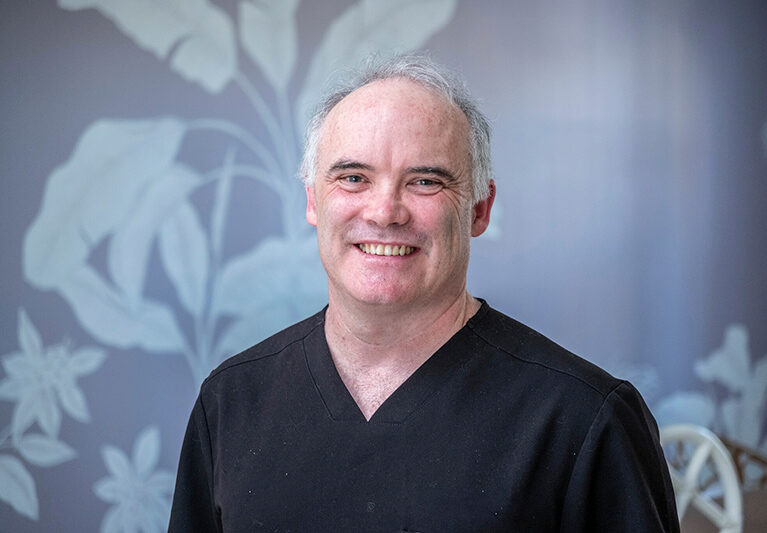
Dr. John Sullivan, an orthopedic surgeon practicing in Vero Beach who treats conditions involving the hips, knees and shoulders, believes joint preservation will become an increasingly important part of orthopedic care. Although joint replacement will remain necessary for many patients, he sees promise in therapies that could help people maintain their natural joints for longer.
“My No. 1 thing is to try and preserve the joint,” said Dr. Sullivan. “But if it gets to the point where the simple things don’t work, then obviously joint surgery is a great option for you.”
Osteoarthritis develops when the protective cartilage covering the ends of bones gradually breaks down. Cartilage allows joints to move smoothly, cushioning the bones and reducing friction. As it deteriorates, movement can become painful and stiff, eventually interfering with walking, exercise and other everyday activities.
Age is one risk factor, but joint damage is not limited to older adults. Sports injuries, including tears of the anterior cruciate ligament (ACL), can increase the risk of developing arthritis years later. Traumatic injuries can damage cartilage directly, setting the stage for progressive deterioration.
Currently, many nonsurgical treatments focus on managing symptoms rather than rebuilding damaged cartilage. Cortisone injections may reduce inflammation and pain, while gel injections can provide relief for some patients. Platelet-rich plasma (PRP), stem cell treatments and procedures that temporarily interrupt pain signals from nerves are other options used by patients.
However, these approaches have limitations, Dr. Sullivan cautioned. Results vary, benefits may be temporary, and some treatments can be expensive and are not covered by insurance. Stem cell treatments, for instance, should not be viewed as a proven way to restore cartilage or permanently reverse arthritis.
“I’m not going to oversell it,” he said. “I’d rather under promise and overdeliver as opposed to overpromising and underdelivering.”
The next generation of treatments could change that conversation. Researchers are investigating injectable medications intended to protect existing cartilage, reduce the processes that break it down and stimulate the body to produce new cartilage.
Several drugs are in development, although they are at different stages of research and regulatory review. One investigational drug, lorecivivint, is being studied for its potential to modify the progression of osteoarthritis. Another, sprifermin, is being investigated for its ability to stimulate cartilage growth.
Neither should be confused with an established treatment that can reliably restore a badly damaged joint. Researchers still need to determine how much cartilage can be regenerated, whether that translates into meaningful pain relief and improved function, and which patients are most likely to benefit.
Another promising avenue involves a protein called 15-PGDH, which has drawn attention in early research examining age-related tissue deterioration. Scientists are investigating whether blocking this protein could encourage cartilage repair. The work remains experimental, with much more research needed before such an approach could become a treatment for patients.
Other experimental therapies are exploring gene-based approaches intended to reduce inflammation inside a joint. Although the strategies differ, they share a common goal – intervene earlier in the disease process rather than simply manage the pain after substantial damage has occurred.
For patients, the timing could be important. If future treatments prove effective, they might help people with early arthritis or those who sustain joint injuries preserve cartilage before irreversible damage develops.
Consider a younger athlete who tears an ACL. The injury itself, along with associated damage to the joint, can increase the risk of arthritis later in life. A treatment that protects cartilage or promotes repair could eventually offer a way to reduce that risk.
Still, Dr. Sullivan cautions against assuming that promising laboratory results will translate into an available treatment anytime soon. Some drugs may be years away from approval, and even successful therapies may not help patients whose cartilage has already deteriorated extensively.
Cost and insurance coverage also remain unknowns. And because much of the research focuses on knees, it is not yet clear whether the same treatments will ultimately be approved for hips, shoulders or other joints.
In the meantime, patients have practical ways to help preserve their mobility. Dr. Sullivan emphasizes maintaining quadriceps strength and flexibility, both of which are important for knee function and range of motion.
“Patients who are able to put it off the longest are the ones who maintain their quad strength and maintain their flexibility,” he said.
He recommends starting with appropriate, less invasive measures and discussing the benefits and limitations of available treatments with an orthopedic specialist. Patients do not necessarily need to try every injection or procedure before considering surgery, however. The decision depends on the severity of the damage, the degree of pain and how much the condition affects daily life.
For some, joint replacement ultimately offers the most dependable path to regaining mobility and quality of life.
Dr. Sullivan is certified in the Jiffy Knee replacement technique, which is designed to minimize disruption of the soft tissues surrounding the knee. Unlike traditional approaches that may require cutting the quadriceps tendon, the technique preserves the tendon and emphasizes moving soft tissues aside rather than extensively disrupting them.
That approach can allow patients to recover more quickly. That difference shows up almost immediately after surgery. Because the quadriceps remains intact, patients are stronger right away and can begin moving sooner.
“Most of my patients can lift their leg off the bed immediately, even while they’re still in the recovery room,” Dr. Sullivan explained. “Many can bend their knee to 90 degrees right away because there’s no added tension on the tendon and the quad is functioning normally. Another patient underwent replacement of both knees and was walking without an assistive device about a week and a half after surgery.”
The goal, he said, is to help patients return to their lives as efficiently as possible when replacement becomes necessary.
Ultimately, the future of orthopedic care may involve a broader range of choices, from early interventions intended to preserve cartilage to advanced surgical techniques for joints that can no longer be saved.
For now, Dr. Sullivan encourages patients to take care of the joints they have while remaining realistic about what current treatments can accomplish.
“Anybody who can avoid surgery, I think that’s nice,” he said. “But at the same time, at least you know you have something that works in your back pocket if it doesn’t work.”
Dr. John Sullivan received his medical degree from New Jersey Medical School in Newark. He completed his residency in orthopedic surgery at State University of New York-Downstate in Brooklyn and his fellowship in orthopedic adult reconstruction at Johns Hopkins University in Baltimore. His practice, Sullivan Orthopedics PLLC, is located at 1040 37th Place, Suite 202, Vero Beach. Call 772-226-8224 to schedule an appointment.