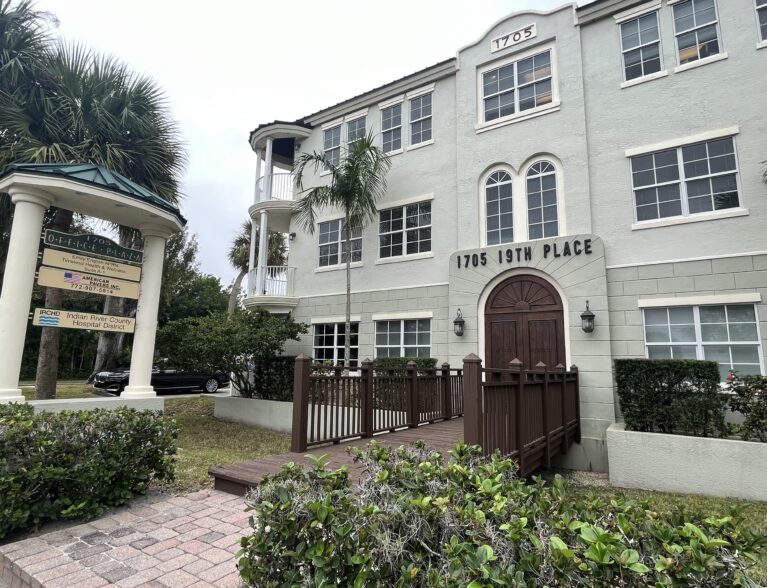
The Indian River County Hospital District took a step toward greater fiscal responsibility this month when Trustees Dr. Chuck Mackett and Paul Westcott blocked a property tax increase for the 2026-27 fiscal year, which begins Oct. 1.
The Hospital District Board normally has seven members, but one seat has been vacant since Dr. Bill Cooney’s June 1 resignation. Under a new law that took effect in July, at least five of the remaining six trustees would’ve had to agree to charge taxpayers more than the so-called “rolled-back” property tax rate.
The rolled back rate is calculated to bring in the same amount of revenue in the coming year as the prior year, despite increases in property values. When Mackett and Westcott held out, a proposed higher tax rate that would have brought in more money was blocked.
Seeing the writing on the wall, the board ended up approving the budget and rolled back property tax rate unanimously at public hearings on Sept. 3 and Sept. 8.
This fall, property owners will pay 71.2 cents per $1,000 of taxable value to the hospital district.
That amounts to $71 per $100,000 of assessed value or about $210 for the average house in the county, with the money going to support agencies that provide healthcare related services mainly for less affluent residents.
The coming year’s district budget is $600,000 less than the current year’s, dropping from $26.8 million to $26.2 million. Five years ago in 2021, the budget was $13.3 million.
For decades, the hospital district’s chief purpose was taxing county residents to pay for indigent care at the county hospital. All that changed seven years ago.
When Cleveland Clinic took over operating the hospital in 2019, the Cleveland Clinic Foundation assumed the burden of indigent inpatient care, which taxpayers previously funded. Freed from paying more than $7 million annually for indigent care at the hospital, the district could have cut its tax rate and budget.
Instead, district trustees shifted those dollars to support nonprofit healthcare agencies in the county, which have since grown dependent upon taxpayer funding.
Former district chairman Dr. Bill Cooney, following the budget process from home after resigning his seat in June, sent a LinkedIn message to Vero Beach 32963 commenting that coverage of the budget had been “Pretty tough on the IR hospital district, but correct in that they fund agencies not truly healthcare related. Experiencing creep. It is not the United Way.”
The district hasn’t just provided stopgap funding to bolster flagging programs in a time of crisis. New programs were launched relying heavily or exclusively on ongoing taxpayer funding. It’s not uncommon for the district to fund upwards of two thirds of an entire program budget.
This year, all new programs were rejected to focus on supporting existing efforts. Overall, trustees rejected $2 million in funding requests to arrive at the $26.2 million final budget.
Not reflected in the budget is the value of a year’s free rent for Thrive, which will develop and operate a 24/7 clearinghouse for alcohol and drug addicts in two taxpayer-owned buildings the district purchased for $4 million.
The district is expected to lose about 10 percent of its tax revenue if Amendment 3 passes in November. If approved by 60 percent of voters, the amendment will reduce property taxes on homesteaded properties.
Trustee Allen Jones noted that the trustees have some tough work to do, and said funded agencies should take note of the new reality. “I think our agencies should expect, that if we get $2 million less, there is no way our spending is going to stay the same,” he said.
As the number and complexity of district-funded programs grew over the past six years, the district had to hire consultants and two attorneys to keep things running smoothly.
Administrative costs now top $1.5 million and Mackett said trustees should take a hard look at those costs as well.
“What has increased dramatically and has outpaced inflation is our spending,” Mackett said. “Not to say that expansion of programs isn’t a good thing and necessary for the community, but spending has increased dramatically.”
“To some degree our tax burden is an indenture. Every dollar that gets paid in taxes has to be earned. It has to be earned at the workplace,” Westcott said.
District taxpayers still pay for some services at the hospital. They include indigent prenatal and maternity care and indigent outpatient mental health treatment at the Behavioral Health Center.
The district also funds a crisis team at Cleveland Clinic’s Emergency Department. Those services cost the district about $4.4 million annually. Another $2 million goes to Cleveland Clinic to bolster the Labor and Delivery unit.
Of the 19 nonprofits funded, the largest awards are $4.5 million to Treasure Coast Community Health, $1.7 million to Whole Family Health Center, $1 million to the Visiting Nurse Association of the Treasure Coast, and $1 million to the Mental Health Association.