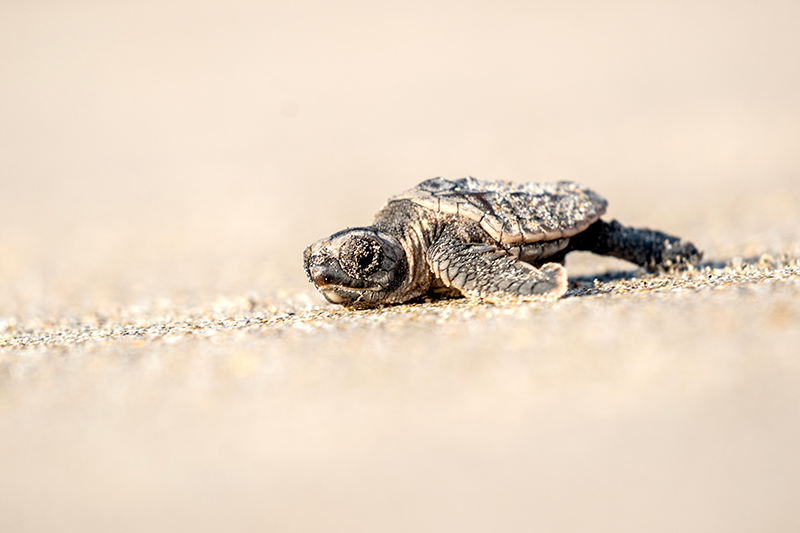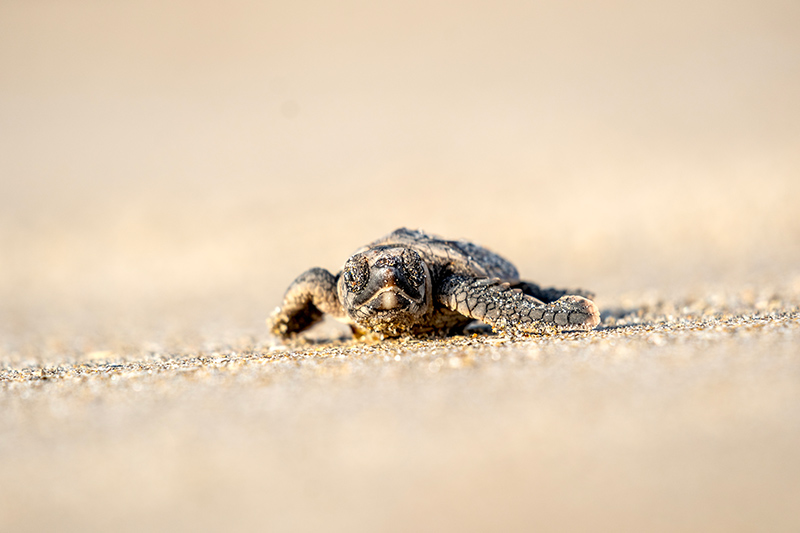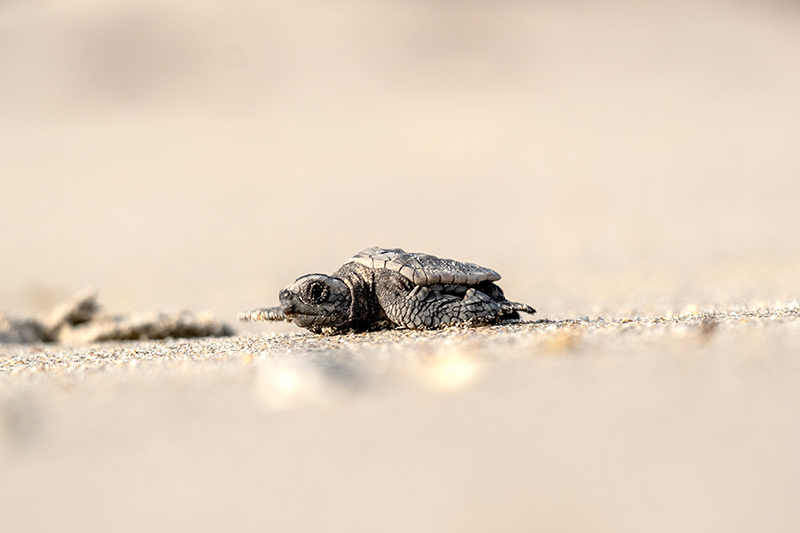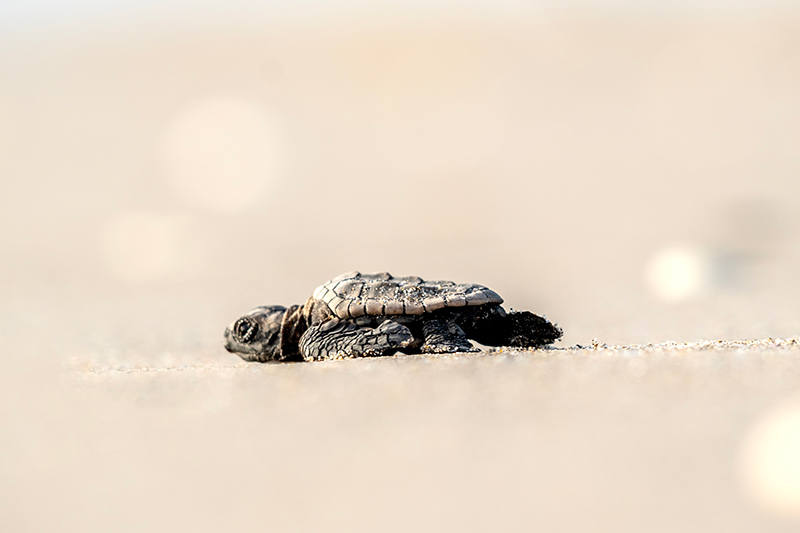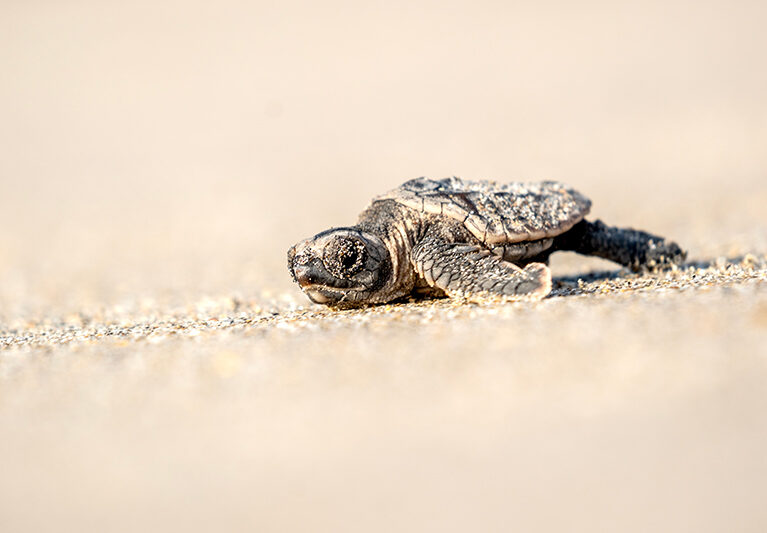
Each year, thousands of two-legged visitors bring their families to frolic on Vero’s pristine beaches. But this year, a record number of four-legged visitors came for a different reason – to start a family.
As of Monday, Sept. 21, 14,051 sea turtles lumbered ashore to lay their eggs along Indian River County’s 22.4 miles of coastline, up nearly 20 percent from last year and the most ever since the county began monitoring turtle nesting behavior in 2005. And there is still more than a month left in the nesting season, which ends on Oct. 31.
“This is great news,” said Edie Widder, CEO and senior scientist with Ocean Research & Conservation Association in Vero Beach. “Every turtle that comes ashore is a vote of confidence in our beaches and a testament to the commitment of the people that monitor and care for them.
“A record nesting season is something to celebrate – but it is also a reminder that we have to keep earning that vote,” added Widder, who founded ORCA in 2005 to protect and restore aquatic ecosystems.
Three types of sea turtles nest on Indian River County beaches – loggerheads, greens and leatherbacks – and it is the loggerheads who are responsible for the record-breaking number of nests. Last year just 6,600 loggerhead nests were recorded in the county. This year there were 10,044.
Fewer green turtles nested here this year – 3,939 compared to 4,520 last year. And 68 leatherback nests were recorded, compared to 78 nests last year. Over the past two decades, however, numbers for all three species have steadily climbed.
“Sea turtles take a long time to mature, at least 20 years to reach sexual maturity,” said Dakota Whalen, the county’s coastal environmental specialist. “So, we’re seeing the fruits of our labor from 20 years ago, back when Indian River County only had 3,000 to 4,000 nests across the entire coast.”
“We expected this to be a high year for loggerheads, but we had no idea it was going to be that high,” said Kendra Bergman, executive director for Coastal Connections, a nonprofit organization dedicated to protecting sea turtles that assists the county with tracking and research. “That tells us we’re on a path of recovery.”
Most sea turtles nest every other year or every third year on Florida’s east coast, Bergman said. “They spend the rest of their time at their foraging grounds rebuilding their energy stock, getting healthy before they have to do this hormonal migration to then reproduce again.”
“Does that mean next year will be a really low year? We don’t know. But no matter what, it’s an upward trajectory,” Bergman said.
Sea turtles have been protected since 1973 under the U.S. Fish & Wildlife Endangered Species Act. Before then, the slow-moving animals were heavily harvested for their meat, especially in Florida. In the 1950s and ’60s, Sid & Roxie’s Seafood Cannery in Islamorada processed between 200 and 500 green sea turtles every week for food.
The Indian River Lagoon was a popular fishing location for juvenile green turtles back in those days, Bergman said.
Teams from Sebastian Inlet State Park patrol the county’s northernmost beaches, and Disney Conservation Team Wildlife monitors turtle activity along a 5-mile stretch of coastline near Disney’s Vero Beach Resort.
The county hires biologists from Ecological Associates, an environmental consulting firm based in Jensen Beach, to patrol the rest of the area’s beaches, Whalen said.
Five biologists hit the beaches every morning and document the “crawls” – tracks left in the sand as the turtles emerge from the ocean seeking a suitable nesting spot. Each turtle species makes a specific crawl pattern, so biologists know which variety of turtle has come ashore, Whalen said.
The biologists pinpoint the location of each nest using GPS tracking and take note if it appears to have been disturbed by predators or humans. They tape off a 10-foot by 10-foot area surrounding about 10 percent of the nests, especially if the nest is on a busy beach, Whalen said.
The areas marked with orange tape are set aside for research. Biologists study these nests, locating the egg clutch precisely by gently digging with their hands. They monitor the nests daily and then, several days after the eggs hatch, they excavate the nest to evaluate how many eggs hatched and if any hatchlings didn’t make it out of the nest.
Loggerheads and green turtles generally lay 100 to 130 eggs, while leatherbacks lay a clutch of around 80 eggs. That sounds like a lot of potential turtles, but Whalen said only about 1 percent of hatchlings will survive to maturity. That averages out to only about one per nest.
“First, these 1- to 2-inch creatures have to make the long journey down the beach without getting snatched by a bird or a crab,” Whalen said.
“Then the really hard journey begins once they make it to the ocean, where they are food for pretty much everything else that lives there. That’s why it’s so important to do our job and protect as many nests as we can – because the survival rate is so low.”
Photos by Joshua Kodis