When actress Sarah Jessica Parker revealed that years of wearing high heels had permanently altered her feet, many women likely understood exactly.
Those stilettos tucked neatly inside closets from coast to coast may make legs appear longer and outfits more polished, but they often come with a hidden cost paid in aching feet, sore knees, tight calves and chronic back pain.
For generations, high heels have been associated with fashion, confidence and professionalism. Yet orthopedic specialists say the harmful effects of regularly wearing elevated shoes extend far beyond feet. In fact, heels can alter the body’s alignment from the ground up, creating a chain reaction that affects the ankles, knees, hips, spine – and balance.
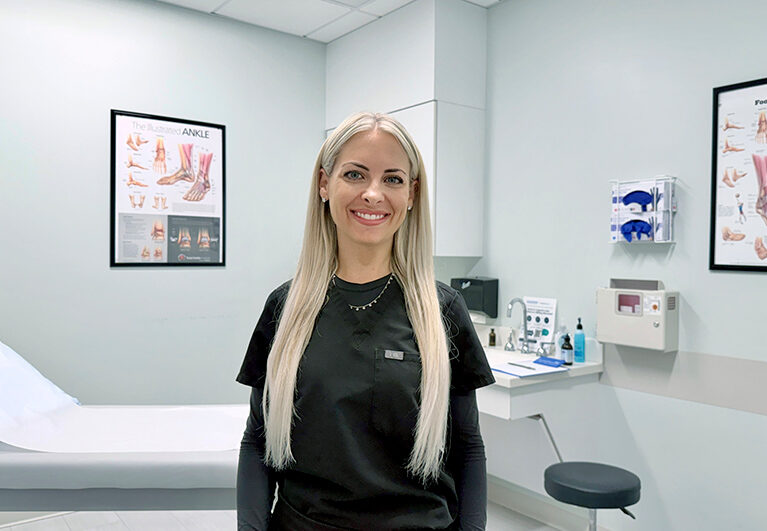
“When a person puts on a pair of heels, their body weight shifts forward onto the balls of the feet,” explained Dr. Amber Morra, a foot and ankle surgeon with Vero Orthopaedics. “The higher the heel, the greater the pressure. Normally, when we walk barefoot, our big toe joint absorbs about three times our weight. When we add high heels, that can increase to six times our body weight.”
The design of many fashionable heels compounds the problem. Narrow toe boxes force the toes into an unnatural position while the elevated heel keeps the ankle pointed downward.
“That positioning affects your whole body,” Dr. Morra said. “It shortens your stride, increases pressure on the forefoot, decreases ankle flexibility, and ultimately alters your gait.”
Most experts classify high heels as shoes with heels exceeding 2½ inches. Research shows that wearing them changes walking patterns and increases stress on multiple joints, particularly the knees. Over time, those altered mechanics can contribute to pain, instability, and long-term joint problems.
Not surprisingly, the feet are usually the first part of the body to suffer.
As the foot slides forward inside the shoe, the toes become compressed, especially in narrow or pointed styles. Over time, this can lead to bunions, hammertoes, corns, calluses, ingrown toenails and nerve irritation. The constant pressure on the ball of the foot may also cause metatarsalgia, a painful inflammation affecting the forefoot.
“Bunions are probably the most common condition associated with wearing high heels,” Dr. Morra said. “Women are already genetically more prone to developing bunions because of increased ligament laxity, but high heels increase that risk significantly.”
In severe cases, bunions can progress to arthritis within the joint, causing chronic pain and difficulty walking. Orthopedic specialists also frequently see fat pad atrophy, a condition in which the natural cushioning beneath the ball of the foot gradually wears away.
“We see metatarsalgia develop when that fat pad thins out and no longer protects the foot from the forces placed upon it,” Dr. Morra explained.
The effects do not stop at the feet.
To maintain balance while wearing heels, the ankles remain in a downward-pointing position for extended periods. Over time, this can shorten the calf muscles and Achilles tendon. Anyone who has spent an entire day in heels and then switched to flat shoes has likely experienced the resulting tightness.
For women who wear heels frequently, those changes can become more permanent, making it uncomfortable to walk barefoot or in flat shoes and potentially increasing the risk of tendon injuries.
The knees also bear a significant burden. Studies published in the journal Gait & Posture have found that high heels increase forces acting on the knee joint, particularly along the inner portion of the knee where osteoarthritis commonly develops. Researchers suggest that years of increased loading may contribute to accelerated wear and tear.
Higher up the body, the hips and lower back work overtime to compensate for the body’s altered center of gravity. As the wearer leans forward, the pelvis tilts and the spine’s natural curves shift in an effort to keep the body upright.
“The body is remarkably good at adapting,” Dr. Morra said. “The problem is that adaptation often comes at the expense of increased stress on other joints and muscles.”
The result can be muscle fatigue, lower back pain, hip discomfort and poor posture. Some studies have even linked prolonged high heel use to reduced balance and an increased risk of falls, particularly as women age.
Despite these serious health concerns, many women continue to wear high heels and have no intention of retiring their favorite pair. Fortunately, there are ways to minimize the damage.
Dr. Morra recommends limiting heel height whenever possible and reserving higher heels for shorter periods of time. Shoes with a wider toe box can reduce pressure on the forefoot and help prevent toe deformities. Platform shoes may also lessen the angle of the foot compared to traditional stilettos.
Alternating footwear throughout the day can provide relief as well. Wearing supportive walking shoes during commutes and changing into heels only when necessary reduces the amount of time the body spends in an altered position.
Regular stretching is equally important. Calf stretches, Achilles tendon exercises, and foot-strengthening routines can help counteract the muscle shortening that occurs with frequent heel use. Maintaining a healthy body weight can also lessen the stress placed on already overworked joints.
For women who develop persistent pain, bunions or other structural foot problems, seeking medical evaluation early may prevent more serious complications later.
The reality is that high heels are unlikely to disappear anytime soon. For many women, they remain a wardrobe staple that conveys confidence and style. But understanding the body mechanics they create can help wearers make informed choices and potentially avoid joint damage and pain.
Prior to joining Vero Orthopaedics, Dr. Amber Morra completed a fellowship at University Hospitals in Ohio, specializing in foot and ankle reconstruction, joint replacement, arthroscopy and sports medicine. She completed her surgical residency at Yale, New Haven Hospital, where she served as chief resident. She received her Doctor of Podiatric Medicine (DPM) degree from Barry University School of Podiatric Medicine in Miami Shores, Florida. You can call or text 772-569-2330 to schedule an appointment.