Seagrass is making a major comeback in the Indian River Lagoon according to recent data released by the St. Johns River Water Management District.
This is great news for residents of Indian River County, where the lagoon is a defining feature of daily and economic life, supporting property values, providing recreational opportunities and supplying an everchanging backdrop of natural beauty.
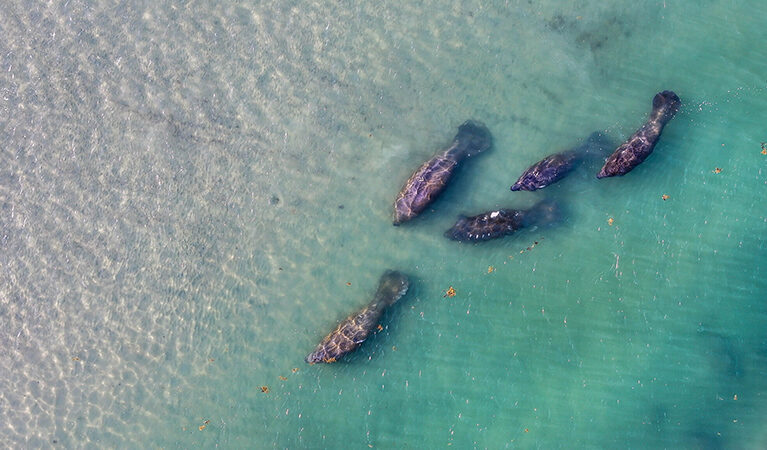
It is even better news for manatees, sea turtles and other marine animals that rely on seagrasses for their survival. Seagrass is the foundation of the lagoon’s ecology. When 60 percent of the seagrass meadows were killed by algae blooms a decade ago, it resulted in massive fish kills, sick bottlenose dolphins and hundreds of dead manatees.
In response to that environmental catastrophe the federal government, the state, and cities, towns and counties up and down the lagoon launched widespread, innovative, determined efforts to reduce nitrogen and phosphorous – which feed algae blooms – in the water and restore seagrass beds.
It has been a long road back but the crusade to save the lagoon – once considered the most biodiverse estuary in the United States, with more than 4,000 species of plants and animals – appears to have turned the environmental tide.
Seagrass beds in the Indian River Lagoon as a whole have more than doubled in size since 2023, including an increase of about 27 percent in the portion of the lagoon that lies within Indian River County.
Seagrass coverage in the Southern Central Indian River Lagoon (SCIRL), which stretches from the Melbourne Causeway in Brevard County south to the Fort Pierce Inlet, jumped from 24,500 acres in 2023 to 42,100 acres in 2025. This represents an increase of about 72 percent, roughly equal to the size of 13,000 football fields.
While these numbers are still well beneath the roughly 79,000 acres of seagrasses that thrived in the SCIRL before the deadly algae blooms, experts say the data shows that efforts by municipalities and environmental groups are paying off.
Besides serving as a staple food for manatees and some sea turtles, seagrass provides habitat for hundreds of species, stabilizes sediment, and filters nutrients from the water.
Game fish abound in and around seagrass meadows, attracting bottlenose dolphins and sports fishermen alike. “A single acre of seagrass can support up to 40,000 individual fish and 50 million small invertebrates,” according to Smithsonian Marine Station at Fort Pierce.
“The increase we are seeing across much of the lagoon is an encouraging sign that environmental conditions in some areas may be improving and supporting natural seagrass recovery,” said Dr. Loraé Simpson, supervising environmental scientist with St. Johns River Water Management District. “While these gains are promising, seagrass coverage remains below 2009 levels, reinforcing the importance of continued restoration efforts, long-term water quality improvements and ongoing monitoring.”
In 2016, an unprecedented brown tide algae bloom smothered seagrass meadows in Brevard County and killed millions of fish, hitting more than 30 species in the Banana River section of the northern lagoon. As recently as 2021, seagrass beds were still so scarce that more than 1,100 manatees died in coastal waters across Florida, mostly from starvation. Indian River County reported 42 deaths, while Brevard County recorded 359 deaths. Mortality has decreased steadily since then.
“I’m hoping that this trend that I see is going to continue,” said Patrick Rose, an aquatic biologist and executive director of the Save the Manatee Club. “We have definitely seen some recovery of seagrasses in the Banana River and some portions of the Mosquito Lagoon. We just don’t want people to feel like, ‘OK, now it’s done.’
“There’s much more work to do. We have to get back to making sure that growth is done sustainably. What’s good for the manatees is good for the entire aquatic ecosystem.”