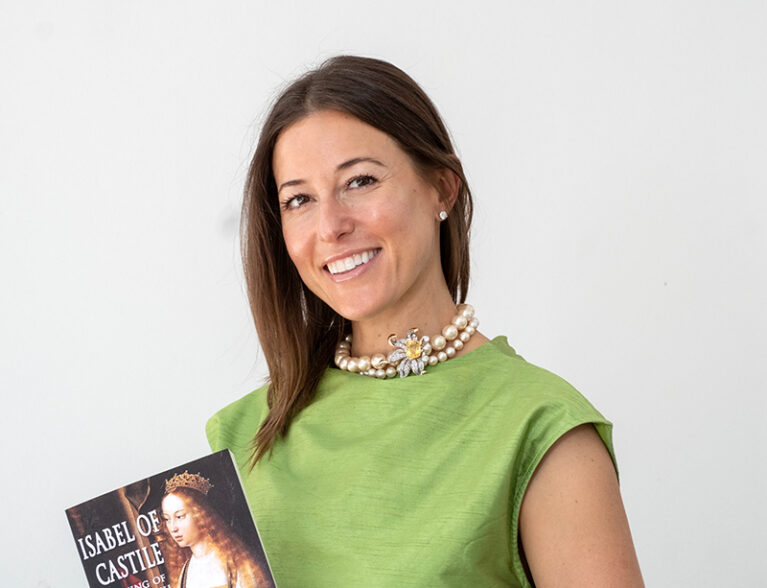
A native of southern California, Nichole Christakes Dapelo grew up in a family of history buffs and, acutely aware of historical bias from a young age, has always wanted to extract the truth from literature and cultural perspectives.
She sought to explore history; not merely as it is told in textbooks and timelines, but as something vivid and alive. Dapelo was especially interested in “uncovering the experiences of some of the extraordinary women who shaped nations, even as records sought to overlook or forget their names.”
Dapelo, who currently lives in Vero with her husband and two young children, has authored three novels, comprising a series entitled “The Making Of: Great Women of Medieval Europe and Their Stories,” that map the continuum of power during the Renaissance.
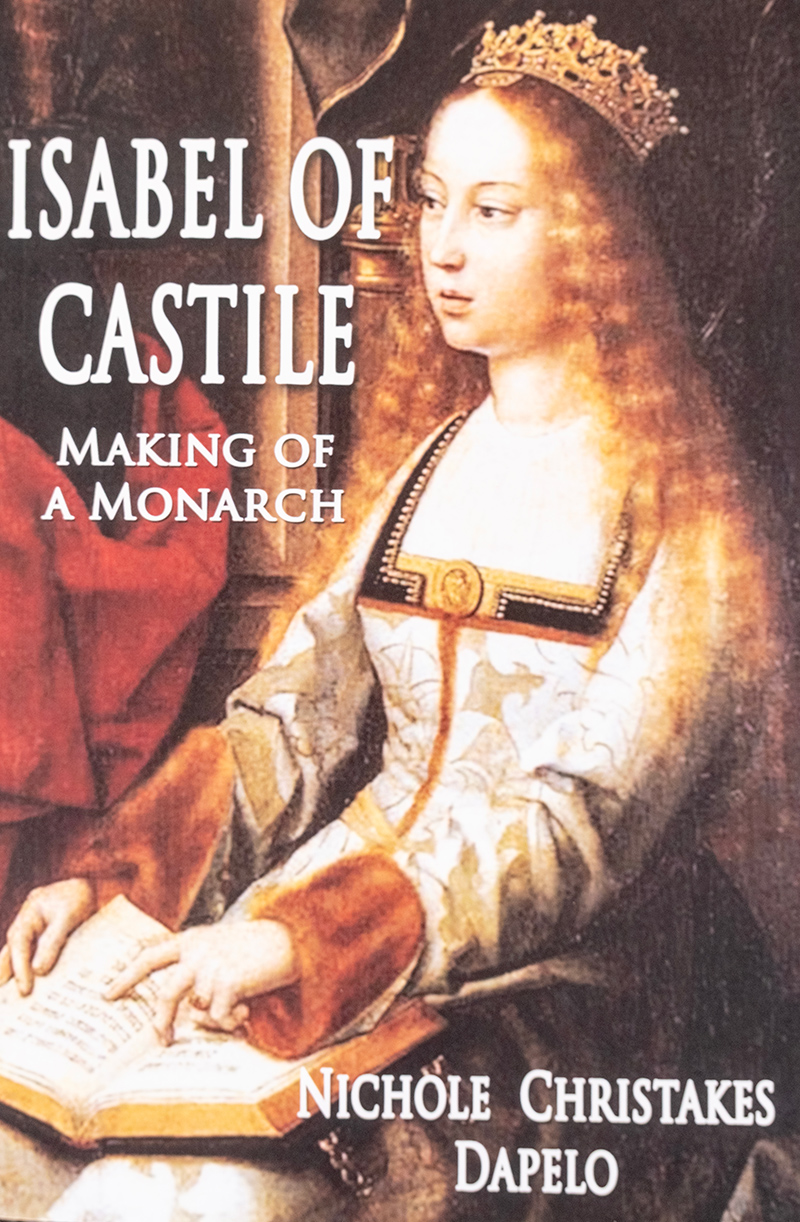
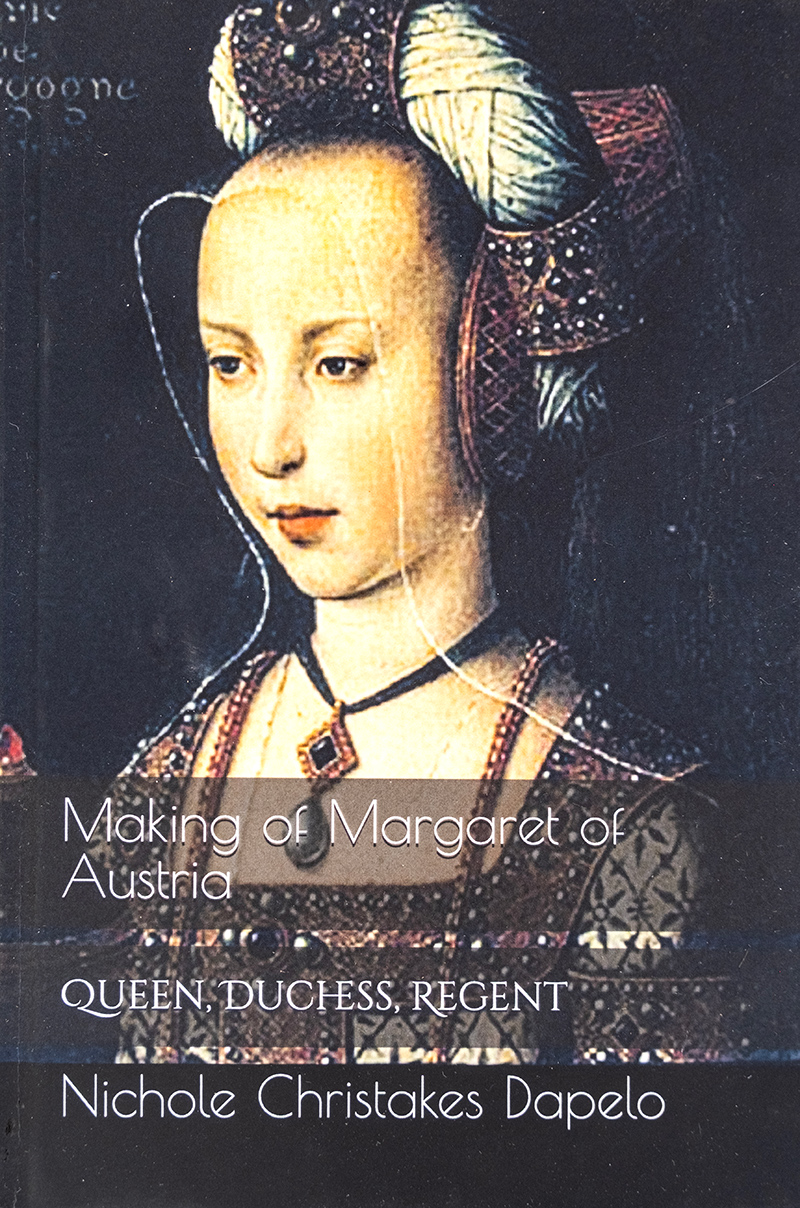
The trio of books, “Isabel of Castile: Making of a Monarch,” “Making of Margaret of Austria: Queen, Duchess, Regent” and “Madame de Pompadour: The Making of a Mistress,” begins with the first breath of the Renaissance and ends just prior to the French Revolution.
Not unlike the characters in her novels, Dapelo’s life didn’t follow a traditional trajectory. After graduating from high school, she attended a community college and then spent a year in Hawaii, but felt ruefully unengaged. She explains that she wanted something more challenging to expand outside of her comfort zone.
A friend encouraged her to “go someplace uncomfortable and get comfortable,” and it became advice she has carried ever since.
Dapelo chose to attend the Universidad Pontificia de Salamanca in Spain and says becoming immersed in the cultural history of Europe transformed her.
She explains that walking through history, falling in love with love, and observing loss, heartbreak and resilience deepened her sensibility. After exploring the locations and era of the Renaissance, she was inspired to discover more about the women who wielded power during that period.
She returned to California and entered UCLA with a major in Spanish followed by Florida Atlantic University, where she earned a master’s degree in comparative literature (French and Spanish).
After graduating, Dapelo began writing about these three exceptionally strong, historical women and their remarkable journeys to power. In her books, she meticulously maps out their circumstances and the skill it took for them to influence the courts and society. She demonstrates how they created the art of maneuverability in the male-dominated power structures of their time.
What unites the novels is the notion that power is an art that is learned, not inherited. It is then negotiated and implemented, whether by men or women, and in doing so it forms the identities of the characters.
Dapelo says when she first began writing “Isabel of Castile” she was drawn not just to a queen, but to a girl; one who had been torn from her childhood and placed in the decadent, dangerous court of her half-brother, King Enrique of Spain.
There, she was expected to survive silently. But Isabel didn’t stay silent. Instead, she challenged the king.
Isabel chose her husband, Ferdinand of Aragon, and defied a patriarchal world to not only claim the throne of a divided kingdom but to unite it as well. Under her reign, Spain found a new identity, for better or worse.
“And yet, what moved me most wasn’t her crown,” says Dapelo. “It was her faith. Her fear. Her conviction.”
That same conviction guided Dapelo through “Making of Margaret of Austria,” a woman traded between courts like a diplomatic pawn.
Promised to one throne, widowed from another, Margaret achieved a status far greater than anyone anticipated, becoming regent of the Habsburg Netherlands and the guardian of the future Holy Roman Emperor. Margaret ruled not by force, but through foresight, diplomacy, restraint, and an astonishing intellect.
Dapelo gives Margaret a voice that history has often muffled. She was not just a regent, but a woman in frequent mourning, a sister, an aunt, and a strategist navigating a world dominated by men. Her silence in the official record is not due to a lack of substance, but rather is the result of the selective memory of the men responsible for preserving history.
And then there is Madame de Pompadour; born a bourgeois girl named Jeanne Antoinette Poisson. After being taken by her mother to a palm reader at age 5, she was told that she would one day capture the heart of a king. That she did; as the chief mistress of King Louis XV.
However, far beyond that, Dapelo reveals that Pompadour captured the political and artistic heart of a kingdom. Though dismissed by her enemies as merely a mistress, she was more accurately a minister in pearls. She negotiated alliances, shaped cultural policy, and protected the Enlightenment intellectuals, most notably Voltaire.
Revealing that Pompadour ruled from a gilded salon rather than a throne, Dapelo’s novel traces prophecy into power, femininity into diplomacy, and art into armor.
Dapelo emphasizes that “each of these women lived in worlds where they were told they could not rule. Despite that, they each, in her own way, did exactly that.”
Having always been drawn to historical fiction, Dapelo explains that “while archives provide dates and treaties, they rarely tell what it felt like to wear the crown, have it stolen or to desire it and be denied.”
In fiction, Dapelo says she can step inside those moments that history only glances at. In novels, she can explore what these women actually felt like when they realized that yes, they could rule countries that had never intended for them to have power.
“We can explore their longings, their contradictions, their strategies – and their stories, which are too often footnotes in the legacies they helped build.”
Her novels enable the reader to explore a history shaped behind closed doors, at marriage altars, in court salons, and in letters passed between queens and regents. It is one shaped by women – some crowned, some silenced, but all influential.
“The series is my tribute to the women who defied history by making it,” Dapelo states.
Photos by Joshua Kodis