The idea of a knee replacement is enough to make even the toughest patients wince. It’s major surgery, after all; muscle and tendon are cut, damaged bone is carved away, and a new joint is put in its place. Most people accept that relief comes at a cost – months of pain, physical therapy, and a slow return to everyday life. But what if that recovery didn’t have to be nearly so long and difficult?
As it turns out, it may not. An alternate surgical technique known as the Jiffy Knee replacement is rapidly gaining popularity among orthopedic surgeons and dramatically speeding patient recovery.
In traditional knee replacement surgery, most surgeons cut through the quadriceps tendon and then stitch it back together once the implant is in place. Because the quadriceps is the primary muscle responsible for walking, standing and climbing stairs, healing takes what seems like a very time and the recovery process tends to be quite painful.
With the Jiffy Knee technique, surgeons avoid cutting muscle or tendon altogether. Instead, specialized instruments are used to gently lift the quadriceps muscle and slide the implant into position. Only the skin and joint capsule are cut. The result is less trauma, less pain and a significantly faster recovery. While a knee replacement will never be “minimally invasive,” this approach is best described as minimally traumatic, with soft-tissue preservation as the goal.
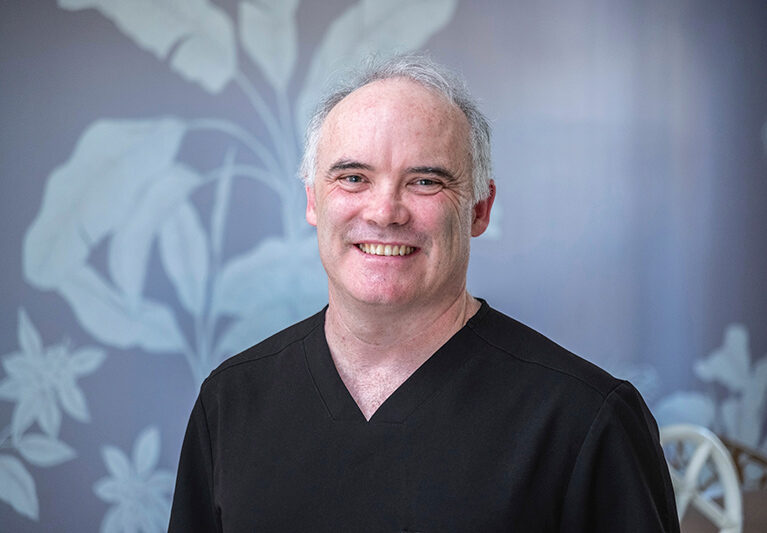
“The Jiffy Knee is a more soft-tissue-sparing technique, specifically because you don’t go into the quads,” said Dr. John Sullivan, an orthopedic surgeon who performs the procedure. “The incision is a little different. Instead of going straight down the center of the knee, I angle it toward the inner thigh. Rather than cutting through the quad tendon, we go underneath it. I don’t cut any muscle or tendon. Instead, I lift it and move it out of the way.”
That difference shows up almost immediately after surgery. Because the quadriceps remains intact, patients are stronger right away and can begin moving sooner.
“Most of my patients can lift their leg off the bed immediately, even while they’re still in the recovery room,” Dr. Sullivan explained. “Many can bend their knee to 90 degrees right away because there’s no added tension on the tendon and the quad is functioning normally.”
By contrast, traditional knee replacement patients often struggle to activate their quadriceps early on, which leads to more pain and stiffness. Bending the knee can also be uncomfortable because the incision runs directly down the center of the joint, placing stress on the healing skin. Kneeling later on can be painful as well, since patients are kneeling directly on the incision. With the Jiffy Knee approach, the incision is off to the side, making these activities more comfortable.
“There are a lot of different ways to do knee replacements, and I’ve done them all,” Dr. Sullivan said. “The closest technique is the subvastus approach, but that puts a lot of stretch on the muscles when you retract them. Stretching muscle can cause problems, and the exposure is more difficult. It’s harder to place the implants exactly where you want them. The Jiffy Knee technique gives excellent exposure without stretching the muscle.”
The Jiffy Knee procedure was developed by Dr. Manish Patel, a Virginia-based orthopedic surgeon who created the approach 20 years ago and was for a long time the sole practitioner. The technique has only been widely taught and practiced in the past couple of years, spreading rapidly through doctors’ practices and hospitals.
“I’ve performed hundreds of knee replacements, and the results with the Jiffy Knee are significant,” Dr. Sullivan said. “Surgical time drops to about 30 minutes, which reduces the amount of time a patient spends under anesthesia. Patients recover in about half the time compared to traditional procedures. By preserving muscle and tendon, post-operative discomfort is reduced and recovery is dramatically faster. In fact, they recover so quickly that I sometimes have to slow them down.”
According to the Jiffy Knee website, studies show the average patient is walking at least 400 feet within four hours of surgery. Ninety-nine percent begin outpatient physical therapy within two days, and many are driving within 10 days. Most impressive, patients report little to no pain within just two weeks of surgery.
“To my knowledge, I’m currently the only surgeon on the Treasure Coast performing this technique, and I’ve had patients travel long distances for it,” Dr. Sullivan said. “The Jiffy Knee is ideal for patients who are anxious about pain and recovery.
“Knee replacement can be intimidating, and anything we can do to reduce stress and fear helps patients heal better. The risks are the same as with traditional surgery. The difference is the recovery. It all comes down to preserving muscles and tendons.”
For patients who once believed that a long, painful recovery was unavoidable, the Jiffy Knee technique offers one of the Holy Grails of modern surgery – less pain and a quicker return to living life on their own terms.
Dr. John Sullivan received his medical degree from New Jersey Medical School in Newark. He completed his residency in orthopedic surgery at State University of New York-Downstate, and his fellowship in orthopedic adult reconstruction at Johns Hopkins University in Baltimore. Dr. Sullivan is excited to be opening an office in Vero Beach within the next few months.