Heartburn may feel like it’s coming from the heart, but the fiery discomfort has nothing to do with cardiac trouble. Instead, it’s a digestive problem that affects millions of Americans and, for some, can become a chronic condition that interferes with lifestyle, sleep and long-term health.
The burning sensation that creeps up the chest after a meal is commonly linked to GERD, or gastroesophageal reflux disease, a condition in which stomach acid repeatedly flows backward into the esophagus.
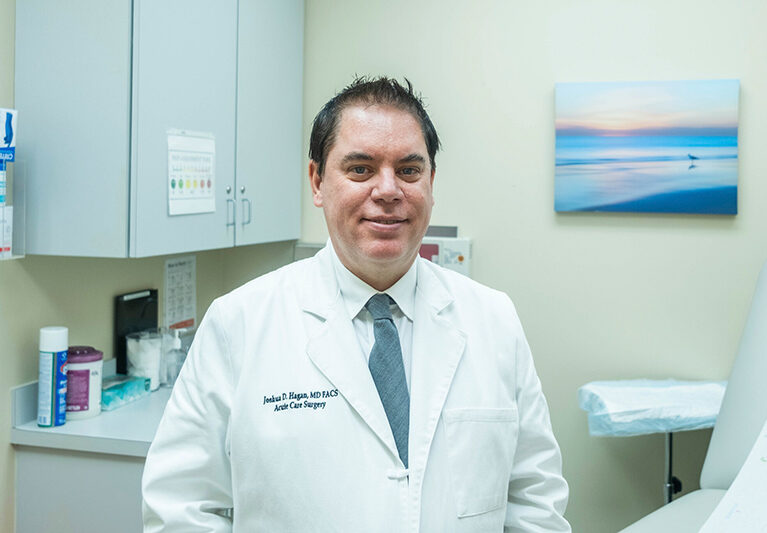
“Heartburn occurs when acid within the stomach that our body uses to dissolve the foods that we eat goes backwards, or refluxes, into the esophagus,” explained Dr. Joshua Hagan, a critical care surgeon at HCA Florida Lawnwood Hospital. “It can also be due to an overproduction of acid.”
Under normal circumstances, a ring of muscle called the lower esophageal sphincter acts like a valve between the esophagus and the stomach. It opens to allow food to pass into the stomach and then closes to keep digestive acids where they belong. But when that valve weakens or relaxes at the wrong time, stomach acid can splash upward, irritating the lining of the esophagus.
The most common symptom is a burning sensation behind the breastbone that may travel upward toward the throat. Other signs can include a bitter or sour taste in the mouth, difficulty swallowing, chronic coughing, or hoarseness.
“The first thing we do is try to determine exactly what is causing the discomfort,” Dr. Hagan said.
“We typically take a holistic approach first. If someone has increased acid related to excessive alcohol consumption, we advise them to reduce their intake. If it’s related to smoking, we recommend smoking cessation. If it’s related to obesity, we recommend a weight-loss program.”
Lifestyle changes often are the first line of defense, but medication is frequently the next step.
“The second thing we do, depending on the cause, is prescribe acid-lowering medications,” he said. “It’s not something that cures the condition overnight. These medications need to be taken every day for a minimum of eight weeks. If the patient still experiences heartburn symptoms, then surgical intervention might be necessary.”
When symptoms persist, doctors may recommend further testing to determine what’s happening inside the digestive tract. One of the most common diagnostic tools is an endoscopy, a procedure in which a thin tube equipped with a tiny camera is passed down the esophagus.
“We look for irritation, and we examine the stomach to see what it’s doing at the time we perform the procedure,” Dr. Hagan explained. “We can determine if there is a hiatal hernia, which is when part of the stomach pushes up into the chest. We can also see if the duodenum, the first portion of the intestine where the stomach empties, is infected.”
During the procedure, doctors often take small tissue samples, known as biopsies, to check for infection or other abnormalities. Additional imaging tests, such as a CT scan, may also be ordered.
“It’s really a thorough evaluation of what’s happening and trying different approaches to see if we can improve the symptoms before considering surgery,” Dr. Hagan said. “This process typically takes three to eight months before we determine whether surgical intervention is necessary.”
Not every case of heartburn requires aggressive treatment. However, experts say that symptoms occurring more than twice a week shouldn’t be ignored.
For patients whose reflux does not respond to medication or lifestyle changes, several surgical options are available.
The most established procedure is called Nissen fundoplication. During this minimally invasive surgery, the upper portion of the stomach is wrapped around the lower end of the esophagus, reinforcing the weakened valve and preventing acid from flowing backward.
If heartburn is caused by a hiatal hernia, which is when part of the stomach pushes through a weak spot in the diaphragm into the chest cavity, the hernia can be repaired during the same procedure. Surgeons reposition the stomach back into the abdomen and strengthen the opening in the diaphragm.
Some patients may benefit from a less invasive approach known as Transoral Incisionless Fundoplication. This technique is performed through the mouth using an endoscope to reconstruct the anti-reflux valve without external incisions.
Another newer option is the LINX Reflux Management System, which uses a small ring of magnetic titanium beads placed around the lower esophagus. The beads open to allow food to pass when swallowing but close afterward to help prevent acid from moving upward.
“Typically these procedures require hospitalization for at least a day,” Dr. Hagan said. “We like to observe the patient afterward because they can experience belching or regurgitation, especially if they had a hiatal hernia. It can be uncomfortable initially, but these are very safe procedures that we can perform with minimal risk.”
Long-term success rates for reflux surgery are encouraging, with most patients experiencing significant relief from acid reflux symptoms for up to 15 years. In rare cases where symptoms return, additional treatment or repeat surgery may be possible.
For many people, however, better habits can make a meaningful difference. Dr. Hagan recommends eating earlier in the evening and remaining upright for two to three hours before lying down. Eating smaller meals and limiting alcohol consumption during meals may also reduce reflux symptoms.
Heartburn may seem like a minor nuisance after a heavy meal, but persistent symptoms can signal a larger problem. The good news is that with the right combination of lifestyle changes, medication and modern surgical techniques, the burning sensation that so many people experience doesn’t have to be a permanent part of life.
Dr. Joshua Hagan is a board-certified critical care surgeon at HCA Florida Lawnwood General Surgery. He received his medical degree and served his residency and fellowship at the University of Tennessee College of Medicine. He completed his internship at Boston Medical Center. His office is located at HCA Florida Lawnwood General Surgery, 2401 Frist Blvd., Suite 5 & 6, Fort Pierce. To schedule an appointment, call 772-297-6184.