For millions of people around the world, a diagnosis of dry age-related macular degeneration (dry AMD) has long marked the start of a slow march into darkness. The central vision blurs, faces become harder to recognize, and reading or driving becomes impossible. Doctors could only offer nutritional supplements and reassurance – tools that might slow the disease but never restore what was lost.
Now, an emerging therapy is literally shining a new light on the condition.
Patients who were once told “there’s nothing more we can do” are now hearing something far more encouraging. A non-invasive, light-based treatment called Valeda Light Therapy has been shown to not only slow the progression of dry AMD but actually improve vision – a first for a disease once considered untreatable.
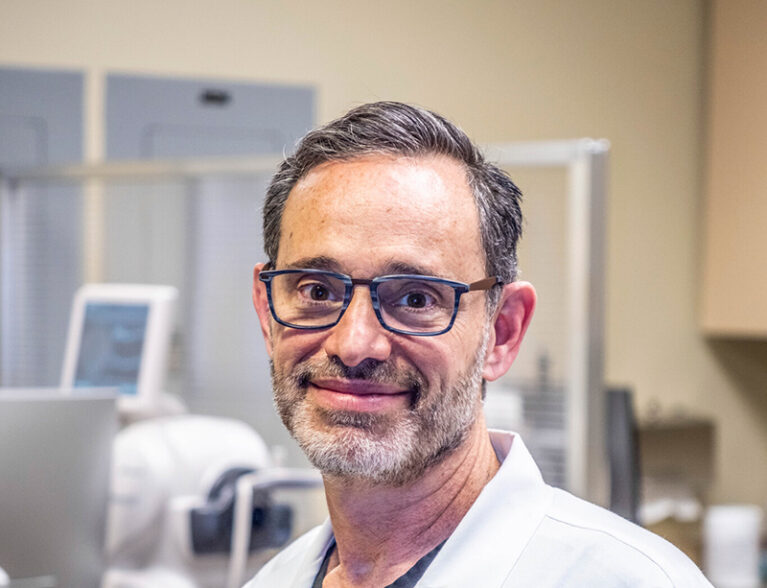
“I’ve been waiting my entire career for a treatment that could actually improve vision for my patients with dry macular degeneration,” said Dr. Adam Katz, retina specialist at the Center for Advanced Eye Care in Vero Beach. “This new Valeda Light Therapy is the first and only treatment for dry macular degeneration proven to improve sight.”
Dry AMD is the more common form of age-related macular degeneration, affecting at least 85 percent of all AMD patients. It’s a degenerative disease of the macula, the central part of the retina responsible for sharp vision. Over time, waste deposits known as drusen build up beneath the retina. As retinal pigment cells weaken and mitochondrial function declines, patients experience a gradual, irreversible loss of central vision.
Until recently, doctors could only manage the disease, but Valeda changes that equation.
The therapy works through a process called photobiomodulation (PBM), a low-level light treatment directed at the retina. Using three specific wavelengths, the device stimulates energy production in the mitochondria, the tiny “power plants” of cells. Because the retina is the most energy-demanding tissue in the body, re-energizing those cells helps them function more efficiently, reducing inflammation and oxidative stress while slowing the buildup of drusen.
“The patient simply places their head into the machine, and a series of lights activate,” explained Dr. Katz. “A white light goes off for 30 seconds while the patient’s eyes are open – they can blink normally. Then, with eyes closed, a red light shines for 90 seconds. The process is repeated twice per eye. It takes about five minutes for one eye, ten for both. Treatments are done three times a week for three weeks and repeated every four months.”
Unlike a laser, the light used in the treatment doesn’t generate heat, and there are no injections, no dilation, and no downtime. “It’s completely non-invasive and has no reported side effects,” Dr. Katz assured.
The science behind Valeda is supported by several clinical trials, including the LIGHTSITE III study, which followed 100 participants over 13 months. The results were encouraging – treated eyes gained an average of one line of improvement on the ETDRS vision chart and showed a significantly lower incidence of new-onset advanced disease.
After 13 months, 55 percent of treated eyes showed noticeable improvement, and more than 60 percent maintained those gains more than four years later with additional treatment and follow-up. Even more promising, patients showed anatomical improvements such as reduced drusen volume, which indicates that the disease process itself may be slowing.
“Those results are impressive,” Dr. Katz said. “When researchers went back and reviewed the data, they found even more evidence of benefit with less drusen, less geographic atrophy. For something that has been historically untreatable, that’s huge.”
Cautious by nature, Katz says he doesn’t adopt new technologies lightly. “I’m very conservative when it comes to introducing new treatments,” he said. “If it’s not something I’d use on myself, I won’t recommend it to my patients. But this light therapy is different. It’s what we’ve been waiting for – a treatment that can truly make a difference.”
While Valeda has been available in other parts of the world for about five years, it was just approved by the FDA for use in the United States 14 months ago, in November 2024.
The best candidates are patients whose best-corrected vision falls between 20/32 and 20/70, with visible medium or large drusen or non-central geographic atrophy – and no signs of wet AMD. Early treatment seems especially beneficial, since patients in the earlier stages of the disease tend to respond best.
As with any new therapy, it’s important to discuss risks and benefits in the context of each patient’s overall eye health, disease stage and lifestyle. Valeda doesn’t replace nutritional supplements or regular eye care, but it does offer something patients haven’t had before – measurable improvement and real hope.
By delivering targeted light to the retina, Valeda taps into the body’s own cellular energy pathways, promoting repair and resilience where continued degeneration once seemed inevitable.
For patients facing a condition that slowly steals their sight, this therapy is more than a medical advance, it’s a hopeful light in the darkness.
Dr. Adam Katz is board-certified by the American Board of Ophthalmology and dual fellowship-trained in disorders of the retina and vitreous. He was awarded his medical degree by Albany Medical College in New York and completed his internship in internal medicine at Lenox Hill Hospital in New York City. He completed his residency at Saint Vincent’s Hospital in Manhattan and retina fellowships at NYU and a second one in Memphis. He can be reached at the Center for Advanced Eye Care, 3500 U.S. 1, Vero Beach, 772-299-1404.