When parents experience significant crises, their children may be adversely affected by the resulting frustration and anger. In some cases, to ensure the children’s safety, the Department of Children and Families may remove them from the home and place them in the care of organizations such as the Hibiscus Children’s Center.
Between 1993 and 2008 a pilot prevention program called Crisis Nursery, introduced by the Department of Children and Families, had operated in Indian River, Martin and Okeechobee counties.
“They were trying to prove to the politicians that prevention is much cheaper than intervention,” said Will Malone, Hibiscus director of prevention programs.
“Our job was to have our family advocates go in, alleviate the initial crisis, and then work on other things that the family may need to tighten up that bond,” said Malone.
In 2008, funding for the program was cut for all but St. Lucie County.
However, in October 2024, Hibiscus reinstituted what is now called the Supporting Families in Crisis program in Indian River County.
The goal is to help families “resolve an immediate crisis and acquire skills to address or prevent future crises.”
A major component of the program, Malone said, is having ‘flex funds’ to assist families with such necessities as rent, utilities, medication or food; the lack of which can contribute to children’s abuse, neglect or, ultimately, removal from the home.
Hibiscus currently has funding for just one family advocate in Indian River County, and is actively seeking grants for another due to increased demand from agencies and from within the community.
Prior to an in-home assessment, Hibiscus conducts a Florida Safe Families Network background check, as families cannot have an open DCF investigation.
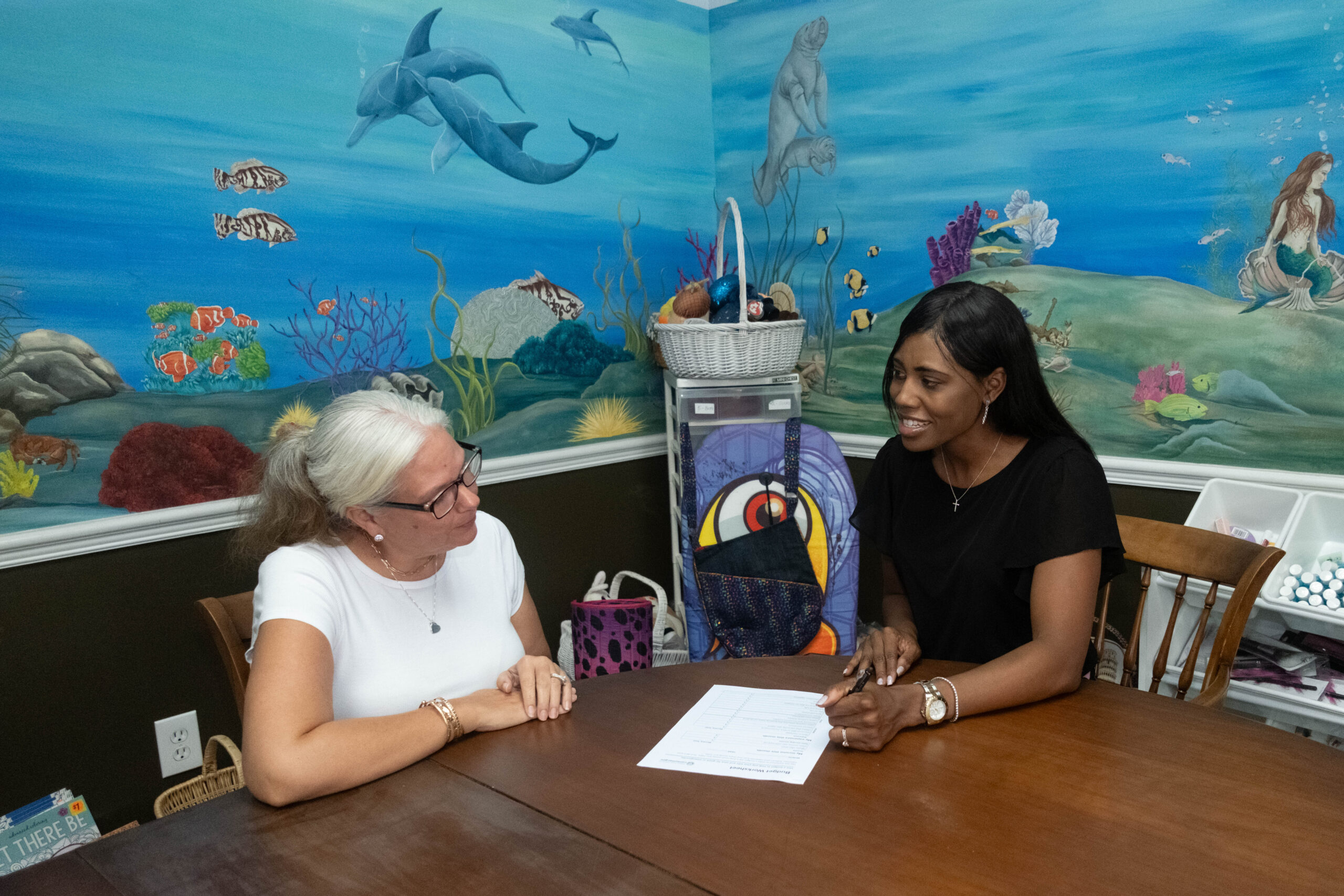
The advocate then visits the home to assess the initial crisis and attempts to mitigate it. For instance, it may involve asking landlords or utility companies whether they will accept a letter of commitment from Hibiscus to grant 45 days before any eviction or discontinuation of services.
“We have a very good working relationship with all the utility companies in Indian River and St. Lucie County and a lot of the landlords and apartment complexes. We’re helping them as well, because it’s saving them money,” said Malone.
After resolving the immediate crisis, the family advocate builds rapport to help with issues like substance use, stress, domestic violence, financial literacy, and public assistance applications.
Families have also received assistance with holiday meals, gifts, or school supplies.
Hibiscus has working relationships with churches and other nonprofit organizations and can make the necessary community referrals.
“We’re not tied down to a curriculum. It’s what the family really needs. So we’re not telling them, ‘You have to do this,’ ‘We have to do that.’ It’s individualized. Whatever the family needs are, we help them with,” said Malone.
The program receives no state or federal monies, so funding is a primary concern. In Indian River, the program is primarily funded by the foundation of one of their board members. They are applying again for an Impact 100 grant, hoping to win after being finalists the last two years.
The Children’s Services Advisory Council in St. Lucie County believes so much in the program that it has granted more than the requested amount the past few years. Malone notes that while St. Lucie’s population is considerably larger than Indian River County, the percentage of families living near or below the poverty line is very similar.
The program has not received any monies from Indian River’s CSAC, but he hopes that by demonstrating the need and the positive outcomes in both counties, they will eventually receive some funding.
In Indian River County, they have served upwards of 45 families and more than 100 children since October. There are currently 16 IRC families in the program, the maximum number for one family advocate.
Malone said that families are generally in the program for up to 120 days.
“And if they need anything more than that, it’s really more intensive than what we’re set out to be. So then we make appropriate referrals,” he added.
Their monthly assessments have shown no verified findings of abuse or neglect among any of the Indian River County families in the program. Additionally, there is a 99 percent success rate for families in accessing community resources and improving in at least three strength and weakness categories.
“Hibiscus has always been known for group care; taking care of kids. We take care of teenagers at the Village in Vero, and we take care of the young ones in Jensen Beach. But Supporting Families in Crisis is a prevention program and is focused on preventing kids from going to places like the Village, or Jensen Beach,” said Rey Navarro, HCC COO.
Navarro stressed while the program is greatly needed in all four Treasure Coast counties, the primary obstacle is funding.
“Finding the families and the families finding us has been easy. The referrals have been easy. It’s just the funding that is the difficult part,” said Navarro.
“People don’t realize that we’re saving them a lot of money as taxpayers, because the cost for one child in the child welfare system for one year is a lot of money. Indian River alone, the last couple of years, has spent millions of dollars for dependency care for children in the system, whether it be in foster care or them having court-ordered plans by a judge,” said Malone.
“That all costs taxpayers a lot of money,” he added.
For more information, visit HibiscusChildrensCenter.org.
Photos by Joshua Kodis