Living in Vero Beach has many benefits – a warm, sub-tropical climate; clean, uncrowded beaches; lots of art and culture – and now a community hospital that has received the highest rating for coronary artery bypass graft procedures from the Society of Thoracic Surgeons.
Cleveland Clinic Indian River Hospital’s Welsh Heart Center recently earned a national 3-star rating from the Society, a widely respected benchmark of surgical quality, based on objective data and risk adjusted outcomes.
One of the procedures that gained Cleveland Clinic recognition is coronary artery bypass graft surgery (CABG), a procedure that improves blood flow to the heart by rerouting blood around blocked arteries. It is a common treatment for coronary artery disease, a condition in which plaque builds up in the heart’s blood vessels. During CABG, a healthy blood vessel from another part of the body is used to create a detour around the blocked area, bypassing the blockage and improving blood flow to the heart muscle.
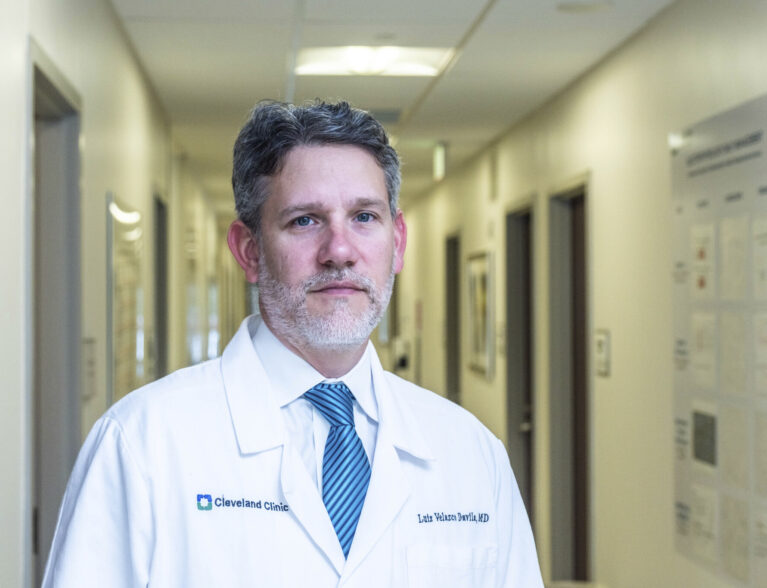
“CABG is a way of re-vascularizing the heart for blockages and redirecting the blood to areas of the heart that are lacking blood flow from calcium and cholesterol plaques,” said Luis Velazco Davila, MD, a cardiothoracic surgeon at the hospital. “It’s a surgical procedure with an open incision in the chest that gives us access the blocked vessel. We open the vessel past the area where the blockage is and use arteries or vessels from other parts of your body to redirect the flow of blood from the aorta to the areas of the heart that are lacking the oxygenated blood.
“CABG is one of the most common surgical procedures with about 200,000 bypass surgeries performed in the US each year and it accounts for about 60-to-70 percent of our volume here at CCIRH. While it’s still very prevalent, new technology and less invasive procedures like implanting stents has enabled us to employ nonsurgical solutions and decreased its popularity somewhat.
“Only about 20 percent of hospitals participating in the STS Cardiac Database achieve the 3-star rating for Coronary Artery Bypass Graft procedures,” Dr. Velazco Davila added. “This rating is based on an analysis of national data collected over a three-year period from January 2022 to December 2024. It was created to help assess and compare cardiac programs across the nation.
What it means for Vero Beach residents is that they receive the same high-level cardiac care here in that they would in major academic centers across the nation.
“What they are looking at to rank hospitals [for this procedure] is major complications that can happen from the surgery. They look at all morbidities from people who undergo these procedures or die within the first 30 days. Then they look at all the major complications that can happen from surgery like stroke, renal failure and prolonged ventilation. And obviously, the overall outcome within the first 30 days.”
The decision on whether a patient needs CABG, medication or stents is dependent on the severity of the condition and made in conjunction with a team that includes the patient, cardiologists and surgeons.
“Some [CABG candidates] will be patients that have multiple blockages in multiple vessels, or blockages in the coronary artery in the left main vessel. There are also anatomies that are not suitable or amenable to have a stent,” Dr. Velaczo Davila said. Patients with diabetes and those that have had stents in the past that failed also likely candidates.
“Through the years and with the advent of new technology and new procedures, the indications for surgery have changed, making some cases more challenging,” he continued.
“What hasn’t changed are the expectations in outcomes. We see sicker patients, but we’re expected to have the same outcomes. While stents are a less invasive procedure, they do not open the artery. With CABG we go in and surgically open the artery and redirect it with a piece of vein or artery. Every patient is different, which is why it’s so important to have a multidisciplinary team making the right decision of each patient based on their individual needs.”
Veins used for grafting come from various parts of the body including the chest wall, arms, legs and abdomen.
CABG is performed under general anesthesia. The patient is hospitalized for four to seven days after the operation and can resume normal activities in a month. Studies show that CABG often provides better long-term survival than stents for patients with complex or multiple blockages, particularly diabetics and those with weakened heart function.
“With our mortality, readmission and complications rates well below the national average, both the hospital and the patients can look at this and understand that they should feel comfortable having their procedures and care right here at Cleveland Clinic Indian River Hospital,” Dr. Velaczo Davila said. “We are comparable to the best hospitals in the nation when it comes to CABG.
“We have doctors that are completely invested in the community, in the hospital and in the care of the patients, as well as state of the art surgical equipment. You really don’t have to travel out of Vero Beach for a CABG when you have a program with the outcomes and ratings that we have.”
Dr. Luis Velazco Davila joined Cleveland Clinic in 2022 after serving as Assistant Professor of Surgery, Division of Cardiothoracic and Vascular Surgery, at the University of Oklahoma. He is board-certified in thoracic and cardiovascular surgery and sees patients at Cleveland Clinic Indian River Hospital’s Rosner Family health and Wellness Center located at 3450 11th Court, Suite 105, Vero Beach. Patients can call 877-463-2010 to schedule an appointment.