Researchers made an exciting announcement in 2021.
For 400 years, anatomists had believed there were just two systems in the body that function as transportation networks for cells, electrolytes, nutrients, hormones and other substances: namely, the lymphatic and cardiovascular systems.
But it turns out they were mistaken. The 2021 study conducted at the University of Pennsylvania and published in the journal Nature found that there is a third circulatory system that transports fluids, immune cells and molecules between organs and the lymphatic and cardiovascular systems. It is the interstitium, a network of fluid-filled spaces throughout the body.
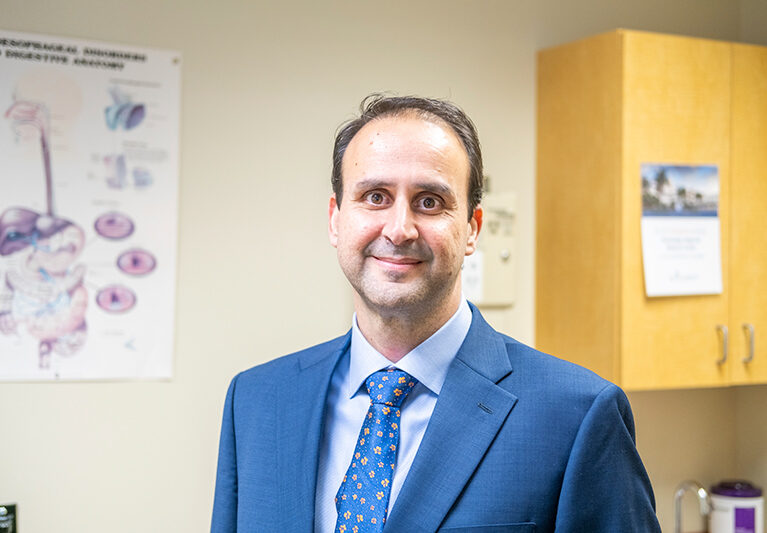
George Christophi, M.D., a board-certified gastroenterologist with Orlando Health Medical Group Gastroenterology, says doctors have known about the fluid filled spaces for a long time but did not fully understand their function or interconnectedness.
“Although the medical community had been aware of the interstitium since the 1960s, it hadn’t been recognized for playing a role in disease until new technology identified it early in this decade,” Dr. Christophi says. “That’s when it was seen it in its natural state for the first time.”
The interstitium are small fluid-filled spaces that cushion organs, move nutrients and help clear waste. These spaces are supported by a framework of tissue that keeps everything connected and balanced. The interstitium plays a key role in keeping your organs healthy and your body running smoothly.
Biology Insights, a peer-reviewed, open access academic journal, adds that the interstitium isn’t confined to one location. It runs beneath the lining of your digestive tract, surrounds your lungs, sits under your skin, and wraps around blood vessels and muscles.
Anywhere you have tissue layers that need cushioning, nutrient delivery or waste removal, you’ll find interstitial spaces. This widespread distribution is part of why it went unrecognized as a unified structure for so long.
“Importantly, immune cells travel to different organs [via the interstitium],” says Dr. Christophi. “It’s key to our bodies being able to fight infection.
“This highway of interconnected spaces filled with moving fluid may also explain how diseases spreads. This newfound network is where lymph, the fluid that your immune cells need to work well, comes from.
“The interstitium isn’t hollow,” Dr. Christophi continues. “It’s a dense, three-dimensional mesh made primarily of collagen fibers, elastin and sugar-based molecules called glycosaminoglycans that absorb and hold water.”
The movement of fluid between your blood vessels and interstitial spaces is governed by a push-and-pull balance of pressures. Blood pressure inside capillaries pushes fluid outward into the tissue.
At the same time, proteins that make the blood denser create an osmotic pull that draws fluid back in. Under normal conditions, the outward push slightly exceeds the inward pull, so there’s a slow, steady filtration of fluid into the interstitium.
Scientists are now studying how this system affects the spread of disease and how it may be utilized to treat disease and benefit health.
“Considering their intertwined nature, a disruption in the interstitium can impact both skin and lymphatic health,” says Dr. Christophi.
“If interstitial fluid doesn’t drain effectively, it can lead to edema or lymphedema – both of which are characterized by swelling caused by fluid accumulation in body tissues.
“Blocked lymph vessels or compromised lymph nodes can cause fluid build-up in the interstitium. Over time, this can lead to issues like dryness, puffiness, and certain skin conditions.”
An article published recently in the New York Times suggested that an interconnected interstitium seems to play a critical role in cancer metastasis. It is well established that cancer cells can spread to the rest of the body by hijacking the lymphatic system, the article stated.
But evidence suggests that tumor cells may reach the lymphatic system by first navigating through the fluid flowing through the interstitium, like fish swimming downstream.
Dr. Christophi concurs. “Research is being done particularly on pancreatic and gastrointestinal cancers, as well as melanoma. Additionally, research into diabetes and liver disease shows great promise.”
This discovery of a third circulatory system is transforming doctors’ understanding of how the human body works. And it may also change how we view our own bodies in relation to other biological systems.
George Christophi, M.D., is a gastroenterologist with Orlando Health Medical Group Gastroenterology. He has BS degrees in molecular biology and chemistry from Richard Stockton University in Pomona, N.J.; earned a Ph.D. in immunology and a medical degree from State University of New York Upstate Medical University in Syracuse. He completed his internal medicine residency, gastroenterology fellowship, advanced inflammatory bowel disease fellowship and post-doctoral gastrointestinal research at Washington University School of Medicine in St. Louis. He is board certified in gastroenterology and internal medicine. Dr. Christophi’s office is located at Orlando Health Medical Group Gastroenterology, 240 N. Wickham Road, Suite 309, Melbourne. Call 321-752-1630 for an appointment.