Local and regional media reports about growth at the Vero Beach Regional Airport have been a mainstay of news coverage in the past few years. The reports have been driven mainly by the increase in passenger service and passenger numbers at the small airfield, as three major airlines have set up shop there. They’ve also included news about terminal renovations and new facilities planned or built.
But the magnitude of the growth at the former naval air station turned general aviation airport is not captured by scattered stories about the latest new route added by Jet Blue or American Airlines.
Passenger traffic in March at the peak of snowbird season was up more than 700 percent compared to three years ago. In that same timeframe, a U.S. Customs house was built and opened at the airport, along with scores of new hangars for the private jets numerous island residents use to operate their businesses or travel to and from their northern homes.
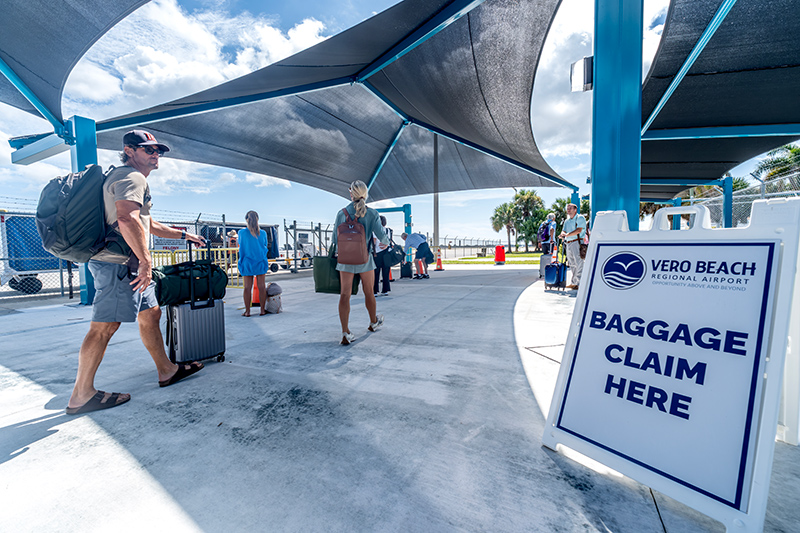
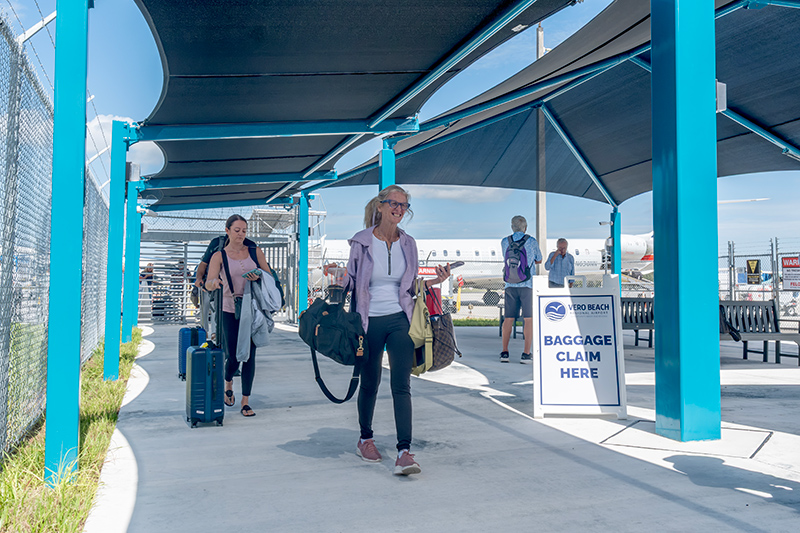
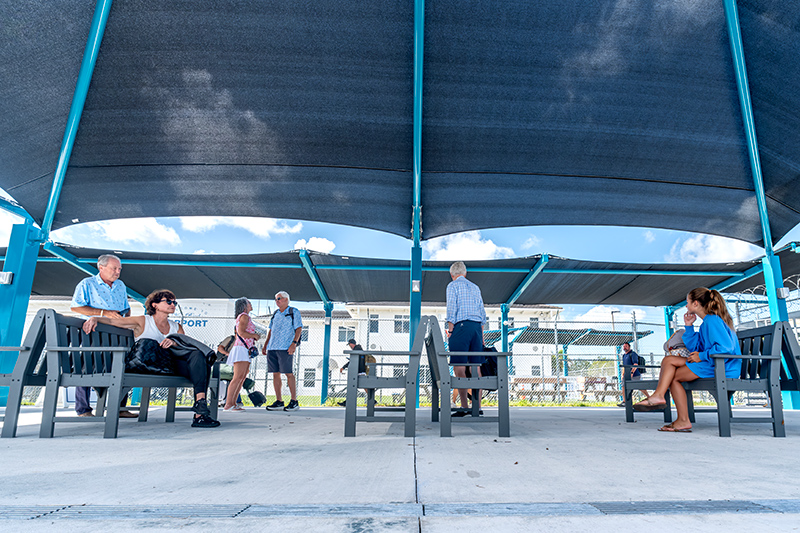
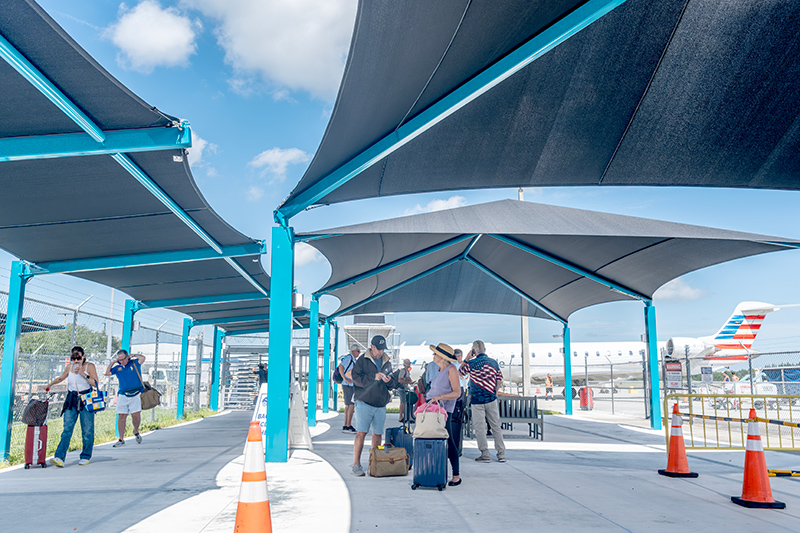
While the dust is still settling on a $5-million slate of improvements at the airport terminal – including an expanded baggage area, covered outdoor waiting areas and ADA compliant restrooms – city council members are already looking ahead at the possibility of expanding the terminal. They are in the early stages of planning public meetings this fall to gather input from city residents and get a sense of what the public would like to see happen at the historic airfield.
At the same time, construction is gearing up on multiple major projects near the terminal.
Envision Parking Partners, a local company that is partnering with SafeParc, has submitted plans to construct and operate a 630-space commercial parking lot southwest of the terminal building on property leased from the city. The system will charge for parking using license plate scanners and mobile payment app technology. The city will collect a 25-percent concession fee.
Interim Airport Director Brandon Dambeck said he expects construction on the parking lot to start in May or June of next year and finish about 90 days later.
City planners approved site plans in March from local developer Coppola Partners LLC to construct a 2,800-square-foot rental car facility on six acres at 2590 Airport Drive, across from the terminal. Preliminary groundwork began in March. Dambeck said he expects paving to begin soon.
The rental facility also includes 2,300 square feet of detailing bays, parking spaces and a vacuum and fueling area.
Ranger Construction, headquartered in West Palm Beach, will be extending Taxiway B, which is in the west/northwest area of the airport near the former Corporate Air facility, now merged with Infinity Aviation. That multimillion-dollar project is expected to get underway in November or December and continue for about eight months.
Elsewhere on the airport’s 1,700-acre property, Piper Aircraft has submitted plans to construct a 30,000-square-foot aviation service facility, Paris Air flight school is getting ready to build a new student training facility, and SkyKing Aviation, a private aviation and aircraft management company, is seeking to lease property near the Jackie Robinson Training Complex to construct still more hangars.
Growth has been driven by three main forces – the pandemic migration to Florida generally and Vero Beach specifically, an astronomical increase in wealth among the segment of the U.S. population that flies private, and the onset and increase in commercial passenger service at the airport.
On the population front, Florida has gained more than two million residents since 2019 and the population of Indian River County has increased from 160,000 to 175,000, according to U.S. Census estimates, a 10 percent jump. More people equal more passengers.
During the pandemic and economic recovery that followed, the top 10 percent of American households added tens of trillions of dollars to their net worth, driven largely by soaring values in the stock market and real estate, according to the Federal Reserve.
Not coincidentally, Forbes reported in January that “demand for private jet flights reached a record level in 2025,” adding that “all indications are that the current ascent will continue.”
But the increase in passenger service has been the top factor fueling growth.
With three major air carriers now landing at Vero’s tiny municipal airport – Breeze Airways, JetBlue and American Airlines – the annual number of passengers served is more than triple what it was just three years ago. A total of 85,728 passengers flew from Vero Beach in 2023 when Breeze was the sole carrier, increasing to 175,995 passengers in 2024. Last year, total passenger count increased to 259,040 after JetBlue and American started service.
And passenger service growth continues. Although JetBlue recently discontinued service to New York’s JFK airport, Breeze Airways has announced it will be adding five new routes to and from Vero Beach starting in October, including non-stop flights to Atlantic City, N.J., Trenton, N.J., and Baltimore.
American Airlines is adding one nonstop flight per week to Philadelphia starting on Nov. 7, and JetBlue will continue its daily flights to Boston’s Logan International Airport.
With all the additional flights, the FAA is requiring the airport to rent a third 1,500-gallon capacity firetruck to its fleet, Dambeck said.
The airport is also acquiring 30 vehicle movement area transponders that will allow pilots and air traffic controllers to electronically track all airport or vendor vehicles – such as tractors, fuel trucks and fire trucks – that enter the airport’s moving space.
This will help to prevent collisions between vehicles and aircraft like the deadly crash involving a fire truck and a commercial plane in March at LaGuardia airport, which claimed the lives of two pilots and injured 39 other people.
“Every bit of additional situational awareness technology that you have available will help,” Dambeck said. The FAA will cover most of the cost to purchase and install the VMAT equipment, with the airport picking up the remainder, he added.
Also this fall, a vendor named Altitude will operate a food and drink concession in the terminal serving passengers who have already cleared security and check-in. The vendor has applied for a license to sell alcoholic beverages, as well, according to Dambeck. Passengers will have to finish their alcoholic beverages before boarding, he said.
This level of growth at the airport has raised fears of overbuilding and a different kind of airport experience than what Vero flyers are used to.
Dambeck said that while there clearly is a strong market for passenger flights at the airport, the city is trying to walk a fine line between reasonable growth and over-expansion, hoping to maintain the small-town airport character that residents like.
With that in mind, designers from Hanson Professional Services are drafting three options for the airport’s future. One option is to leave the airport as is, after completion of the current terminal improvement project, which is almost finished.
The second option includes a small expansion of the terminal building to the south and the third option would be a larger expansion of the terminal to the west, where short-term and employee parking currently are located.
“We’re inviting residents, businesses and airport users to help shape what the future looks like,” Dambeck said. “We will continue to preserve the airport’s balanced role, serving both general aviation and commercial air service, rather than become a large commercial hub.
“This planning process gives us the opportunity to evaluate our long-term facility needs while incorporating community input,” he said. Dates and locations for the airport charrettes have not been announced yet.
The airport hosted a “soft opening” of the upgraded terminal the week of Aug. 17 and everything went smoothly, Dambeck said.
Avis Car Rental has moved to its new counter in the renovated terminal area, which will be its home until the consolidated rental car facility is finished. Avis’ old counter will be removed to provide more room for queuing in the lobby, Dambeck said. “The airport aced all county inspections for the project, and the Transportation Security Administration has signed off on opening the arrival area and most of the outdoor turf area.”
Changes to the flow of airport car and truck traffic are also complete, and traffic will now enter and exit in one direction – east to west.
“It may take a little time for people to get used to the procedural changes, but ultimately [the roadwork] has eased a lot of the congestion to create a better experience coming in and out of here,” Dambeck said.
Photos by Joshua Kodis