How do you create a grand edifice that fits in perfectly with its natural surrounds but also looks like it’s been there forever?
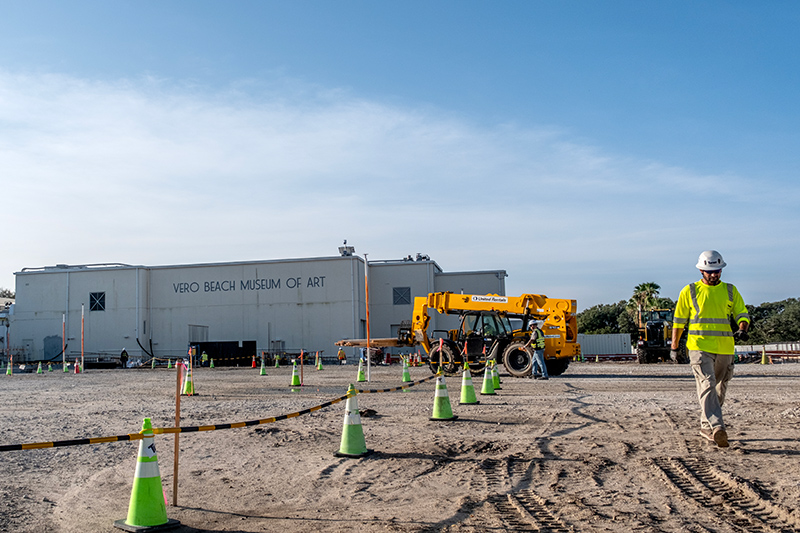
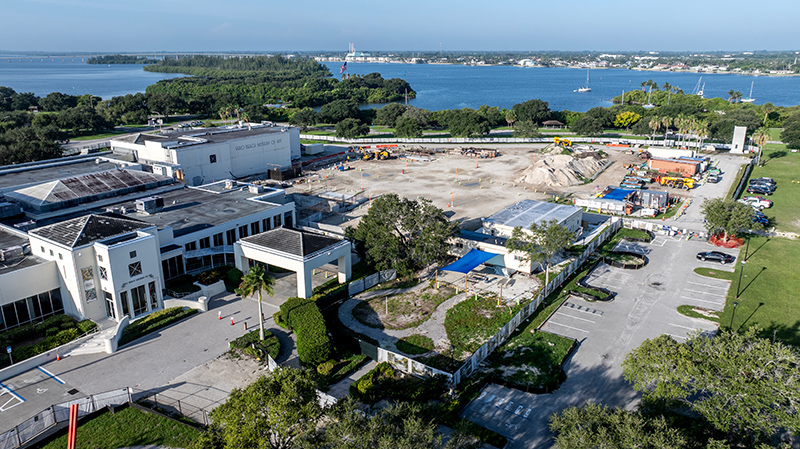
That was the challenge for the designers of the new $126 million Vero Beach Museum of Art now taking shape in Riverside Park.
Brad Cloepfil and his design team at project architects Allied Works knew from the get-go that they wanted to construct the walls using local materials that would provide decades, or even centuries, of resilience to Vero’s sometimes harsh subtropical weather. At the same time, the walls should evoke and resonate with the beauty and allure of the art that will be displayed inside.
“Most art museums are urban. We’re not,” said Brady Roberts, the museum’s executive director and CEO. “We’re in a very special place and in a very special park. It required original thinking because there is no other art museum like this in a subtropical environment anywhere that has our kind of community arts center and broad base of programs.”
Roberts told Cloepfil that he wanted something that looked like a fossilized Florida stone.
“We’ll make our own Vero Beach concrete,” Cloepfil replied.
“In the initial meeting between Brad and the team of concrete experts at Maschmeyer, I thought they’re either going to think this guy is brilliant, or he’s crazy. But I could tell right away they were all speaking the right language,” Roberts said. “There’s a lot of chemistry behind concrete. It needs to have structural integrity and there are a lot of variables. This team really applied themselves and worked together to create something that’s very beautiful.”
Maschmeyer Concrete is a Florida concrete company with dozens of locations around the state.
According to owner Troy Maschmeyer who founded the company in 1986, it is “one of the leading privately held, family-operated ready-mix concrete, block and building materials suppliers in the country.” It has accumulated a long list of awards for quality and safety excellence from NRMCA, the ready mix trade association.
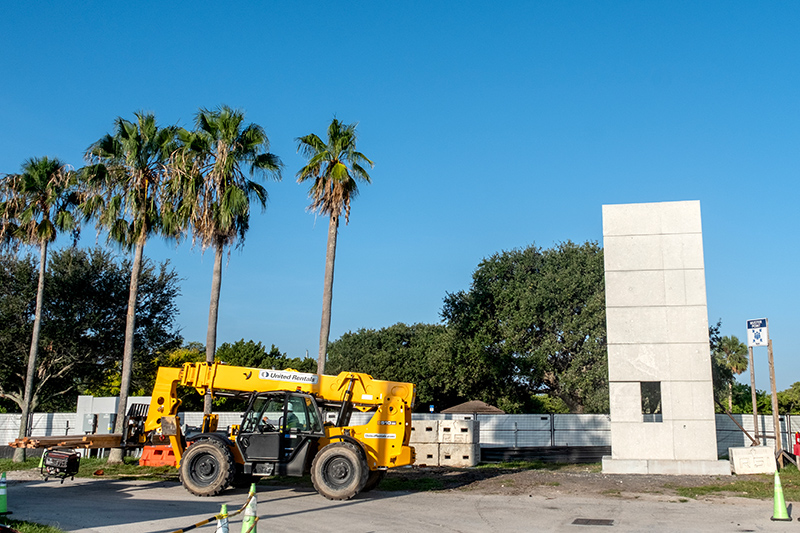
An L-shaped “proof-of-design” mockup wall was recently poured at the building site as a guide and touchstone that workers can refer to as they erect the walls that will enclose 100,000 square feet of new public space.
The walls will be monolithic, concrete on the inside and outside.
“We were really captivated by the coquina used in architecture in other places of Florida,” said Chelsea Grassinger, a principal partner at Allied Works. Coquina is a sedimentary geologic formation comprised of compacted and cemented shells.
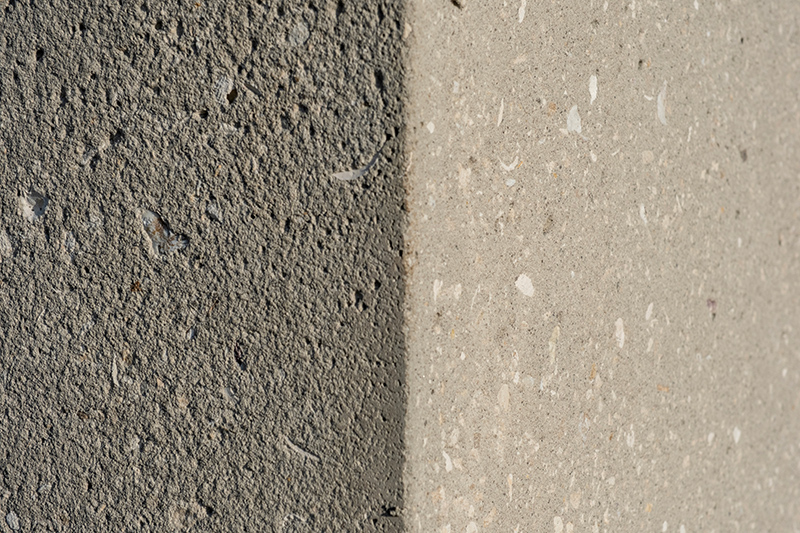
“It has this rich porousness,” Grassinger explained. “We were searching for a way to express that in the architecture and we felt that cast-in-place concrete was going to give us that expression.”
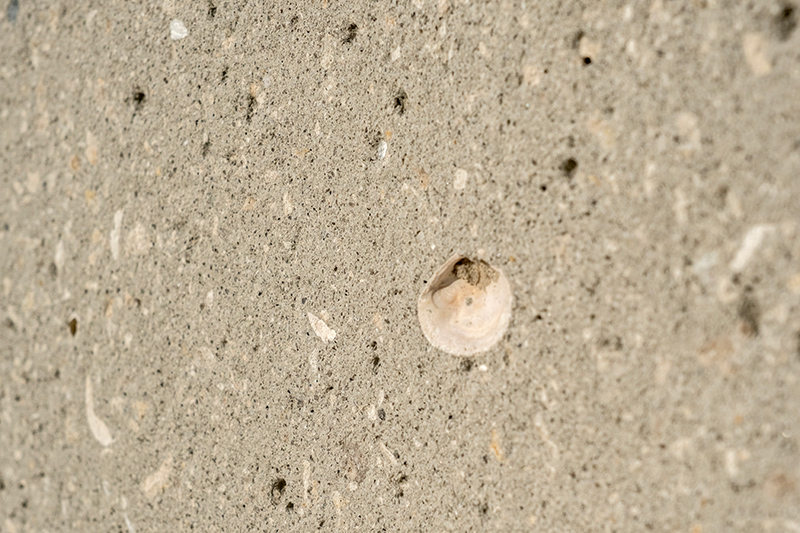
Working with Maschmeyer’s technical experts, Grassinger, Cloepfil and others on the design team directed test pourings at Maschmeyer’s Vero Beach plant. By the third pour, they knew they had the right mixture of local sand, concrete, slag and Florida beach shells.
“There really was no other material that gives us the ability to capture the character of the place, while providing not only structure, but finish and façade,” Grassinger said. “The interior and the exterior are sort of a constant experience. You’re moving between these concrete walls, whether they are on the outside or the interior. The fluidity of that concrete material was really important.”
Next, the selected test wall was sandblasted to expose more of the shells inside, Grassinger said.
“That was the key,” she added. “That’s when the magic happens. Sandblasting adds refinement to the finish, exposing the shells, the sand, the warmth, the depth and character, but retains a refined surface that is appropriate for an art museum.”
The team figured out the best time during the curing process to do the sandblasting by trial and error, Grassinger said. If the concrete was too soft, too much material was blasted off; if it was too hard, not enough could be blasted off, she said.
“It looks so natural in our park and so close to the lagoon. It’s beautiful, like it should be,” Grassinger said. “It’s been a really productive, successful process. This is why we do what we do. Our core portfolio is art museums and cultural institutions. It’s where we thrive and where we find our approach really resonates.”
Once erected, the walls will all be sealed to provide protection from the elements, she said.
The two-year, $126 million project broke ground last November and is right on schedule, Roberts said, with foundations and retaining walls being poured now. It is slated for completion by late 2027.
“We’ve been looking at this in plans and models for years now, but when you see the scale of it in real open space, it’s quite impressive,” Roberts said of the mockup wall. “You’re getting a sense of the vertical scale, as well. It’s pretty exciting.”
Photos by Joshua Kodis