For parents, the words “pediatric cardiology” are frightening. A child being referred to a heart specialist raises fears that something is seriously wrong. But sometimes the most important thing a pediatric cardiologist can tell a family is that their child’s heart is perfectly healthy.
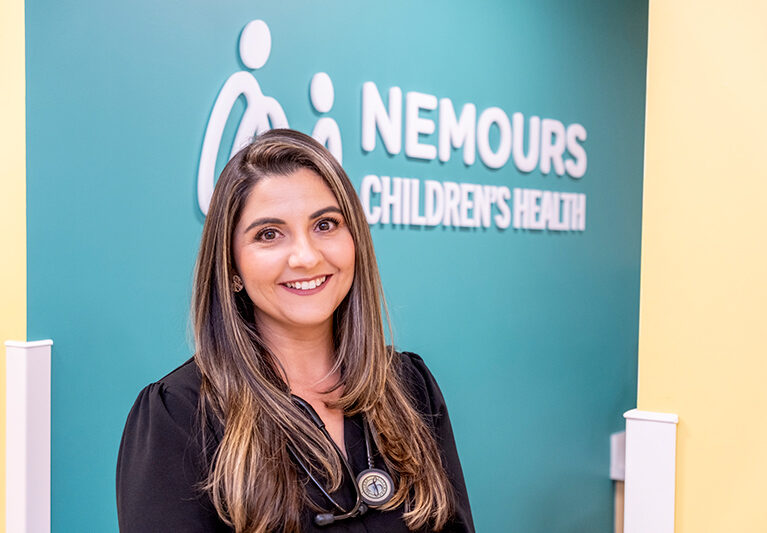
That is one of the goals behind a new pediatric cardiology clinic in Vero Beach, where Nemours Children’s Health pediatric cardiologist Vanessa Hormaza, M.D., is providing specialized heart care for children from before birth through age 21.
Nemours Children’s Health primary care clinic opened in Vero in 2017. The new practice expands the Nemours treatment footprint in Indian River County.
The need for pediatric cardiac care reflects a changing community.
“We’re getting more and more families, and with that comes more and more children,” Dr. Hormaza said. “We wanted to make sure that we could provide a space to better serve our community.”
The new 2,600-square-foot clinic provides a more spacious setting where children can receive a range of cardiac services without necessarily having to travel to Orlando for every evaluation or test.
Dr. Hormaza describes the clinic as a “one-stop shop.”
“When you come to see me, it is my priority to make sure that all your testing is done same day and results are provided at the time of the visit,” she said.
Depending on the child’s symptoms or reason for referral, that may include an electrocardiogram, commonly called an EKG, which records the heart’s electrical activity, or an echocardiogram, an ultrasound that allows physicians to examine the heart’s structure and function. The clinic can also provide longer-term heart-rhythm monitoring for children experiencing palpitations or episodes of rapid heartbeat.
The clinic sees children for a wide variety of concerns, including chest pain, fainting or near-fainting, dizziness, shortness of breath and palpitations. A significant family history of cardiomyopathy, sudden cardiac death or premature coronary artery disease can also prompt a pediatric cardiology evaluation.
Dr. Hormaza said one common misconception among parents involves heart murmurs.
A murmur is a sound a physician hears while listening to the heart. While some murmurs can be associated with a heart problem, many are what doctors call innocent or benign murmurs.
“Most commonly, it is we call an innocent or benign heart murmur, where it’s just a sound when we listen, but when we look at the anatomy and structure of the heart, there’s absolutely nothing wrong with the heart to cause that sound,” she said.
And pediatric cardiology can begin before a child is even born.
The clinic offers fetal echocardiography, a specialized ultrasound examination of an unborn baby’s heart. The optimal time for the examination is generally around 22 to 24 weeks of pregnancy.
A fetal echocardiogram may be recommended for several reasons, including a maternal history of congenital heart disease, diabetes during pregnancy, conception through in vitro fertilization or concerns identified during a routine prenatal ultrasound or genetic testing.
The examination can identify certain congenital heart defects and abnormal heart rhythms.
Perhaps one of its greatest benefits, Dr. Hormaza said, is giving physicians and parents an opportunity to prepare for the baby’s delivery if a heart problem is detected.
“It allows us to better prepare for delivery,” she said. “It allows us to survey how the baby is doing clinically during pregnancy and come up with a delivery plan.”
In some cases, that may simply mean making sure the baby receives an EKG after birth. In cases involving a serious congenital heart defect, knowing about the condition before delivery can help the medical team determine where the baby should be born and ensure that the appropriate specialists, medications and equipment are available.
If a child ultimately requires cardiac surgery, the Vero Beach clinic is supported by Nemours Children’s Health in Orlando, where pediatric cardiothoracic surgeons are available. Dr. Hormaza said cases that meet surgical criteria are presented to a larger team, which works collectively to determine the appropriate treatment and coordinate care for the family.
The local clinic also provides preventive cardiac care.
Children with high blood pressure, high cholesterol or a significant family history of heart disease may be evaluated even if they are not experiencing obvious symptoms. Genetic testing is available for children who may have an inherited predisposition to certain heart conditions, with assistance from a cardiogenetic counselor.
The Nemours team also offers a healthy-weight program for children struggling with obesity with that service offered through tele-health.
Another issue bringing more children into pediatric cardiology offices is sports participation.
Dr. Hormaza said Florida’s new requirement for high school students to undergo an EKG before participating in sports has increased the number of children receiving the test, including those who have no symptoms.
A number of high school athletes have died on the field in recent years due to undetected heart defects. An EKG can help identify electrical abnormalities of the heart and may also provide clues that lead physicians to investigate possible structural heart problems.
For families seeking a sports EKG through the clinic, Dr. Hormaza said Nemours offers a very accessible option: a $20 sports EKG that can be scheduled through the Nemours app without going through insurance.
Although heart disease in children is relatively uncommon, pediatric cardiologists see children with a broad range of concerns. Sometimes the child arrives because of a genuine cardiac problem. Other times, the evaluation provides something equally valuable: reassurance.
A young child might tell a parent, “My heart is beeping,” for example, or complain of chest pain after playing outside in the heat. Another child may become short of breath during physical activity or experience an episode of fainting.
Those symptoms do not automatically mean the child has heart disease, but they can leave parents understandably worried.
Dr. Hormaza said one of her primary goals is to make both the child and the parents feel comfortable and understand what is happening.
“This new cardiology clinic reflects Nemours Children’s commitment and investment in the health and well-being of the communities it serves,” said Dr. Hormaza said. “As someone who calls this community home, I am proud to continue serving our children and families to ensure they get the cardiac care and support they need in a space dedicated to them.
“My goal is to give good quality care to these children, to make them feel comfortable, to make them feel welcomed, and to ultimately have parents walking out here at the door feeling better and not nervous or scared or worried about their child’s heart.”
And that may be the most important service a pediatric cardiology clinic can provide – not only identifying children who need specialized care, but helping families understand when there is nothing to fear.
Dr. Vanessa Hormaza received her M.D. from the University of Texas Medical Branch at Galveston and the University of Virginia School of Medicine. She completed her residency in Pediatrics at USF Health Morsani College of Medicine and her fellowship in Pediatric Cardiology at the University of Virginia Health System. Nemours Children’s Health, North Vero Beach, located at 3755 7th Terrace, Suites 301 and 304, is open Monday through Friday from 8 a.m. to 4 p.m. Families can now schedule appointments for cardiac care by calling 407-650-7715.