The Sebastian Inlet District, Vero’s Ocean Research and Conservation Association (ORCA), and Sebastian Inlet State Park have banded together to save a badly eroded section of the park.
Coconut Point, a finger of land jutting into the Indian River Lagoon on the south side of the park, was torn up by Hurricane Nicole when it came barreling through in November 2022 – partly because the nearby boat ramp magnifies wave action. That is the same hurricane that wiped out the Humiston Park boardwalk in Central Beach.
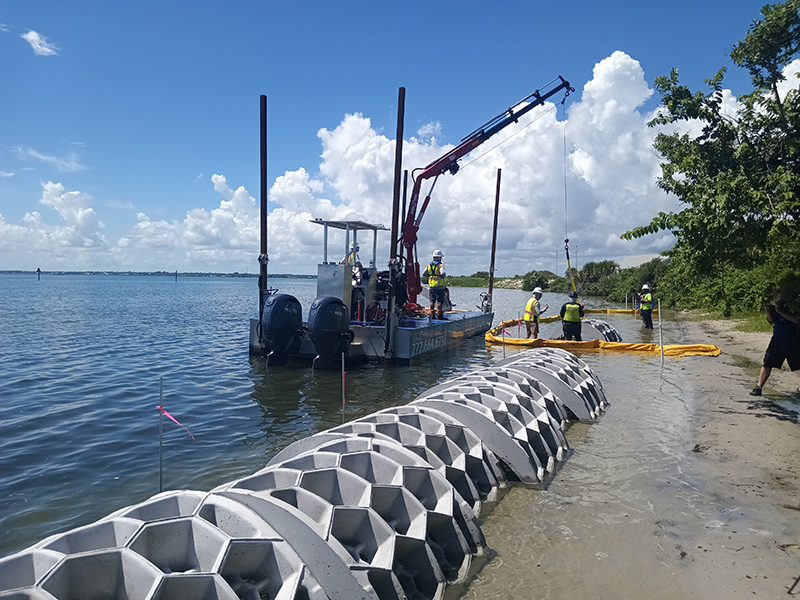
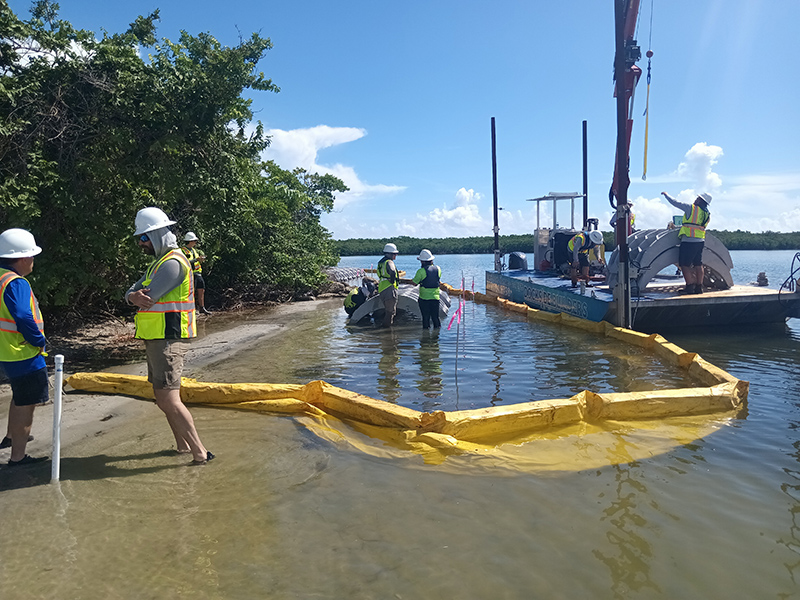
The Coconut Point Shoreline Resilience Project aims to reduce ongoing erosion while building up sand to replace what was washed away. To that ecological end, a jagged line of 22 honeycomb pattern concrete reef arches – each 4 feet wide, 2.5 feet high and weighing around 1,200 pounds – has been put in place along a 200-foot stretch of shoreline just west of the campgrounds.
“This project showcases a great example of how partnering agencies are working together to improve coastal resiliency along public shorelines in Florida,” said James Gray, executive director of the Sebastian Inlet District, the independent taxing district that maintains the inlet that bisects the state park.
In three to six months, about 90 mangrove trees will be planted between the reef arches and the land, providing additional resilience and restoring the vital ecosystem by creating a sheltered area for small fish and crustaceans.
ORCA, a scientifically powerful nonprofit organization focused on protecting the Indian River Lagoon and other aquatic ecosystems, is overseeing the project and will be monitoring its progress over the next three years with the help of volunteer citizen scientists.
Reef arches have been used successfully as breakwater structures elsewhere in Florida, including at Cape Canaveral, Titusville and Palm Bay, said Natalie Stephens, a research associate who manages ORCA’s coastal restoration projects.
“The ultimate goal is that over time we might not even actually see the reef arches because they will be overtaken by the natural recruitment of mangroves and other shoreline vegetation as the shoreline comes back,” Stephens said. “We’re going to be looking at shoreline accretion – the gradual buildup of sand and other sediment – seagrass growth and biodiversity. Our goal is to use rigorous monitoring to see how the reef arches are performing over time and how the living shoreline is maturing.”
By attracting oysters and other invertebrates, the structure will also improve the water quality, Stephens said. A single adult oyster, for example, can filter up to 50 gallons of water per day, she said.
The project has a modest price tag – $190,004 – that belies its major impact. It is being funded by a potpourri of state agencies and environmentally minded businesses, including the Sebastian Inlet District and Florida Department of Environmental Protection, said Ed Garland, public information associate at the Inlet District.
Reef Arches, headquartered in Boynton Beach, which manufactured the concrete arches, is donating $81,000 worth of labor and materials, and 45 of the 90 mangrove plants will be provided by MANG, a West Palm Beach company that sells environmentally themed apparel. For each piece of apparel sold, MANG donates one mangrove plant to a shoreline restoration project.
ORCA’s management and monitoring of the project is being funded by 11th Hour Racing, a Rhode Island nonprofit organization founded by philanthropist Wendy Schmidt that’s dedicated to mobilizing the sailing and maritime industries to protect ocean health.
-

- PHOTO BY JOSHUA KODIS

-

- PHOTO BY JOSHUA KODIS

-
- PHOTO BY JOSHUA KODIS

-

- PHOTO BY ED GARLAND

-

- PHOTO BY ED GARLAND
-

- PHOTO BY ED GARLAND