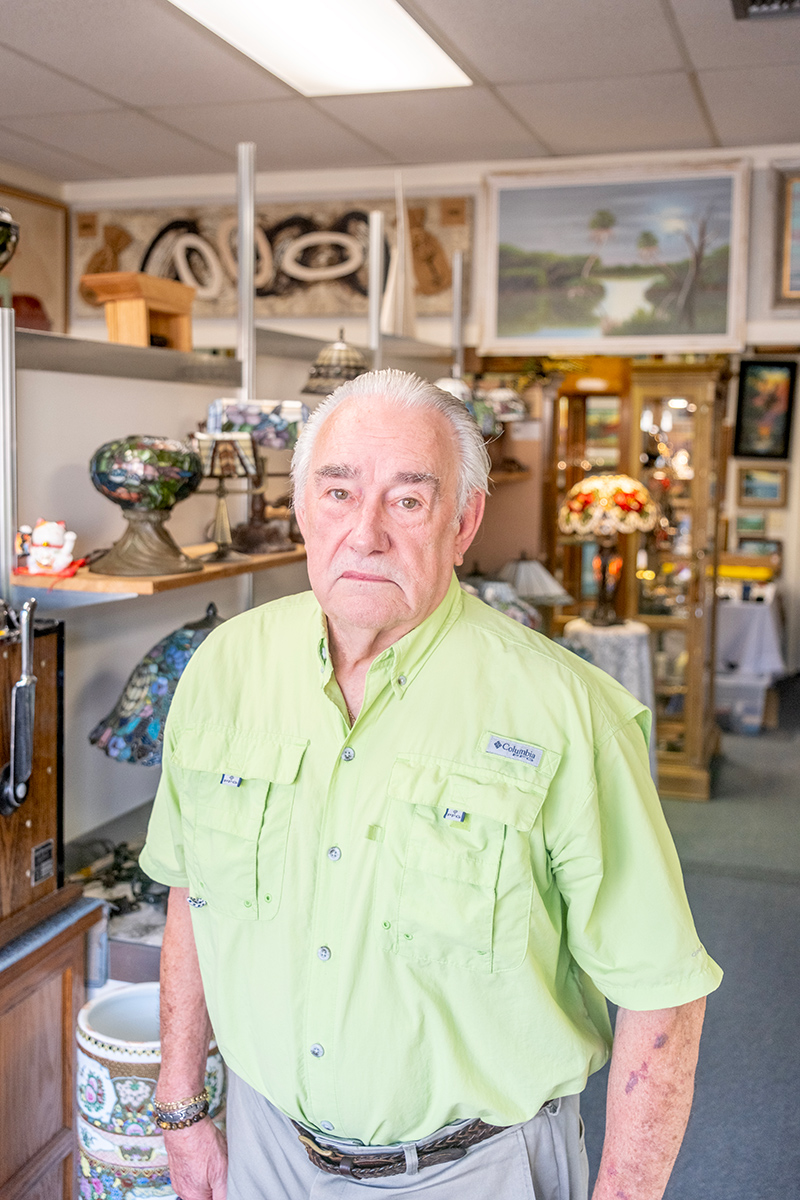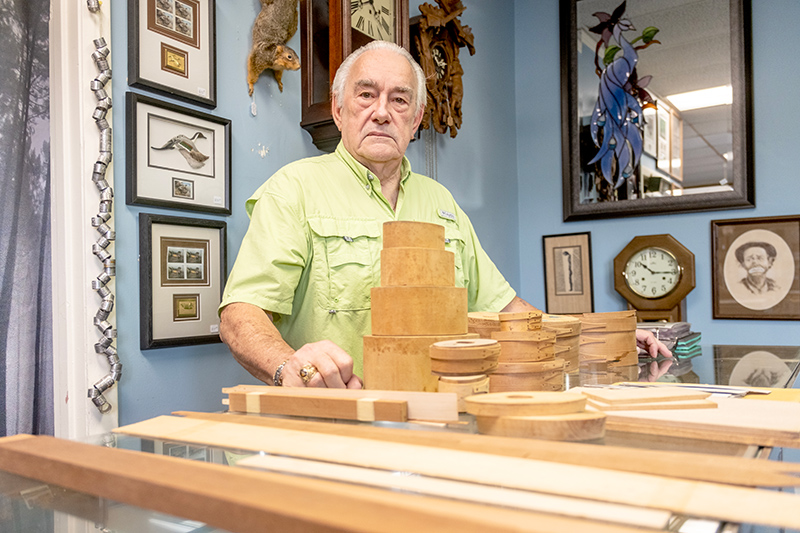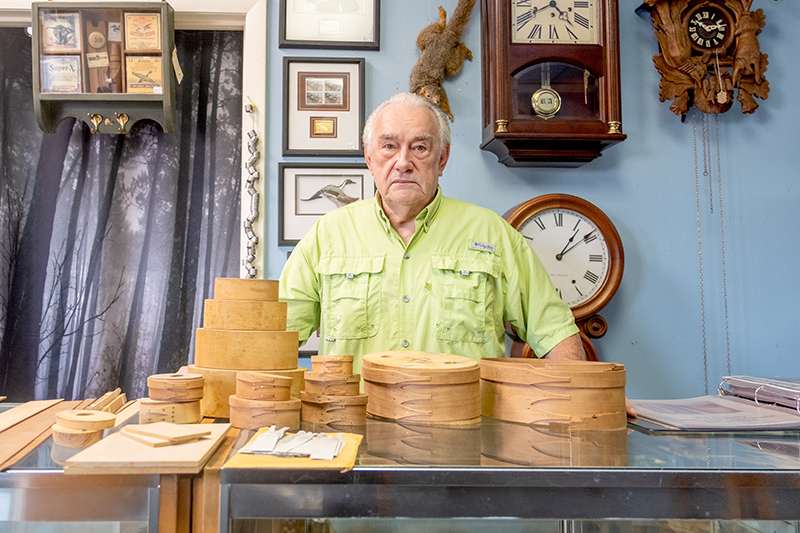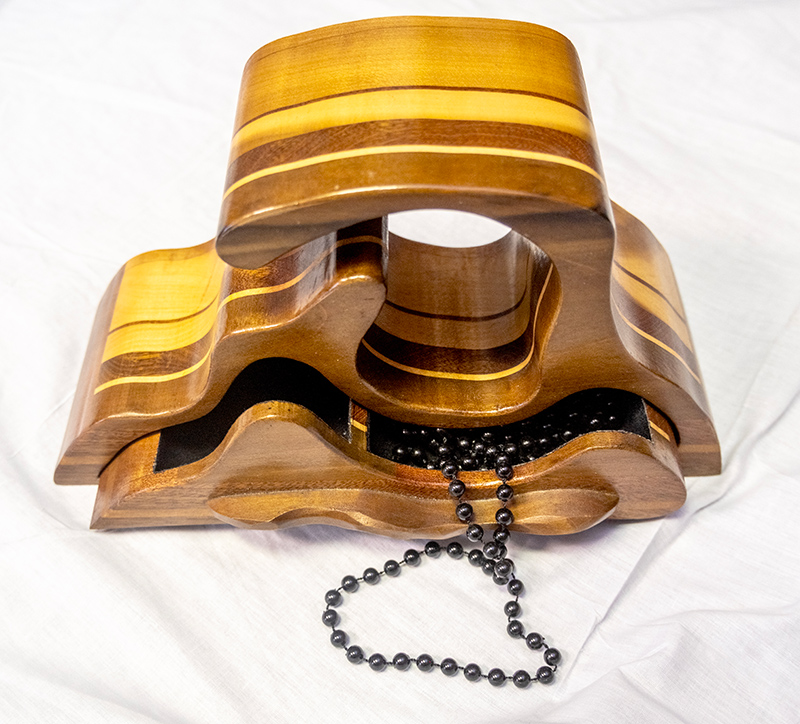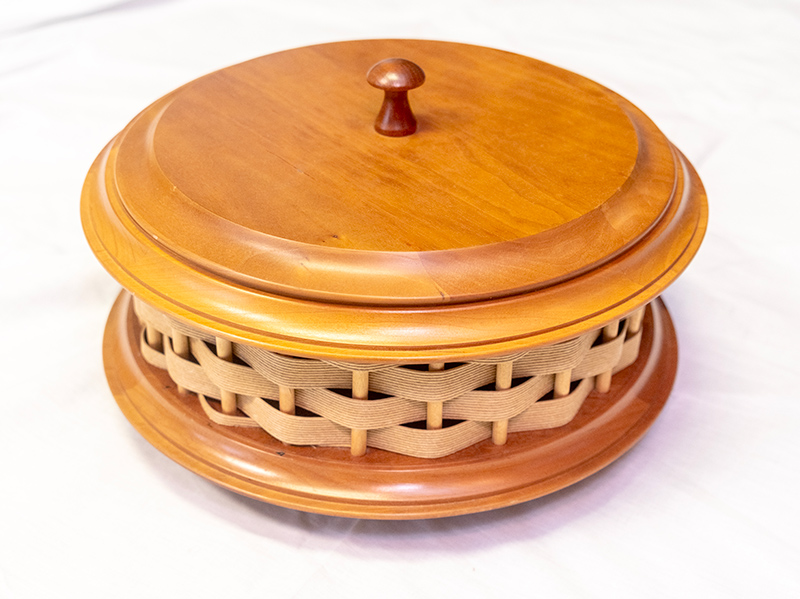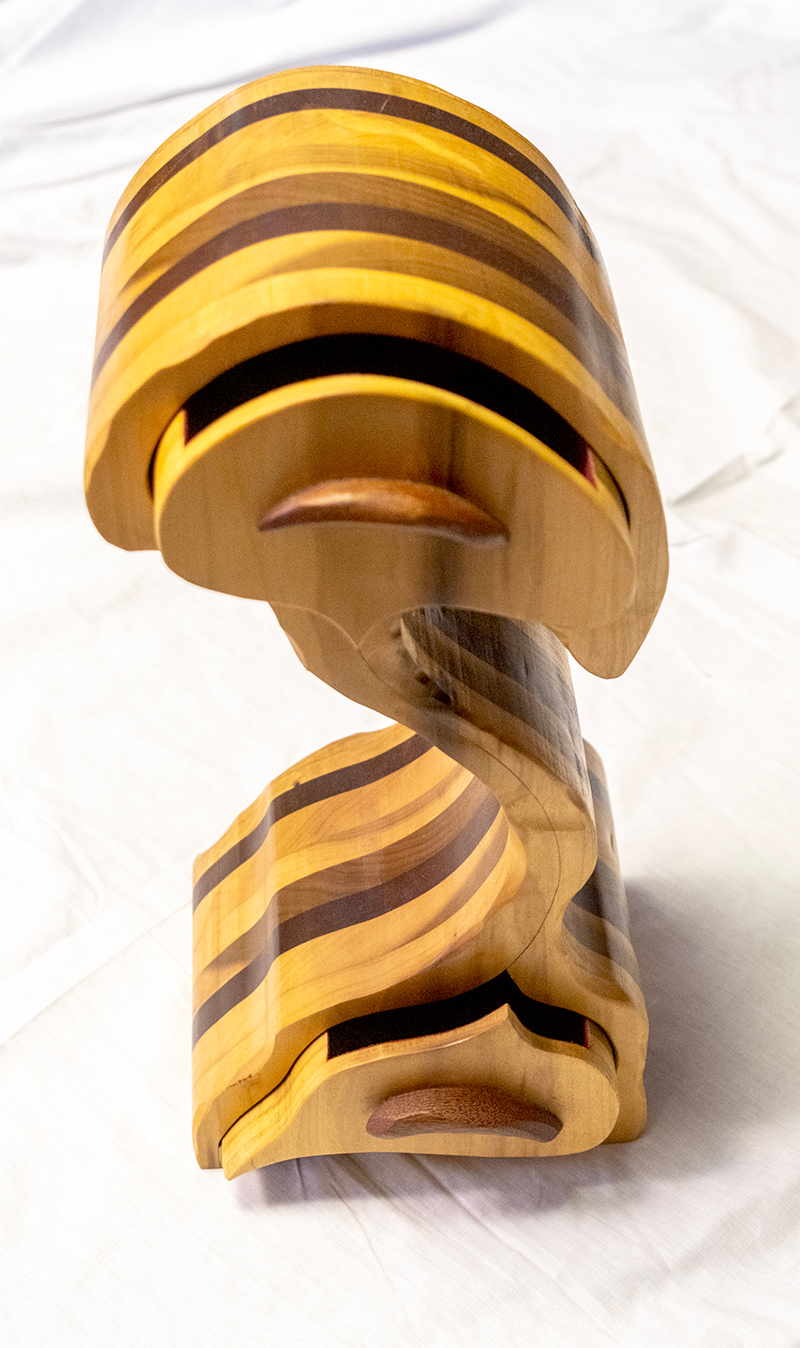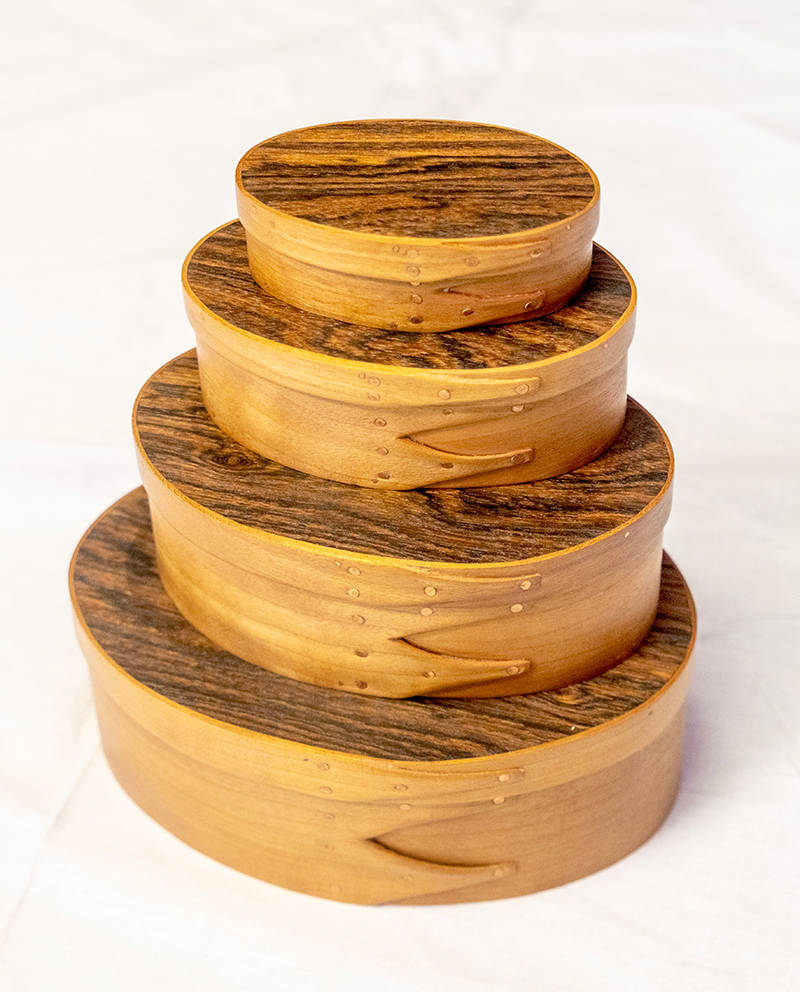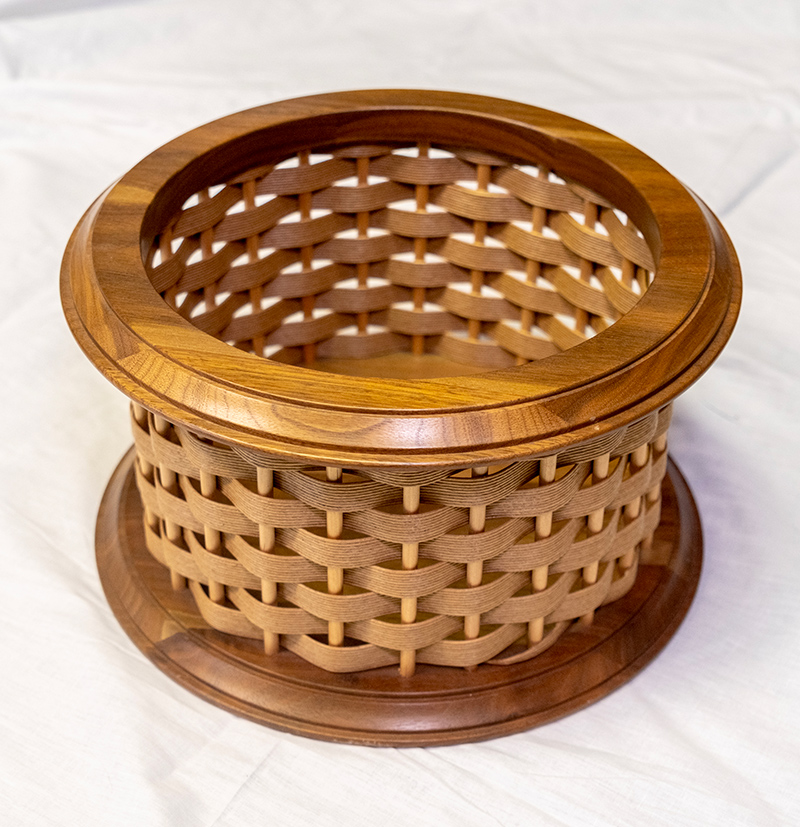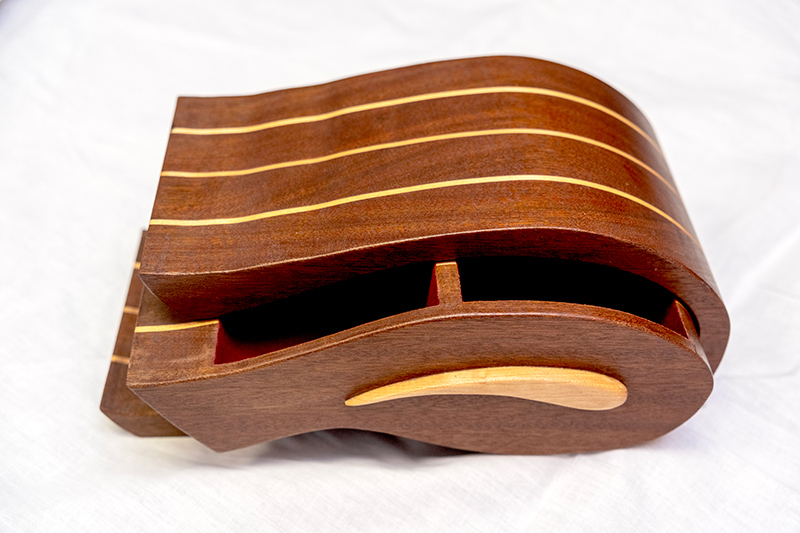
Darrell Remole is one of only a handful of artisans in the United States skilled in crafting the distinct minimalist design of Shaker style boxes, clocks and basket designs. His artwork, with its timeless simplicity and functional beauty, is sold throughout the country, reflecting its enduring appeal.
He also holds the distinction of being the only Shaker craftsman whose work is sold at the Shaker Village of Pleasant Hill in Harrodsburg, Kentucky.
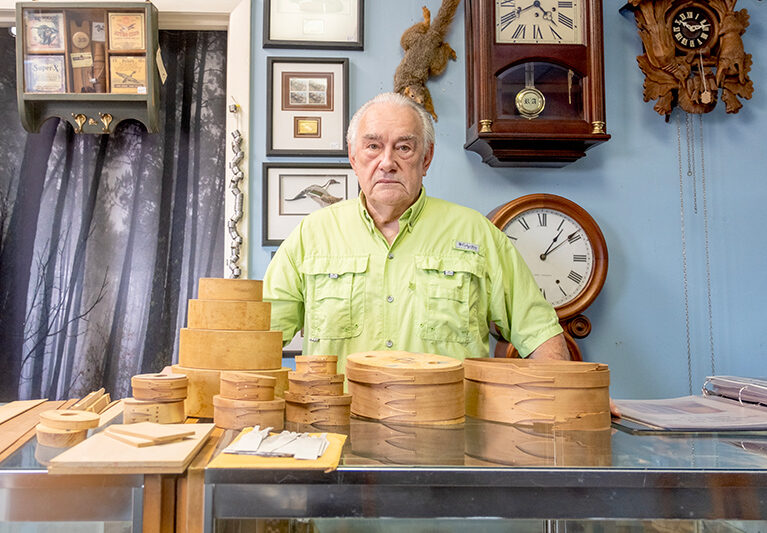
Inside Remole’s Vero Beach studio-gallery, visitors are greeted by a striking display of finished handcrafted pieces. The rich scents of oak, maple, cherry and mahogany invite a closer look, not to mention an itch to touch them.
“The wood I use is shipped from Michigan, Kentucky and Indiana. I also use exotic Zebra wood imported from Africa. For me it is an honor to uphold the Shaker box and basket traditions and to have been taught by the late John Wilson, a Master Shaker box maker,” Remole explains.
“After the classes, I started making boxes for friends and soon others wanted to buy my boxes.
That’s when I started a side business called Darmikk Designs, making Shaker boxes and other wooden items.”
The clean lines of the pieces’ designs contradict the complexity involved in making the iconic Shaker style boxes.
Describing the steps involved, Remole says he begins with a rectangular piece of wood, about an inch in thickness, from which he shaves slices that are 1/16th of an inch.
“I filet the wood and shape it with a band saw, then use authentic Shaker templates and trace it on the wood. These almost paper-thin slices are then placed in a copper pot immersed in distilled water and cook for about 30 minutes,” says Remole.
“This is genuine Shaker tradition. Never use water from the tap but distilled water, which won’t leave spots. And copper doesn’t discolor the wood.”
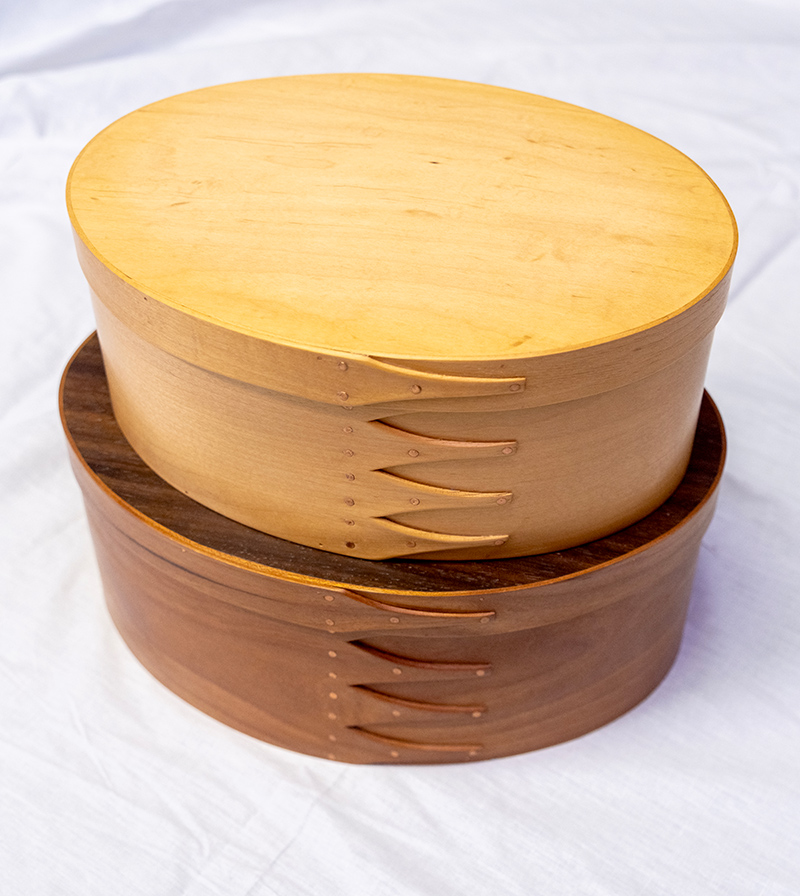
The strips are then made into seamless ovals, by wrapping them around various sized solid wood oval shapers. Once dry, the bands are tacked together to construct the box and they are given a hand-rubbed finish.
Eventually the boxes can be stacked on top of each other, from the largest on the bottom to smallest on top. They are also designed to nest neatly inside one another, with each smaller box fitting into the next larger one until the entire set is concealed within the largest box, much like Russian nesting dolls.
During the years when Remole and Melissa, his wife of 34 years, both worked full time, they worked as a team to exhibit and sell every weekend. The demanding schedule of working every day, month after month, became second nature.
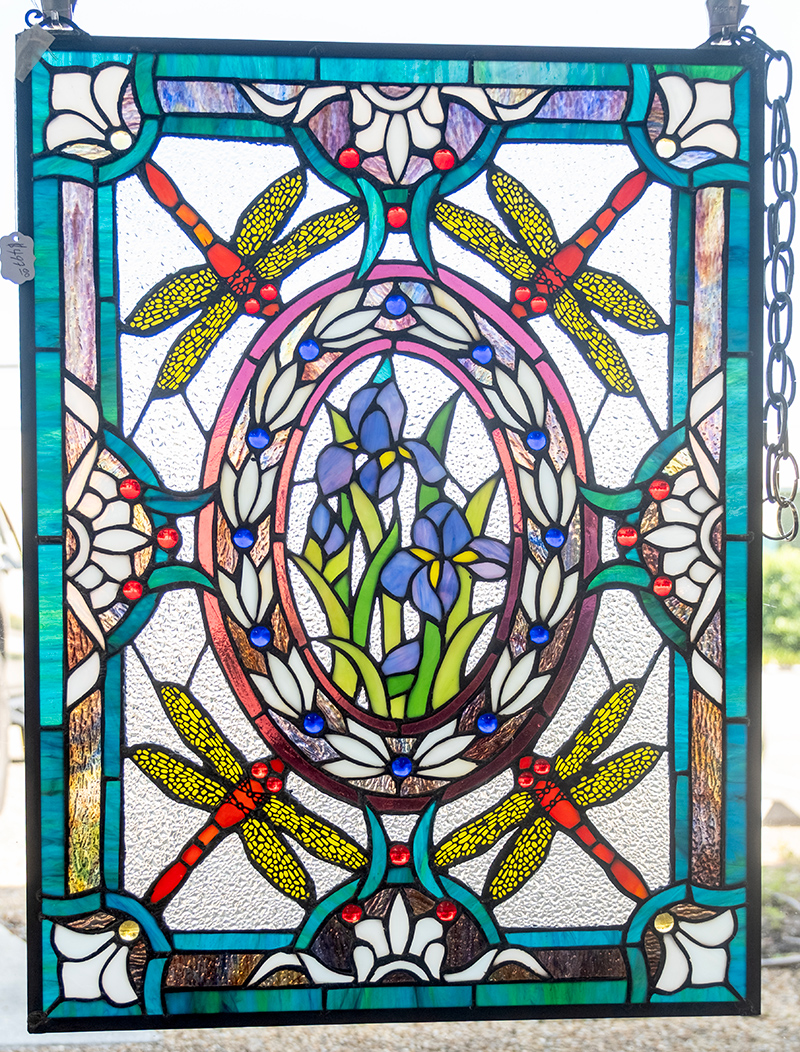
In his spare time, Remole continued creating Shaker boxes while also developing another art form, stained glass.
“You know that saying about golf widows. Well ,I was a Shaker widow, until we agreed Saturday night would be our date night,” says Melissa, as they smile knowingly at one another.
The lively stained-glass pieces are a stunning departure from the simple design of the Shaker boxes and baskets. However, as visually incongruous as they may appear side-by-side, the same meticulous patience is employed in both processes.
The exact cutting of the glass, the precision in its placement, and the time spent soldering to form a strong bond are the same skills Remole utilizes when he creates his remarkable wooden pieces.
“In June of 1983, I attended a class learning the fundamentals of making stained glass art. I started making sun catchers and worked my skills up making lamp shaders, window panels, mobiles and other items using stained glass,” says Remole.
He got so good at it that the owner of the stained-glass store eventually hired him to repair items and teach classes.
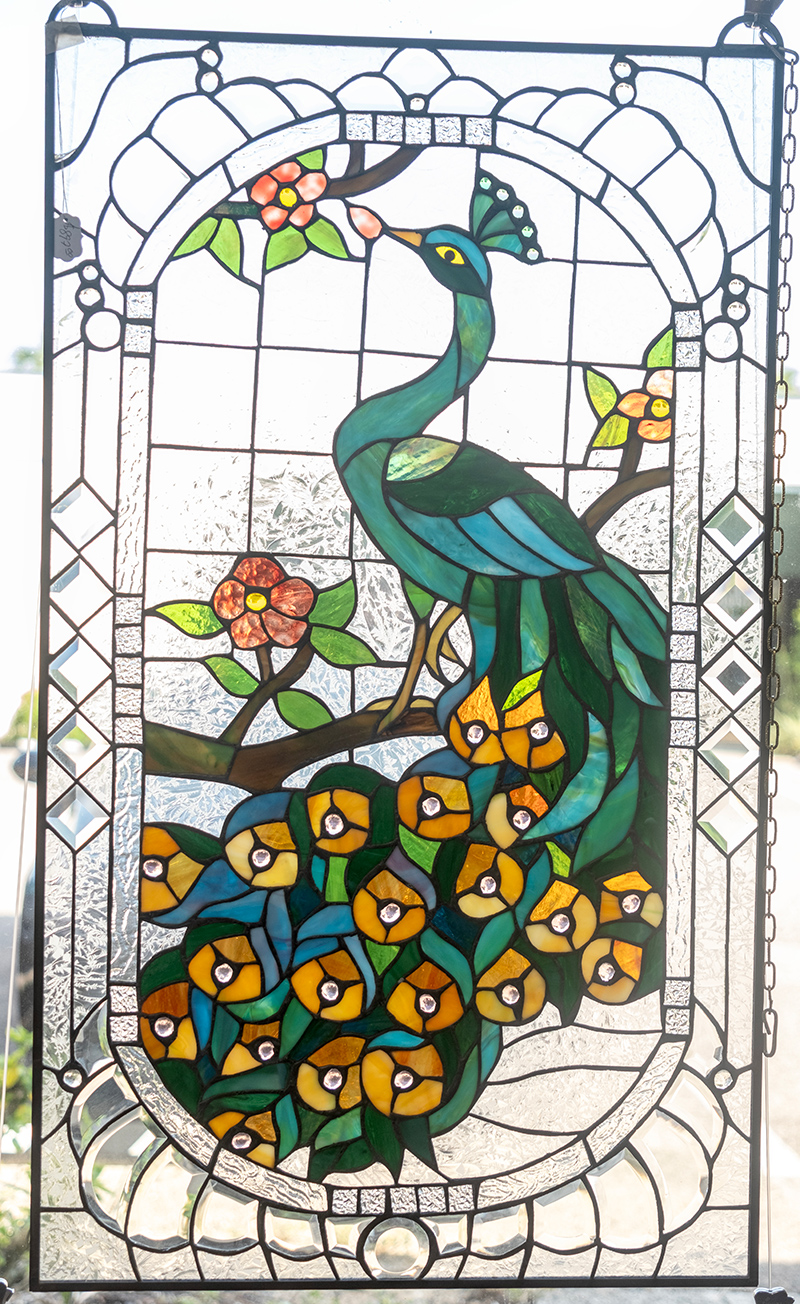
A stained-glass window panel of a peacock adorns the front of his studio-gallery, diffusing the sunlight into a spectrum of colors, depending on the time of day.
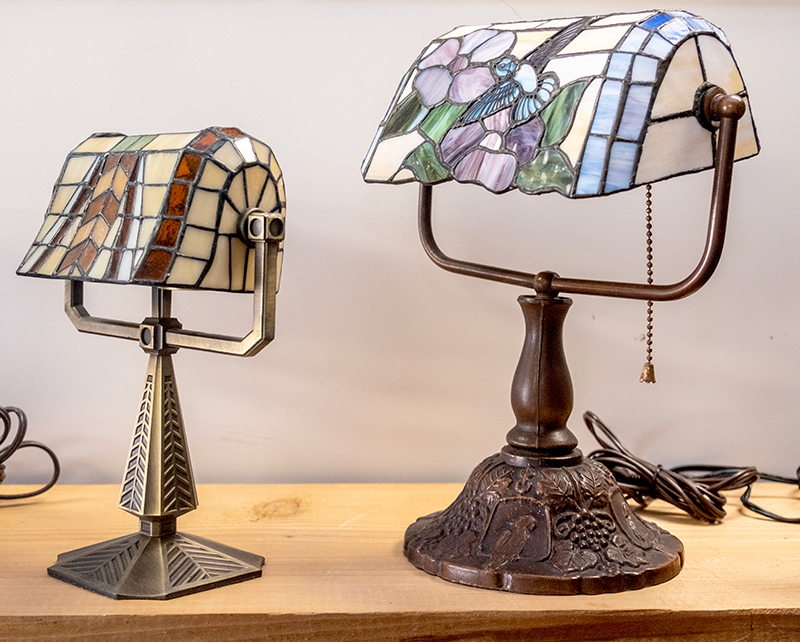
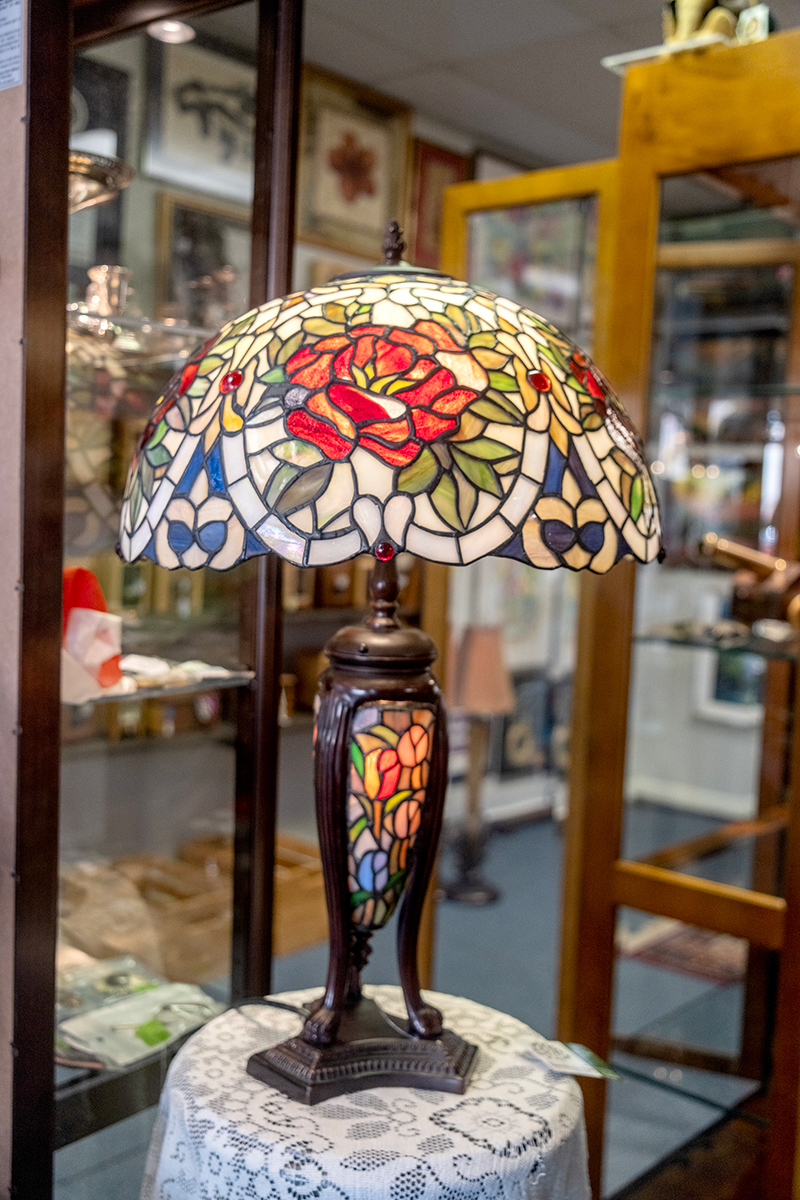
The colors draw viewers inside, where Remole’s stained-glass lamps, arranged along a shelf, glow with a refined beauty that recalls the famed Tiffany glass.
A mirror embellished with curved stained glass captures attention first with the viewer’s own reflection, and then with the quiet simplicity of its beauty.
“I was told you can’t cut a mirror because it would crack and wouldn’t work. But I did it and fit in the stained-glass design and proved it could be done,” says Remole with pride.
“My artwork includes wood, stained glass and quilts. I especially enjoy the challenge of creating pieces that capture an idea of personality of the individual. All items made are personally signed,” he explains.
His artwork all reflects his embrace of core Shaker principles: streamlined design, peace, harmony, and respect for materials, with nothing wasted.
When he is not creating Remole and his wife enjoy relaxing at their Vero Beach home with Savannah, their British Shorthair cat.
Remole is a member of the Sebastian River Art Club and the Cultural Council of Indian River County, and has won numerous awards for his work at exhibitions and galleries throughout the area.
Photos by Joshua Kodis