A prime benefit of becoming an Athena Society member of the Vero Beach Museum of Art is the opportunity to engage in the selection process by voting on artworks being considered for addition to the museum’s permanent collection.
At the annual dinner last Thursday, members were asked to vote on a selection of six quite varied artworks, curated by VBMA chief curator Caitlin Swindell, CEO Brady Roberts and the collections committee.
Now numbering an impressive 165 member households, Athena Society members contribute an additional $5,000 over the Chairman’s Club level or higher. To keep it equal, households, whether individuals or couples, are entitled to two votes.
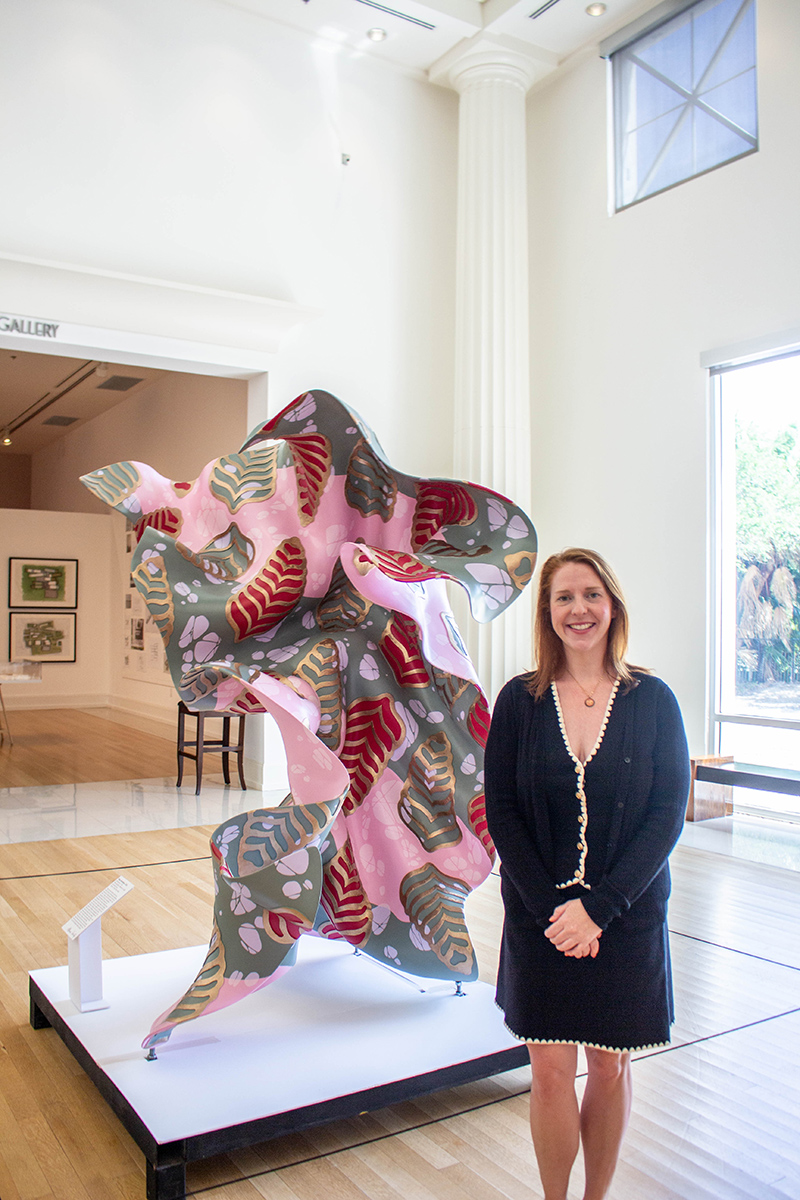
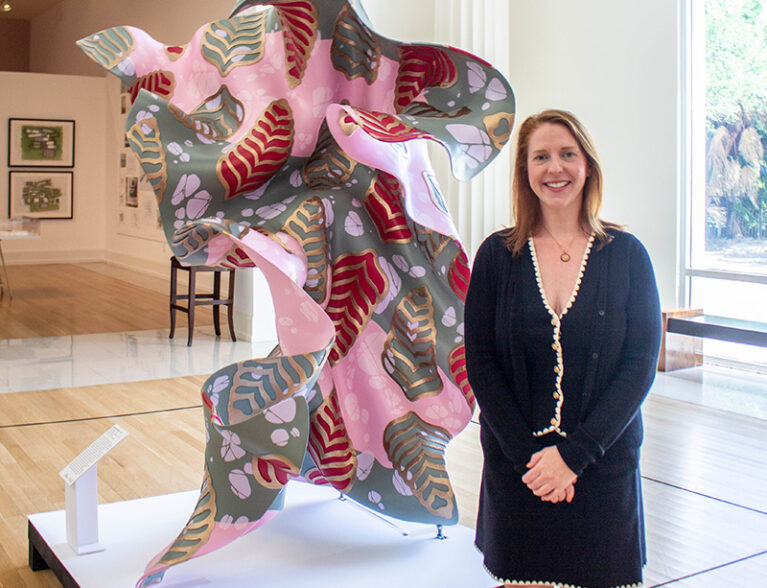
At last week’s Athena Society Dinner, members voted to purchase “Wind Sculpture in Bronze VI,” a 2025 hand-painted bronze sculpture by British-Nigerian artist Yinka Shonibare, CBE.
Shonibare was appointed a Commander of the Order of the British Empire in 2019 in recognition of his exceptional services to the arts.
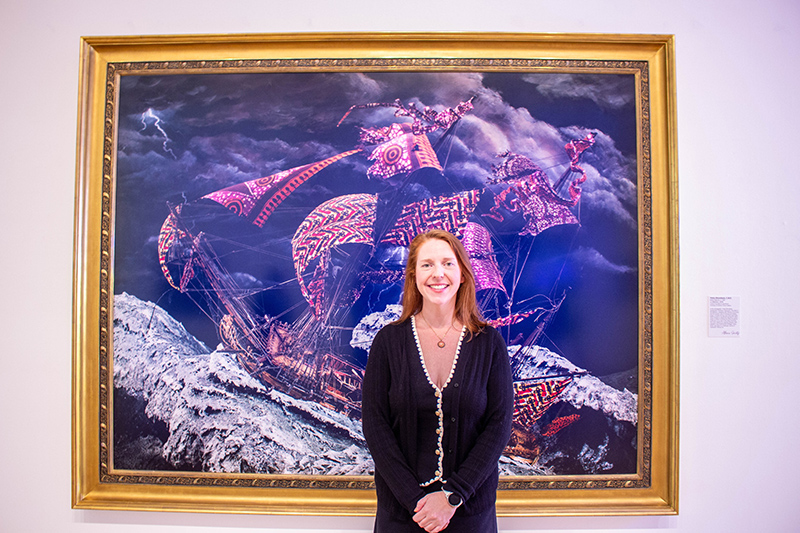
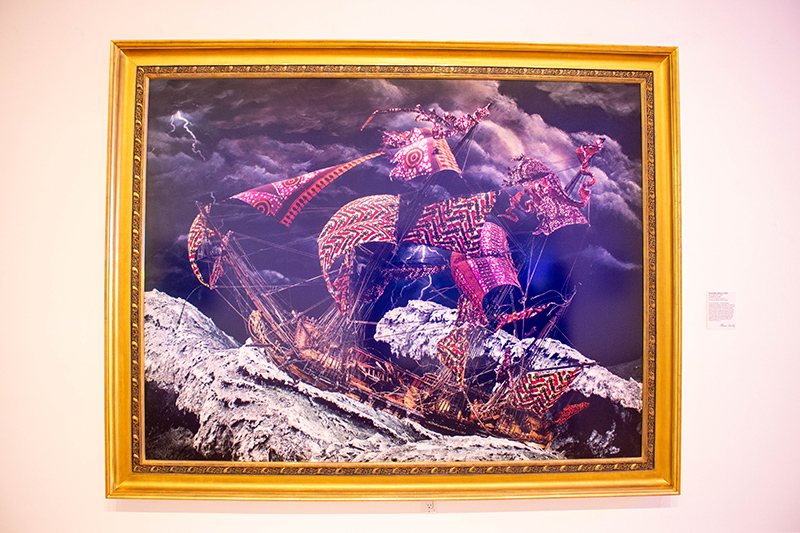
Remarkably, after the committee selected the sculpture for consideration, the artist generously offered that should it be chosen, he would gift the museum his “La Méduse,” a 2008 chromogenic print mounted on aluminum. The sculpture and print both came courtesy of the James Cohan Gallery.
“This is kind of an unusual acquisition process. It’s like a gift with purchase situation; the first time that the museum has had that, which is pretty cool,” said Swindell.
Shonibare’s works frequently examine issues of colonialism and the interrelationship of Africa and Europe. Additionally, as in these two acquisitions, they often incorporate the Dutch wax fabrics inspired by Indonesian batik textiles that eventually became widespread in West Africa.
“It’s significant for West African cultures and has a long history of how that came to be. So there’s a lot of multiculturalism happening with this one material. It’s something that continues throughout his work.” says Swindell.
She explains that his artwork often references art history. In “La Méduse,” a wave-threatened ship outfitted with Dutch wax fabric sails evokes Théodore Géricault’s large-scale painting “Raft of the Médusa,” concerning the aftermath of the ill-fated French frigate.
Swindell observes that the sculpture complements the print with its suggestion of sails billowing in the wind, but notes that there is also a distinct botanical motif, which will align well with the design of the proposed outdoor sculpture garden.
“This particular shape is one of nine that he hand-painted with different patterns,” says Swindell.
Others have found homes in museums abroad and in the United States such as his “Wind Sculpture VII,” which in 2016 became the first sculpture to be permanently installed outside the Smithsonian’s National Museum of African Art in Washington, D.C.
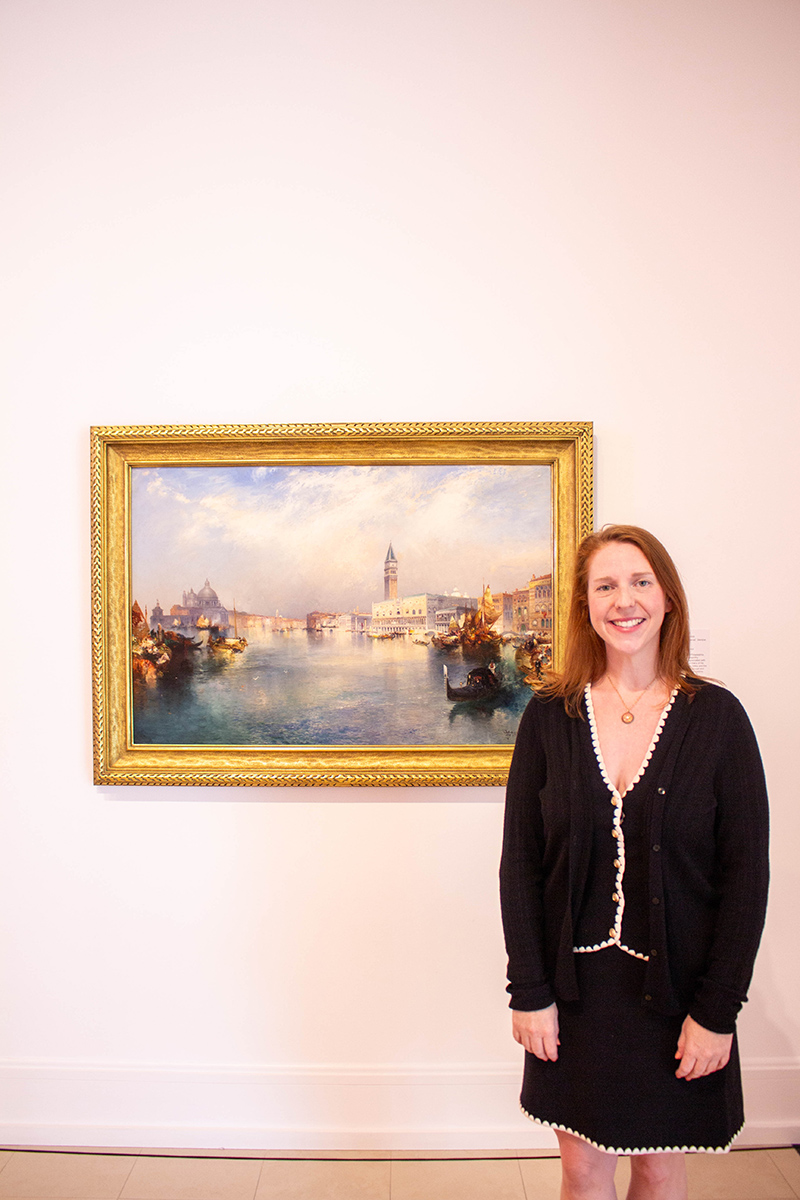
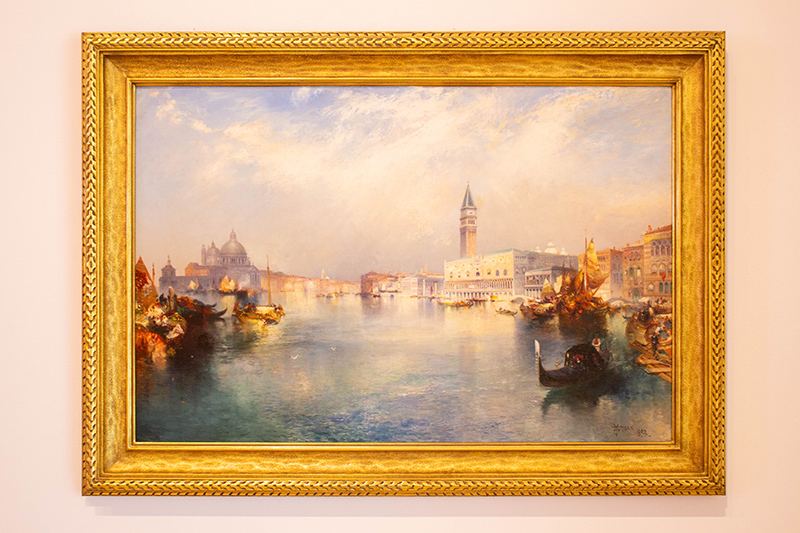
Of the works not chosen, the earliest chronologically was “Entrance to the Grand Canal, Venice,” an 1893 oil on canvas by English-born American Thomas Moran. Known as a leading member of the Hudson River School movement, he was also renowned for his powerful paintings of the West, particularly the Grand Canyon and Yellowstone.
Swindell said he had also visited Venice two times after having been impressed by British landscape artist JMW Turner’s Venetian scenes at the National Gallery in London.
Moran captured the luminous allure of Venice with shimmering light playing off the canal and illuminating the Fontego dei Turchi, while fishing boats and gondolas (he had a gondola shipped home to East Hampton as reference) line the periphery.
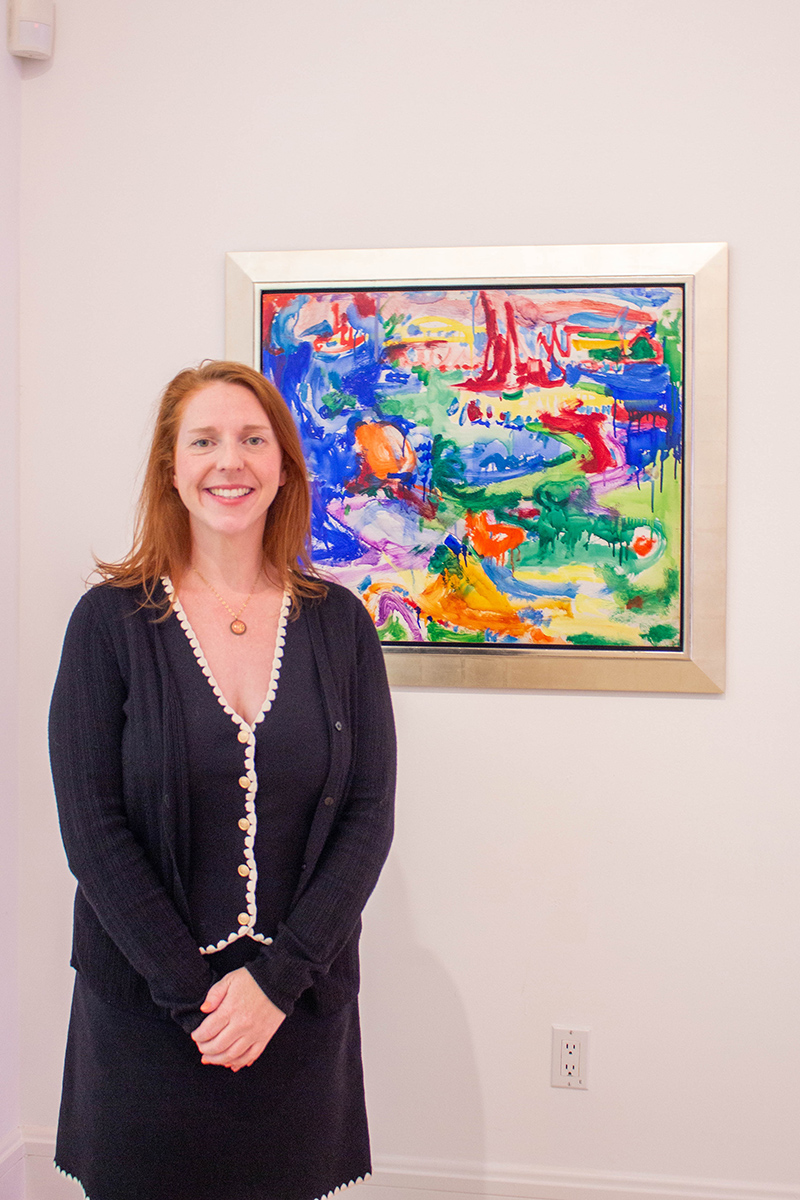
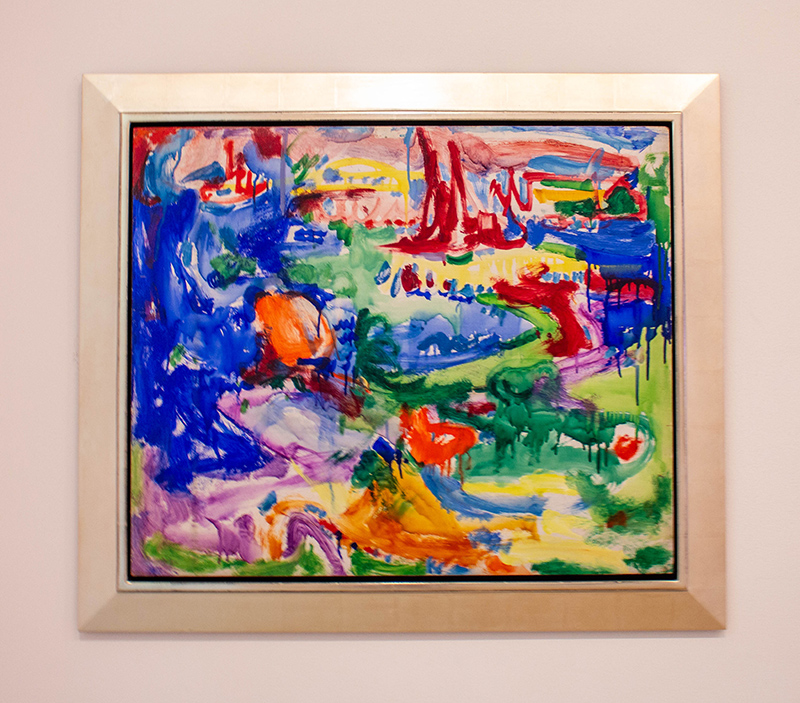
The vibrant “Paysage (Landscape No. 83),” a 1935 casein on panel by German-born American Hans Hoffman, was painted earlier in his career, before the later abstractions he is known for.
“I feel like Hans Hofmann is really a staple artist for every museum collection because he really helped form and move forward abstract expressionism,” says Swindell, calling him a teacher who profoundly shaped modern American art.
“He was known for his idea of this push and pull theory of abstraction, which artists are still taught about today. This is a really important piece from 1935; it’s the same year that he founded his school in Provincetown, Massachusetts.”
Swindell says Hoffmann was inspired by Fauvism, having met Matisse, Picasso and others of the era, and the vivid colors of the piece are indicative of that.
“So it’s really important for the time period of his work. It’s also just a fantastic landscape.”
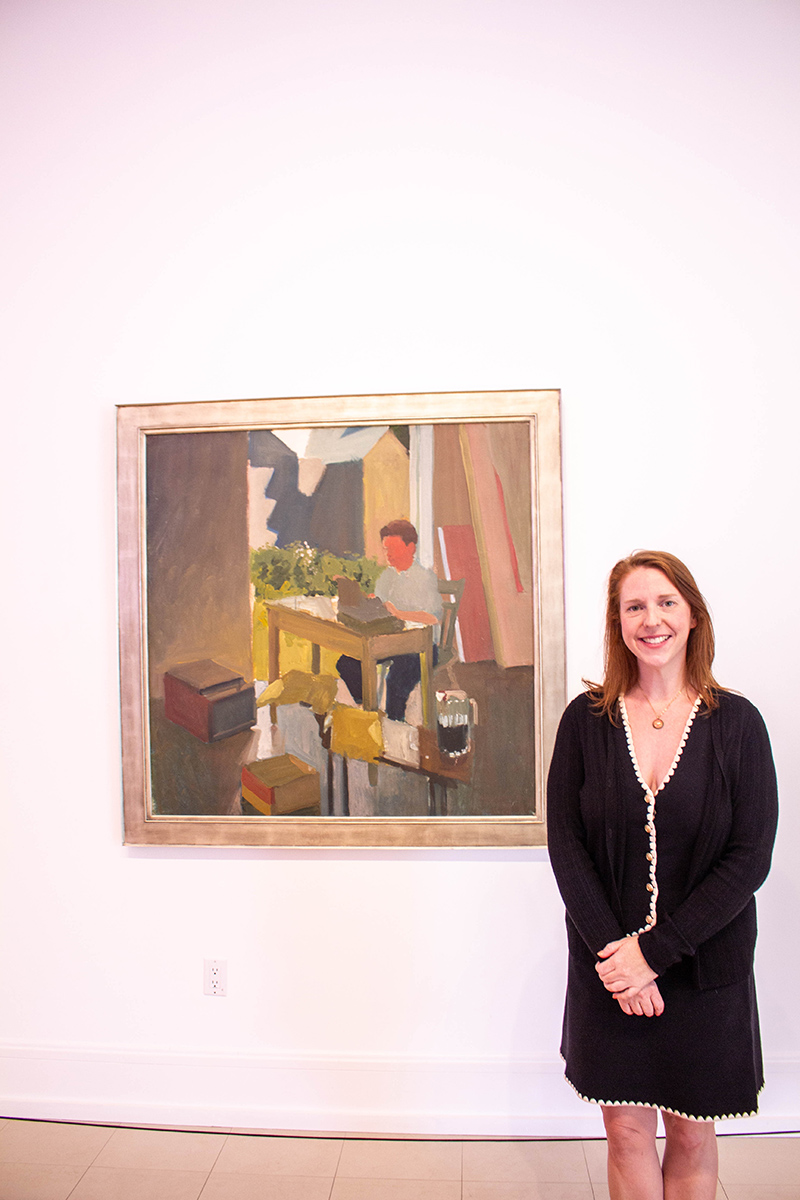
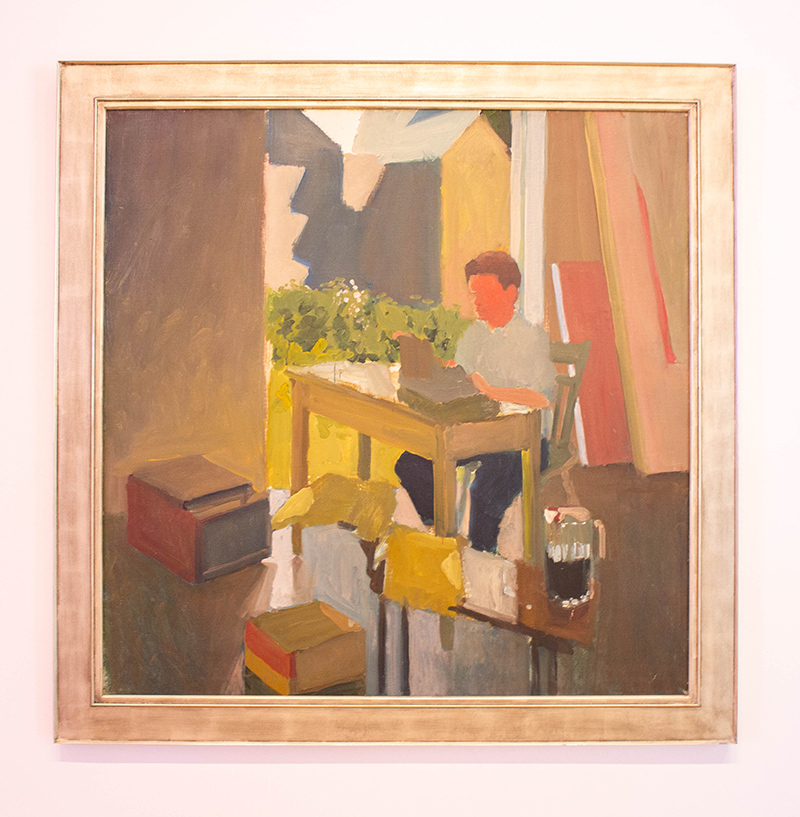
Swindell says that “James Schuyler,” a 1960 oil on canvas by American artist Fairfield Porter, is indicative of his representational and figurative realism.
“So 1960, when you think about that period, it’s kind of the peak of Abstract Expressionism and other forms of abstraction. And he went against that by continuing with figuration and a lot of narrative-based painting,” says Swindell.
“The sitter is James Schuyler, a poet and writer, who’s a really important figure in the artist’s life. You’re seeing him in Fairfield Porter’s home, because he lived there for periods of time, at a typewriter working. So it’s really a key subject, style and time period for the artist.”
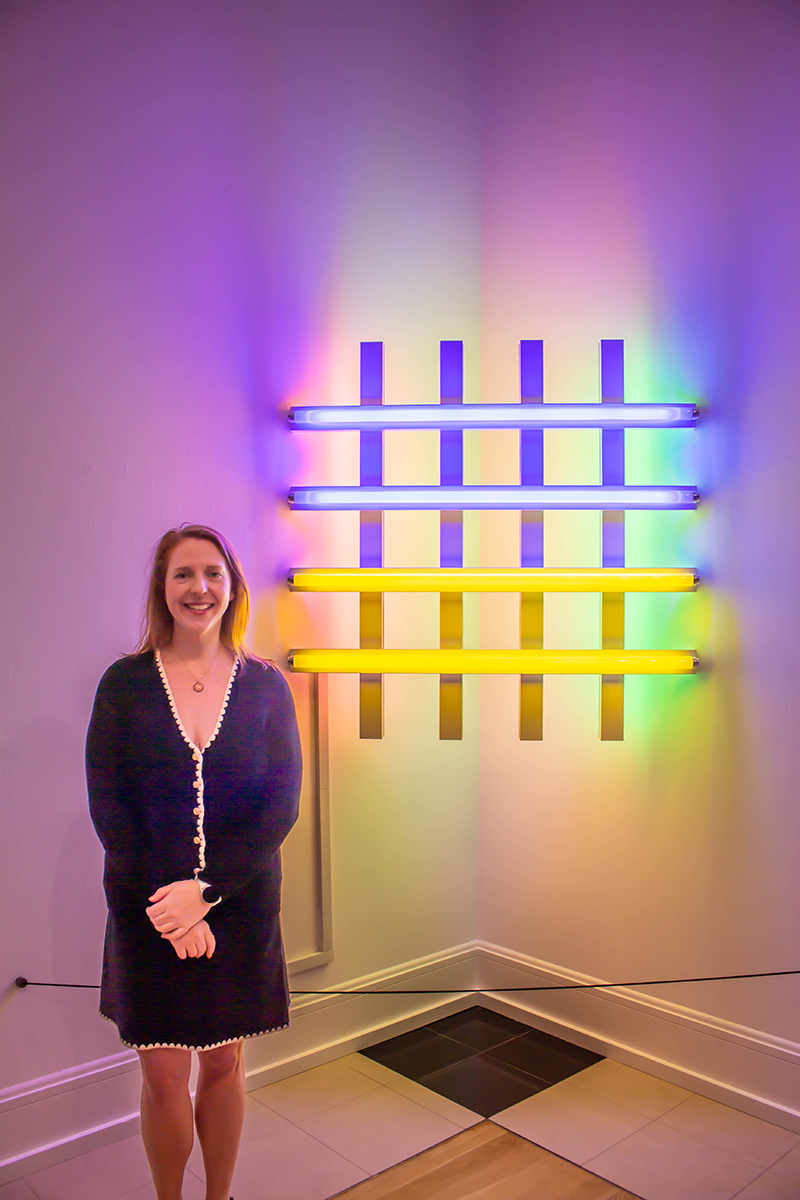
A 1978 work by American artist Dan Flavin, “untitled (for you, Leo, in long respect and affection) 4,” uses light as a medium. The 4-foot-square work of blue, yellow, pink and green fluorescent lights, two of each, is meant to be placed in a corner.
“Dan Flavin was really the first artist to make industrial materials and fluorescent lights his ongoing media in sculpture, starting in the ’70s and on. And this piece, like a lot of his works, has a lowercase designation that are untitled and then in parentheses are usually illusions or recognition of key people in his life,” says Swindell.
“This one’s great because it recognizes Leo Castelli, a really instrumental gallerist, who helped catapult Flavin and many others.”
She explains that Flavin’s works are ideally meant to be displayed in areas that are overlooked, such as in stairwells, corridors and hallways. He wanted his work to activate what are generally thought of as throwaway spaces.
“He was really one of the first to utilize materials in that way.”
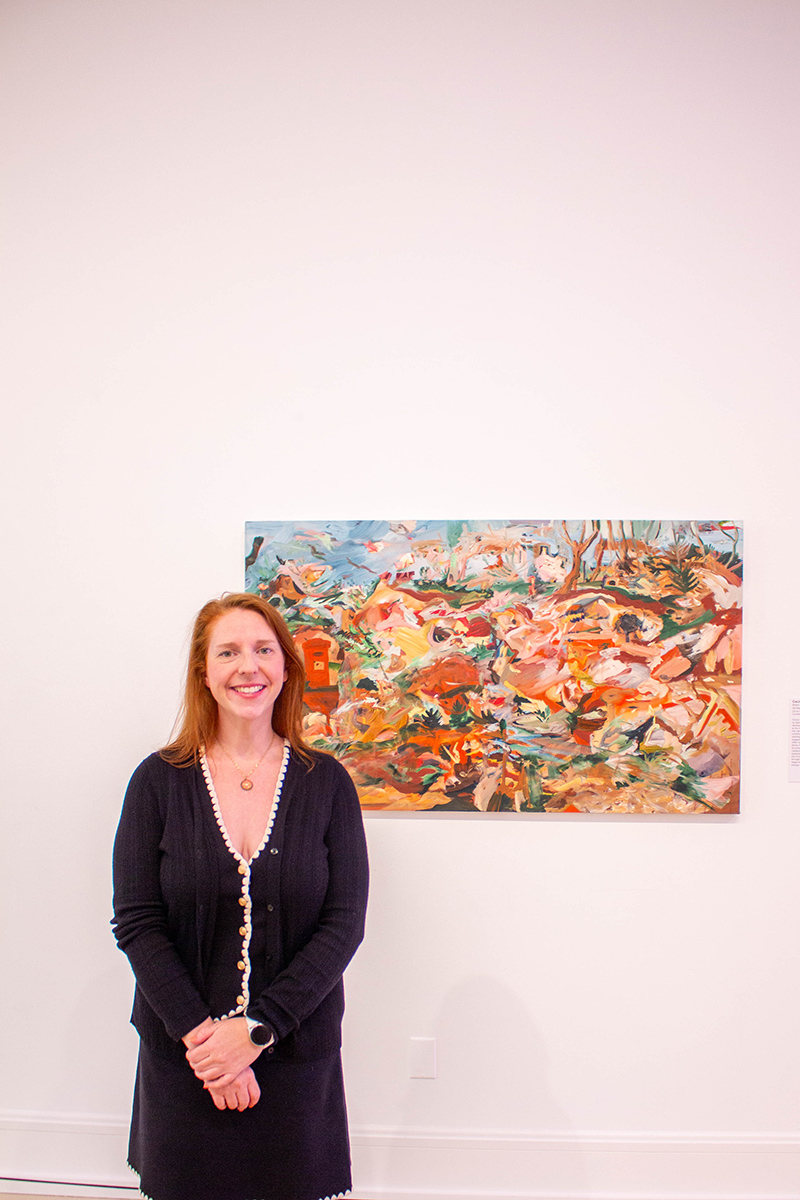
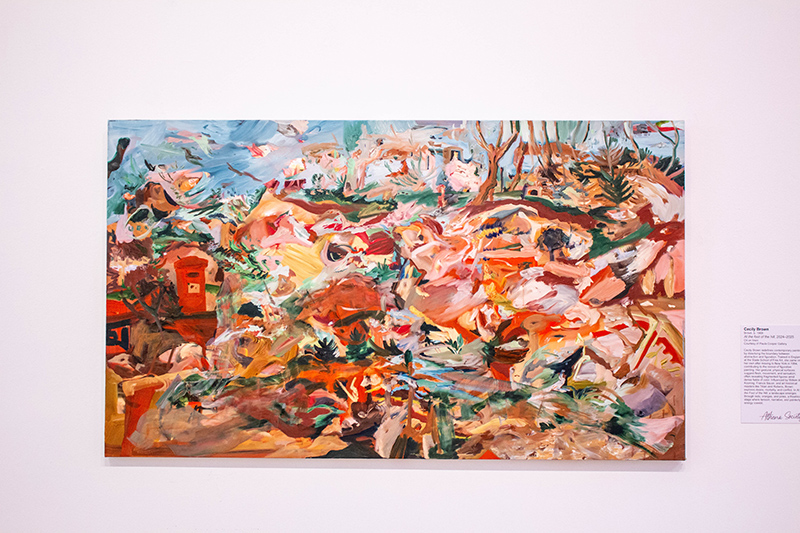
British artist Cecily Brown moved to New York City in 1994 and painted “At the Foot of the Hill,” an oil on canvas in 2024-2025.
“She creates these really visceral abstract paintings. Sometimes figures are seen, there’s sometimes allusions to animals, but oftentimes they’re highly abstract. This is one of those examples where all you can really make out in terms of representational, other than like sky and trees, are a mailbox and maybe some sort of entryway,” says Swindell.
“She very much sees abstract painting as an expression of her body and experience, so there’s a lot of emotion in her gesture. You feel a really strong emotional pull.”
For more information, visit VBMuseum.org.
Photos by Joshua Kodis