Can you believe it’s been 55 years since the original concept recording of “Jesus Christ Superstar” was first released? Did you own the two-LP album on vinyl in the brown folding jacket; the top-selling album of 1971?
Riverside Theatre’s production of “Jesus Christ Superstar” may bring waves of nostalgia for anyone who remembers those days and that recording. And the brilliant score from Andrew Lloyd Webber and Tim Rice is still as fresh and exciting as ever. It was Sir Andrew’s first major success, one that many feel he’s never bettered; not with “Cats” or “Phantom” or any of the others, with the possible exception of “Evita.”
That revered score is served up deliciously by the excellent musicians and very talented cast of Riverside’s production of the stage version, which first played Broadway the year after that studio recording was released. A true rock opera, sung through without any supporting dialogue, it makes tremendous vocal demands, especially on those playing the leading roles of Judas Iscariot and Jesus Christ.
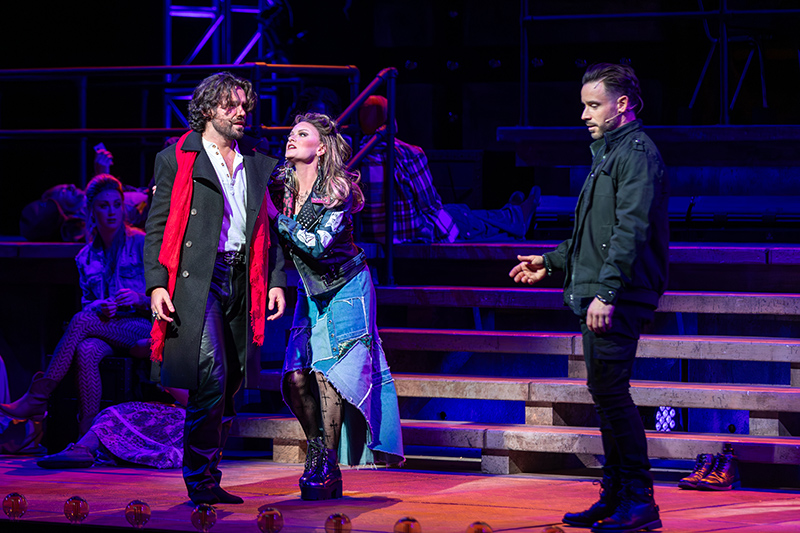
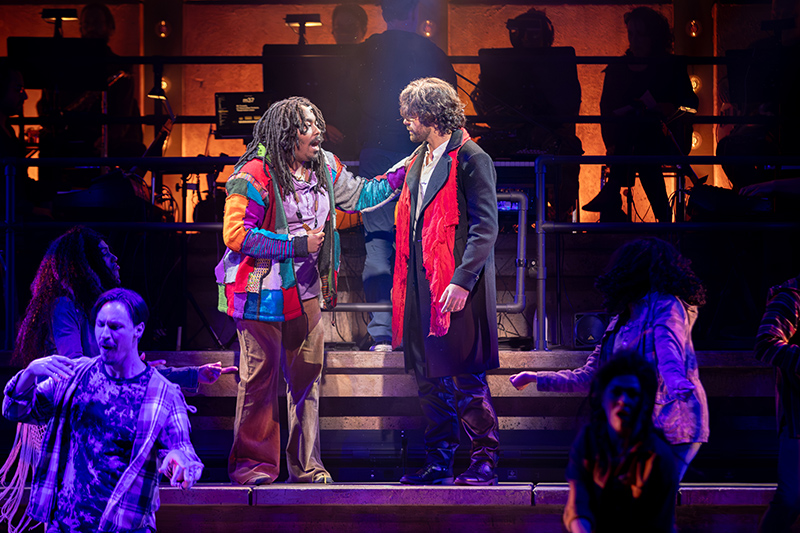
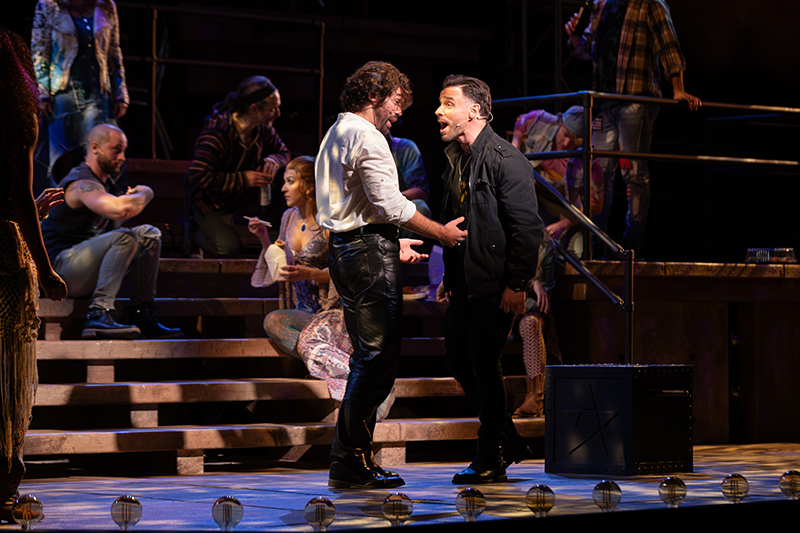
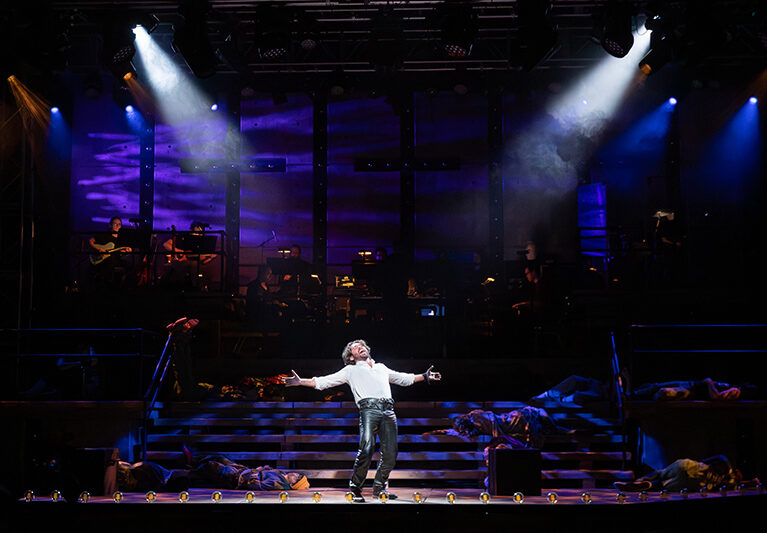
Riverside has cast two powerhouse vocalists, David Toole and Cole Thannisch, respectively, in those roles. These gents were clearly cast to scale the heights of the classic ’70s rock sound baked into the music, with thrilling results. That they also manage the moments of pathos with heartfelt emotion is the key to this production’s success.
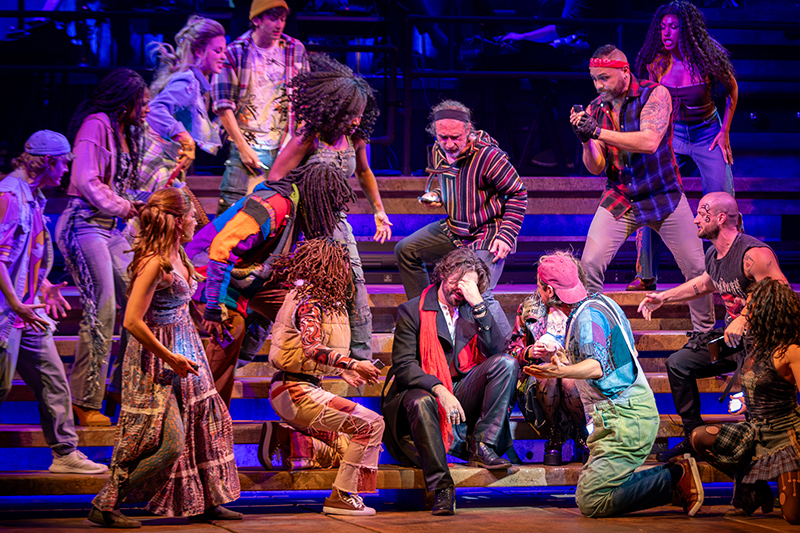
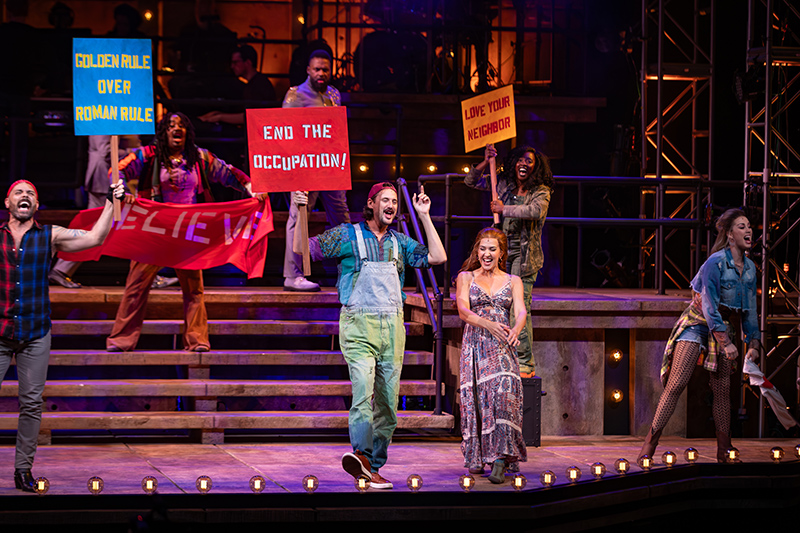
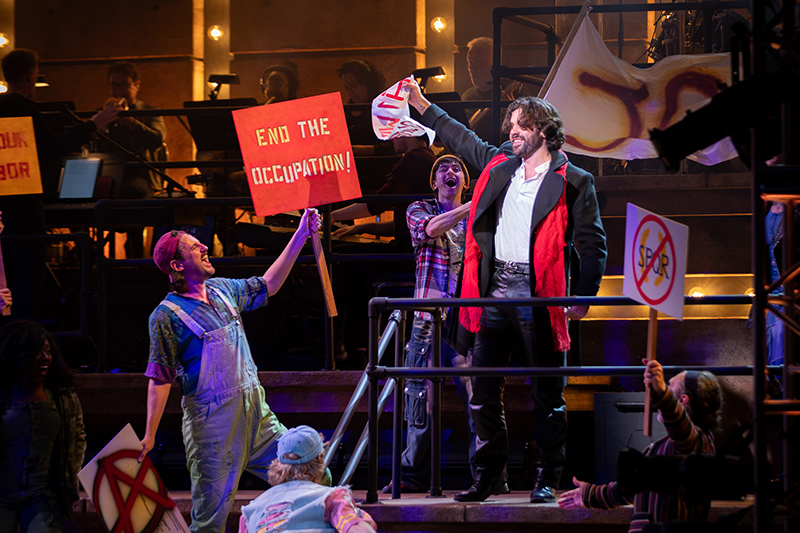
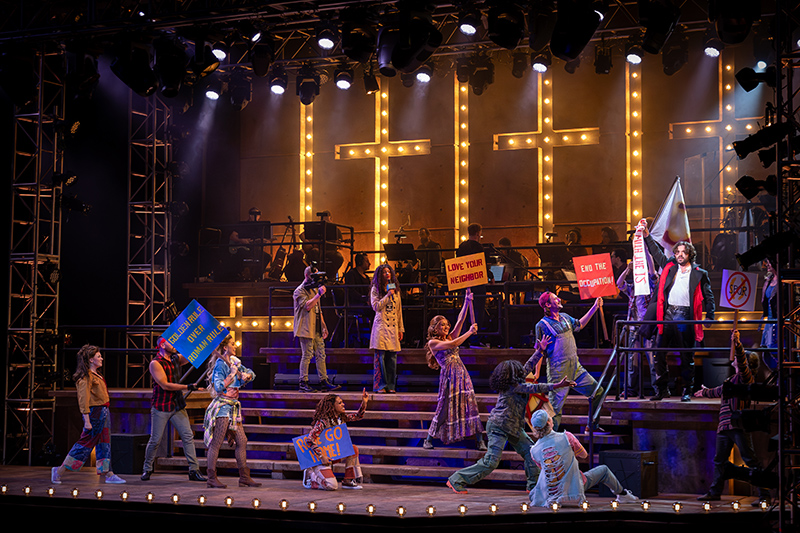
With no script binding the action to Rice’s lyrics, any director tackling the libretto has plenty of latitude in their visual presentation, and here director Allen Cornell employs a time-hopping array of costumes, props and settings to give his production lots of new ideas mixed among imagery more traditionally used to tell the story.
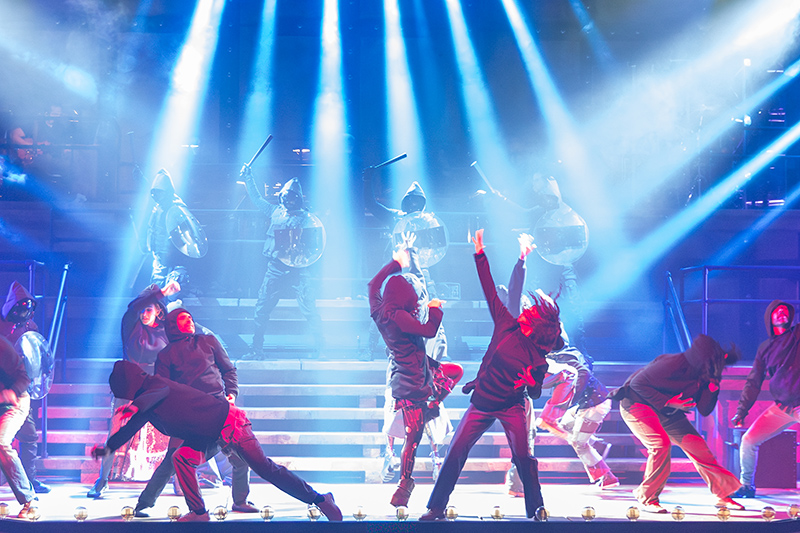
We get swirling, hoodie-clad looters and smoky chaos at the top of the show, quickly subdued by nightstick-wielding forces, their faces subdued by visors, all before a word of the lyric is sung.
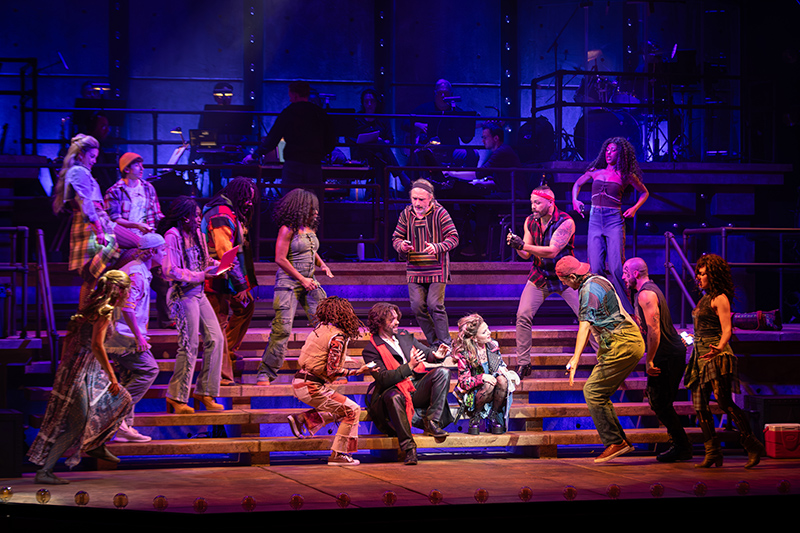
Soon after, there’s a scene where everyone on stage holds an electronic device with a small screen so bright it could be seen from space. Some of these ideas, like the apostles and their crowd scrolling on cellphones and taking selfies, work nicely.
There’s a moment when Judas gets caught in an entwining web of yellow police tape during “Damned for All Time” that’s terrific. Others, like the moneychangers’ temple conceived as a high-end nightclub, complete with go-go boy, less so.
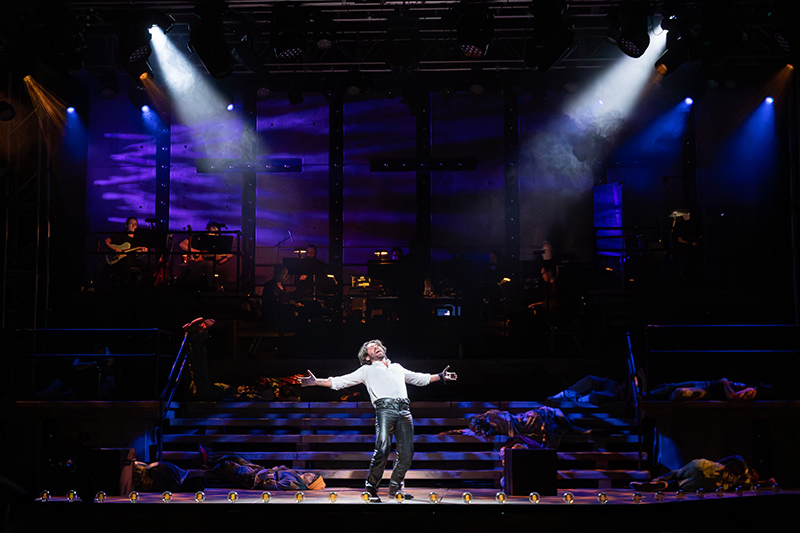
As Jesus, Thannisch radiates the benevolence and love that lead his apostles to adore him. His singing is … well, heavenly (in a rock-star, Led Zeppelin sort of way).
The second act showstopper “Gethsemane,” a heartbreaking, powerful plea for reconsideration of his destiny, had members of the Opening Night audience on their feet in a spontaneous ovation.
(With all his rumination, though, Thannisch still needs to avoid looking down so much, his tousled hair obscuring his expressions. We need to see his face!)
The title character notwithstanding, Toole owns the show as Judas. His voice is perfectly matched with Lloyd Webber’s score, and his acting is gut-wrenching. Tortured by his growing anxiety about Christ’s future and his predestined role in it, Toole makes the agony of his helplessness to alter events palpable.
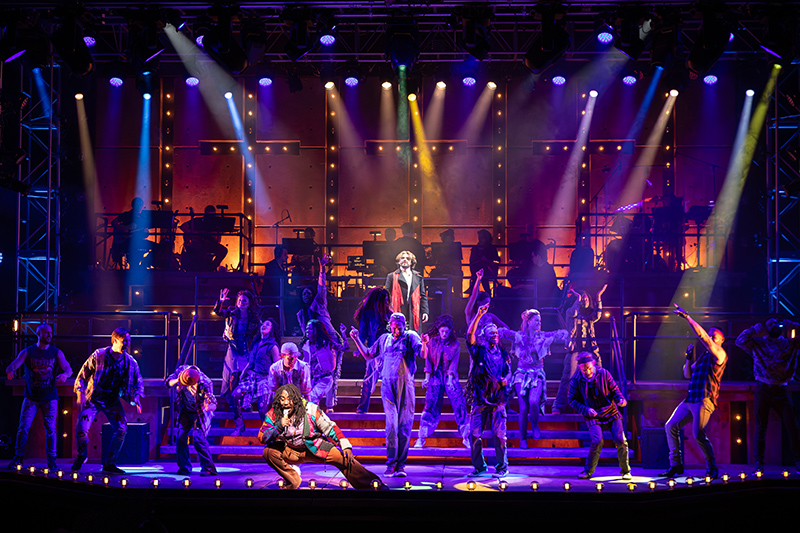
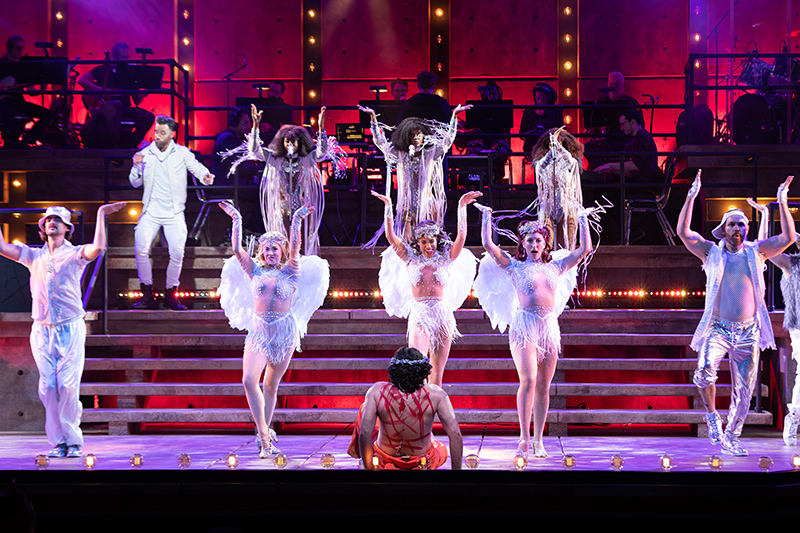
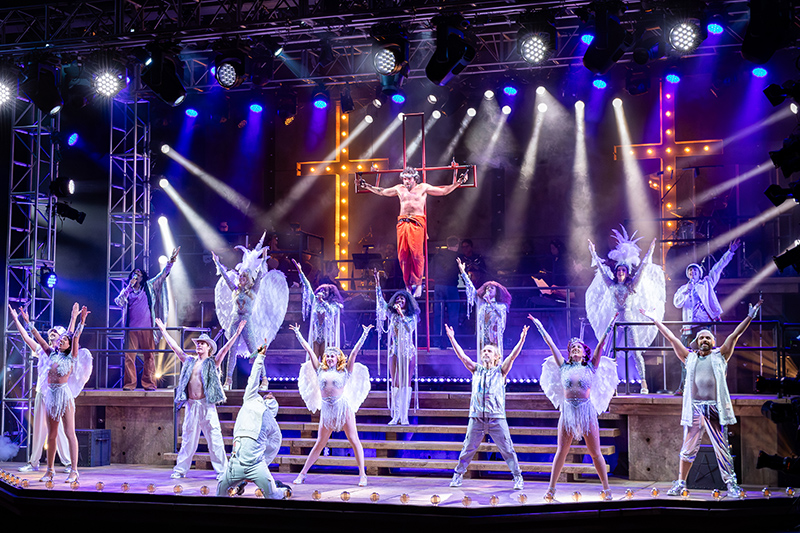
His return in the Great Beyond for “Superstar” is thus all the more joyful, bringing him together with the whole exuberant company in the celebratory, penultimate number.
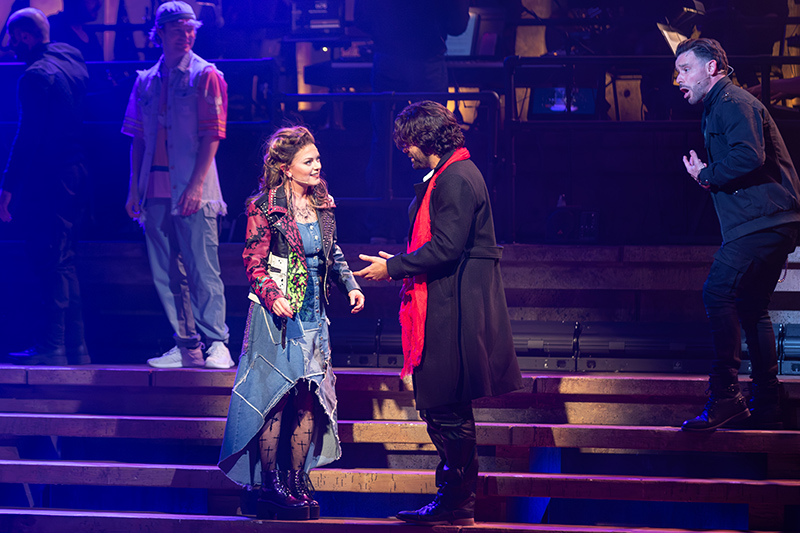
Perhaps to tamp down any perception of romantic longing between Jesus and Mary Magdalene, sometimes read as a subtext in the show, their relationship feels fairly cool and detached in this production, as if HR is watching for any malfeasance.
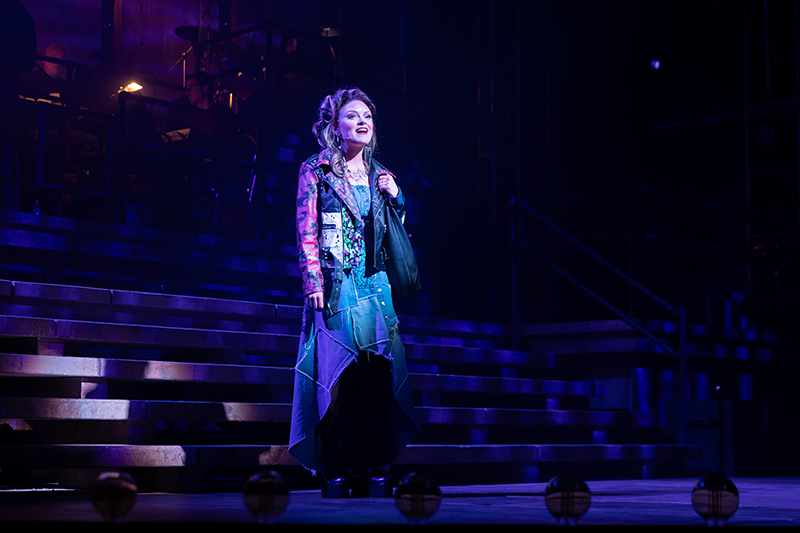
As a result, Ruby Lewis, who was delightfully wistful earlier this season as Audrey in “Little Shop of Horrors,” isn’t given much to play. Her rendering of “I Don’t Know How to Love Him,” the show’s breakout hit that had eons of radio airplay back in the day, while beautifully sung, doesn’t really land, as we don’t sense any struggle against her conflicted feelings.
In fact, “Could We Start Again Please,” her rueful duet with Peter (Reese Sebastian Diaz) after Jesus’ circumstances fall apart in Act Two, hits much harder.
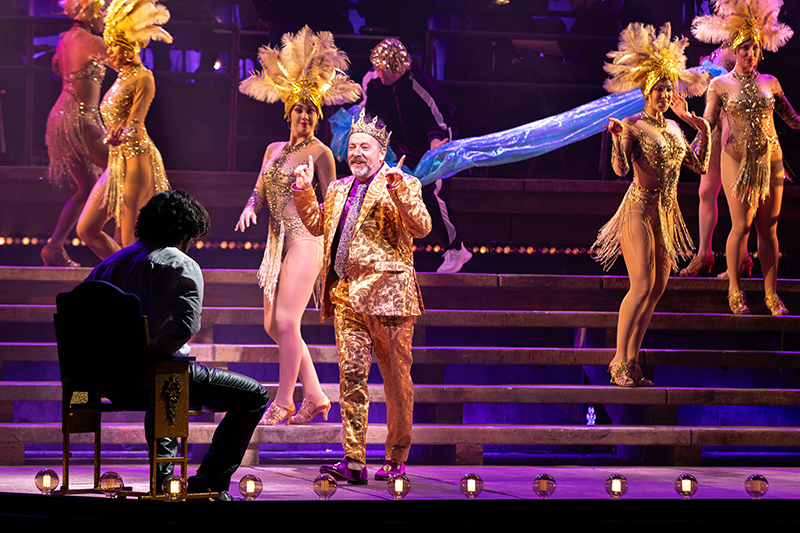
Craig Waletzko offers a comparatively tame version of King Herod, considering the role has often been played in drag or some other flamboyant manner to suggest the character’s decadence. Here he sparkles in gold sequins, does some light magic tricks, and a bit of soft shoe amid Vegas-style showgirls.
Pontius Pilate (P.J. Griffith), too, is presented as audiences are unlikely to have seen the character before, recounting “Pilate’s Dream” to a silent, inattentive wife or exercising on his stationary bicycle in a tracksuit. But Griffith conveys a sympathetic desire to give Jesus an out, ultimately boiling over in frustration when he washes his hands of Christ and condemns him to his fate.
The design elements of the show are outstanding. Kurt Alger’s eclectic costumes run the full gamut, from ’70s-style hippies contemporaneous with the time the show was written, to fashions of today and everything in between.
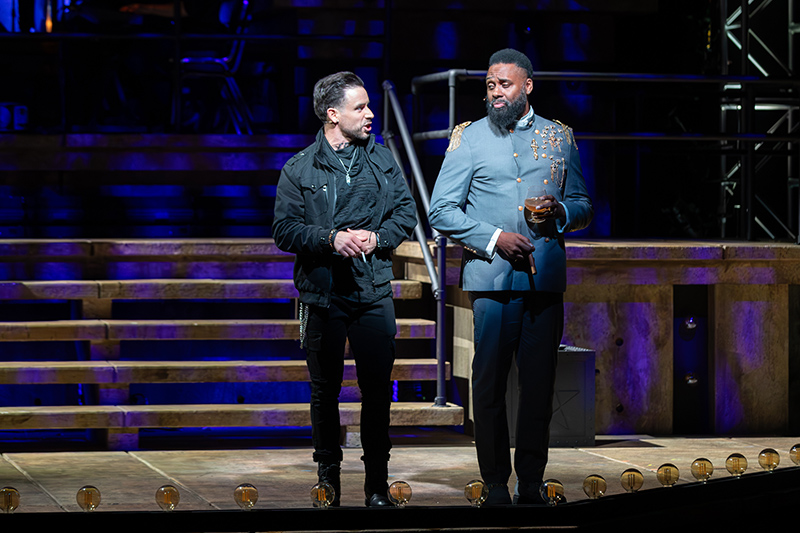
Caiaphas (Nicholas Ward) and Annas (Nick Berninger), both excellent, by the way, don’t wear priestly vestments, but quasi-military uniforms with gold epaulets and matching gold shoes, and Judas’ final costume wouldn’t be out of place in a 2026 Super Bowl halftime show.
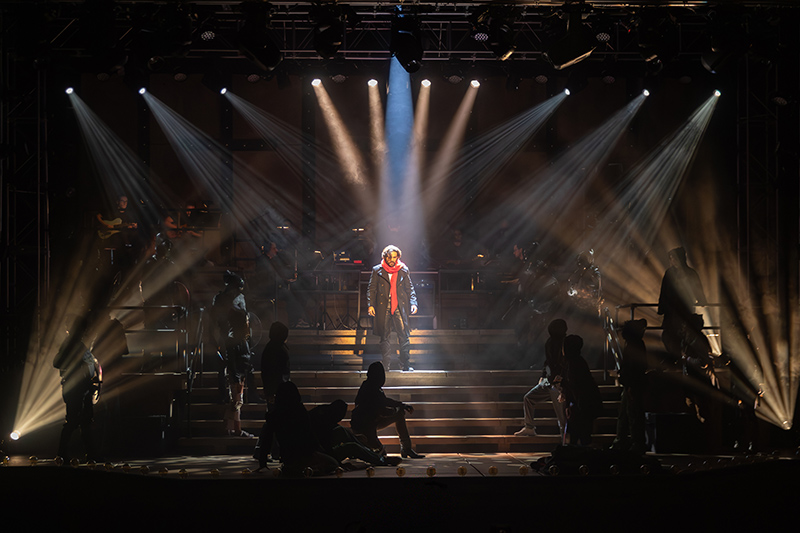
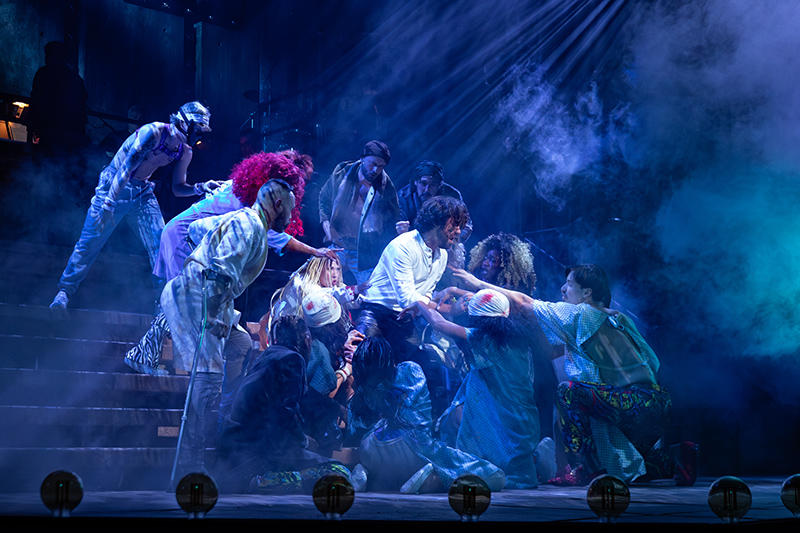
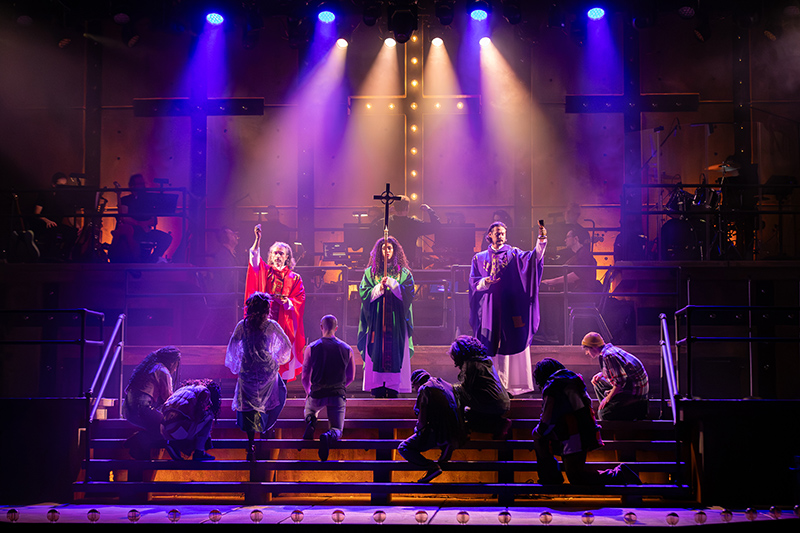
Yael Lubetzky’s fantastic lighting evokes a rock concert, frequently isolating characters in shafts from above, dramatically and appropriately.
Ending as it does with Jesus’ body being taken down after the Crucifixion, the show is scrupulously agnostic about his divinity, focusing instead on his human experience; but for his foreknowledge of how events will play out. Cornell’s inventive response to this ambiguity is a very satisfying final image.
“Jesus Christ Superstar” runs through March 22 at Riverside Theatre, 3250 Riverside Park Dr., Vero Beach. Tickets are available online at RiversideTheatre.com or by calling the box office at 772-231-6990.
Photos provided