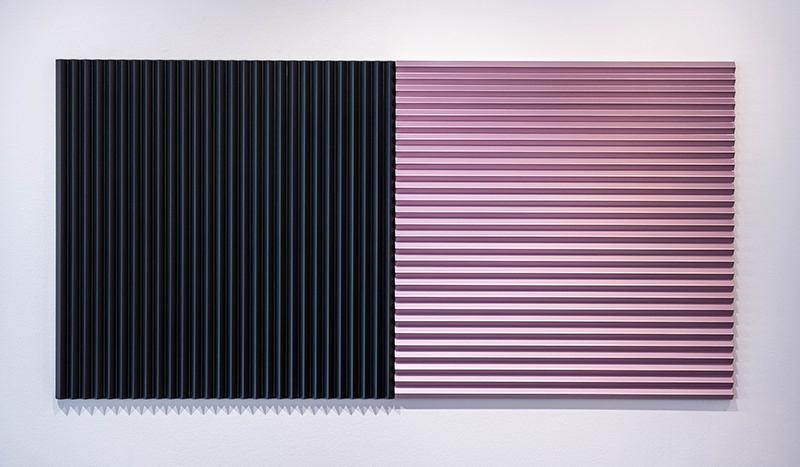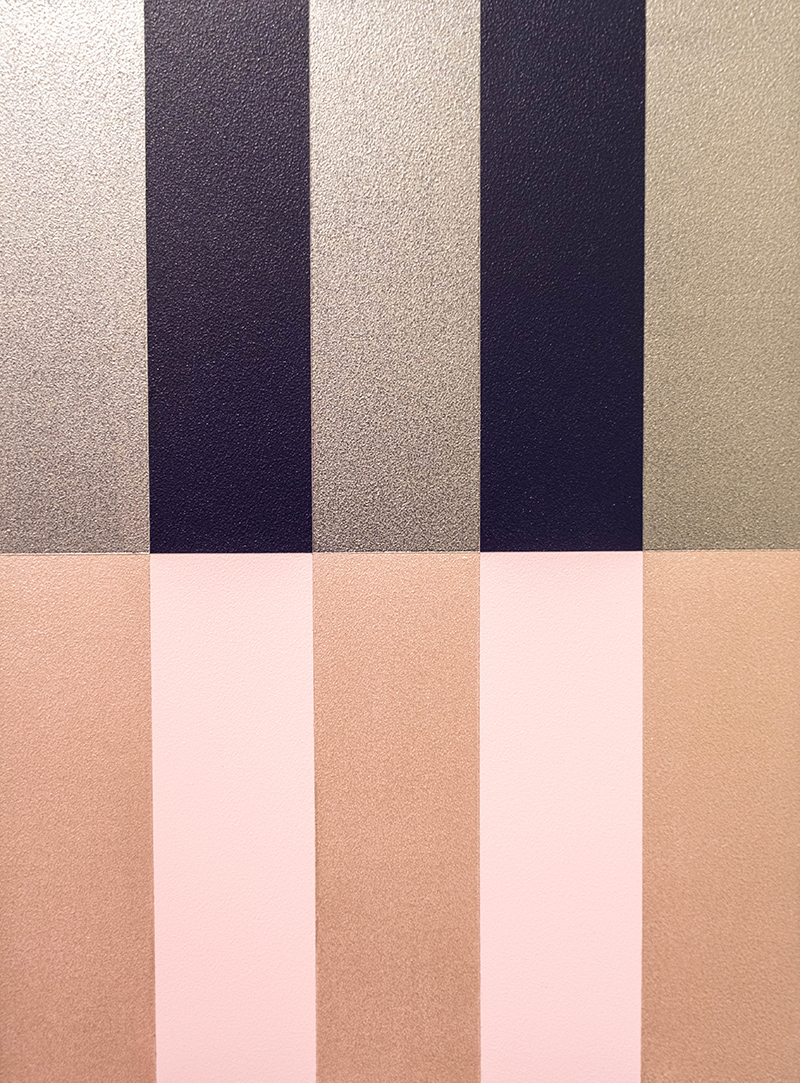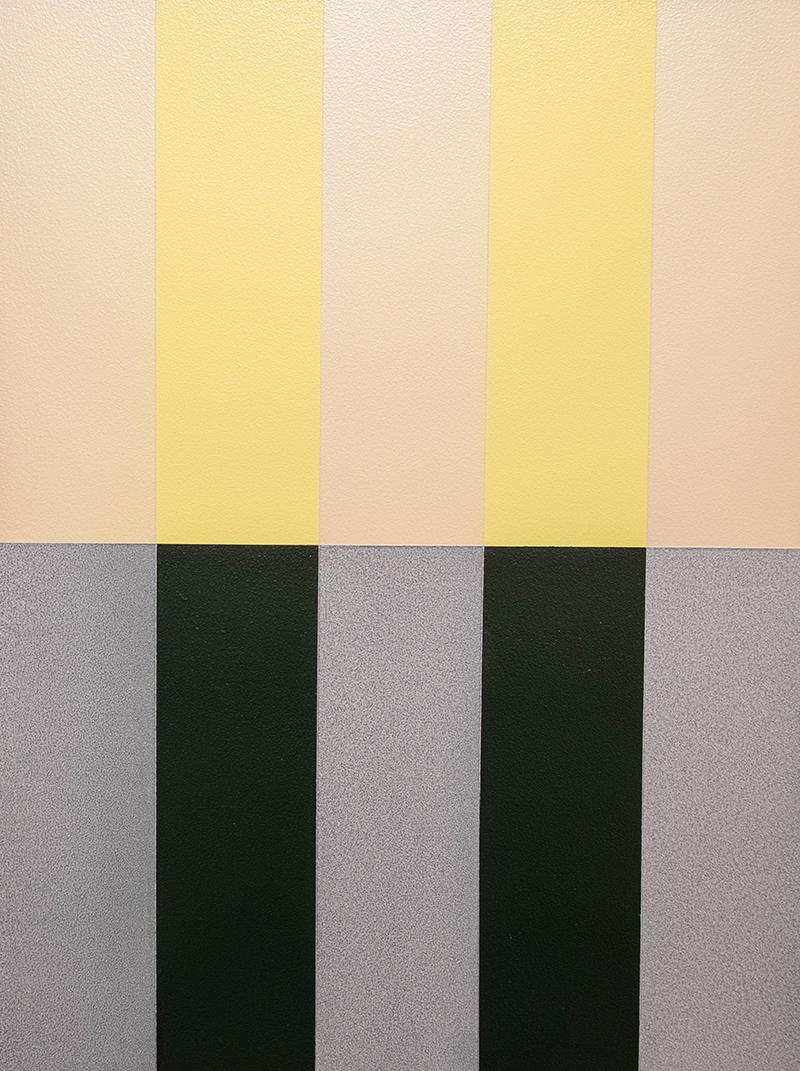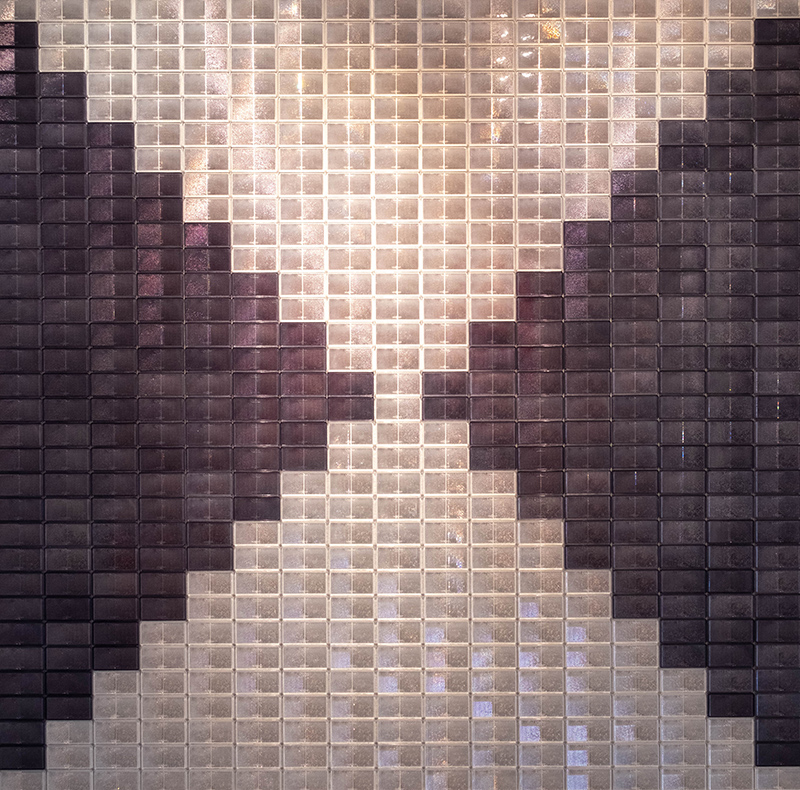
The Gallery at Windsor has recently opened Reflection, a new exhibition of mesmerizing artworks by British/Bangladeshi artist Rana Begum. On display through May 8, the exhibit is a collaboration with the SCAD Museum of Art and was curated by Daniel S. Palmer, chief curator at SCAD (Savannah College of Art and Design).
Parker writes about the show in its associated manuscript, “Rana Begum Reflection,” explaining that Begum encourages viewer engagement through the use of light, space and color, positioning the audience as an integral component of her art. The pieces selected for the exhibit illustrate the extensive range of her work, emphasizing how she builds on and engages with the traditions of abstraction, Minimalism and Op Art.
“By recontextualizing these elements in imaginative ways, the artist produces formally compelling installations with a range of subtleties,” writes Palmer.
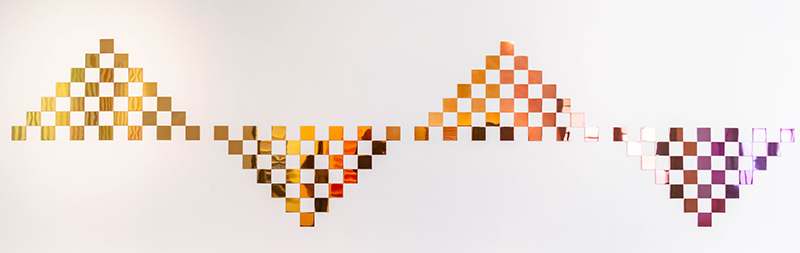
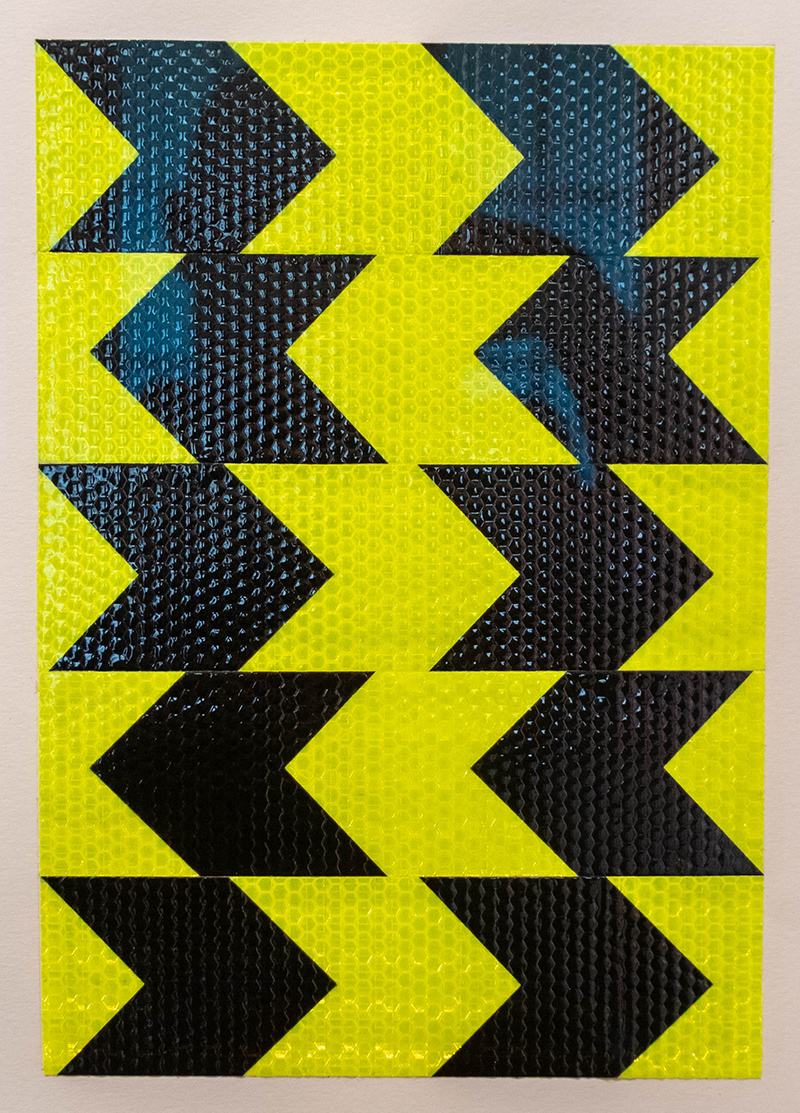
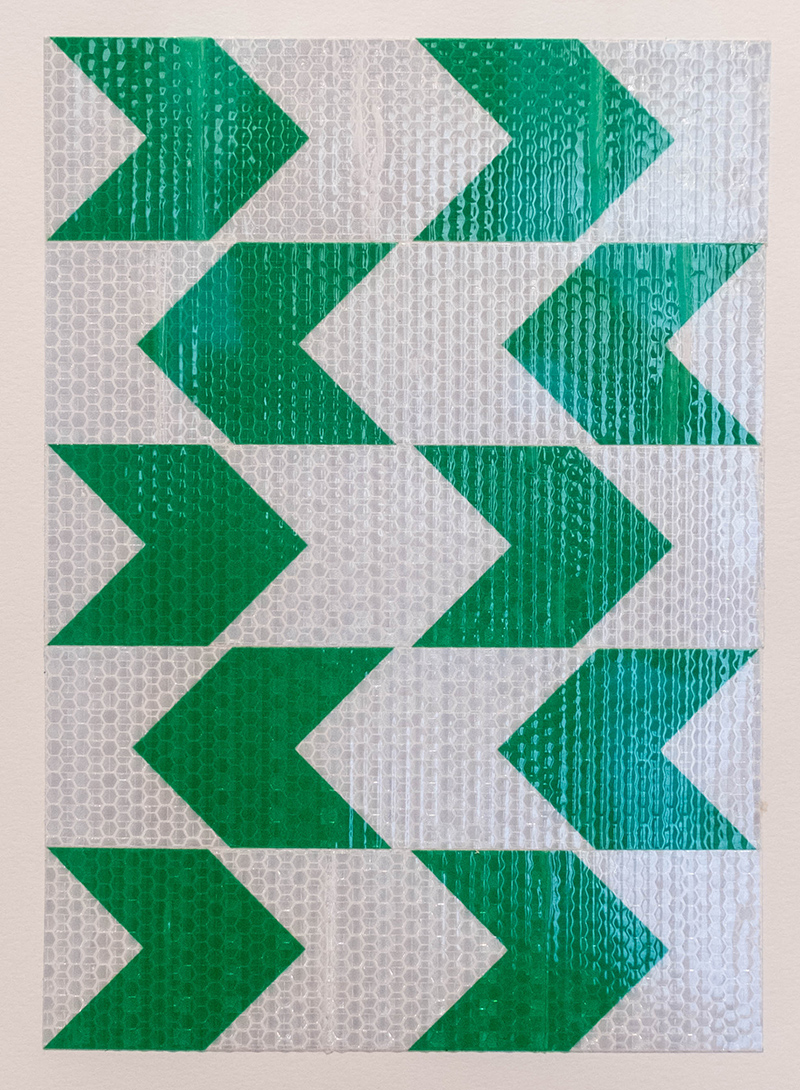
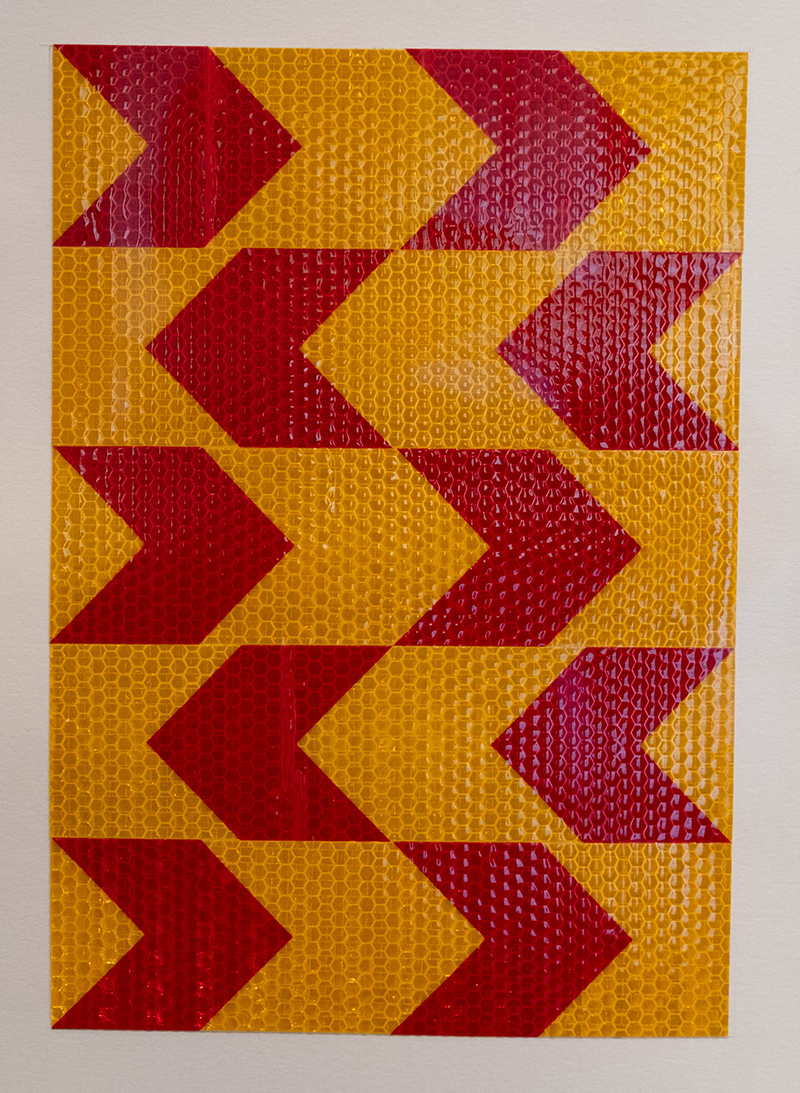
Begum repurposes everyday industrial materials in her work, such as automobile light reflectors, safety tape, metal or glass panels, and even segments of chain link fencing. By imaginatively reframing these elements, she is able to create installations that are compelling and nuanced and which create transformative experiences.
In a video presentation on the installation of her works within the Gallery at Windsor, Begum notes that she was interested in seeing how the pieces would adapt, since the architecture of each new space reshapes the interplay of light and color.
The artist, who lives and works in London, says she has always been drawn to recognizable industrial architectural materials that have a function, a purpose.
“There’s a series of work in the show that uses reflectors that are used for cars or bicycles. That’s a material that doesn’t matter where you are in the world, you would recognize,” says Begum.
“And they’re made to have a function, a purpose, but they’re incredibly beautiful. Internally, there’s a geometry that reflects light.”
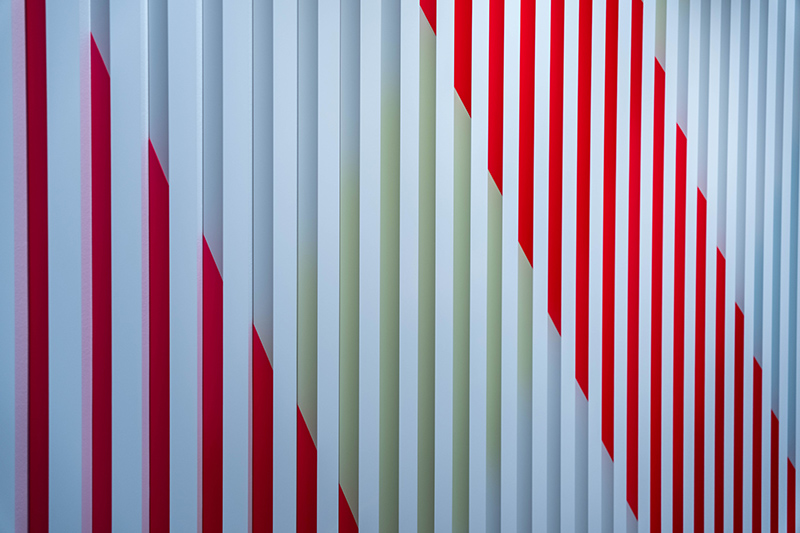
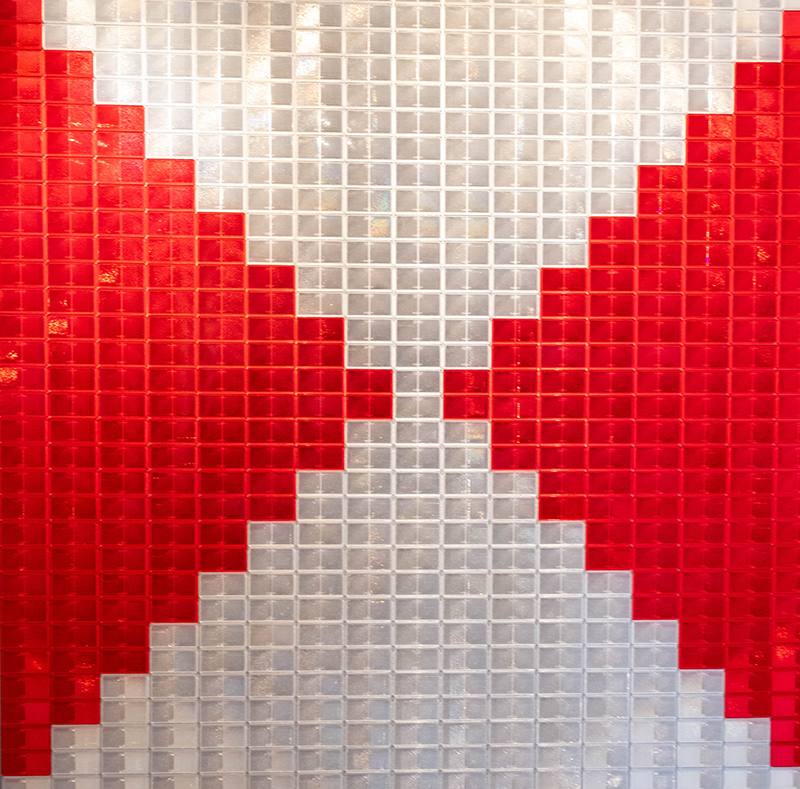
Her Bar Series is particularly intriguing. Constructed of 30 metal bars hanging vertically in a tight row, each bar is some 6 feet high and 2 inches deep. But to fully understand the work, the viewer has to move around the space, as looking from each side produces a separate set of color and patterns.
“But what I hadn’t realized when I first started making those works was how much the colors reflect and bounce off,” says Begum in the video, calling it a surprising and exciting accident.
“When I initially approached this emblematic work from Begum’s Bar Series, I read it as an installation of metal bars with a diagonal pattern painted across them and a fainter pattern of painted wall segments behind,” Palmer writes.
“Then, when I looked a bit closer, I was convinced that the wall color was produced by LED lights emanating from the work. Eventually, making my way closer still, I registered that the painted side portions of the bars were reflecting light onto the wall adjacent to them. Walking from left to right across the work and then back the other direction was a revelation, with the pattern flipping in the process.”
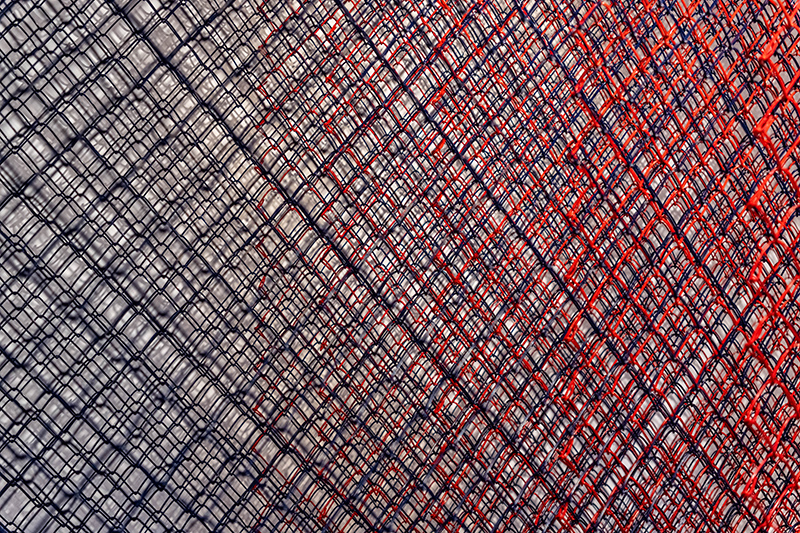
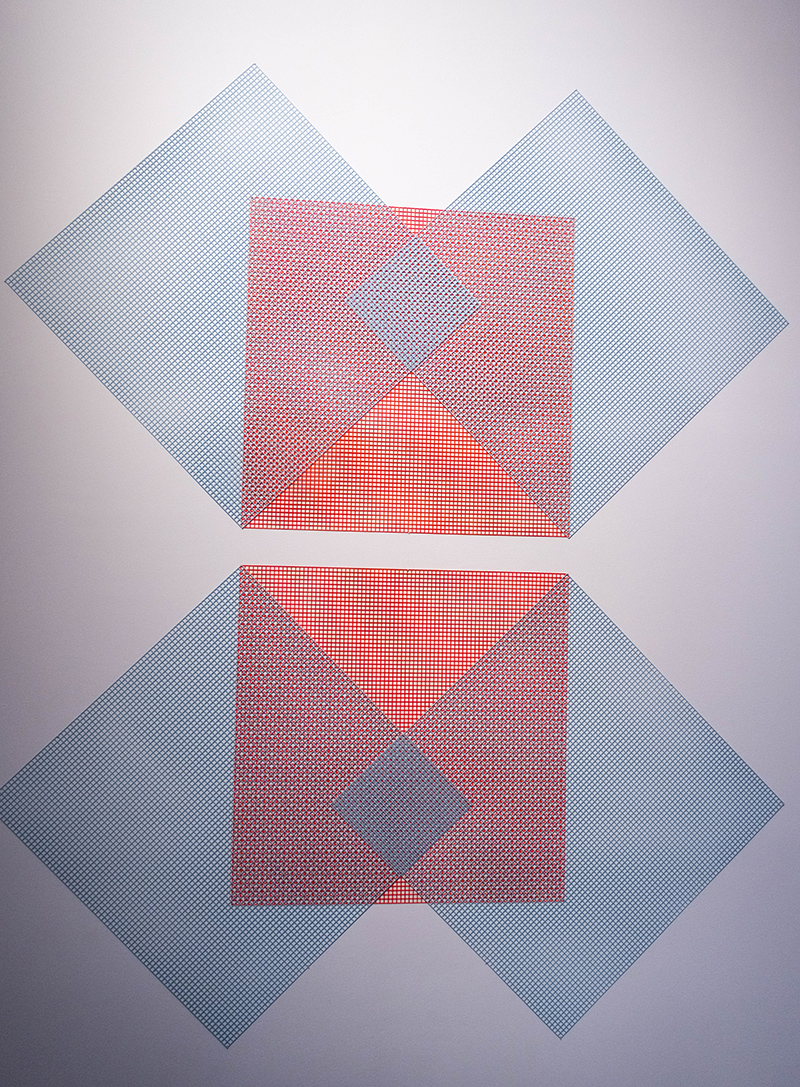
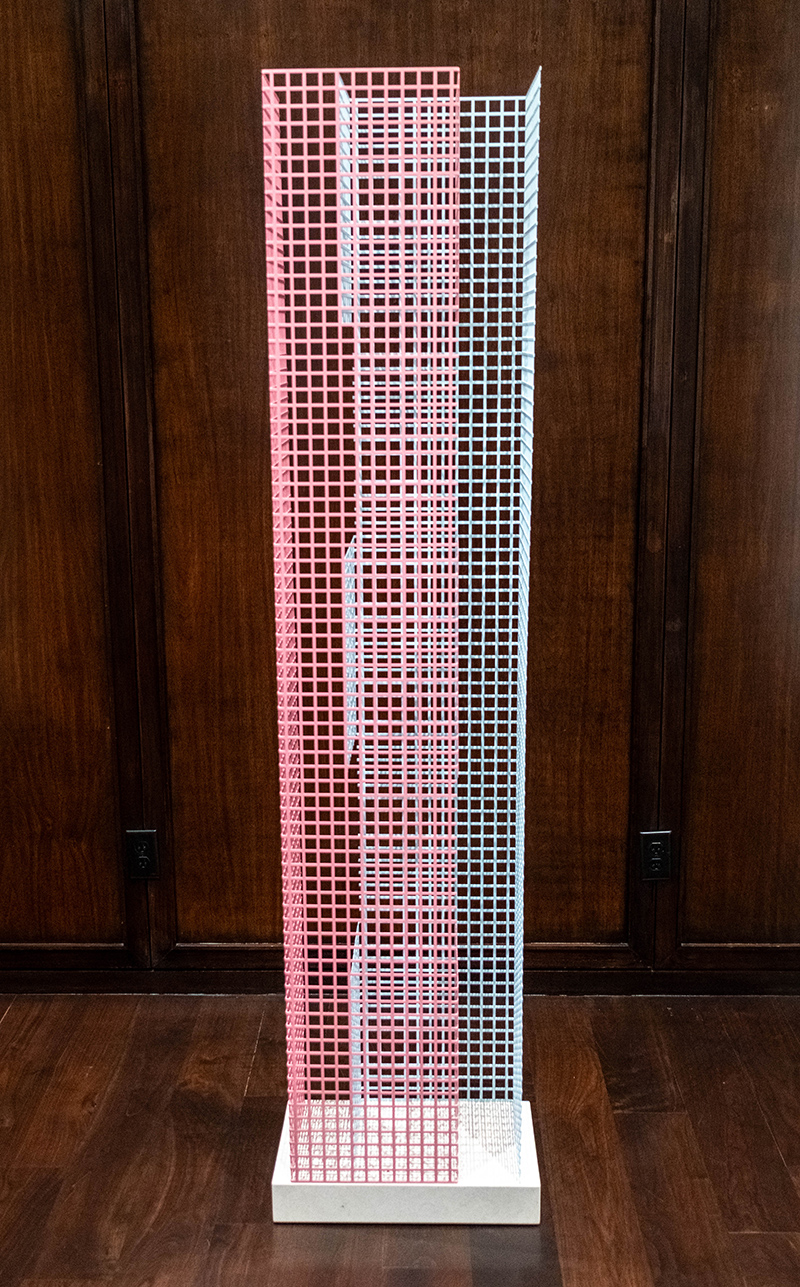
Another absorbing installation is comprised of five red and five blue sheets of powder-coated chain link fencing that hang from the ceiling, precisely layered one behind the other. The colors deepen and lighten as the viewer moves about, creating an almost dizzying experience.
“It’s easily recognizable, it has a lot of meaning, it has a lot of depth. On one hand, it’s really harsh. It’s really brutal. It’s divisive. It segregates people,” says Begum, describing the concept of chain link fencing.
“On the other hand, it’s really light. It’s really beautiful. It appears and disappears,” she says, adding that employing it for art is the complete opposite of its typical function.
“It has quite a somber mood and color. It’s a dark blue and a dark red, and when those two colors overlap, you get a third layer of geometry and color. It’s a series of works that forces you to think about your environment, forces you to think about what’s happening around you,” says Begum.
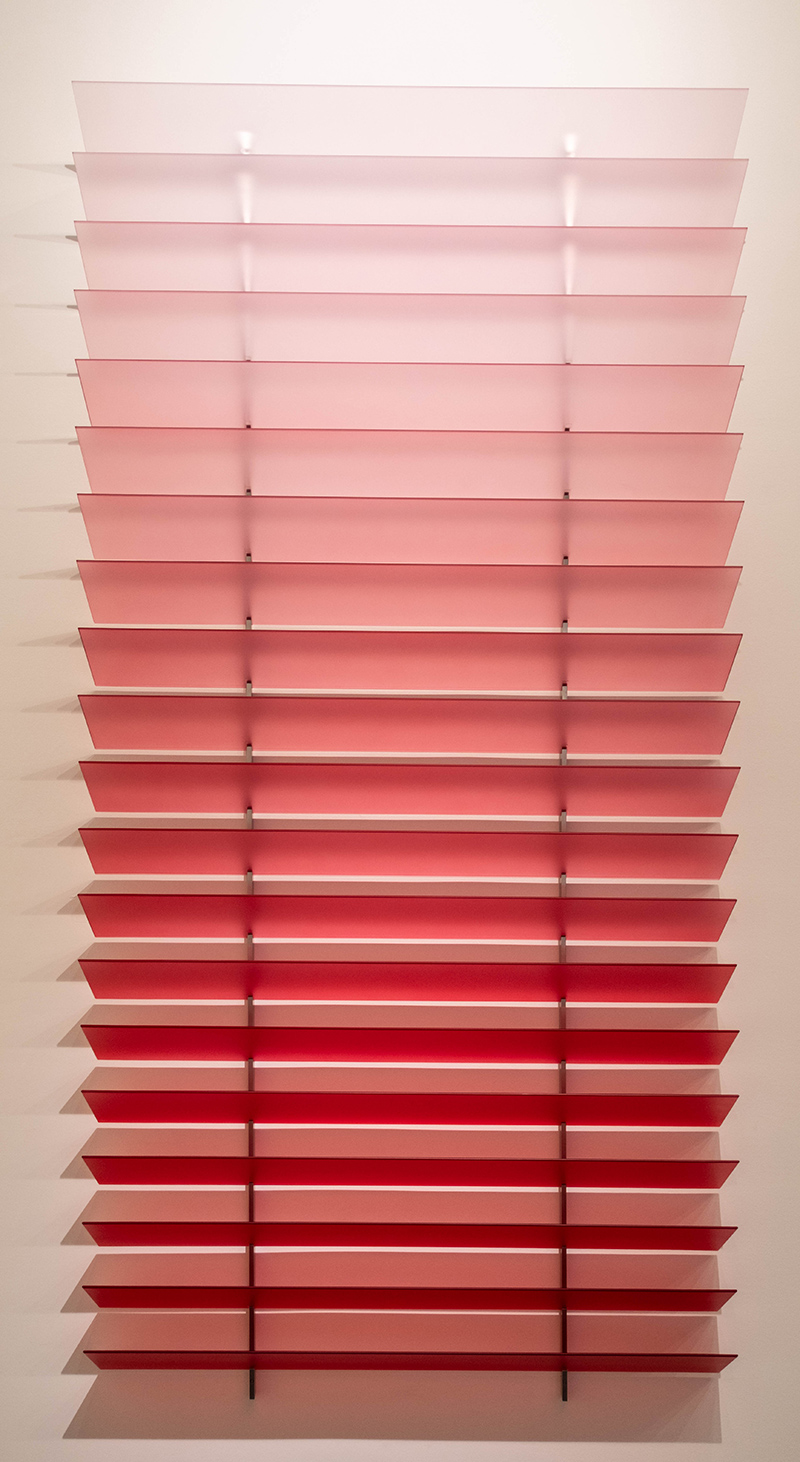
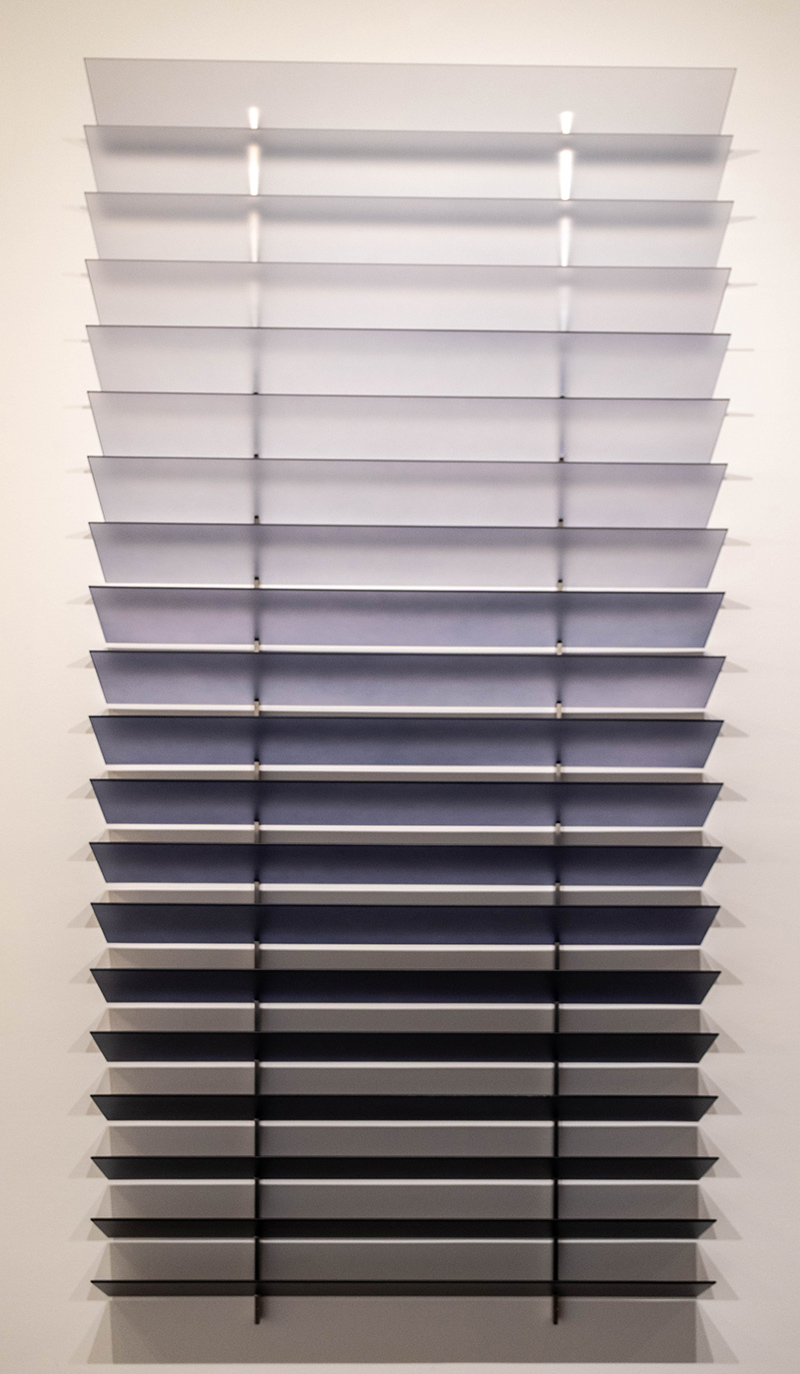
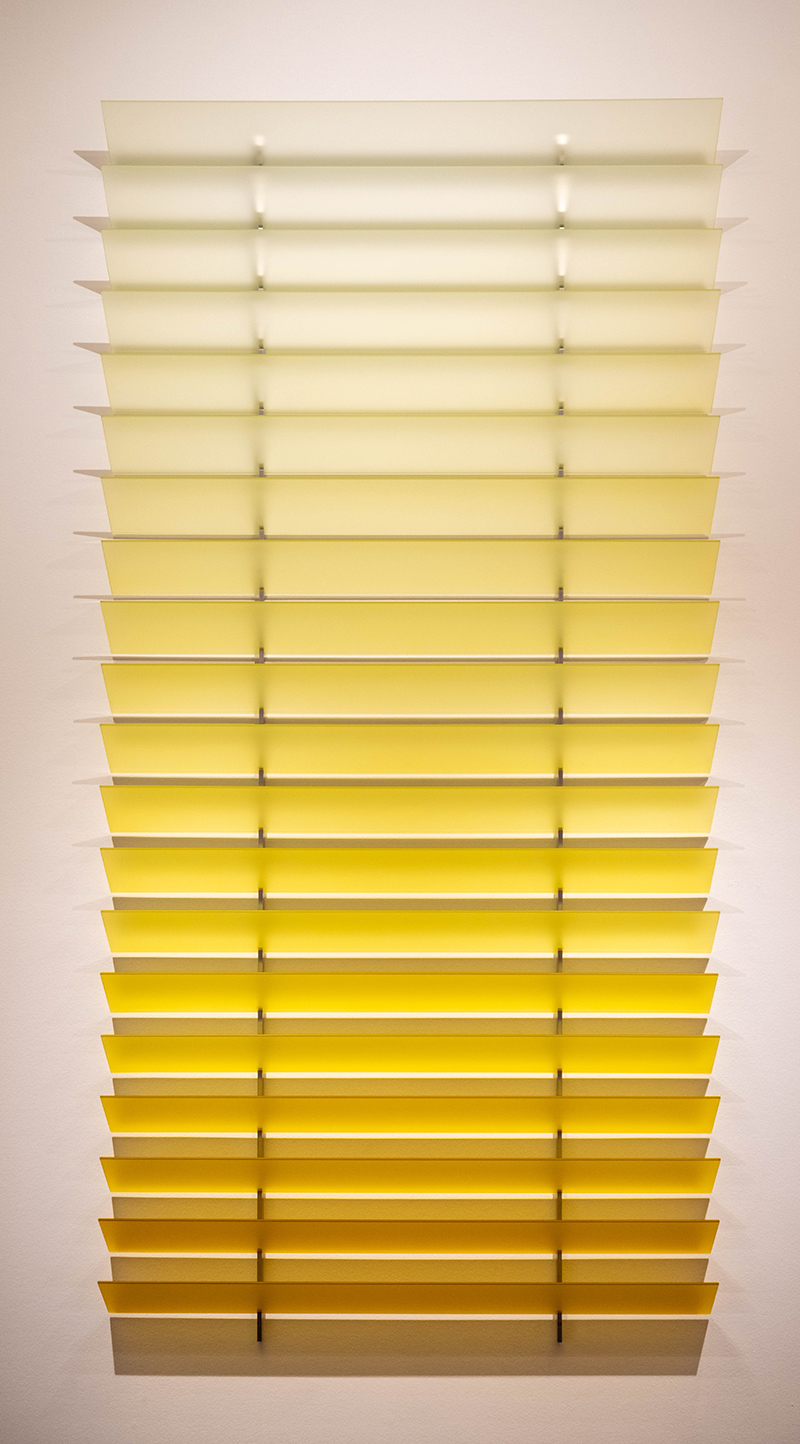
Like immovable kinetic structures, the three red, yellow and gray sculptural works from her Louvre Series explore how materials interact with light, reflection and transparency. Each piece, evocative of ventilation panels or blinds, consists of 20 translucent horizontal slats. The light plays off the mirror finish of the painted glass and aluminum slats, as the intensity of the pigment grows fainter from bottom to top.
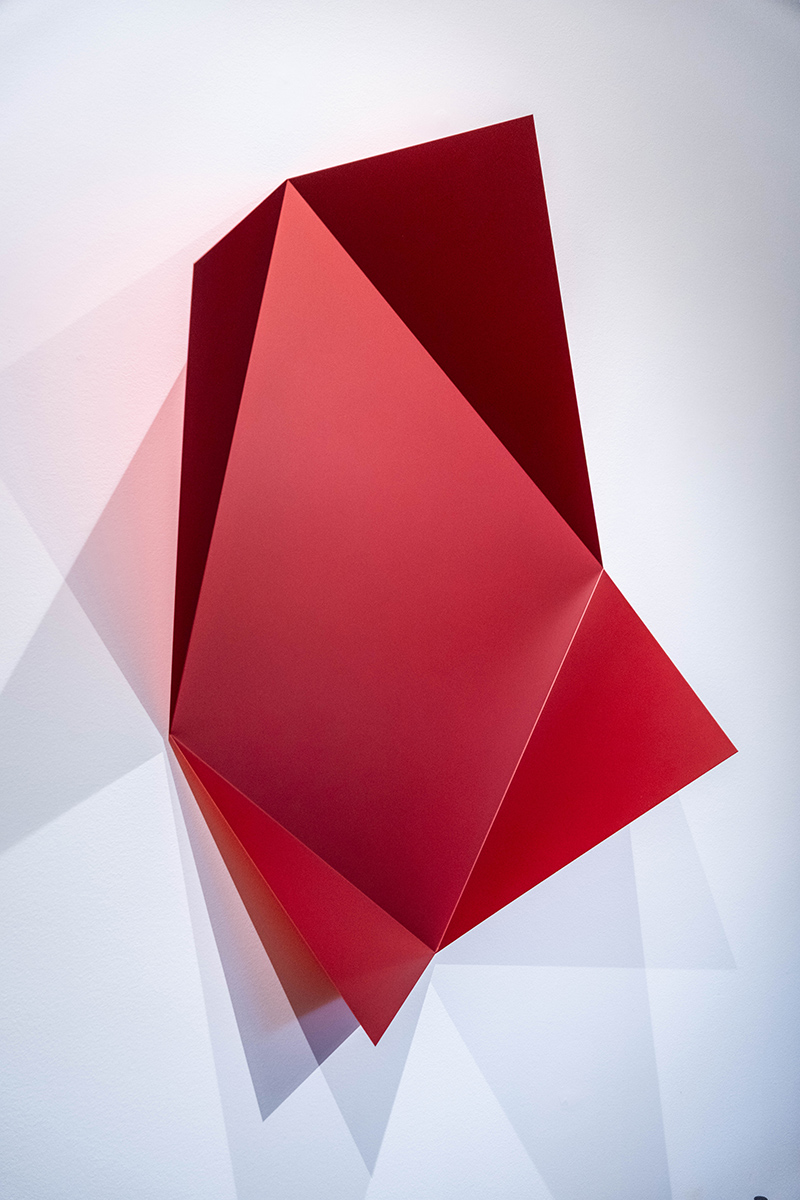
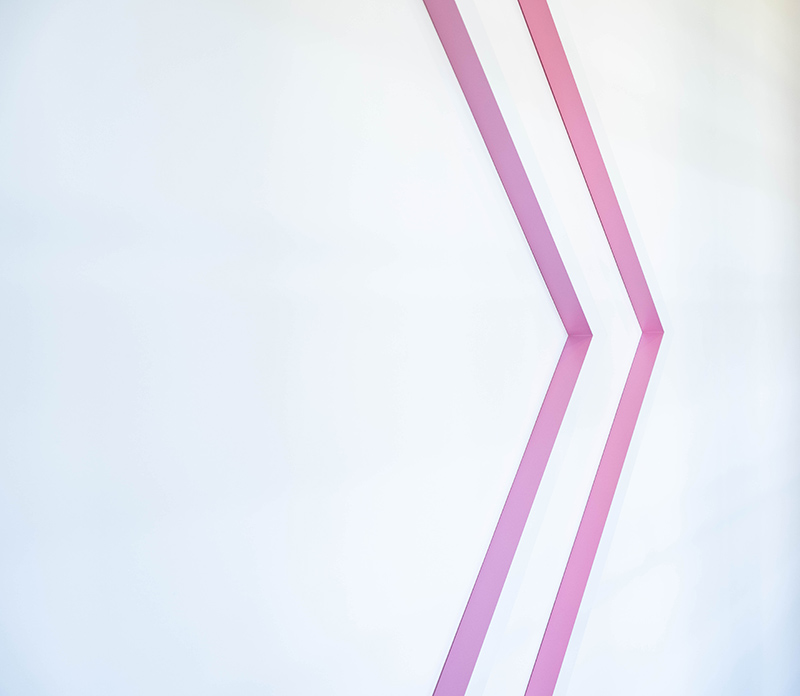
A sculpture from her Fold Series has the characteristics of a bold, red origami-style form.
“While from far away the sculptural work has a graphic boldness that almost appears to be emanating from its oblique corners, its intricacies are revealed as visitors arrive closer and examine it in greater detail,” writes Palmer about the piece.
“The actual faceting of the work is rather precise. To achieve this effect, Begum has bent a stainless-steel sheet meticulously and painted it immaculately, creating a seemingly impossible object. Even more vividly, light reflects and radiates off it onto the gallery wall.”
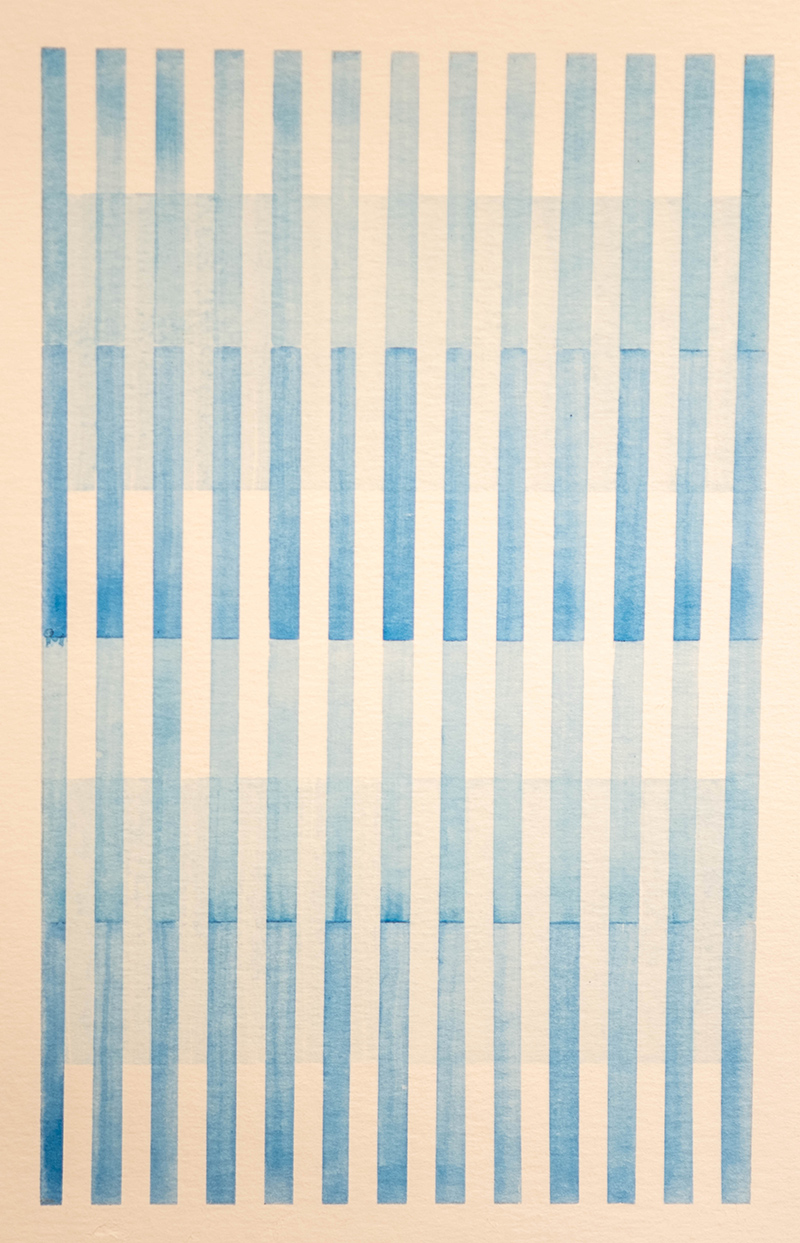
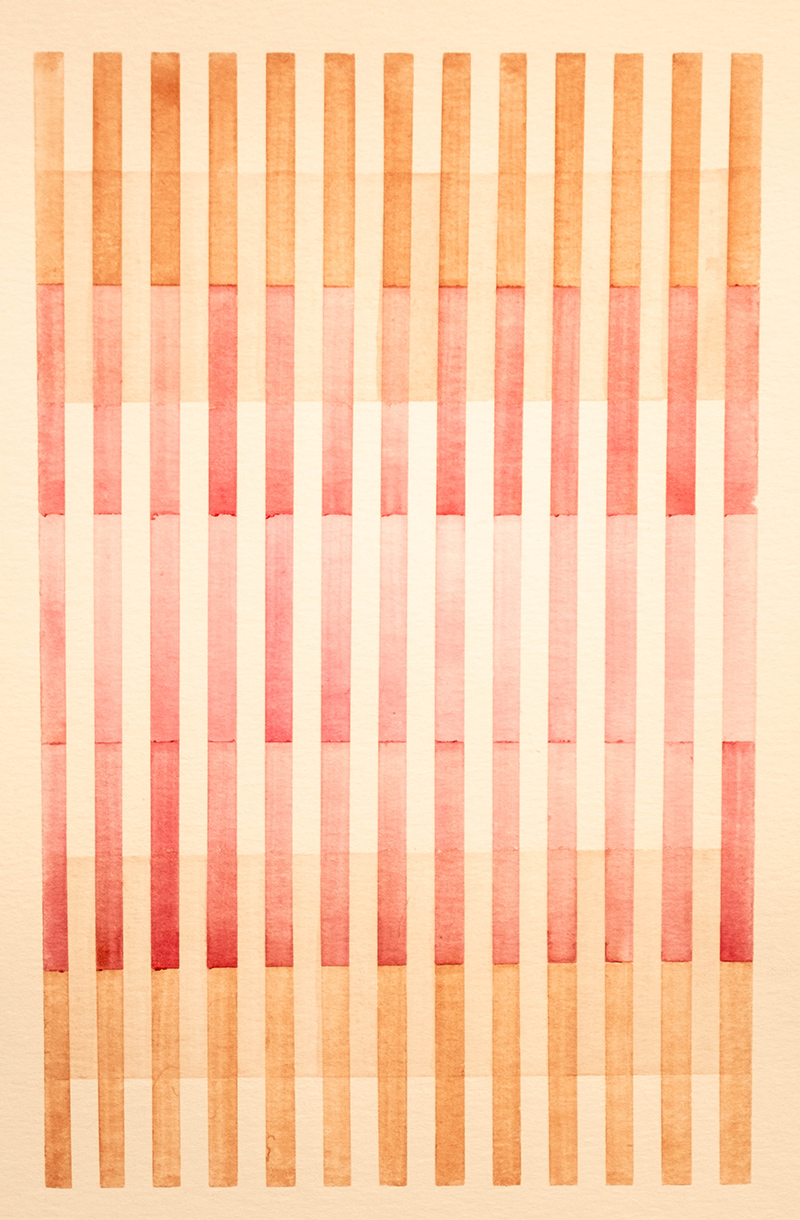
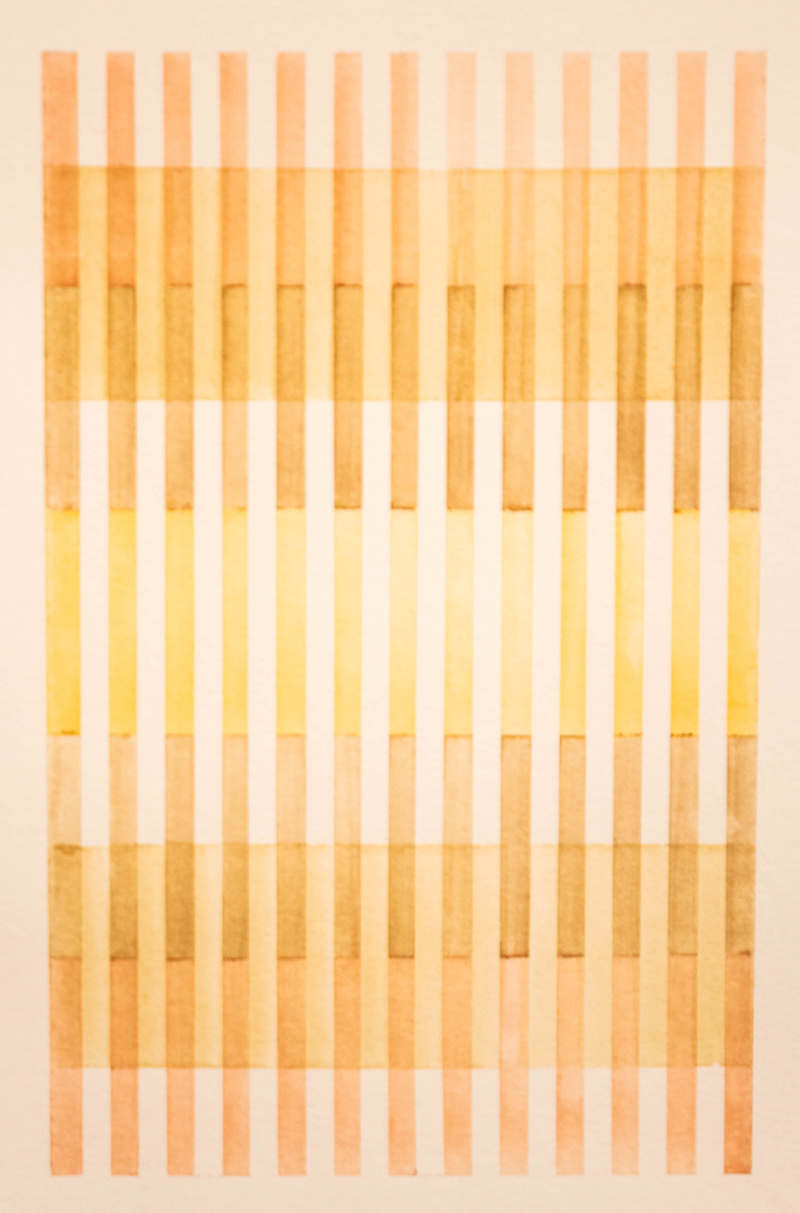
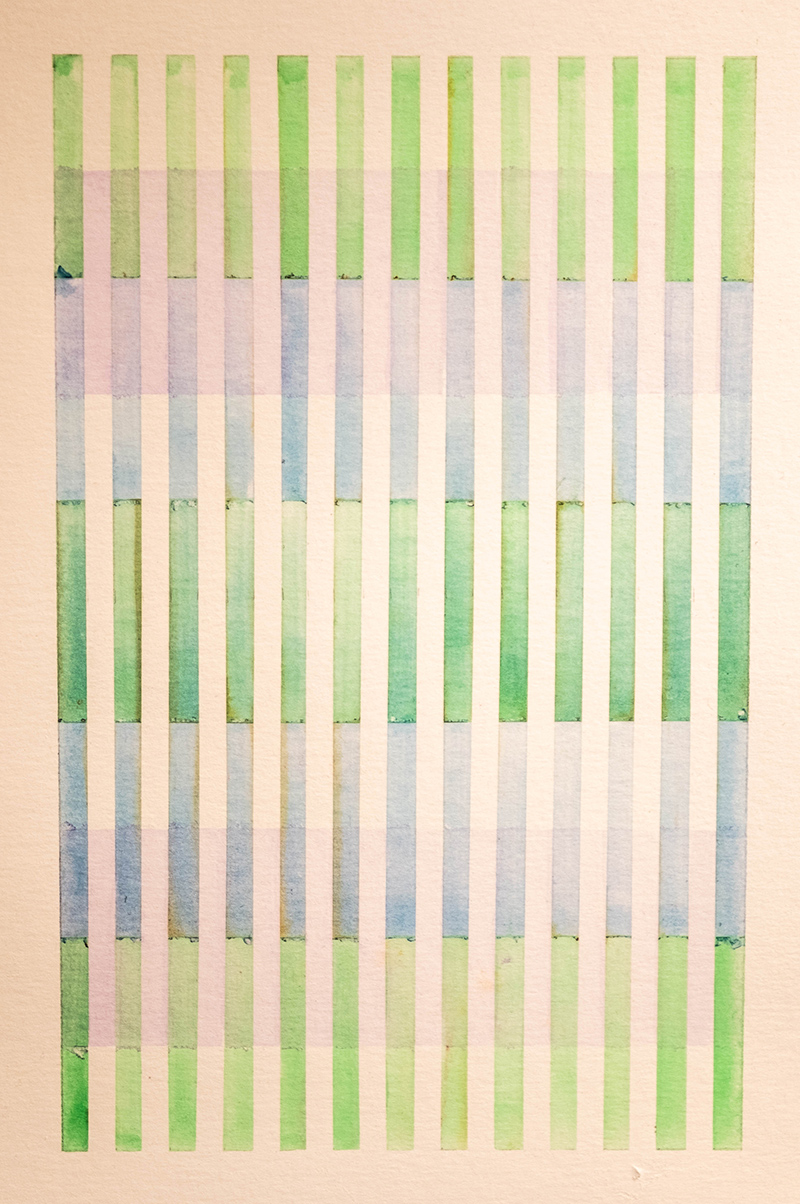
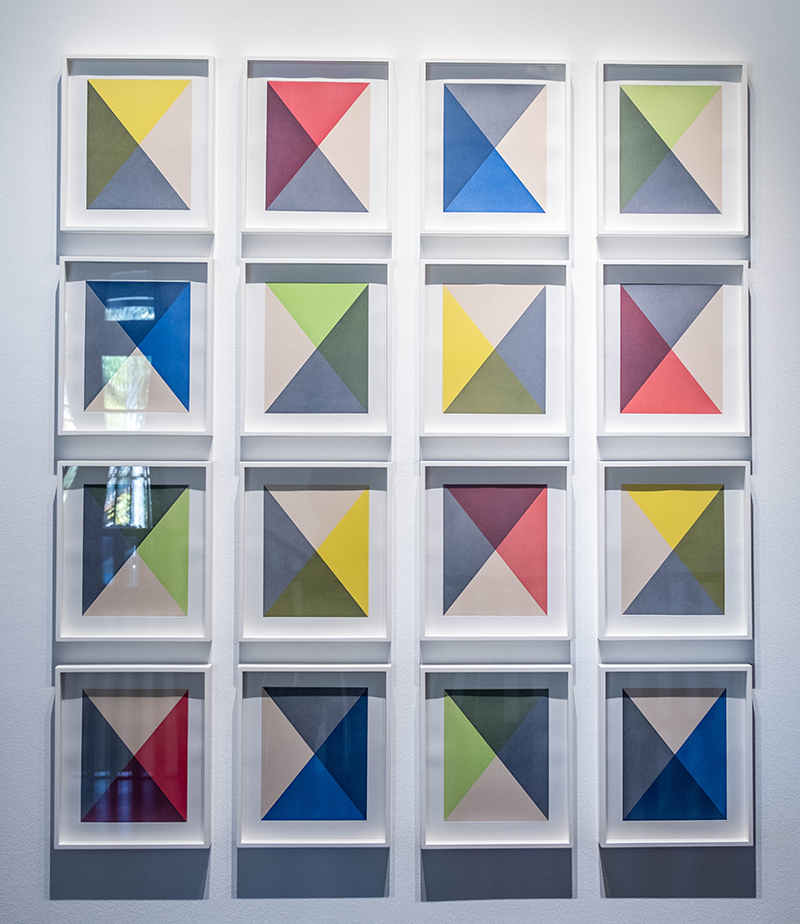
In addition to the three-dimensional works, there is a selection of framed watercolors on A4 paper.
“Begum took up watercolor practice seriously during COVID, a time of isolation, and these works convey the intimacy of that moment. She continues to create in this challenging medium while traveling or as a mindful break in her day amid the occasionally hectic nature of modern life and her busy studio. Grounding her in careful color application and meditative breathing, each brushstroke offers a moment of calm and an opportunity to recognize the geometries of her surrounding environments,” writes Palmer.
He asserts that her work resonates with a wide range of audiences.
“The works are so colorful and accessible and beautiful. And yet, when you really start to look a little bit more closely, they create profound experiences that hopefully invite people in and help them to see the world differently,” he says.
The Gallery at Windsor is open to the public by appointment. Admission is free; with a suggested $15 donation to the Windsor Charitable Foundation, which supports local nonprofits. Tuesday and Wednesday group tours are available with luncheon in the clubhouse ($60 pp inclusive of the suggested donation).
For more information, visit WindsorFlorida.com or call 772-388-4071.
Photos by Joshua Kodis