After years of strategizing, planning and raising money, Indian River Land Trust is getting close to a big reveal at its Coastal Oaks Preserve project.
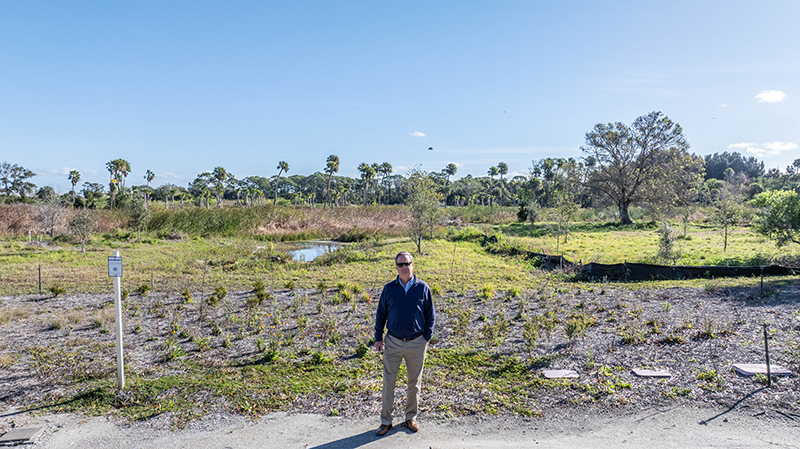
The front section of the 226-acre property, which stretches from U.S. 1 to the Indian River Lagoon near the southern edge of the county, was a mass of pepper trees and other invasive plants when the Land Trust bought the property in 2011.
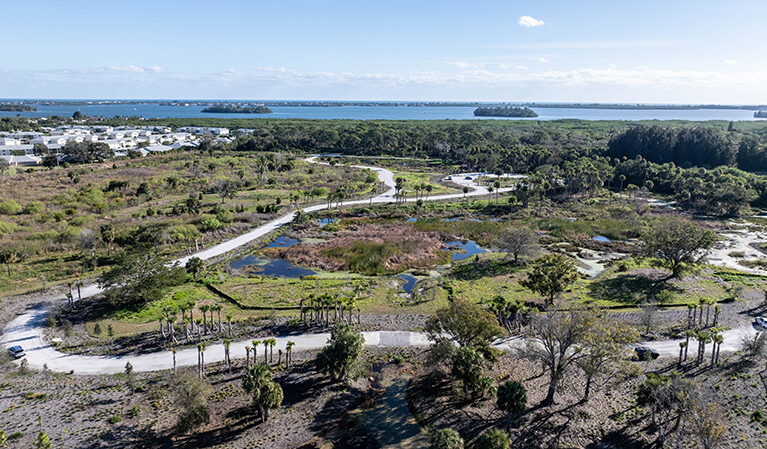
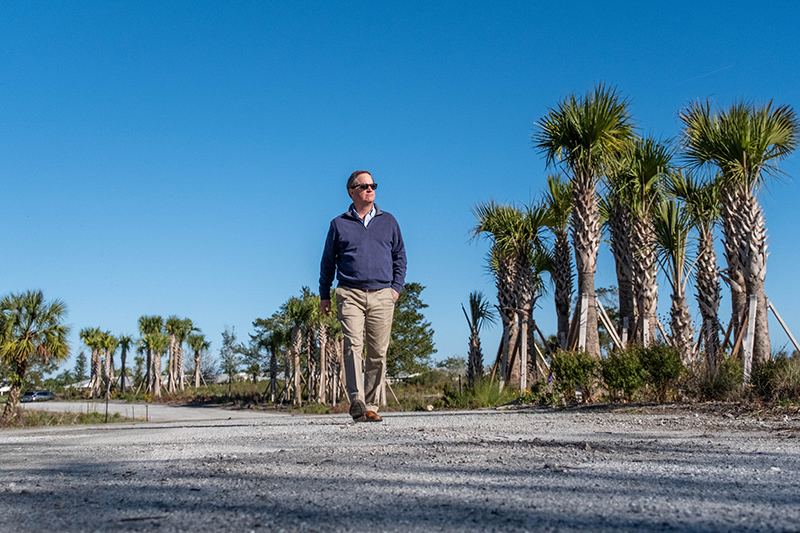
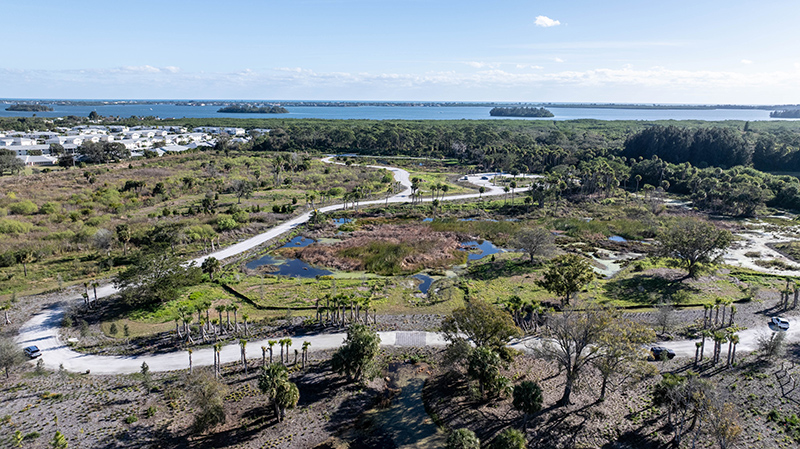
Over the past year or so, it has been transformed into an entryway to the natural realm, with berms, curving shell roads and 80,000 new native plants and trees, including hundreds of palm trees and live oaks.
Beyond the newly landscaped area lies an extraordinary swath of mostly natural terrain that includes “nearly every type of habitat you can find in the whole coastal region,” according to Land Trust executive director Ken Grudens.
There are mangrove forests, salt and freshwater marshes, ponds, pine flats, oak hammocks and palm hammocks, not to mention a mile of lagoon shoreline with healthy seagrass beds offshore.
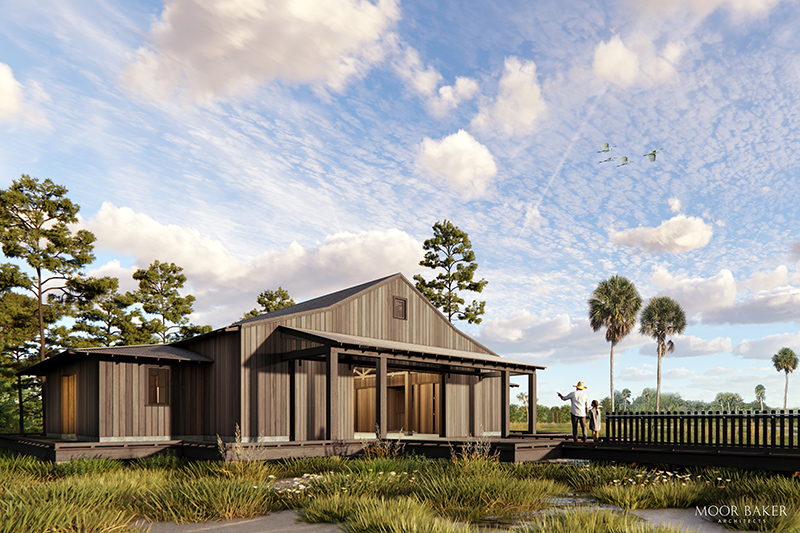
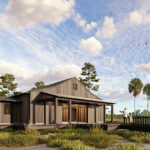
The Land Trust, which has preserved more than 12 miles of lagoon shoreline and 1,300 acres of ecologically precious property in the county, broke ground this week on a pavilion that will serve as a focal point for the preserve and include restrooms, gathering space for visiting groups and lab facilities for onsite researchers.
“It is a place where people will gather and then go out and immerse themselves in these landscapes, whether for education, recreation or scientific research,” Grudens says.
“We have recreated a coastal oak hammock in front,” which will shield the preserve from the busy highway, says Sally Coyle, one of the key players on a team of landscape architects, biologists and engineers who have spent years broadly envisioning and finely detailing the complex ecology of the restoration.
John Blum, vice president of Carter and Associates, the engineering firm that laid out the city of Vero Beach more than 100 years ago, mentions the mysterious quality of the entryway, as the shell road curves out of sight of the highway, dips down to a low-water bridge by a wetland Blum engineered, and proceeds into the carefully crafted site.
“Our design emulates how plants in their native ecosystems group together and thrive,” says Coyle, principal of Orlando landscape architectural firm, Coyle & Carons, which specializes in botanical gardens, zoos and other nature-centric projects.
The expertise and passion of many people have infused the project with an almost magical quality.
Dix-Hite landscape architects, a major firm with offices in Atlanta, Birmingham and Orlando that aims “to harness the spirit of the land through holistic, intentional and enduring design,” according to its website, created the masterplan for the preserve, before handing off implementation to Coyle & Carons.
Coyle herself has been to the site more than a dozen times over the past year, supervising the interconnected placement of plant communities, and she says everyone at her six-person firm has contributed to the design process.
Likewise Land Trust board members Liz Gillick and Dick Brickman, both landscape architects, who have poured time, energy and talent into the project, and Land Trust executive director Ken Grudens, who has a master’s degree in landscape architecture.
Multiple specialized native plant nurseries and landscaping firms have worked in concert to actualize an evolving vision for the property, which the Land Trust sees as “a living classroom.”
Vero Beach architect Peter Moor, also a Land Trust board member, designed the pavilion pro bono in a fitting Florida vernacular style.
Grudens says the pavilion sits at the intersection of multiple ecosystems and serves as entryway into the wonders of the site via a network of trails that will incorporate old fire brakes and mosquito empowerment dykes.
The next phase of the project will include an over-the-water platform along the shore of the lagoon and over-the-water pavilion on an existing pond for the use of students, researchers and visitors to the preserve, which Grudens says will be open to the public periodically when it is complete.
The property has been used since 2015 by a junior scientist program put together by the Land Trust and Harbor Branch Oceanographic Institute. That program, which has trained more than 200 students from Vero Beach High School, Sebastian River High School and Indian River Charter High School, brings juniors and seniors to the site to conduct serious environmental research in conjunction with Harbor Branch scientists and Land Trust staff members. And Grudens says a wide range of partner organizations are waiting in the wings to begin education and research programs.
“We’ve met on site with a number of organizations that have interest,” says Grudens. “The Brevard Zoo has already run a series of pilot projects here with homeschoolers, which helped to inform some of the design that we did.
“Gifford Youth Achievement Center is interested in summer programs and we have had the Environmental Learning Center out here.” Pelican Island Audubon Society, Indian River State College and the Vero Beach Museum of Art are other organizations Grudens has spoken with about collaboration.
Junior scientist enrollment is limited to 20 students a year who must apply to be part of the program. They come to the site for three or four hours once a week from September to January, breaking up into teams of four or five to do intensive environmental research.
Their research helps guide the Land Trust’s property restoration decisions and keeps up what Grudens calls “a continuum of knowledge” by monitoring seagrass health along with animal and plant populations that have been under observation since the program started.
Besides bright, ambitious students and their scientist mentors, the Preserve is inhabited by bobcats, coyotes, otters, hawks, owls and dozens of other mammals and reptiles. Bottlenose dolphins, West Indies manatees and swift schools of game fish swim in the adjacent lagoon while pelicans and other water birds soar above, or wade along the shore.
“We have a wildlife cam back there that has recorded all kinds of animals passing by,” says Grudens.
Archeologists and beekeepers also use the property, which once was part of the Hallstrom estate, according to county historian Ruth Stanbridge. The Land Trust owns a strip of land on the west side of U.S. 1 that connects to more than 100 acres of county preserve land that slopes up from the highway and railroad tracks to historic Hallstrom House.
“Connectivity is one of our goals,” Grudens says.
The irreplaceable complex of native ecosystems was almost lost to development during the early-2000s real estate boom.
Before it passed to the Land Trust, the biggest part of the property was entitled for 545 homes, and a highway frontage strip was slated to be yet another storage facility, stretching for half a mile along U.S. 1.
When it was buying up conservation land in 2007, Indian River County offered the home developer $10 million for the property. He turned that payday down but ended up losing the waterside tract when the housing boom went bust.
That opened the door for the Land Trust. In 2011, at the bottom of the market, the group stepped in and bought it from the bank for $1.69 million.
In the years since then, it has picked up adjacent parcels – including most recently the 6-acre strip on the west side of U.S. 1 where the storage facility was planned – to accumulate 226 acres.
“The front 35 acres were an abandoned Hallstrom citrus grove that was heavily overgrown with invasive Brazilian pepper trees, and we weren’t sure how we were going to deal with that,” Grudens said.
“Fortunately, St. Johns River Management needed to do mitigation for the new FDOT interchange on I-95 and they came in and removed all the pepper trees and Australian Pines and restored the marshland.”
In 2019, as the Land Trust shifted much of its attention from land acquisition to improving the property it had purchased over the previous decade, a committee was formed to “select a landscape architectural firm to create a masterplan and charrette for improving the Coastal Oaks property,” according to board member Gillick.
Also in 2019, the Land Trust launched a $10 million capital campaign to fund the project, along with other land improvement and acquisition initiatives.
The campaign exceeded its goal, with $3.5 million earmarked for Coastal Oaks Preserve improvements.
Though Phase One will be complete a year from now when the pavilion is ready for school kids and scientists to use, the Preserve will never really be finished. “It is a living environment that will continue to evolve,” says Gillick.
“Our goal was to create a biodiverse, self-sustaining native landscape, that on its own goes through a natural process of evolution,” says Coyle.
“Plant species create their own communities and micro-communities based on available sun and water. Plants are living things that bring their own ecosystems. The soils will improve over time, and we already see a lot of new pollinators showing up at the Preserve.
“The landscape we are creating is a kind of experiment in which we try to work with the forces of nature to preserve the native ecosystems.
“When someone drives in here 50 years from now, I think they will see a beautiful meadow blending into a successional forest. The oaks will get big and twisty, creating a more enveloping, sun-dappled canopy. The vision for the whole property is for our touch to be very light on the land.”
At the same time, programing, research and structures will evolve, too, as uses are refined and new partners and ideas emerge.
Grudens says he hopes the second phase of current development will be seamless with the first phase, with work on new trails and over-water structures “critical for accessing the lagoon for education and research” starting about the same time the pavilion is completed.
He said the Land Trust hasn’t decided yet on the details of public access but opening the property one Saturday a month is a possibility.
“It will be busy with school groups and other programing during the week, but we could have occasional days when the public can come and enjoy all of this and learn about the ecology, with Land Trust staff and other docents are on site to guide people through the property.”
-
- PHOTO BY JOSHUA KODIS
-
- PHOTO BY JOSHUA KODIS
-
- PHOTO BY JOSHUA KODIS
-
- PROVIDED