The Chamber Music Society of Lincoln Center returns to Vero Beach for another sensational trio of concerts in January, February and March at Trinity Episcopal Church.
“This will be our fifth season, which is already an anniversary, so that’s incredibly exciting,” says cellist David Finckel, CMS co-artistic director with pianist Wu Han.
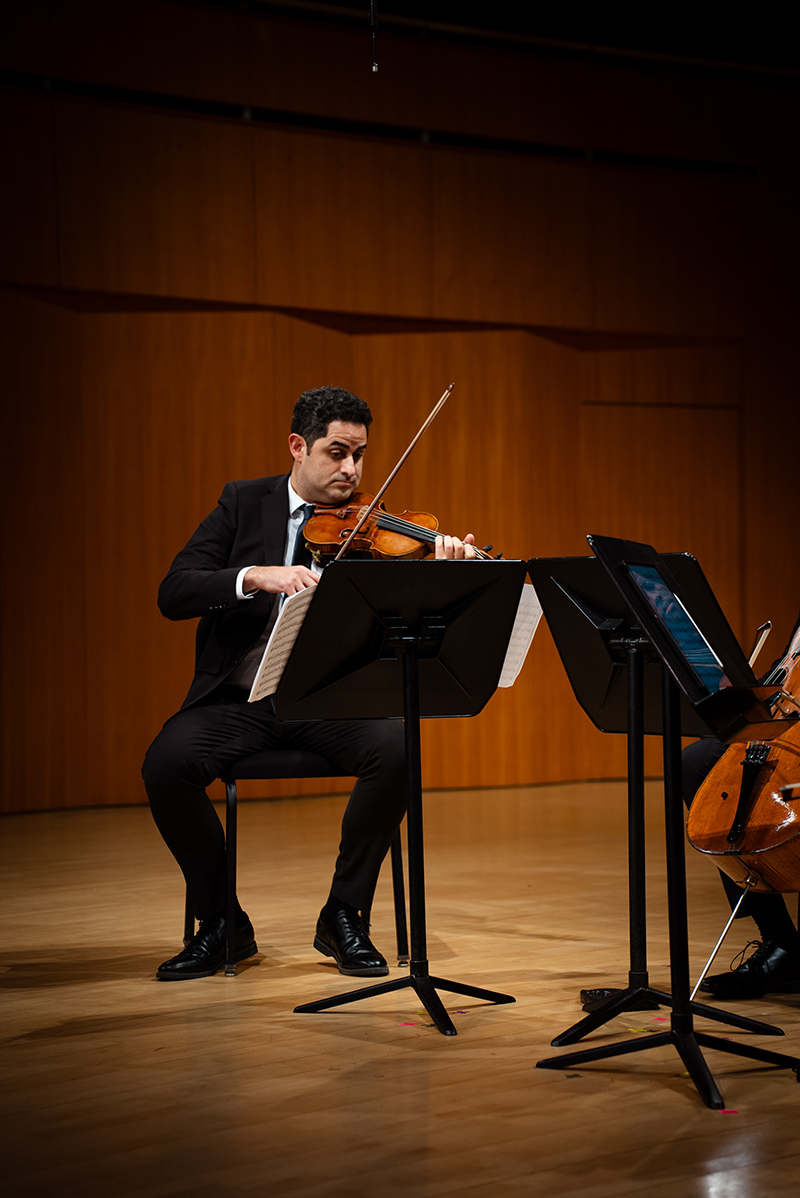
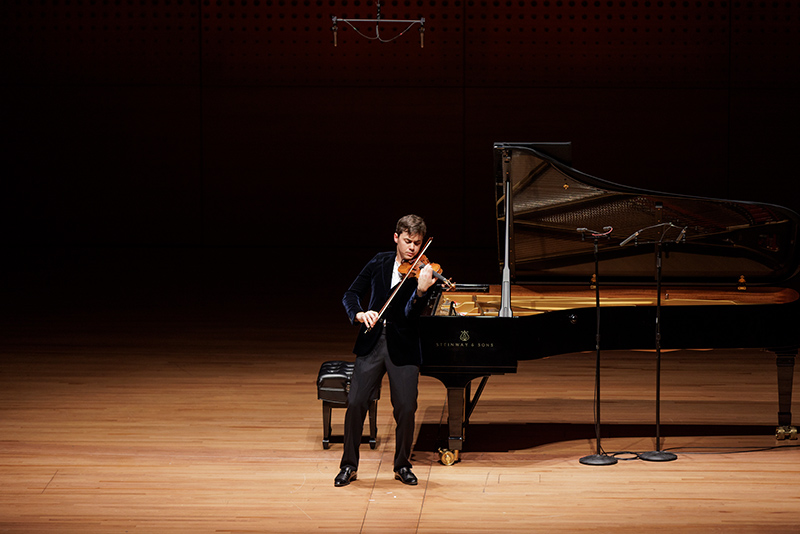
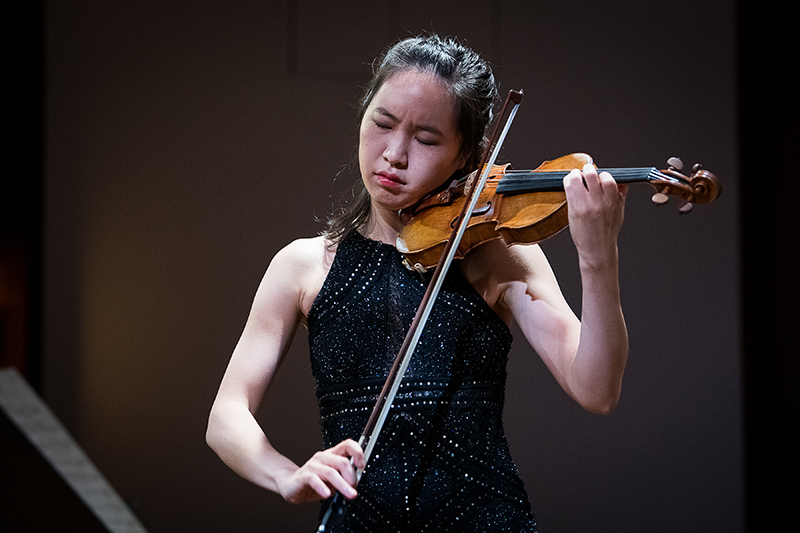
Of the eight other artists who will join them over the course of the season, audiences will be familiar with all but Kristen Lee, who will be introduced in the first program.
Wednesday, Jan. 21
Artists: David Finckel, Cello; Kristin Lee, Violin; Juho Pohjonen, Piano; and Arnaud Sussmann, Violin/Viola
Beethoven Trio in D major for violin, viola, and cello, Op. 9, No. 2
Lee, Sussmann, Finckel
Beethoven Sonata in E-flat major for violin and piano, Op. 12, No. 3
Lee, Pohjonen
Beethoven Trio in B-flat major for piano, violin, and cello, Op. 97, “Archduke”
Pohjonen, Sussmann, Finckel
“Kristen is one of our veteran Bowers young artists who’s been with us now well more than 10 years. You will know from the minute she starts to play; she’s a consummate professional. She is a major figure on the New York stages and also on tour. I just returned from a three-week tour of China and she was the only violinist on the whole tour,” says Finckel.
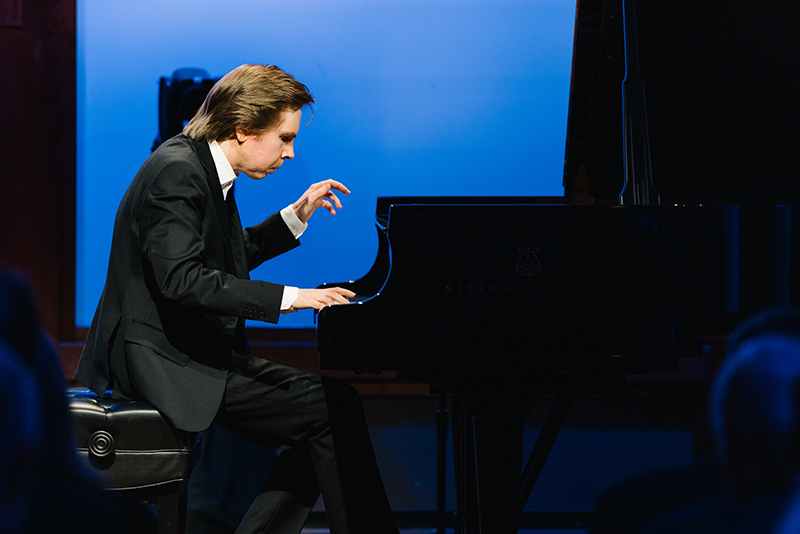
“I’m playing in the Beethoven String Trio with Kristen and with Arno Sussman, a violinist who’s playing viola in the first piece, and with the Finnish pianist Juho Pohjonen, who is absolutely a phenomenon.”
This group and program are part of a tour they are taking to other cities, including Lincoln Center’s famed Alice Tully Hall in New York City.
“So, it is very exciting to start this way,” says Finckel.
Thursday, Feb. 19
Artists: Dmitri Atapine, Cello; Paul Huang, Violin; Paul Neubauer, Viola; Daniel Phillips, Violin/Viola; and Danbi Um, Violin
Mozart: Quintet in C minor for two violins, two violas, and cello, K. 406
Huang, Um, Phillips, Neubauer, Atapine
Kodály: Serenade for two violins and viola, Op. 12
Huang, Um, Neubauer
Dvořák: Quintet in E-flat major for two violins, two violas, and cello, Op. 97, “American”
Um, Huang, Neubauer, Phillips, Atapine
This second concert includes two string quintets.
“The standard string quintet is a string quartet plus an extra viola. It was really Mozart who invented this idea of the viola quintet. People say that’s because Mozart loved to play the viola himself, so he wrote a second viola part in these pieces so that he could play in them,” Finckel explains.
The program is bookended by a quintet written by Antonin Dvořák in 1897, subtitled “The American.” At the time, Dvorak was director of the National Conservatory of Music of America in New York City. Homesick for his native country, he enjoyed spending summers in Spillville, Iowa, a little Czech community where he could speak the language and eat the food. It was there, Finckel explains, that he wrote the piece.
“But he just embraced all the music that he heard in America, like Native American and African American music and culture. And this piece is full of those cultures, and that’s why it’s nicknamed ‘The American,’” says Finckel.
Centered in the program is what Finckel describes as an “incredible string trio” by Hungarian composer Zoltán Kodály, who collected native folk music from remote villages to incorporate into his own classically oriented compositions.
“This Kodály Serenade is one of them. It’s a masterpiece and it’s a barn burner. People don’t think they’re going to like it or understand it, but it’s a spectacular hit every time,” says Finckel.
“We don’t have such a thing as an ‘A Team’ here, but these two violinists Paul Huang and Danbi Um are two of the greatest violinists, I think, playing today, each of them in their own way.
They’re coming with veteran violist Paul Neubauer, who many people feel is the greatest violist alive, and they’re also accompanied by the wonderful Daniel Phillips, playing viola. Daniel Phillips was one of the violinists of the great Orion String Quartet, which gave its last concert in 2023. Danny is a great musician, and a marvelous violist who will always pick up the viola when it’s needed. And the cellist is our wonderful colleague, Dmitri Atapine, who’s been with us also as a Bowers artist many years, more than a decade. So that’s a very special program.”
Wednesday, March 25
Artists: Benjamin Beilman, Violin; David Finckel, Cello; and Wu Han, Piano
Brahms: Scherzo, from “F-A-E” Sonata for violin and piano
Beilman, Wu Han
Shostakovich: Piano Trio No. 2 in E minor, Op. 67 for violin, cello and piano
Beilman, Finckel, Wu Han
Schubert: Trio No. 2 in E-flat major for Piano, Violin, and Cello, D. 929
Wu Han, Beilman, Finckel
“And then the season finishes with a very eclectic program where you have a combination of Brahms, Shostakovich and Schubert. But what unites these pieces on the program, I think, is a kind of maturity,” says Finckel. He adds that it’s the case even though the Brahms opening piece, was written when he was very young.
“This one little movement, which is a scherzo for violin and piano, is one of the most heroic, forceful, confident, uplifting pieces of music you could ever hear. So for that reason, many people like to open their concerts with this piece, especially violinists if they’re giving a recital, because it just breathes positive energy,” says Finckel.
Conversely, Shostakovich’s Trio presents an entirely different sort of energy. Finckel explains that he was under great emotional strain as he wrote the piece, devastated not only by the death of one of his closest friends, but also by news filtering into Russia about the Holocaust.
“This piece has everything in it, from mystery and drama, to out and out anger and indignation. It is also a great, great tribute to the Jewish people through the Jewish melodies and idioms. It’s one of the masterpieces of the 20th century, no question,” says Finckel.
“It is an essential work in piano trio literature, and it leaves audiences in a transported state. I’ve heard it many times; I’ve played it many times. I will be playing it there again with great pleasure. It’s a piece never to forget.”
The concert ends with another great masterpiece of the 19th century, Schubert’s final piano trio, published as Opus 100 in late 1828, shortly before his death.
“It has a magisterial first movement of symphonic scale. It has a haunting slow movement, which reminds me of the mood of his famous song cycle, ‘Winterreise,’ because you sense the wanderer in search of romance, trudging through the snow in vain. The second movement begins with a cello solo; it’s haunting. And then you have an incredible finale, which goes on and on and on, and it ends with a return of the slow movement theme, but this time in a major key,” says Finckel.
“At the last minute, the clouds open up, the sun comes out, and the whole concert ends on a note of unrestrained joy. So this is going to be something quite special. This is exactly how this concert is going to end.”
Benjamin Beilman, who Finckel calls a great American virtuoso, joins him and Wu Han in this closing concert.
“Ben is one of the real shining stars of the violin today. Everywhere he plays, he gets asked back. He goes from one triumph to the next, spreading joy and his beautiful sound, playing on a magnificent violin. It will be a great way to end this fifth Vero season,” says Finckel.
Performances begin at 7:30 p.m. at Trinity Episcopal Church. For more information, visit ChamberMusicSociety.org.
Photos provided