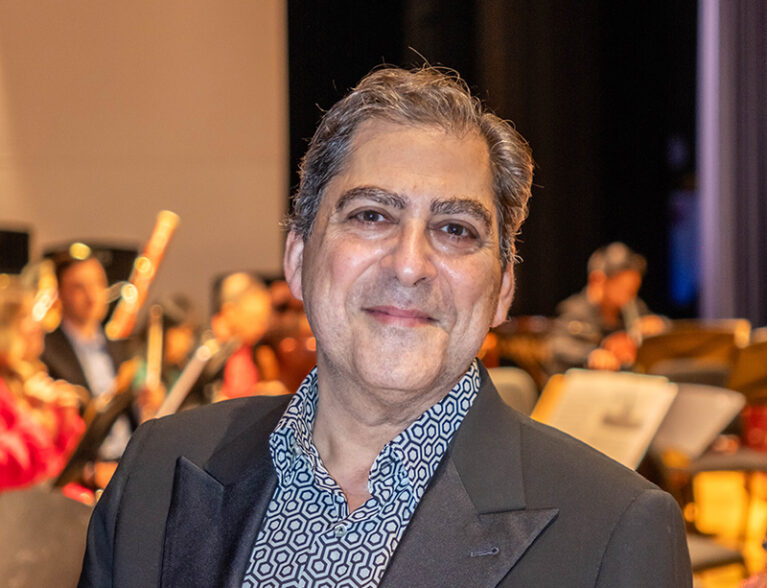
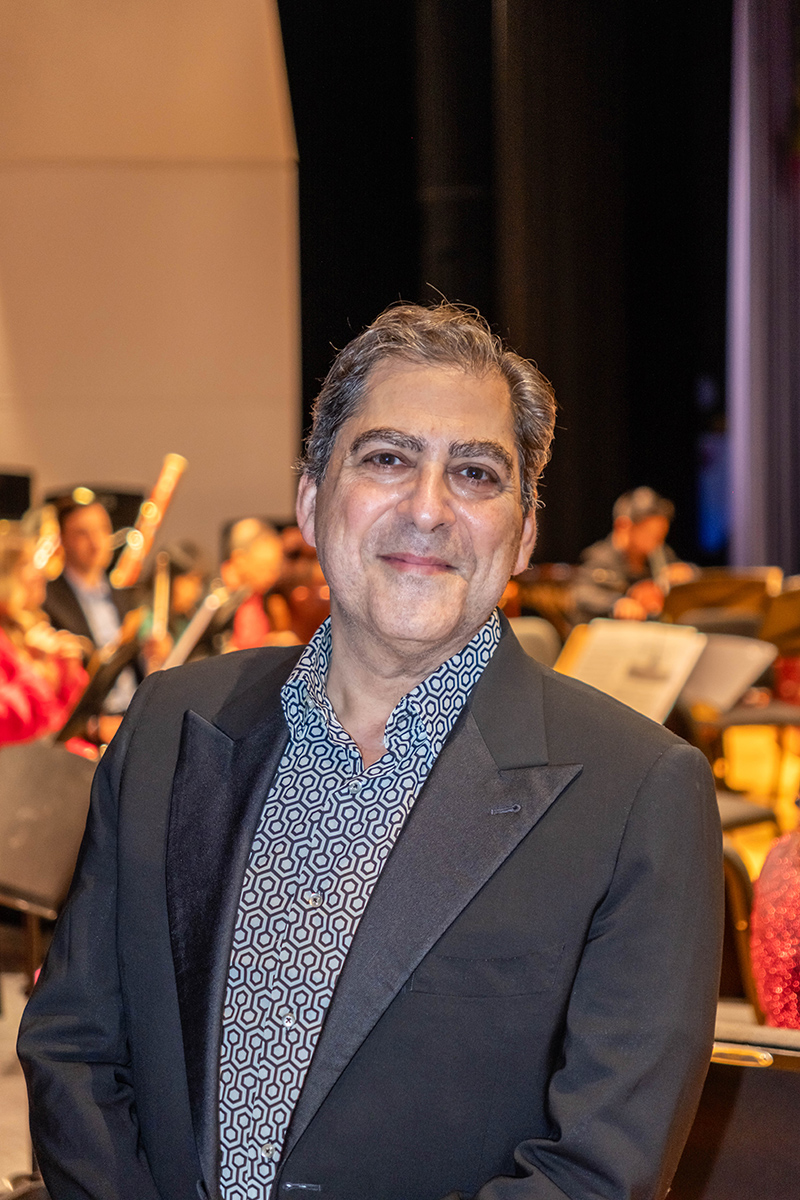
The 36th season of the Atlantic Classical Orchestra is expected to be an especially noteworthy one, filled with an extensive and engaging repertoire. “There’s a lot going on this season,” states David Amado, ACO music director.
Thursday, Jan. 22
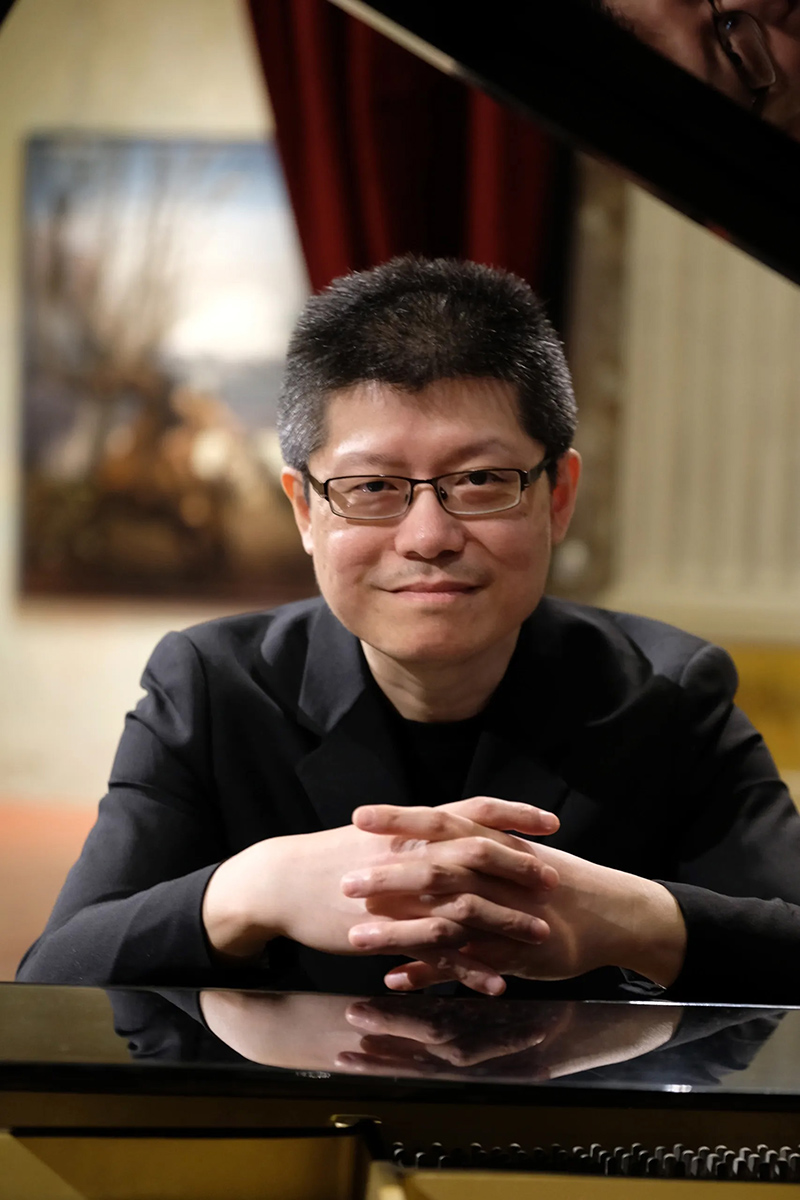
Masterworks Series 1: Borrowed & Blue, with Pianist Tao Lin
Weill: Suite from “Three Penny Opera”
Saint-Saëns: Piano Concerto No. 5, op. 103 (“Egyptian”)
Gershwin/arr. Bennett: “Porgy and Bess Symphonic Picture”
The season opens with selections that delve into the impact of African and African-American musical traditions on composers worldwide.
Kurt Weill’s jazzy Suite from “Three Penny Opera” was written for Bertold Brecht’s 1928 parody.
“Many of the tunes from the ‘Three Penny Opera’ became jazz standards. ‘Mack the Knife’ is probably the most famous one. It’s sort of incredible. This is what was going on in Berlin, but we identify it with American jazz,” says Amado.
Only seven years later came Gershwin’s gorgeous “Porgy and Bess.”
“It speaks a lot of different languages all at once, by virtue of the fact that it is so well-crafted and steeped in Western art traditions. Yet it has these accents of jazz, of African-American spirituals, and folk songs. It’s this sort of incredible new hybrid.”
Sandwiched between them is Saint-Saëns’ “Egyptian.”
“Where Weill and Gershwin’s music lean heavily on jazz and African American traditional music, Saint-Saëns looks to Egypt. In the late 19th century Saint-Saëns traveled along the Nile, like so many Western Europeans, and was completely smitten. So he wrote this kind of musical postcard about Egypt.”
Thursday, Feb. 12
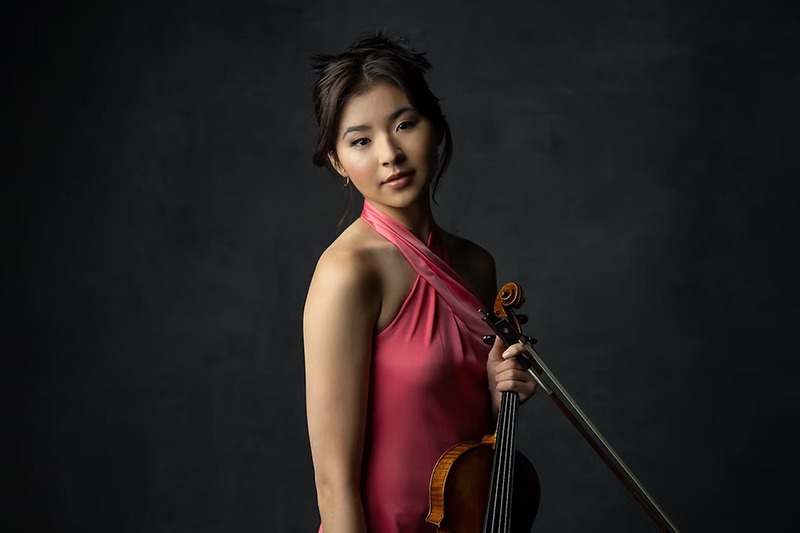
Masterworks Series 2: Into the Night, with Violinist Hina Khuong-Huu
Mussorgsky/arr. Rimsky-Korsakov: “Night on Bald Mountain”
Prokofiev: Violin Concerto No. 2, op.63
Tchaikovsky: “The Sleeping Beauty” Suite, op.66a
Amado says that although Mussorgsky’s version of “Night on Bald Mountain,” does exist, the Rimsky-Korsakov version is what is generally played. However, the original, which was written for piano solo, has a distinctive quality as well.
“Rather than technicolor, it’s a series of black ink drawings rather than lots and lots of bright colors. So I don’t think we’re quite giving Mussorgsky a fair shake.”
Amado suggests the hint of darkness in Prokofiev’s Violin Concerto may be attributed to his becoming engaged in the languages of noncommunist societies while traveling around Western Europe. But knowing that he would soon return to Stalin’s Soviet Union, he recognized that he would have to be extraordinarily careful in how he expressed himself musically.
“So I think there’s an undercurrent that’s hard to put your finger on, and I think it has to do with that impending return to the limits of Stalinist aesthetics. He’s working all that through in a way where he’s finding a more human voice that he still feels is authentic to him, and that won’t get him sent to Siberia,” says Amado.
“And our soloist is the winner of the Elmar Oliveira Violin Competition; she’s fantastic,” he says, referencing Hina Khuong-Huu.
That evening closes with Tchaikovsky’s exceptional ballet, “The Sleeping Beauty,” which, says Amado, like his “Swan Lake” and “Nutcracker,” seems to come from another universe.
“It’s such extraordinary music. There was something about writing for the ballet that gave Prokofiev and Tchaikovsky both, this extra boost of inspiration. I’m always delighted to be able to do any Tchaikovsky, especially any Tchaikovsky ballet music.”
Thursday March 12,
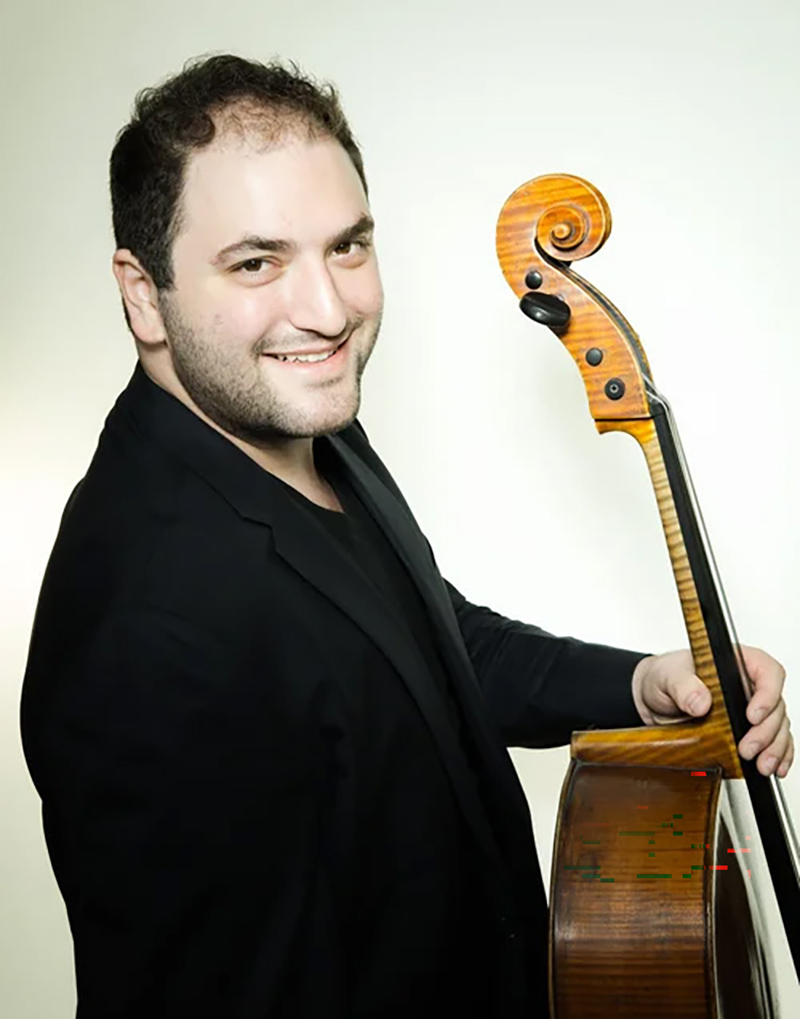
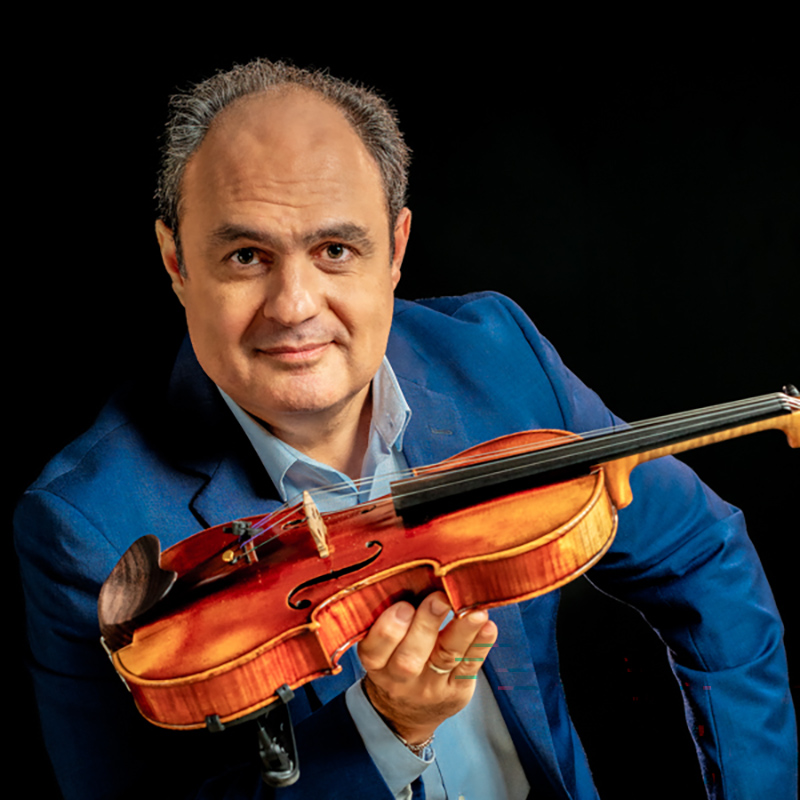
Masterworks Series 3: Town and Country, with ACO Concertmaster Leonid Sigal and Cellist Julian Schwarz
Aaron Copland: “Appalachian Spring” Suite for 13 Instruments
Paul Frucht: “Finding Religion”
Beethoven: Symphony No. 6, op.68 (“Pastorale”)
“The middle of this program is a relatively new piece, called ‘Finding Religion’ written in 2018 by a young composer, Paul Frucht,” says Amado.
Frucht’s work, inspired by an art song by Charles Ives titled “Religion,” is a double concerto that will feature cellist Julian Schwarz and violinist Leonid Sigal.
“It’s a beautiful piece; very approachable. Paul writes very affecting music. It feels to me like there’s no barrier between the emotional content and the audience. There’s not a lot of intellectual gymnastics that the audience needs to do in order to get to the kernel of truth in the piece,” says Amado.
“And we’re surrounding that with two wonderful standards, starting with Copeland’s ‘Appalachian Spring,’ commissioned in the mid-’40s by Martha Graham.”
Amado explains that early in his compositional career, Copeland wrote urban music that celebrated the noise of the city. Eventually realizing that it presented a barrier to the audience being able to receive the emotional message he wanted to communicate, he simplified his language.
“‘Appalachian Spring’ is a great example of the answers he arrived at. It’s a piece built on some very basic sonorities, and developed in an incredibly thoughtful, sensitive and skillful way. It’s an absolutely ravishing piece, particularly in this original instrumentation, which is only for 13 players,” says Amado.
The second half features Beethoven’s “Pastoral Symphony,” which Amado feels presents a gentler side of the composer not always associated with him.
“You don’t feel the pressure to get through, to rush. It’s that feeling on the first beautiful spring day, when you just stand outside. Nothing pushing you further out and nothing pulling you in. You’re just there. I think it’s a really lovely, beautiful piece.”
Thursday April 9
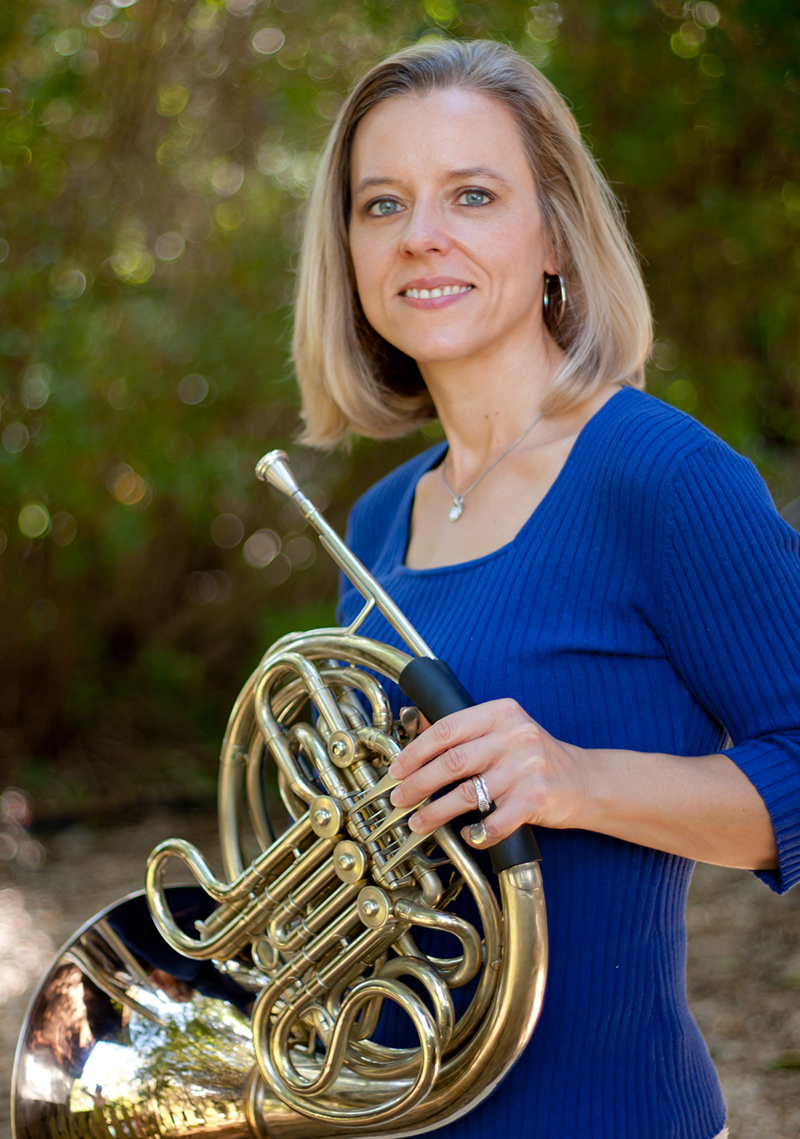
Masterworks Series 4: Themes and Variations with Karen Schubert, Principal Horn
Brahms: “Variations on a Theme by Haydn,” op.56a
Mozart: Concerto No. 4 in Eb major for Horn, K. 495
Hindemith: “Symphonic Metamorphosis of Themes by Carl Maria von Weber”
“Karen Schubert, our principal horn, is going to play the Mozart Fourth Horn Concerto on this program. She’s such a fantastic player. Mozart wrote a handful of concertos for a friend of his who was a virtuoso player on the natural horn. In Mozart’s day, the horn didn’t have valves. It was just a tube,” says Amado, noting that modern instruments sound considerably better.
“We’re proceeding that with the Brahms ‘Variations on a Theme by Haydn,’ which is not really a theme by Haydn, as we now know.
“But Brahms thought it was, so he was thinking about Haydn the whole time, so that comes across as well. And it goes nicely with the Mozart. The piece is so firmly rooted in classical transparency and counterpoint clarity, so I think those two pieces go beautifully together.”
In the second half, Amado continues the idea of composers commuting across generations for their inspiration, with Hindemith’s “Symphonic Metamorphosis of Themes by Carl Maria von Weber.”
In an unusual twist Amado and Tao Lin will play Weber’s original four-hand piano duets ahead of each of Hindemith’s reimagined and magnified orchestral showcases, so that people can experience the difference.
“I’ll come out with Tao, and we’ll play a piece, and then I’ll turn around and conduct the metamorphosis of that piece.
“Then I’ll turn and sit back down at the piano and play another piece and do the same thing,” he explains.
The ACO also hosts a Chamber Music Series in partnership with the Vero Beach Museum of Art: Jan. 18: Music and Nation; Feb. 15: Melody and Counterpoint; March 15: Kaleidoscope of Expressions. Chamber Series Concerts begin at 3 p.m. in the VBMA Leonhardt Auditorium.
On Jan. 12, Vero Friends of ACO will host its annual Benefit Concert at 4:30 p.m. at the Orchid Island Beach Club.
The Violin Virtuosity Concert will feature violinist Hina Khuong-Huu and pianist Lindsay Garritson, followed by a cocktail reception.
Masterworks Series Concerts begin at 7 p.m. at the Community Church of Vero Beach.
For more information, visit AtlanticClassicalOrchestra.com or call 772-460-0850.
-
- PHOTO BY JOSHUA KODIS

-
- PHOTO BY JOSHUA KODIS
-
- PHOTO PROVIDED
-

- PHOTO PROVIDED
-

- PHOTO PROVIDED
-
- PHOTO PROVIDED
-
- PHOTO PROVIDED

-

- PHOTO PROVIDED
-

- PHOTO PROVIDED