Good news about green sea turtles for the holidays.
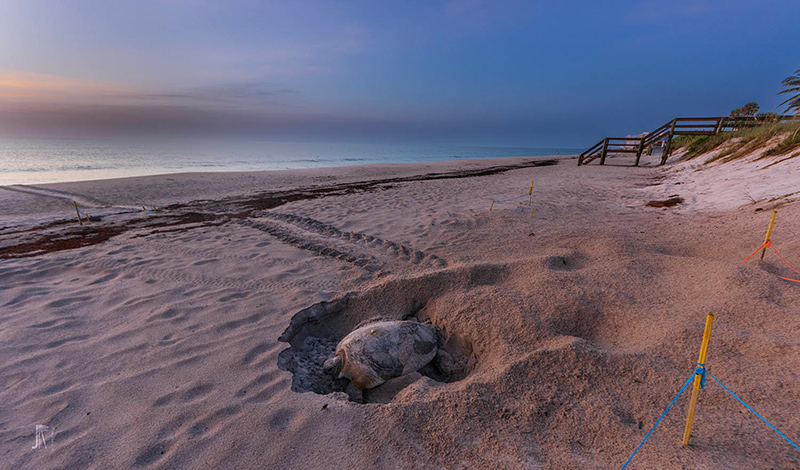
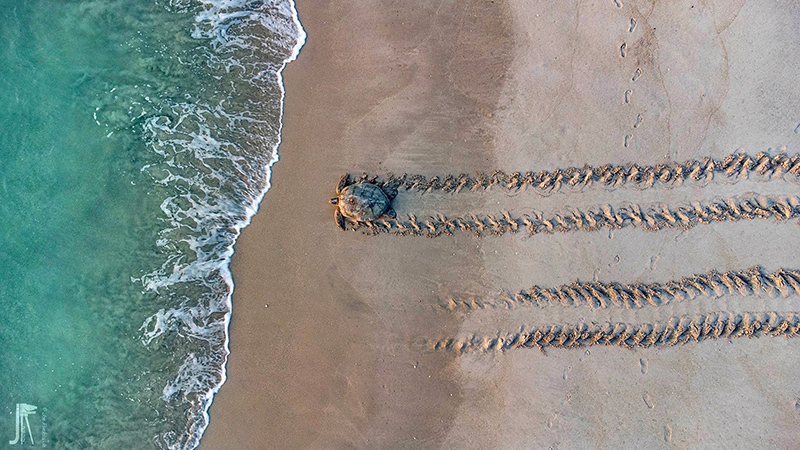
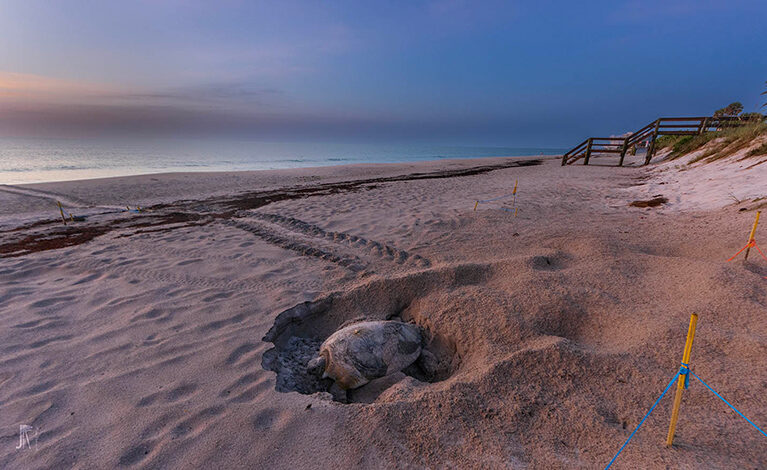
The 2025 nesting season saw the mysterious and charismatic animals dig a total of 4,636 nests along our barrier island – a new record and a 600-percent increase from 761 just 20 years ago.
The International Union for Conservation of Nature said that as a result of the worldwide rebound of the green sea turtle population, the species is no longer in danger of extinction.
“This is a great message of encouragement that we gotta keep it up. It is very possible that in our lifetime we can see the [complete] recovery of this species,” said Kendra Bergman, founder of Coastal Connections, a nonprofit organization dedicated to the conservation of sea turtles on the Treasure Coast.
Green sea turtles once numbered in the tens of millions, ranging as far south as the tip of South America and as far north as Great Britain, Nova Scotia and Japan, in the Atlantic, Pacific, Gulf of Mexico and Caribbean.
But over the years, hunters killed off 95 percent of the estimated 19 million to 33 million green sea turtles once living throughout the Caribbean.
Even when unsustainable hunting and trade began to decline, green sea turtles faced new threats, including pollution, habitat loss, rising sea levels and warmer temperatures, and entanglement in fishing gear.
Despite the international reclassification, Florida’s population of green sea turtles continues to be listed as “threatened” according to the U.S. Endangered Species Act, after being downlisted from “endangered” in 2016.
The University of Florida and Jensen Beach nonprofit Inwater Research Group track sea turtles by satellite transmitter and have learned that Florida’s green turtles mainly feed around the Florida Keys, according to Bergman. They stay there most of the winter, munching on seagrasses and storing up energy in their fat layers for mating, and then migrating up to our shores for nesting in the spring, she said.
Green turtles can live to be 70 or 80 years old, grow to 4 feet in length and weigh more than 400 pounds. They are one of three sea turtle species that nest on barrier island beaches, along with loggerheads and leatherbacks.
County staff members, contractors and volunteers working in teams of three to five people comb more than 22 miles of Indian River County beaches seven days a week during the nesting season to count, mark and monitor nests of the three species. They counted more than 11,000 nests in total this season.
Destroying a sea turtle nest is a third-degree felony and federal penalties include fines up to $25,000 and up to one year in prison. State penalties also include fines and imprisonment.
Photos by Joshua Kodis