The Double Portraits exhibition at the Vero Beach Museum of Art offers a fascinating look into how photography can capture and document life’s nuances, focusing particularly on experiences within the American South.
Caitlin Swindell, VBMA chief curator, who has her own personal history with the south, says the show highlights the complexity and evolution of that part of the country.
Curated by Swindell, the selection of 47 photographs by 34 artists is on loan from the Georgia-based Do Good Fund collection of more than 800 works, and is on display through Jan. 11, 2026.
The works are by acclaimed Magnum photographers, World Press award-winners and Guggenheim fellows, as well as a number of emerging artists.
“Portraiture was a really big focus of the collection, and I noticed how often the presence of two people would emerge, which has always been an interest of mine in terms of art history. To my knowledge, there hasn’t ever been a survey exhibition on double portraiture,” says Swindell.
As mirrors are often incorporated in the photographs, Swindell has placed a two-panel antique mirror at the entrance to the exhibit.
“The hope is that when you come in and you’re greeted by this, you’re immediately picturing yourself within the museum walls. It prompts you to maybe feel a bit more empathetic, prompt a connection with the sitters in these works,” says Swindell.
A timeline of key historical moments to the right of the entrance illustrates the evolving portrayal of double portraiture through the ages utilizing sculpture, paintings and contemporary photography.
“Especially as we get to the 20th century, there’s a lot of psychology and complexity to how people are picturing two people or even versions of themselves,” Swindell explains.
The show is organized into four thematic sections: Portraits in Parallel: A Conventional Photograph; In the Moment: A Snapshot Aesthetic; Between Us: Gestures of Care and Compassion; and Unseen and In-Between: Rethinking the Double Portrait.
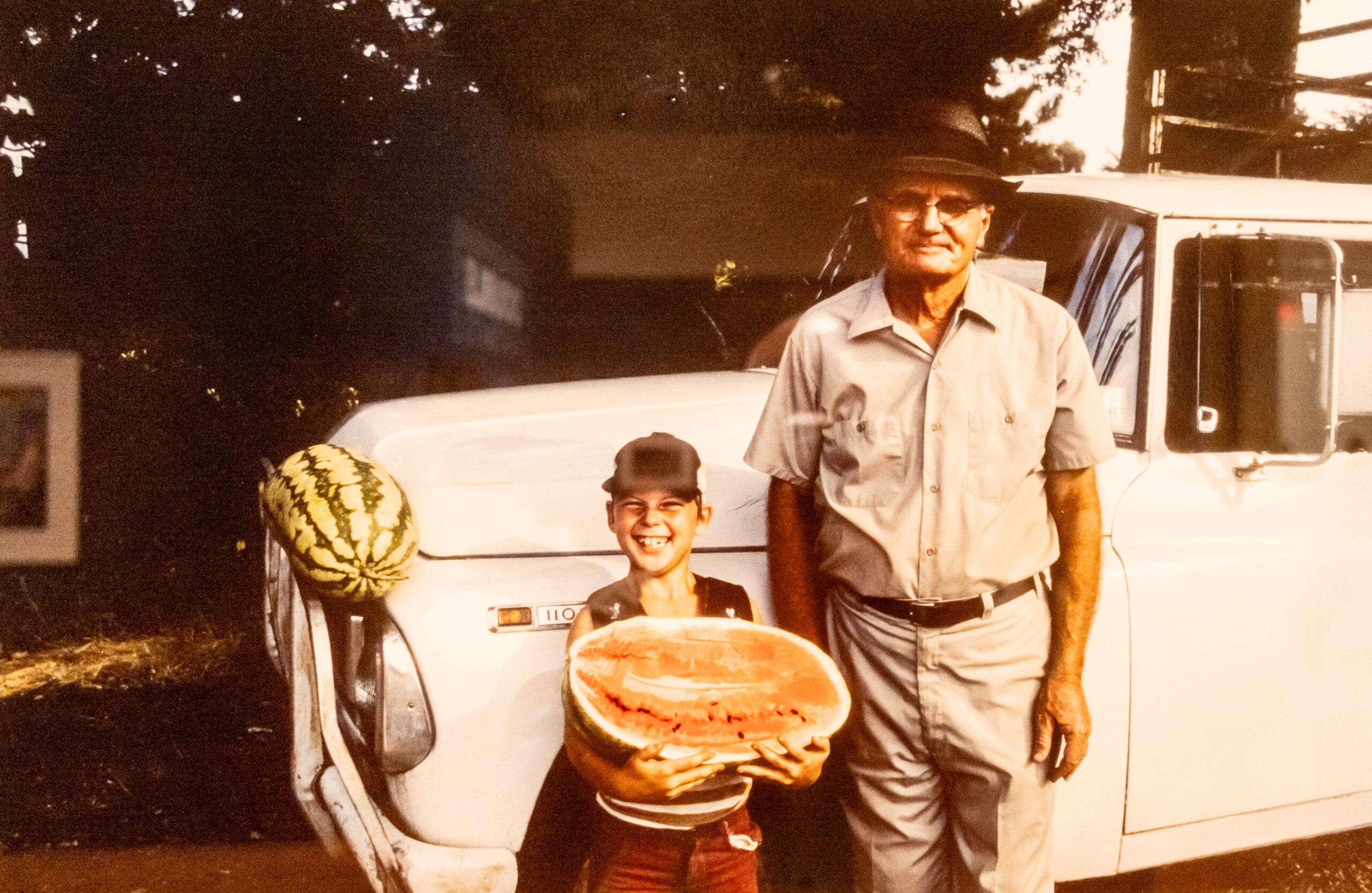
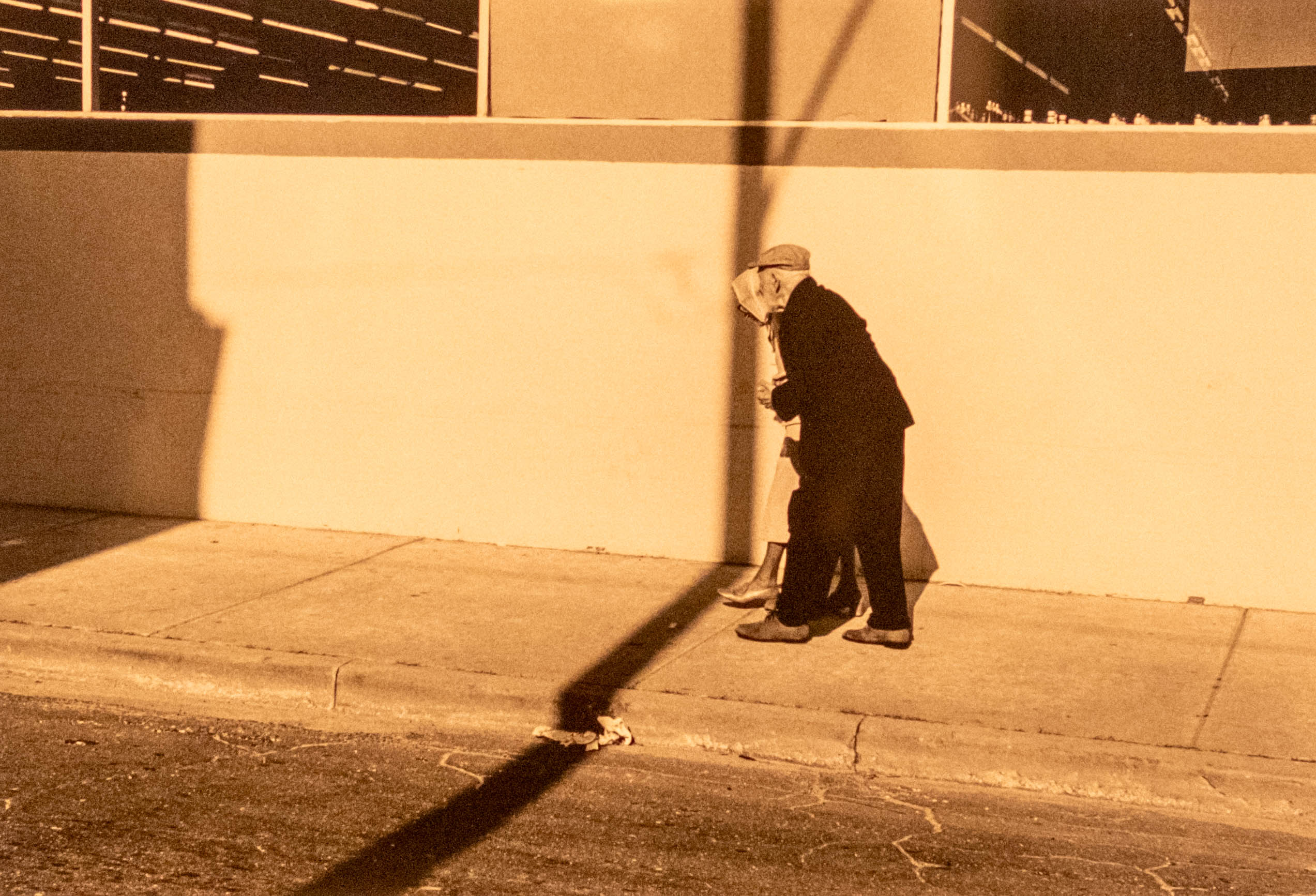
In Portraits in Parallel, subjects are often depicted facing forward or are positioned side by side, yet the compositions are eminently engaging, as exemplified by “Collins Ave Couple, Miami Beach, FL,” 1975.
Shot by the renowned Rosalind Fox Solomon, who died this past June at age 95, the image exudes warmth and happiness, leaving no doubt that the couple was as comfortable being photographed as they were confident in their relationship.
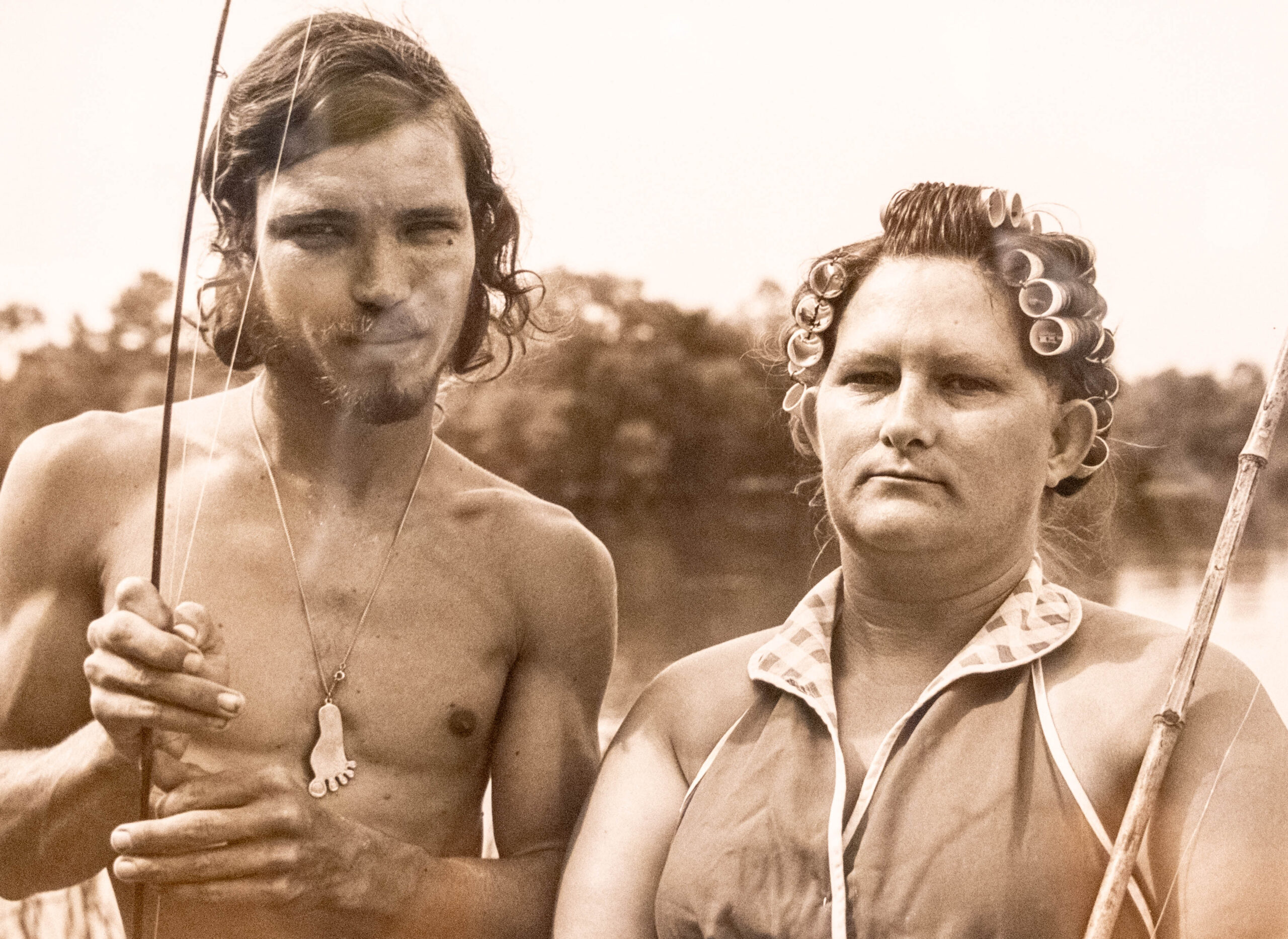
On the other hand, in “Couple Fishing on the Flint River, Bainbridge, GA,” 1980 by Jimmy Nicholson, the flinty looks of the couple holding fishing rods – a shirtless man with an incongruous foot pendant and a woman with curlers in her hair (one wonders why) – suggests that while they permitted the photo to be taken, they weren’t necessarily happy about it.
Several works are by the prolific Burk Uzzle, known for presenting an “atypical way of seeing ourselves” and whose work spans some six decades.
In “Mildred and Mary, Wilson, NC,” 2011, elderly twins are seemingly in on the joke, their faces portraying hints of suppressed smiles. Posed just so and seated opposite one another, their matching pink ‘go-to-church’ outfits and bright white pumps are in stark contrast to the peeling blue paint on the wall behind them; even with the wall’s twin parallel lines.
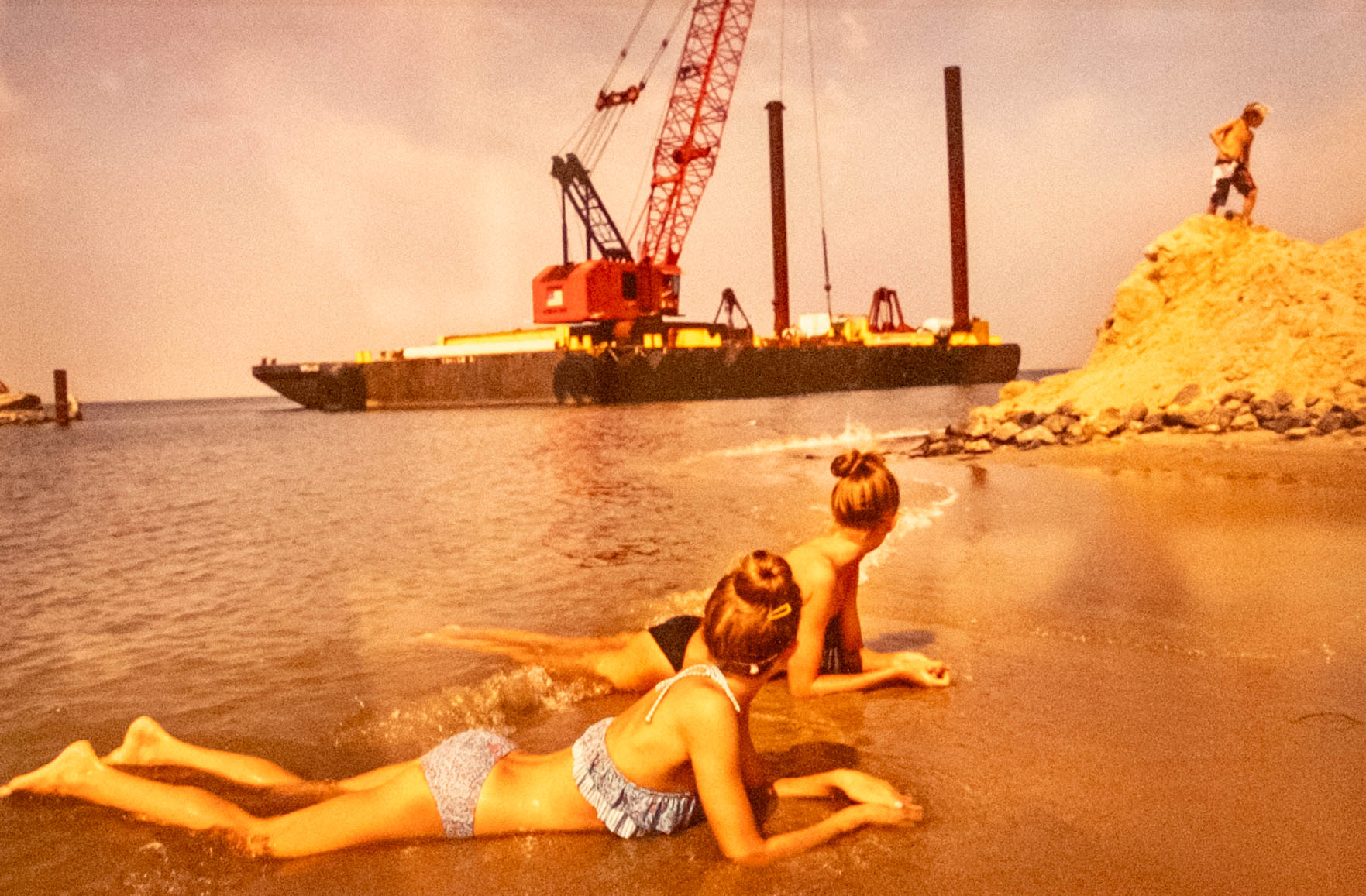
In the Moment features photographs that are more spontaneous and less posed.
“You’re not always seeing the sitter in full. But also, one of the highlights of this section is that although people had been taking snapshots throughout the whole 20th century, it was not really seen as high art until the ’60s or ’70s,” Swindell explains, crediting William Eggleston for making that transformation.
Among the shots in that section is “Anna and Eloise,” 2013 by Cynthia Henebry, whose photographs focus on the mysteries and complexities of childhood. In this one, an attractive, barefoot woman holding an empty mug strikes a pose while glancing away from a little girl who, oblivious to the woman, gabs nonchalantly on her cellphone. Her bicycle’s training wheels allow her to rest her legs on the handlebars, as relaxed as a CEO on the phone with her feet on the desk.
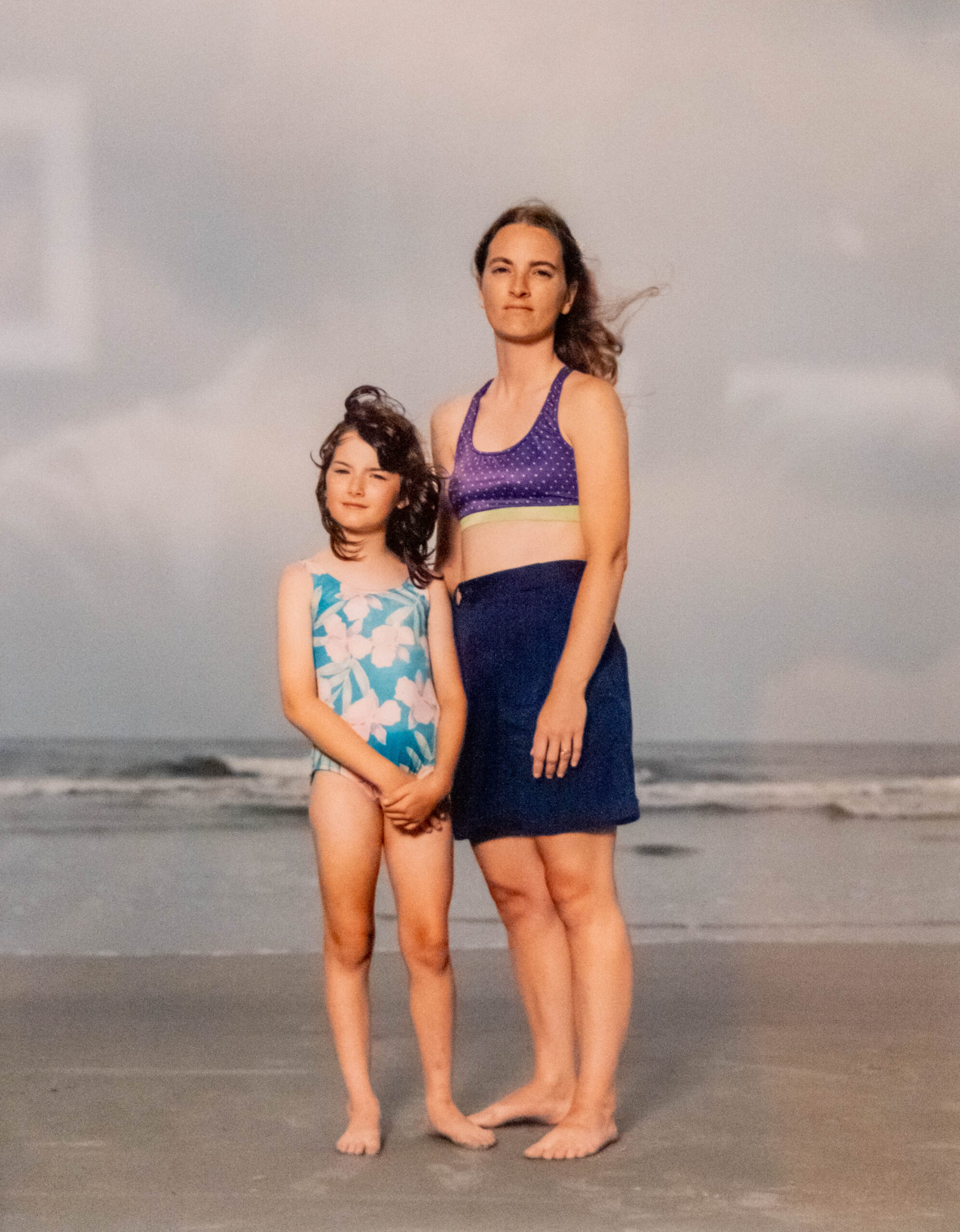
The focus of the Between Us section falls somewhere between the first two, but is highlighted by the closeness and dynamic of subjects sharing the frame.
“And really, it’s one of my favorite sections, because I think about key photos from my own life and the more intimate photos stand out in my memory,” says Swindell.
Among them are several touching mother/daughter shots, such as a mother comforting her little girl in “Durham, North Carolina,” 1971, shot by documentary photographer Alex Harris for a project to document that area’s substandard housing and living conditions.
Mark Steinmetz, known for presenting “gentle humanity in the ordinary,” captures a very young mother cradling her baby’s head in a universal gesture of protection, while making a call from a roadside phone in “Knoxville” from the “South Central” series, 1991.
The final section, Unseen and In-Between, features more unconventional photos, including one of Swindell’s favorites, “Lynda, Jeremy, Kudzu field,” 1982 by Michael Stipe, best known as the lead singer and lyricist of the Georgia rock band R.E.M.
“I love the ambiguity in art, like trying to figure out about a photo. And this photograph, which is his sister and one of his friends, a fellow artist in that community, is such a surreal image,” says Swindell, adding that Stipe prefers to not always show faces in portraiture.
“So here you’re really just seeing the glow of his sister’s hair and the perspective is kind of unusual. It’s just a really haunting and interesting photograph.”
Another complicated piece with a whole lot going on is “Untitled from the ‘Knit Club’ series,” 2018, by Carolyn Drake.
Swindell says Drake did documentary work in Turkey and central China for many years before eventually making a complete change by moving to Water Valley, Mississippi, a small town of some 3,000 people. There, she collaborated with a community of women who became known as the Knit Club, to create staged photographs.
“They would go to historic houses in this small town, bring props, and be very improvisational with the story that they wanted to tell,” says Swindell.
In this one, a colonial portrait is being held by an unseen woman as her unseen daughter wraps her hands around her legs. So while you see the hands of the woman and daughter, the only face is of the little girl in the colonial portrait.
“I do love it because it’s again, a double double,” says Swindell.
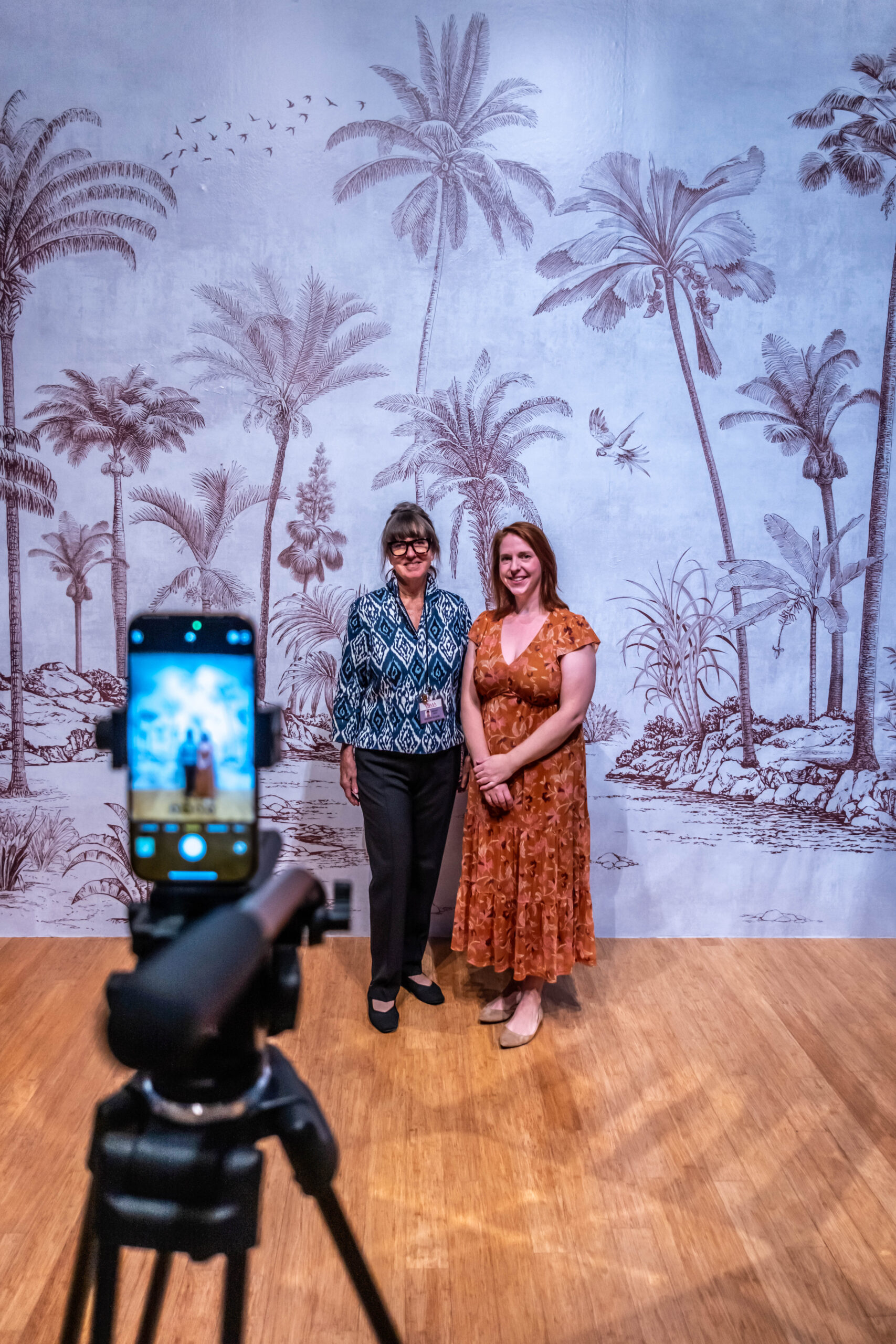
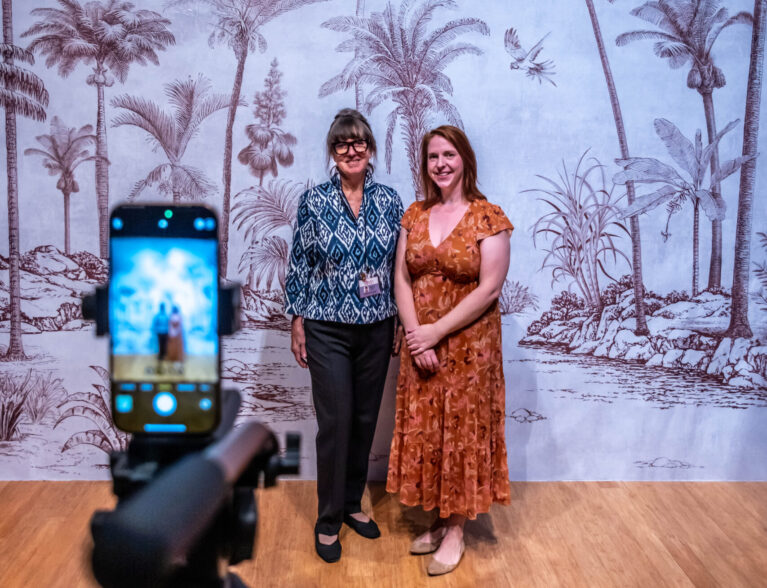
Swindell is always looking for innovative ways to have people experience new shows, and for this exhibit has created an interactive ‘create your own portrait’ feature, providing backdrops and a camera stand where people can place their cellphones.
“It provides an opportunity to think about early modes of portraiture,” says Swindell, referencing the early tin types.
“I love having an experiential component of an exhibition. So when we’re here, we’re looking, we’re learning, we’re thinking, we’re contemplating, but then we have a little bit of the doing with it, which I think adds to the experience.”
Photos by Joshua Kodis