Visitors to the Recent Acquisition Highlights exhibition at the Vero Beach Museum of Art will in effect be treated to two distinct exhibits. Split between the Schumann and Titelman Galleries, it features a total of 52 pieces from the permanent collection acquired since 2019 and is on display through Jan. 11.
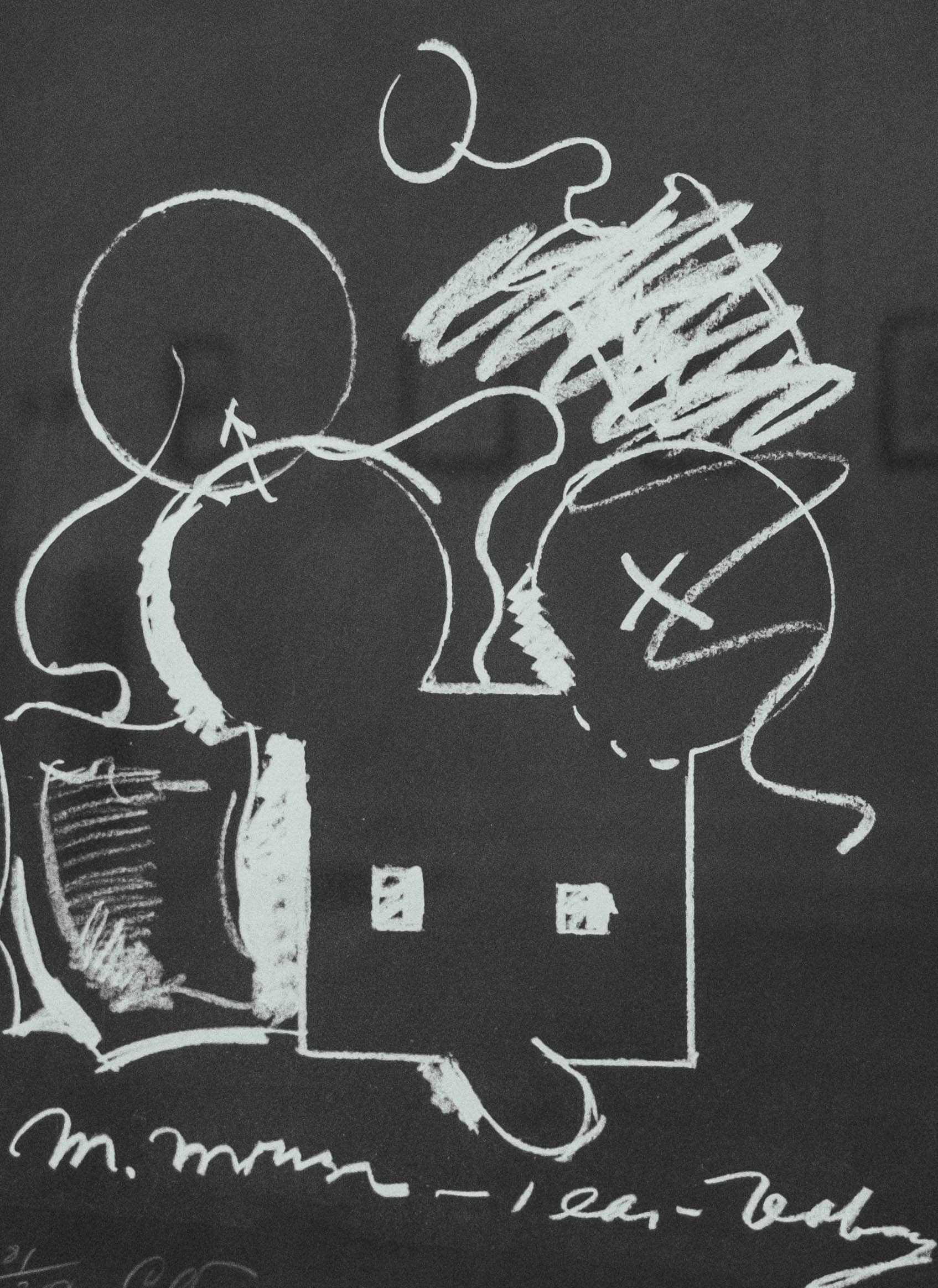
The Schumann Gallery holds the New York Collection for Stockholm Portfolio, a fascinating suite of 29 prints and one photograph by influential American mid-century artists created as a fundraiser for the Moderna Museet, Stockholm’s modern art museum.
“The modern art museum in Stockholm in 1973 collaborated with this group called E.A.T., Experiments in Art and Technology,” says Caitlin Swindell, VBMA chief curator.
“They worked to commission these 30 major artists from the period to create a print specifically for this body of work that would then be sold in a limited edition of 300 prints that would help the museum make acquisitions of American art,” she adds.
“It’s a really cool project, because a lot of these artists worked in media outside of printmaking. So if you’re a performance artist or a sculptor or a painter, how are you going to contribute to this portfolio?”
Many are as puzzling as they are fascinating, so Swindell has created labels for each one. Give yourself lots of time because you’re going to want to read each interesting backstory.
“I felt compelled to write a label, not just because I enjoy doing it, but because there’s a lot of conceptual art where the idea behind it is what makes it important, not the physical object. And to some show a little insight into their artistic process,” she explains.
One of the more recognizable prints is Roy Lichtenstein’s “Finger Pointing,” a Pop art image used for a 1964 American Pop Art exhibition at the Moderna Museet, that crops the hand of Uncle Sam from James Montgomery Flagg’s World War I recruitment poster.
The instructions in Jim Dine’s “Peaches,” says Swindell, such as “buy a saw” and “nail in wall 4,” create an amusing functional diagram for the larger mixed-media “Peaches” installation he completed in 1969 for the Moderna Museet.
Pop artist James Rosenquist was known for illustrating iconic images from American life, and in “Ten Days” he has marked the passage of time with 10 tally marks – five nails and five bobby pins – using red, yellow and blue primary colors.
“I think it’s a really great insight into each artist. They were asked to contribute just one print; that’s it. And everything was a print except for one photograph,” says Swindell.
That photograph, “Hard Core,” is by Walter De Maria, known for bringing order to nature in his Land Art. It’s a still from the 1969 film of the same name, that featured shots taken in Nevada’s Black Rock Desert.
Robert Whitman was a key figure in the avant-garde participatory performance Happenings in New York that began in the late 1950s. His “Untitled” appears as a line drawn across the paper, but is instead a conceptual piece, a print folded in half with a drawn line bisecting the crease.
“It’s really interesting, because again, this artist works in performance work and video. This is a remnant of his performance of folding paper,” says Swindell.
Robert Rauschenberg’s “Installation Drawing for Monogram” contains drawings and calculations for the installation in the Moderna Museet of his mixed media sculptural work “Monogram,” which contains a taxidermized Angora goat.
“This is a great look into his creative process for what is a really enigmatic artwork that scholars are still trying to figure out,” says Swindell.
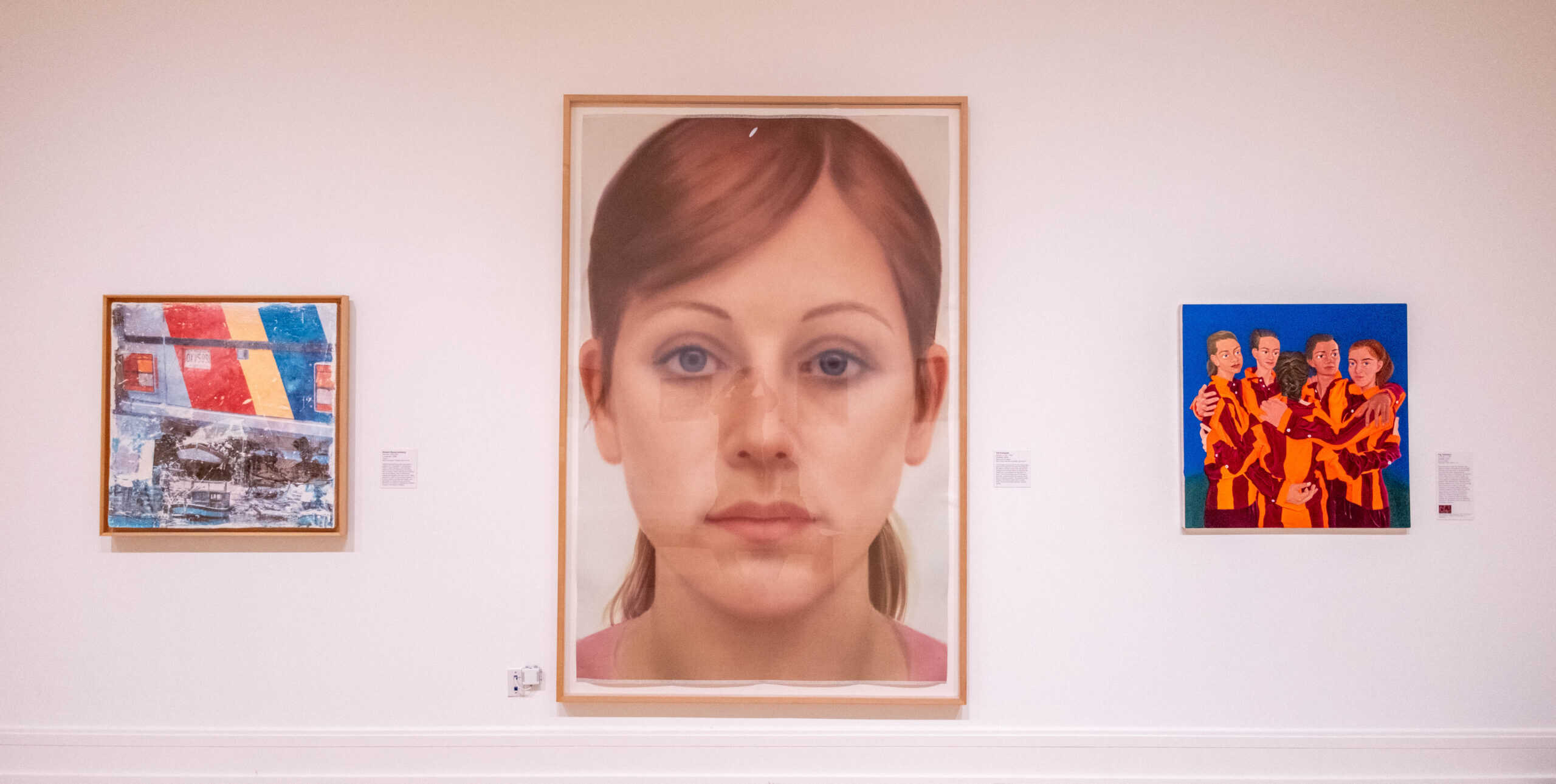
In the Titelman Gallery, 23 artworks from the permanent collection, acquired within the past six years, are displayed. Some have not previously been exhibited, and others were shown only briefly.
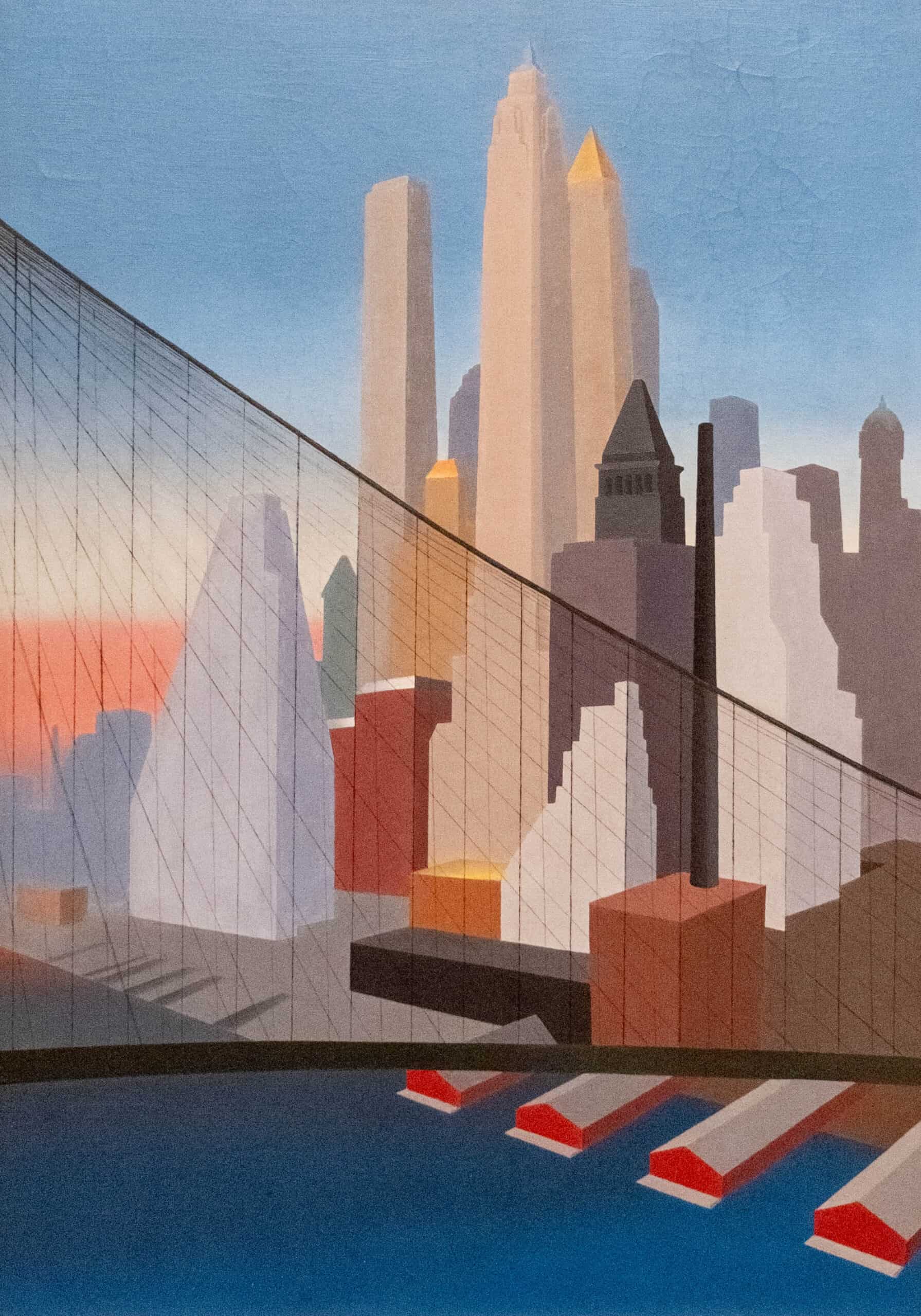
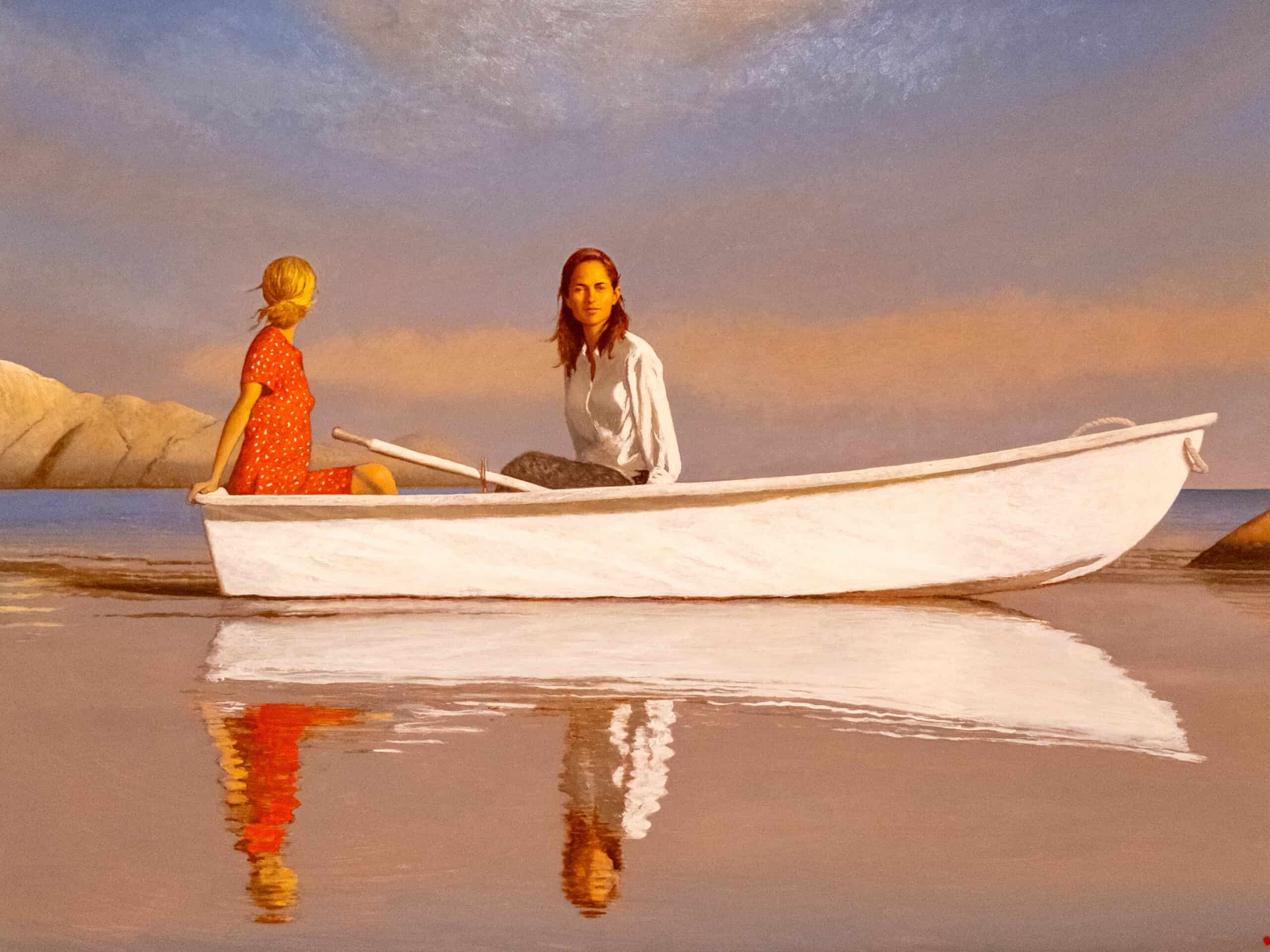
“In this relatively small gallery, we are still able to put out some of our strengths. Where we’re going as a collection with some of these American Modernist pieces, to early American and European art and photography, which is one of our least represented media,” says Swindell.
“I wanted to show the breadth of the collection, but it can be a challenge bringing together works that are so different in style, so I tried to make sections within sections. It’s fun to conceptualize how to bring these together in one little space.”
Swindell chose three photographs for the show, including the elegant “Night Bather,” 1939 by Louise Dahl-Wolfe, a renowned New York City fashion photographer whose work appeared on the covers of 86 Harper’s Bazaar magazines between 1936 and 1958.
“And then this is another female photographer who has a really interesting trajectory in her life and art. She focuses on aging women,” says Swindell, referencing Anne Noggle.
Known for her black and white portrait photography, Noggle served as an Air Force Service Pilot and captain from 1953 to 1959 before studying photography under the GI Bill.
“Stellar by Starlight #3,” 1986, the third in a triptych, is an otherworldly self-portrait of Noggle at age 64, in a hot tub enveloped by fog and bubbles. In “Artifact,” 1976, the lighting accentuates the curves and textures of her mother’s aging hands; one upturned and holding dentures.
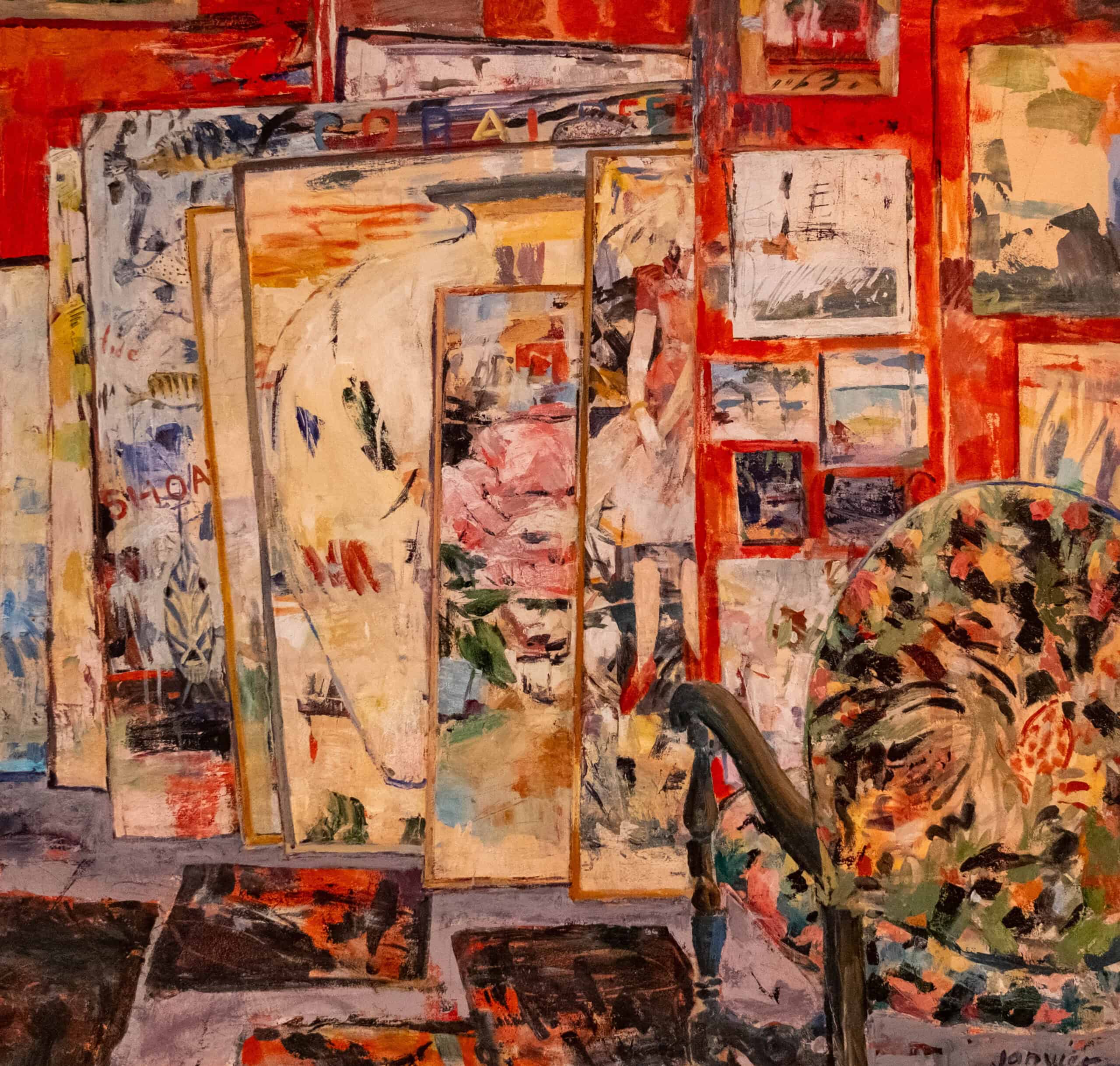
Former Vero Beach artist Janvier Miller is represented with “Studio in Red for M,” 2024, a layered representation of her Vero studio that pays homage to “The Red Studio” by Henri Matisse.
“I was interested in putting Jan’s piece with Faye Sanders’ because she’s also inspired by Matisse, and they’re also really colorful and vibrant,” says Swindell.
In “Huddle” 2021 by New York artist Fay Sanders, Swindell points out that the vivid colors and circular formation of the five female soccer players were influenced by Matisse’s “The Dance.”
Referencing “Portrait of Ben Medary” 1930 by American artist Alice Neel, Swindell says that while she is one of the most significant portrait artists of the 20th century, she didn’t receive recognition in the art world until the last decades of her life.
“She’s known for a different style later on but this is one of her early works; it’s a bit more muted, meditative.
“There’s a long, complex story about this intertwined relationship between Alice Neel, and her good friend Rhoda Medary, who was also an artist, and who was married to Ben Medary,” says Swindell.
Another striking portrait, considerably larger scale, is “Untitled” 2004 by contemporary portraiture artist Till Freiwald, which at first glance appears to be a blown-up photograph, but is in fact a watercolor, with softly blended layers of translucent colors.
“The expressions of all of his sitters are hard to pinpoint. He takes photographs of them and paints them from memory based on sketches he makes,” says Swindell.
For more information, visit VBMuseum.org.
Photos by Joshua Kodis